Alcohol doesn’t completely burn off during cooking. Its evaporation relies on several factors, like cooking time, temperature, and the type of alcohol used. For instance, short cooking times leave significant amounts behind, while longer cooking reduces it. Spirits evaporate faster than beer or wine. So, if you’re looking to minimize alcohol in your dish, consider the method and duration. Keep exploring to uncover more on how to effectively manage alcohol content in your cooking!
Key Takeaways
- Alcohol evaporates when exposed to heat, enhancing flavor but not completely eliminating it.
- Short cooking times leave significant alcohol traces, while longer durations reduce content more effectively.
- High temperatures and methods like simmering or boiling accelerate alcohol evaporation.
- Different alcohol types evaporate at varying rates; spirits evaporate faster than beer or wine.
- Complete removal of alcohol is time-dependent and often not guaranteed, even after extended cooking.
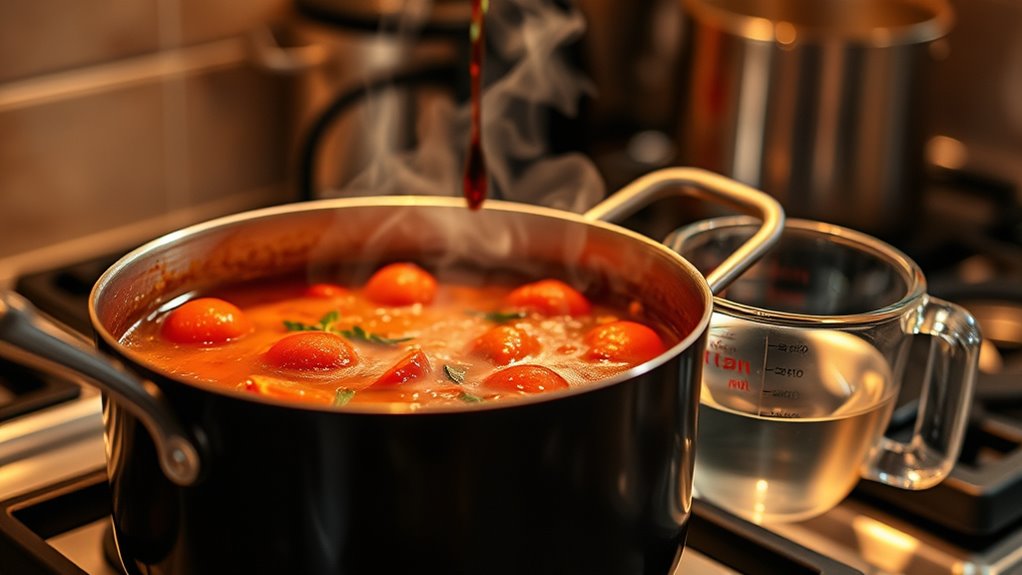
When you’re cooking with alcohol, you might wonder if it actually burns off during the process. It’s a common question, especially if you’re concerned about the effects of alcohol in your food. The truth is, alcohol does evaporate when heated, but the extent to which it burns off depends on various factors like cooking temperature and time.
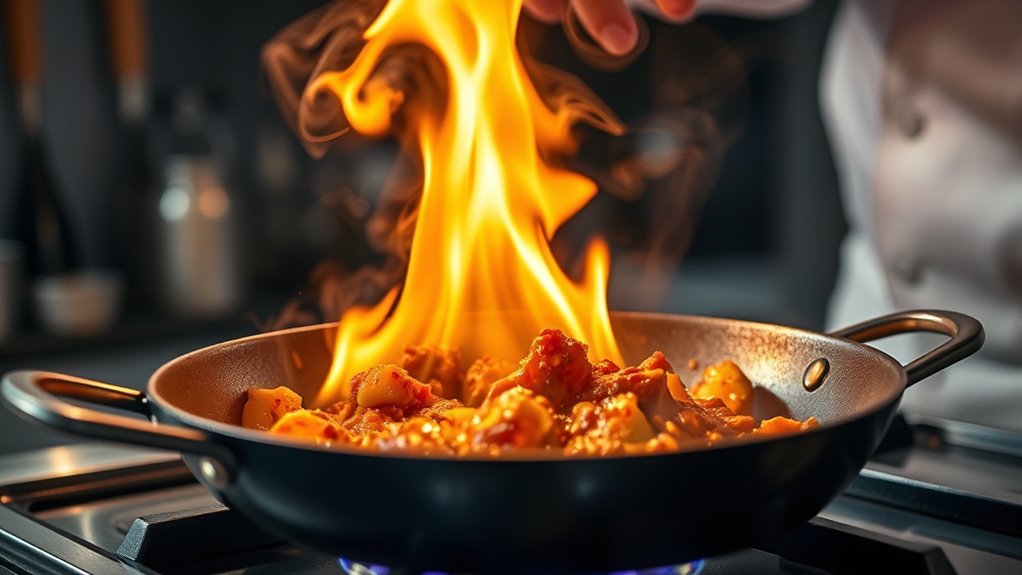
Alcohol evaporation occurs when you expose alcohol to heat. As it heats up, the alcohol begins to evaporate, and this is what gives your dish that beautiful, rich flavor. However, it’s not a straightforward process. If you’re simmering or boiling a dish, the alcohol will evaporate more quickly than if you’re just lightly heating it. The cooking temperature plays a vital role here; higher temperatures facilitate faster alcohol evaporation. But even at high temperatures, the complete removal of alcohol takes time, and you might still find traces of it in your food.
Alcohol evaporates when heated, enhancing flavors, but complete removal takes time and depends on cooking temperature and method.
Let’s break it down a bit. If you’re making a sauce and you add wine, for instance, the alcohol will start to evaporate almost immediately. But if you only cook it for a few minutes, a significant portion of the alcohol may still remain, depending on the cooking temperature. In fact, studies have shown that after just 15 minutes of simmering, about 40% of the alcohol can still be present. If you let it cook for an hour, around 25% remains, and even after two hours, about 10% might still linger. So, if you’re cooking for a large gathering and want to guarantee that the alcohol has mostly burned off, plan on cooking your dish for a longer time at a high temperature.
It’s also worth noting that the type of alcohol you’re using can influence how quickly it evaporates. Spirits like vodka or rum will evaporate faster than beer or wine due to their higher alcohol content. So, when you’re making a dish, consider not just the cooking time but also the initial concentration of alcohol in your ingredients. Additionally, understanding the role of temperature in alcohol evaporation can help you achieve the best results in your cooking.

Goya White Cooking Wine, Authentic Latin Pantry Staple, Recipes, 25.4 Ounce
- Size: 25.4 oz bottle
- Versatile Use: Ideal for meats, seafood, vegetables, and more
- Quality Assurance: Goya ensures premium quality
As an affiliate, we earn on qualifying purchases.
As an affiliate, we earn on qualifying purchases.
Frequently Asked Questions
Can Alcohol Enhance the Flavor of Dishes?
Yes, alcohol can definitely enhance the flavor of dishes! When you use cooking techniques like deglazing or marinating, alcohol helps to extract and amplify flavors, creating a more complex taste. It pairs well with various ingredients, making your dishes more vibrant. Just remember to choose the right type of alcohol for your recipe, as it can complement or clash with other flavors. Enjoy experimenting with different combinations to elevate your culinary creations!
What Types of Alcohol Are Commonly Used in Cooking?
You’ll commonly find wine, beer, and spirits like vodka or rum in cooking. These types of alcohol not only enhance flavors but also contribute to the dish’s aroma. When you cook with alcohol, the cooking temperature plays a vital role in alcohol absorption. Higher temperatures can help evaporate some alcohol, but it doesn’t fully disappear, so it’s worth considering how much remains in your dish after cooking. Enjoy experimenting with different types!
Is There a Difference Between Wine and Spirits in Cooking?
Yes, there’s a difference between wine and spirits in cooking. Wine has lower alcohol volatility compared to spirits, which means it evaporates slower. When you cook with wine, you often get a more subtle flavor infusion, while spirits can provide a stronger kick due to their higher alcohol content. Both contribute unique tastes, but the liquid evaporation process affects how intense those flavors become in your dish. Choose wisely based on what you want!
How Does Alcohol Affect Texture in Recipes?
Alcohol can work like a magician in your recipes, transforming textures in delightful ways. When you cook with alcohol, it evaporates, but not all of it vanishes. This evaporation process can enhance flavors and modify textures, giving dishes a richer, more complex mouthfeel. For example, using wine or spirits can help tenderize meat, while also adding moisture. So, when you’re cooking, remember that alcohol isn’t just about flavor; it’s about texture, too!
Are There Alternatives to Alcohol in Cooking?
Yes, there are plenty of alternatives to alcohol in cooking! You can use cooking substitutions like vinegar or citrus juices for acidity and flavor. For a richer taste, try broth or stock, which can enhance your dish without the alcohol. If you’re looking for sweetness, consider using fruit juices or purees. These flavor alternatives can give your meals depth while keeping them alcohol-free. Just remember to adjust quantities to suit your taste!

OAK & SAGE Homeopathic Cooking Burns Gone – Unscented – 8oz – 100% Herbs, No Alcohol, No Chemicals
- Pure Unscented Formula: 100% herbs, no chemicals or alcohol
- Fast Relief: Eliminates minor and cooking burns quickly
- Homeopathic Remedy: Contains natural, homeopathic ingredients
As an affiliate, we earn on qualifying purchases.
As an affiliate, we earn on qualifying purchases.
Conclusion
So, next time you’re cooking with wine or spirits, remember that not all the alcohol evaporates. In fact, studies show that after an hour of simmering, only about 25% of the alcohol remains! That means if you’re hoping to eliminate the effects of alcohol entirely, you might want to cook a little longer. Enjoy your meals knowing the science behind it, but keep in mind your guests’ preferences when it comes to alcohol content!

Xuhal 3 Pcs Stainless Steel Kitchen Thermometer with 5 Inch Long Stem 1 Inch Dial Thermometer Milk Frothing Food for Oven Probe Meat Grill BBQ Cooking Chocolate Water (Red,Black,White)
- Set of 3 Thermometers: Includes three stainless steel thermometers with sleeves
- Compact Size: 1-inch dial, 5-inch stem for easy handling
- Versatile Use: Suitable for oven, meat, grill, BBQ, chocolate, water
As an affiliate, we earn on qualifying purchases.
As an affiliate, we earn on qualifying purchases.

Holland House Cooking Wine 13.1 oz Bottle (Pack of 4 Sampler Pack) – 1 Each of Red White Marsala & Sherry
- Variety of Cooking Wines: Red, White, Marsala, Sherry
- Versatile for Recipes: Ideal for dishes, desserts, vegetables
As an affiliate, we earn on qualifying purchases.
As an affiliate, we earn on qualifying purchases.