
Better air circulation makes your cooking space more comfortable by quickly removing heat, humidity, and odors that can build up. It prevents the kitchen from becoming stuffy and helps keep the environment fresh and safe. Using ventilation systems like range hoods or natural methods like opening windows improves airflow, reducing risks and enhancing safety. When you understand how to optimize airflow, your kitchen stays cooler, cleaner, and more pleasant—if you want to discover how to maximize these benefits, keep exploring.
Key Takeaways
- Improved air circulation quickly removes heat, humidity, and odors, creating a more comfortable cooking environment.
- Proper ventilation prevents the buildup of fumes, enhancing safety and reducing health risks.
- Enhanced airflow reduces stuffiness and stagnation, making the kitchen more pleasant during cooking.
- Effective ventilation maintains consistent temperatures, protecting appliances and improving food quality.
- Combining mechanical and natural airflow methods ensures continuous fresh air, boosting overall cooking comfort.

Good air circulation is essential for a comfortable cooking experience because it helps eliminate heat, humidity, and odors quickly. When your kitchen has proper ventilation efficiency, you prevent the space from becoming stuffy and uncomfortable. This not only improves comfort but also enhances overall kitchen safety by reducing the buildup of harmful fumes. This means you can focus on your cooking without feeling overwhelmed by lingering smells or excessive heat. Good kitchen airflow is vital because it continuously moves air, dispersing heat and removing cooking fumes before they settle. Without it, you might find your kitchen feeling stuffy, which can make the entire cooking process less enjoyable and more stressful.
Proper kitchen airflow prevents stuffiness, disperses heat, and keeps odors at bay for a more comfortable cooking experience.
Efficient ventilation not only improves comfort but also contributes to safety. When heat and smoke are quickly carried away, you reduce the risk of accidents or the buildup of harmful fumes. Proper airflow helps maintain a consistent temperature, so your stovetop and oven work more effectively. You won’t have to deal with uneven heating or lingering odors that can interfere with your food’s taste and quality. Additionally, understanding how airflow dynamics operate in your kitchen can help you optimize your ventilation setup for even better results. Incorporating ventilation principles can further enhance the effectiveness of your system.
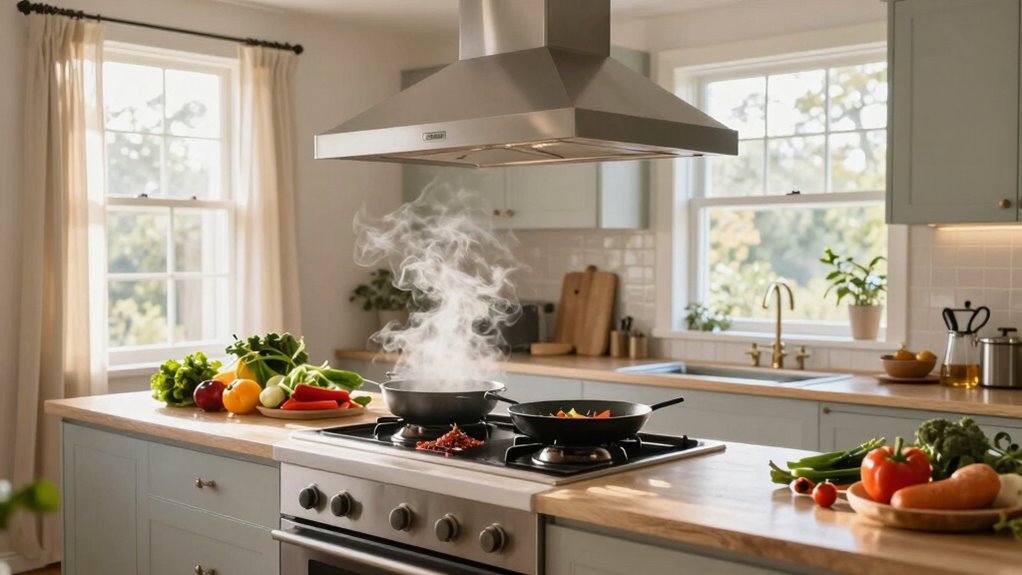
You can enhance ventilation efficiency by choosing the right ventilation system for your kitchen, such as a range hood or exhaust fan. These devices improve airflow by actively pulling out hot air, steam, and smells. When you turn on your range hood, it creates a steady flow of fresh air, ensuring that heat doesn’t accumulate and odors don’t spread throughout your home. The placement and size of the vent are also important — a well-positioned vent will maximize airflow and keep your kitchen cool and fresh during busy cooking sessions.
Another key aspect is understanding how kitchen airflow works. Good airflow isn’t just about having a vent; it’s about creating a consistent flow of air across your cooking area. Opening windows or adding a ceiling fan can help promote cross-ventilation, which complements your mechanical systems. This continuous movement of air makes sure that heat and humidity are expelled efficiently, leaving the space more comfortable to work in. Proper ventilation efficiency ensures that your kitchen remains a safe and pleasant environment for cooking.
In the end, improving air circulation isn’t complicated, but it makes a big difference in your cooking comfort. When your kitchen has good ventilation efficiency, heat and odors are managed effectively, and your space remains fresh and inviting. It’s about creating a balance—ensuring your ventilation system is properly installed, maintained, and complemented by natural airflow. Regular maintenance and understanding airflow optimization can help you achieve this balance more easily. Doing so guarantees you enjoy a more pleasant, safe, and efficient cooking environment every time you step into the kitchen.

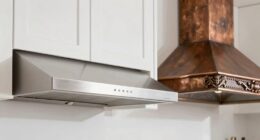
COMFEE' Range Hood 30 Inch Under Cabinet 200 CFM Ducted/Ductless
Improving Kitchen Air Quality High-quality Comfee range hood with 2-speed exhaust fan provides strong air suction to remove…
As an affiliate, we earn on qualifying purchases.
As an affiliate, we earn on qualifying purchases.
Frequently Asked Questions
How Does Air Circulation Affect Kitchen Humidity Levels?
Better air circulation helps control your kitchen humidity levels by promoting air quality and temperature regulation. When air moves efficiently, it reduces excess moisture from cooking, preventing humidity buildup. This keeps the air dry and comfortable, making your kitchen a more pleasant space. Good airflow also disperses heat and odors, ensuring a balanced environment. Overall, improved circulation supports a healthier, more comfortable cooking area by managing humidity effectively.
Can Poor Air Flow Cause Food Odors to Linger?
Imagine lingering steam and spices, clinging stubbornly to your kitchen air. Poor air flow traps food odors, making it hard to enjoy your space. Ventilation systems play an essential role in odor dispersal, whisking away unwanted smells and revitalizing the atmosphere. Without proper ventilation, those aromas settle deep into corners, lingering longer and dulling your cooking experience. Good air circulation ensures your kitchen stays crisp, inviting, and free of stubborn odors.
What Is the Ideal Airflow Rate for Cooking Areas?
The ideal airflow rate for cooking areas is around 100 cubic feet per minute (CFM) for range hoods, ensuring proper ventilation. Ventilation systems should be capable of exchanging indoor air efficiently to maintain good air quality. You want enough airflow to remove cooking odors, smoke, and excess heat without creating drafts. Regularly check and adjust your ventilation system to keep the air fresh, comfortable, and safe during cooking.
How Do Ceiling Fans Influence Cooking Comfort?
Ceiling fans substantially boost cooking comfort by providing consistent airflow, especially when placed strategically—ideally centered above the kitchen. You can adjust fan speed control to suit the heat level, ensuring a gentle breeze that cools you without disturbing cooking. Proper ceiling fan placement and adjustable speed control help maintain ideal air circulation, reduce heat buildup, and create a more comfortable environment while you cook.
Does Air Circulation Impact the Energy Efficiency of Kitchen Appliances?
You’ll find that good air circulation boosts your kitchen’s energy efficiency by reducing appliance strain. Studies show that proper ventilation systems can cut energy costs by up to 30%. When you enhance air filtration and ventilation, appliances like range hoods and ovens work more efficiently, using less energy. This not only saves you money but also improves overall cooking comfort by maintaining a cooler, more breathable environment.
COMFEE' Range Hood 30 Inch Under Cabinet 200 CFM Ducted/Ductless
Improving Kitchen Air Quality High-quality Comfee range hood with 2-speed exhaust fan provides strong air suction to remove…
As an affiliate, we earn on qualifying purchases.
As an affiliate, we earn on qualifying purchases.
Conclusion
Improving air circulation gently enhances your cooking experience, making it feel more effortless and inviting. When the air moves smoothly, it creates a subtle harmony that keeps your kitchen comfortable and welcoming. Think of it as a quiet partner working behind the scenes, ensuring every moment you spend cooking is a little more pleasant. Embrace these subtle changes, and you’ll find your culinary time becomes even more enjoyable—where comfort quietly becomes a natural part of your kitchen’s charm.
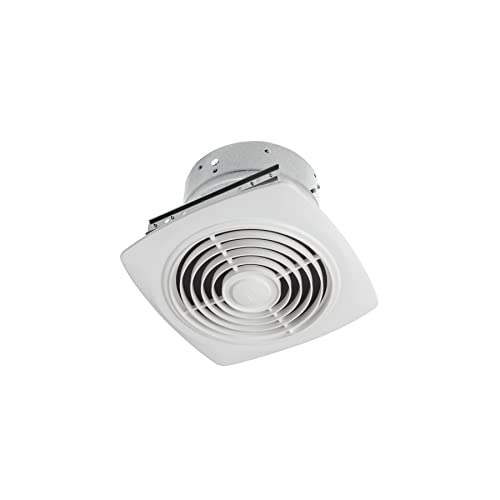
Broan-NuTone 505 Exhaust Fan, White Vertical Discharge Ceiling Ventilation Fan, 8.5 Sones, 200 CFM, 8"
VERSATILE FAN: Exhaust fan helps eliminate , tobacco smoke, and cooking odors. The galvanized steel house installs easily…
As an affiliate, we earn on qualifying purchases.
As an affiliate, we earn on qualifying purchases.

Air Purifiers for Home with High Efficiency Filter Up to 1076 Ft² for Pet Hair, Odors, Pollen, Smoke, Compact Air Cleaner with 3 Speeds, Timer, Aroma Quiet 360°Intake Filter, White
Effortless Operation: Simplified control panel with intuitive design makes it easy to operate. No complicated setup—just one tap,…
As an affiliate, we earn on qualifying purchases.
As an affiliate, we earn on qualifying purchases.