TL;DR

Get kitchen gear delivered free with Prime
- Fast, free delivery on millions of items
- Prime Video, Amazon Music and more included
- Member-only deals all year
Good Housekeeping’s Home Care & Cleaning Lab recommends unplugging a toaster or toaster oven and letting it cool completely before cleaning. Remove crumbs, wash removable parts separately, and keep cleaners and tools away from heating elements; let a toaster oven dry completely before reconnecting it.
Good Housekeeping’s Home Care & Cleaning Lab has outlined a safe routine for cleaning toasters and toaster ovens: unplug the appliance, let it cool completely, remove crumbs and clean removable parts, while keeping moisture and sharp tools away from heating elements. The guidance matters because both appliances can collect food debris and grease, but they contain electrical and heating components that can be damaged by careless cleaning.
For a standard toaster, the report recommends holding the unplugged appliance over a trash can, sliding out its crumb tray and emptying it, then gently shaking the toaster to dislodge loose pieces. Turn it upside down and shake again to release larger crumbs that remain inside. A small pastry brush can help remove debris still caught in the slots or crevices. The report also lists a small spatula as an option, but cautions against using sharp tools that could damage the appliance.
Clean the tray with a damp cloth or sponge. If it is removable and suitable for washing, it can instead be cleaned in warm, sudsy water, rinsed and dried before being put back. For the exterior, the report advises applying all-purpose cleaner to a damp cloth or sponge rather than spraying directly into the appliance. Wipe the body, knobs, lever and areas around the slots, then go over the surface with a damp cloth and buff it dry. Stainless-steel surfaces can be polished with a cleaner intended for appliances.
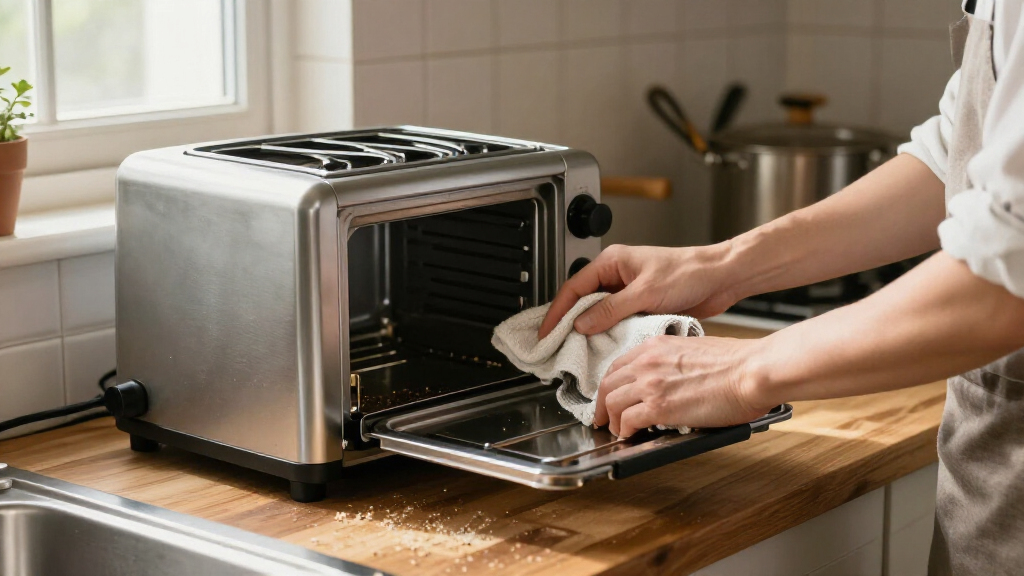
A toaster oven needs additional attention because it has a larger cooking interior and removable pieces that may collect grease and food residue. After unplugging it, shake loose crumbs into the trash. Wash racks, pans and the crumb tray in warm, soapy water, using a non-abrasive sponge on stuck-on residue; rinse and allow the parts to air-dry. To clean the interior, put all-purpose cleaner on a sponge and wipe the surfaces, taking care to avoid the heating elements. The report suggests using glass cleaner on glass doors and an appliance-safe stainless-steel product on stainless-steel exteriors.
Before reconnecting a toaster oven, allow it and its cleaned parts to dry completely. Good Housekeeping specifies at least five minutes for the appliance to dry before it is plugged back in. The report does not give a universal schedule for cleaning: the amount of residue and how often the appliance is used will affect when it needs attention.
Safer Cleaning, Less Built-Up Residue
The practical benefit of the guidance is that it separates cleaning steps by appliance and part, instead of treating a toaster as an ordinary countertop surface. Emptying the crumb tray and shaking out loose debris addresses the food particles that accumulate inside, while wiping the exterior tackles fingerprints and grease without putting liquid into slots or near heating components.
For toaster ovens, cleaning removable racks and pans separately can help with residue from foods such as pizza, while a non-abrasive sponge reduces the risk of scratching those parts. The report’s repeated cautions—to disconnect power, let the appliance cool, avoid the heating elements and wait for it to dry—are safety and care precautions. They are not a claim that the steps eliminate every risk or apply to every model. Readers should also check their appliance’s manual for model-specific instructions.
Products Worth Considering

Breville Bambino Espresso Machine, Brushed Stainless Steel (BES450BSS)

Ninja French Door Premier 10-in-1 Air Fry Oven, 20.3 Qt, Stainless Steel (FO101)
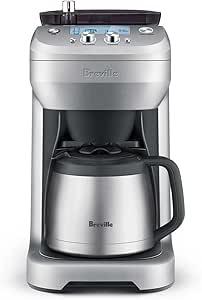
Breville Grind Control BDC650BSS Thermal Carafe Coffee Maker – Brushed Stainless Steel
As an affiliate, we earn on qualifying purchases.
Why Toasters Need Different Care
The Good Housekeeping report describes crumbs and buttery fingerprints as common signs of a toaster that has been overlooked during kitchen cleaning. A basic pop-up toaster has slots and a crumb tray, while a toaster oven has an interior, a door and removable cooking accessories. Those differences explain why the report recommends a brush and exterior wipe-down for one, but washing racks and pans and cleaning around—not over—the heating elements for the other.
The report draws on advice from cleaning professionals at the Good Housekeeping Institute Home Care & Cleaning Lab. It names examples of all-purpose, glass and stainless-steel cleaners, but the cleaning sequence does not depend on those specific brands. The source material does not provide product testing results or claim that a particular cleaner is required.
“Always unplug the toaster or toaster oven before cleaning it.”
— Good Housekeeping report, citing its Home Care & Cleaning Lab guidance
Model Instructions Still Matter
The supplied report does not specify whether every cleaner or washing method is suitable for every toaster model. It does not provide manufacturer-specific directions, a recommended cleaning frequency, or guidance for appliances with unusual coatings or parts. Its examples of branded cleaners are presented as options, not as required products. The safest method for a particular appliance may depend on its manual, especially for removable pieces and permitted cleaning agents.
The report also gives no separate guidance for a toaster that is damaged, malfunctioning or heavily soiled. Its steps cover routine crumb and grease removal; they should not be read as repair instructions. If an appliance’s manual warns against a method, or its parts cannot be removed as described, that model’s instructions take precedence.
Check the Manual Before Cleaning
The immediate next step for readers is to identify their appliance type and review its manual for care instructions before cleaning. Once the toaster or toaster oven is unplugged and fully cool, the report’s sequence is to remove loose crumbs, clean removable parts as directed, wipe surfaces without wetting heating elements, and let everything dry before reconnecting the appliance. No follow-up announcement or new cleaning standard is included in the supplied source.
Key Questions
Should I unplug a toaster before cleaning it?
Yes. Good Housekeeping’s guidance says to unplug the toaster or toaster oven and let it cool completely before cleaning.
Can I wash a toaster’s crumb tray?
If the tray is removable and suitable for washing, the report says it can be cleaned in warm, sudsy water, then rinsed and dried before reinsertion. Otherwise, wipe it with a damp cloth or sponge and follow the appliance manual.
How do I clean inside a toaster oven?
After unplugging it and removing loose crumbs, use a sponge with all-purpose cleaner to wipe the interior, taking care to avoid the heating elements. Wash removable racks, pans and the crumb tray separately with warm, soapy water.
When can I plug a toaster oven back in?
The report says to let the toaster oven dry completely for at least five minutes before plugging it back in. Follow the manual if it gives a longer drying time or different instructions.
Source: goodhousekeeping.com