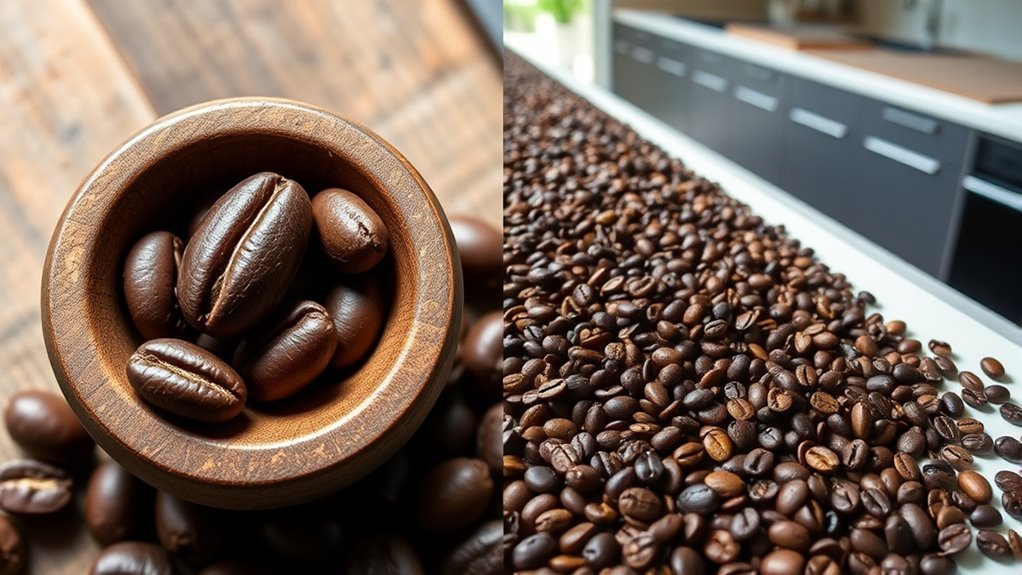

Single origin coffee is sourced from a specific location, showcasing unique flavors tied to its region’s climate and soil. Each cup tells a story about the land and farmers. In contrast, blend coffee combines beans from various origins to create a balanced, consistent flavor that appeals to broader tastes. While single origin offers distinct, rich experiences, blends focus on harmony and accessibility. Want to know more about their brewing techniques and personal merits?
Key Takeaways
- Single origin coffee comes from a specific location, highlighting unique flavors and stories tied to that region and its farmers.
- Blend coffee is a mix of beans from various origins, designed for a balanced and consistent flavor profile.
- Brewing methods for single origin coffee, like pour-over, enhance its distinct characteristics, while blends are versatile for different brewing techniques.
- Single origin offers a deeper connection to the land and farmer’s craft, whereas blends cater to broader taste preferences and easy drinking.
- Understanding the differences between single origin and blends enriches the overall coffee experience and appreciation for craftsmanship.
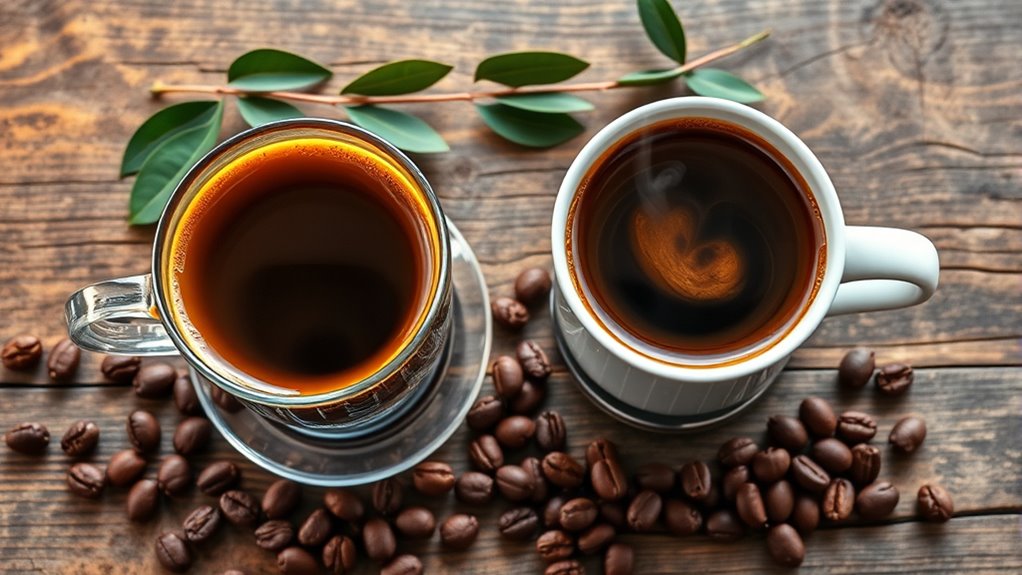
When you’re sipping your morning coffee, have you ever wondered about the origins of your brew? The coffee world is rich with stories, and understanding the difference between single origin and blend coffee can enhance your appreciation for that warm cup in your hands. Single origin coffee comes from one specific location, whether it’s a particular farm, region, or even a single estate. This means you’re tasting a unique profile that reflects the climate, soil, and even the farmer’s techniques. Each sip tells a story, offering insights into the farmer’s dedication to their craft and the land they cultivate. These farmer stories add depth to your experience, connecting you to the people behind the beans.
On the other hand, blend coffee is a mixture of beans from different origins. Roasters create blends to achieve a balanced flavor profile that appeals to a wider audience. This process allows for creativity in brewing techniques, as roasters can combine various beans to highlight specific traits or create a consistent flavor experience. With blends, you’re likely to enjoy a more uniform taste, but you might miss out on the individuality that single origin offers. Both types have their merits, and your choice depends on what you’re looking for in your coffee experience.
If you’re curious about the brewing techniques involved in each type, you’ll find distinct approaches. Single origin coffee often benefits from methods that emphasize its unique characteristics, such as pour-over or French press. These techniques allow you to savor the coffee’s nuances, focusing on its acidity, sweetness, and aroma. In contrast, blends are typically versatile, lending themselves well to espresso machines or cold brews. The goal is to create a harmonious and pleasing cup that satisfies a broad range of palates. Additionally, both single origin and blend coffee can be enhanced by energy-efficient cloud servers that allow roasters to analyze data on flavor profiles and customer preferences.
Ultimately, choosing between single origin and blend coffee is a personal journey. If you value the stories and distinct flavors of a specific region, single origin is your best bet. However, if you enjoy the comfort of a balanced taste that’s easy to drink, blends might be more to your liking. Whichever you choose, understanding these differences enhances your appreciation for the craft of coffee making, enriching every sip you take. So, the next time you pour that cup, think about the journey your coffee took to get there.

Bones Coffee Company Ethiopia Single-Origin, Citrus, Floral and Berries Notes, Whole Coffee Beans, Low Acid Medium Roast Arabica Beans Flavored Coffee, 12 oz Whole Bean
- Origin: Ethiopia Huila region
- Roasting Style: Artisan roasted in small batches
- Packaging: Resealable for freshness
As an affiliate, we earn on qualifying purchases.
As an affiliate, we earn on qualifying purchases.
Frequently Asked Questions
Can Single Origin Coffee Be More Expensive Than Blends?
Yes, single origin coffee can be more expensive than blends. The price premiums often come from the sourcing complexity involved in finding high-quality beans from specific regions. These beans are usually harvested in limited quantities, which drives up their cost. Additionally, the meticulous processes involved in growing and processing single origin coffee contribute to the higher price. If you’re after unique flavors and distinct characteristics, the investment can be worth it.
How Does the Roasting Process Differ for Single Origin and Blends?
The roasting process for single origin and blends differs primarily in roasting temperature and flavor development. When you roast single origin beans, you often use a lower temperature to highlight their unique flavors. In contrast, blends might require higher temperatures to achieve a balanced flavor profile. This allows the distinct characteristics of each bean to shine through. You’ll notice that single origins can exhibit more nuanced flavors, while blends tend to be more consistent.
Are There Health Benefits to Choosing Single Origin Coffee?
Yes, there are health benefits to choosing single origin coffee. These coffees often have higher antioxidant levels due to their specific growing conditions and processing methods. By selecting single origin, you might enjoy a richer flavor profile while reaping the benefits of those antioxidants, which can help combat oxidative stress and support overall health. So, if you’re looking for both taste and health perks, single origin might be the way to go.
Which Brewing Method Is Best for Single Origin Coffee?
If you want to savor the unique flavors of single origin coffee, pour over brewing’s your best bet. Picture a delicate stream of water cascading over freshly ground beans, releasing their rich aromas. This method highlights the coffee’s intricate notes beautifully. Alternatively, the French press offers a robust, full-bodied experience, letting the oils and flavors mingle. Each sip reveals the distinct character of your single origin coffee, making your mornings a delightful adventure.
Can I Find Organic Options for Both Single Origin and Blend Coffees?
Yes, you can definitely find organic options for both single origin and blend coffees. Many roasters prioritize organic certification, ensuring that the coffee is grown without synthetic pesticides or fertilizers. Look for brands that emphasize sustainable farming practices, as they often source their beans from organic farms. By choosing organic coffee, you’re not only enjoying a better brew but also supporting environmentally friendly methods that benefit both farmers and the planet.

Cameron's Coffee Roasted Whole Bean Coffee, Breakfast Blend, 32 Ounce
- Product Size: 32-ounce bag of coffee
- Handcrafted Quality: Small-batch roasted and sustainable
- Flavor Profile: Rich, mild, and flavorful
As an affiliate, we earn on qualifying purchases.
As an affiliate, we earn on qualifying purchases.
Conclusion
When it comes to choosing between single origin and blend coffee, it’s all about your taste journey. Single origin offers a unique passport to a specific region’s flavors, while blends provide a harmonious symphony of beans from various locales. Each sip tells a story, inviting you to explore and savor. So, whether you’re chasing the exotic or embracing the familiar, remember that both paths lead to delightful experiences. Your coffee adventure awaits—sip wisely!

Bodum 34oz Pour Over Coffee Maker, High-Heat Borosilicate Glass with Reusable Stainless Steel Filter and Cork Grip – Made in Portugal
- Capacity: 34oz pour over coffee maker
- Brewing Method: Manual pour over for fresh coffee
- Filter Type: Reusable stainless steel mesh filter
As an affiliate, we earn on qualifying purchases.
As an affiliate, we earn on qualifying purchases.

Veken French Press Coffee Maker, No Plastic Touching Cafe,34oz 1 L Cafetera
- Material: 304 stainless steel and food-grade silicone
- No Plastic Contact: Plastic-free brewing surfaces
- Glass Carafe: High borosilicate, thermal shock resistant
As an affiliate, we earn on qualifying purchases.
As an affiliate, we earn on qualifying purchases.