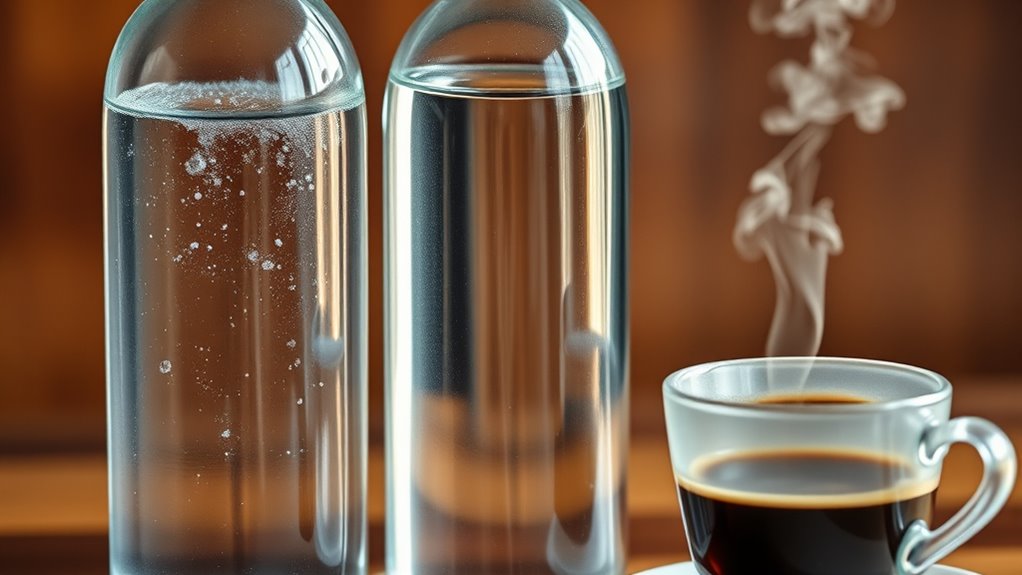

The best water for coffee gives your brew a consistent mineral profile without making preparation complicated. My best overall pick is Third Wave Water Classic Profile, a straightforward choice for brewers who want a dedicated coffee-water mix; COFFEE WATER Mineral Packs for 125 Gallons stand out for larger batches, while Third Wave Water Low Acid suits people seeking a profile tailored to low-acid brewing. The main tradeoffs are roast-specific flavor profiles versus a more flexible everyday mix, and convenient small portions versus fewer replenishment purchases. Packet yields and intended roast styles also vary, so the most suitable option depends on how much coffee you make and what you brew. Read on for the full comparison and a guide to choosing the right minerals for your routine.

Get kitchen gear delivered free with Prime
- Fast, free delivery on millions of items
- Prime Video, Amazon Music and more included
- Member-only deals all year
Complete the kit


Key Takeaways
- Classic Profile earns the lead as the most straightforward everyday pick, while the light-, medium-, and dark-roast profiles are more targeted choices.
- 25-gallon and 125-gallon formats suit different routines: the smaller batch requires less commitment, while the larger supply reduces how often frequent brewers need to restock.
- Roast-specific labels signal different intended uses; choose by the coffee you brew most, rather than assuming a single profile will suit every bean.
- Third Wave Water Low Acid offers a distinct option for shoppers seeking a low-acid-oriented profile, but it is less neutral as an all-purpose choice.
- Packet count alone does not tell the whole story: compare the stated yield per packet and the water volume each serving is meant to prepare.
| Third Wave Water Low Acid Coffee Profile – 12 Count 1-Gallon Sticks |  | Best for a Gentler-Tasting Cup | Quantity: 12 sticks | Water yield: 1 gallon per stick | Profile: Low-acid coffee profile | VIEW ON AMAZON | See Our Full Breakdown |
| Third Wave Water Medium Roast Mineral Enhancer, 12 Single-Gallon Sticks |  | Best for Medium-Roast Balance | Quantity: 12 single-gallon sticks | Total stated yield: 12 gallons | Minerals: Magnesium and calcium | VIEW ON AMAZON | See Our Full Breakdown |
| Perfect Coffee Water Minerals for Brewing Coffee, 10 Stick Packets |  | Best for Manual and Filter Brewing | Quantity: 10 stick packets | Water yield: 1 gallon (4 liters) per packet | Recommended methods: Manual and filter brewing | VIEW ON AMAZON | See Our Full Breakdown |
| COFFEE WATER Mineral Packs for Brewing Coffee (Makes 25 Gallons) |  | Best for One-Gallon Batches | Total yield: 25 gallons | Packet sets: 25 | Dosage: One packet set per gallon | VIEW ON AMAZON | See Our Full Breakdown |
| Coffee Water Mineral Packs, 25 Sets (Makes 125 Gallons) |  | Best for High-Volume Water Prep | Total yield: 125 gallons | Packet sets: 25 | Dosage: One packet set per 5 gallons | VIEW ON AMAZON | See Our Full Breakdown |
| Third Wave Water Classic Profile Mineral Packets for Light Roast Coffee, 12 Gallons |  | Best for Light Roast Clarity | Profile: Classic | Designed for: Light-roast coffee | Quantity: 12 single-gallon sticks | VIEW ON AMAZON | See Our Full Breakdown |
| Third Wave Water Dark Roast Profile Mineral Packets, 12-Pack |  | Best for Dark Roast Balance | Coffee profile: Dark roast | Pack size: 12-pack | Purpose: Lower acidity, highlight flavor, and help limit scale buildup | VIEW ON AMAZON | See Our Full Breakdown |
| water for coffee | Quantity | Compatibility |
|---|---|---|
| Third Wave Water Low Acid Coff | 12 sticks | — |
| Third Wave Water Medium Roast | 12 single-gallon sticks | All types of coffee makers |
| Perfect Coffee Water Minerals | 10 stick packets | — |
| COFFEE WATER Mineral Packs for | — | Pour-over, coffee makers, and espresso |
| Coffee Water Mineral Packs | — | Pour-over, coffee makers, and espresso |
| Third Wave Water Classic Profi | 12 single-gallon sticks | Keurig, percolator, moka pot, French press, drip coffee maker, thermal coffee maker |
| Third Wave Water Dark Roast Pr | — | — |
More Details on Our Top Picks
Third Wave Water Low Acid Coffee Profile – 12 Count 1-Gallon Sticks
This profile is for drinkers seeking a smoother, less sharp cup, rather than a general-purpose mineral recipe. Each pre-measured stick treats one gallon, so I can prepare water for a drip machine, a K-Cup brewer, or manual brewing without changing the dose by coffee format. Compared with Third Wave Water Medium Roast Mineral Enhancer, its main distinction is the low-acid positioning; the Medium Roast option emphasizes magnesium, calcium, sweetness, and body instead. That makes this a more targeted pick for people who dislike bright or sharp-tasting coffee, though it does not promise a medical benefit or suit every palate. The tradeoff is an added prep step and a profile that may shift the taste away from what a particular bean or roast is meant to show. Choose it for a gentler flavor direction, not if you want neutral water or precise control over a coffee’s original profile.
Pros:- Pre-measured sticks simplify dosing for one gallon of water.
- Can be used with K-Cup brewers, beans, and ground coffee.
- Offers a low-acid flavor profile for those who prefer less sharp-tasting coffee.
Cons:- Requires dissolving a stick before brewing, adding a preparation step.
- The altered profile may not suit every roast or coffee preference.
- The supplied product details do not specify the mineral blend or a measured acidity change.
Best for: Coffee drinkers who find their usual brew too sharp and want a pre-measured water treatment compatible with different brewing methods.
Not ideal for: People who want to preserve a coffee’s original taste profile, avoid extra preparation, or need a product making a verified medical claim about reflux.
- Quantity:12 sticks
- Water yield:1 gallon per stick
- Profile:Low-acid coffee profile
- Compatible brewing:K-Cup brewers, beans, and ground coffee
- Format:Pre-measured sticks
- Total stated yield:12 gallons
Our verdict“Choose this if you want a convenient, gentler-tasting water profile; skip it if you prefer your coffee’s unmodified flavor.”
Third Wave Water Medium Roast Mineral Enhancer, 12 Single-Gallon Sticks
For medium-roast brewing, this blend centers its recipe on magnesium and calcium: magnesium is intended to add sweetness, while calcium contributes body. Each stick makes a gallon, and the stated compatibility with all types of coffee makers makes the dosing approach straightforward across a home setup. Compared with the Third Wave Water Low Acid Coffee Profile, this is less specifically aimed at a gentler-tasting cup and more focused on balancing flavor and texture. It also gives more detail about its mineral components than the Perfect Coffee Water Minerals listing does. The limitation is that a medium-roast-oriented blend is not automatically the right match for every bean or brewing goal. It is also not recommended for people with magnesium sulfate sensitivities. I would pick it for repeatable, medium-roast brewing, but choose a different profile if sensitivity or a distinct low-acid aim guides the purchase.
Pros:- One stick prepares a gallon, with 12 sticks supplied.
- Magnesium and calcium are included to support sweetness and balanced body.
- Listed as compatible with all types of coffee makers.
- Made in the USA.
Cons:- Not recommended for people with magnesium sulfate sensitivities.
- Its medium-roast focus may be a poor fit for drinkers seeking a different flavor profile.
Best for: Home brewers who regularly make medium-roast coffee and want a measured mineral blend for several types of coffee makers.
Not ideal for: People with magnesium sulfate sensitivities or coffee drinkers who want a profile specifically positioned for low-acid flavor.
- Quantity:12 single-gallon sticks
- Total stated yield:12 gallons
- Minerals:Magnesium and calcium
- Profile:Medium roast
- Compatibility:All types of coffee makers
- Origin:Made in the USA
- Sensitivity guidance:Not recommended for people with magnesium sulfate sensitivities
Our verdict“Pick this for a straightforward mineral recipe aimed at medium roasts, provided magnesium sulfate is suitable for you.”
Perfect Coffee Water Minerals for Brewing Coffee, 10 Stick Packets
This packet set is most clearly aimed at manual and filter coffee, where a brewer can prepare treated water separately and use it for a pour-over or similar method. Each stick treats one gallon, and the product is described as making balanced, clear-tasting water with a smooth body. The listing also cites its use in the 2022 and 2023 World AeroPress Championship winning recipe, a notable brewing reference rather than a guarantee that every coffee will taste the same. Compared with COFFEE WATER Mineral Packs for Brewing Coffee, which explicitly lists espresso compatibility and an SCA water-standard target, this one gives a narrower recommended-use case. That narrower guidance helps manual brewers but leaves less certainty for machine owners: check with the espresso machine manufacturer before use. With 10 packets rather than 12, it also yields fewer gallons than the Third Wave Water stick options.
Pros:- One packet treats one gallon of water.
- Designed for balanced, clear-tasting water with a smooth body.
- Manual and filter brewing methods are specifically recommended.
- The product listing cites use in winning World AeroPress Championship recipes in 2022 and 2023.
Cons:- Espresso machine compatibility should be checked with the manufacturer.
- Ten packets provide less total water than the 12-stick Third Wave Water options.
- The supplied details do not identify the specific mineral ingredients.
Best for: Pour-over, AeroPress, and other manual or filter brewers who want single-gallon mineral packets and a clearly stated brewing focus.
Not ideal for: Espresso-machine owners who have not checked manufacturer guidance, or households seeking a larger packet supply.
- Quantity:10 stick packets
- Water yield:1 gallon (4 liters) per packet
- Recommended methods:Manual and filter brewing
- Origin:Sourced and packaged in the USA
- Stated water profile:Balanced, clear-tasting water with a smooth body
- Espresso guidance:Check with the machine manufacturer before use
- Championship reference:Listed as used in the 2022 and 2023 World AeroPress Championship winning recipe
Our verdict“Choose these packets for manual or filter brewing, and look to a more explicitly machine-oriented option if espresso is your main method.”
COFFEE WATER Mineral Packs for Brewing Coffee (Makes 25 Gallons)
This is the more flexible choice when I want to treat water one gallon at a time: each packet set is dosed into a gallon, for 25 gallons total. It is designed for reverse-osmosis or distilled water and lists pour-over, coffee makers, and espresso among its compatible methods. The ingredient list—magnesium sulfate, calcium citrate, sodium bicarbonate, and sodium chloride—also makes the formulation more transparent than the Perfect Coffee Water Minerals listing, which does not name its minerals in the supplied details. Its stated aim of meeting Specialty Coffee Association Water for Coffee standards gives buyers a defined formulation reference. The tradeoff is repetitive dosing: every gallon needs its own packet set. Compared with the companion Coffee Water Mineral Packs (Makes 125 Gallons), this option offers smaller batches and simpler one-gallon measurement, but far less total yield.
Pros:- Designed for reverse-osmosis or distilled water.
- One packet set treats one gallon for easy small-batch dosing.
- Lists pour-over, coffee makers, and espresso as compatible methods.
- Names four ingredients and states an SCA water-standard target.
Cons:- Requires a separate packet set for every gallon treated.
- Provides substantially less total yield than the 125-gallon companion pack.
- The listed mineral blend may not suit buyers seeking a profile tailored to a specific roast.
Best for: Brewers using reverse-osmosis or distilled water who want measured one-gallon batches for pour-over, drip, or espresso.
Not ideal for: High-volume households or cafés that would rather dose a larger batch at once and minimize repeated packet handling.
- Total yield:25 gallons
- Packet sets:25
- Dosage:One packet set per gallon
- Water type:Reverse-osmosis or distilled water
- Ingredients:Magnesium sulfate, calcium citrate, sodium bicarbonate, and sodium chloride
- Compatibility:Pour-over, coffee makers, and espresso
- Stated standard:Formulated to meet Specialty Coffee Association Water for Coffee standards
Our verdict“Choose this 25-gallon pack for small, clearly measured batches; pick its 125-gallon companion if you routinely prepare more water at once.”
Coffee Water Mineral Packs, 25 Sets (Makes 125 Gallons)
When I prepare coffee water in larger batches, this pack stretches 25 packet sets to 125 gallons by dosing each set into five gallons. That makes it a different proposition from the 25-gallon COFFEE WATER Mineral Packs, where one set treats one gallon: this option reduces packet handling for larger water containers, while the smaller pack allows more granular batch sizing. Both are formulated for reverse-osmosis or distilled water, list pour-over, coffee makers, and espresso, and name the same four ingredients. The stated SCA water-standard target offers a shared reference point, not a reason to assume either dose fits every taste or machine setup. The central tradeoff is batch size: five-gallon portions can be inconvenient if I only need a little treated water or want frequent recipe adjustments. Choose this for steady, higher-volume brewing rather than occasional single-gallon preparation.
Pros:- Twenty-five packet sets make up to 125 gallons.
- One set treats five gallons, reducing repeated dosing for larger batches.
- Compatible with reverse-osmosis and distilled water.
- Lists pour-over, coffee makers, and espresso, plus its four ingredients and SCA standards target.
Cons:- Five-gallon dosing can be inconvenient for small households or occasional brewing.
- The larger batch size offers less flexibility for changing water recipes frequently.
- Requires access to a container that can hold and store treated water in larger quantities.
Best for: Frequent home brewers, shared coffee stations, or small offices that use reverse-osmosis or distilled water and can prepare five-gallon batches.
Not ideal for: Occasional brewers who want one-gallon portions, or anyone without a suitable container for mixing and storing larger water batches.
- Total yield:125 gallons
- Packet sets:25
- Dosage:One packet set per 5 gallons
- Water type:Reverse-osmosis or distilled water
- Ingredients:Magnesium sulfate, calcium citrate, sodium bicarbonate, and sodium chloride
- Compatibility:Pour-over, coffee makers, and espresso
- Stated standard:Formulated to meet Specialty Coffee Association Water for Coffee standards
Our verdict“Choose this for frequent brewing and five-gallon prep; select the 25-gallon pack if smaller batches matter more than reduced dosing.”
Third Wave Water Classic Profile Mineral Packets for Light Roast Coffee, 12 Gallons
For buyers who want brewing water tailored to light-roast coffee, this Classic Profile adds magnesium and calcium to each gallon, aiming to support sweetness and body while letting a coffee’s natural acidity show through. That focus makes it a more specific choice than Third Wave Water Dark Roast Profile Mineral Packets, which are formulated to soften dark-roast acidity. The single-gallon sticks are straightforward to portion, and the stated compatibility spans drip machines, French presses, moka pots, and several other brewers.
The tradeoff is that you need to prepare the water rather than use it straight from the tap, and the package yields up to 12 gallons—less than the 25-gallon COFFEE WATER Mineral Packs. Choose this when roast-specific water matters more than maximizing packet yield; skip it if you want one mineral profile for every roast or minimal prep.
Pros:- Adds magnesium and calcium to the brewing water
- Designed to highlight light-roast acidity while supporting sweetness and body
- Compatible with drip, French press, moka pot, and other listed brewing methods
- Single-gallon sticks make portions easy to measure
Cons:- Requires preparation of mineralized water before brewing
- Yields up to 12 gallons, less than the 25-gallon COFFEE WATER Mineral Packs
- Its light-roast focus may be a poor match for dark-roast preferences
Best for: Light-roast drinkers who brew with several methods and want mineral-adjusted water in measured single-gallon batches.
Not ideal for: People who mainly drink dark roasts, want a single profile for varied beans, or prefer not to mix minerals into brewing water.
- Profile:Classic
- Designed for:Light-roast coffee
- Quantity:12 single-gallon sticks
- Yield:Up to 12 gallons
- Minerals:Magnesium and calcium
- Compatibility:Keurig, percolator, moka pot, French press, drip coffee maker, thermal coffee maker
Our verdict“Choose this profile if you mainly brew light roasts and value measured, roast-specific water over a larger all-purpose supply.”
Third Wave Water Dark Roast Profile Mineral Packets, 12-Pack
This profile is the lineup’s most targeted option for drinkers who find dark roasts too sharp: it is designed to lower perceived acidity and bring out dark-roast flavors. Its defining distinction is the stated absence of temporary hardness, which is intended to help limit scale buildup while treating the water. Compared with Third Wave Water Classic Profile Mineral Packets for Light Roast Coffee, this is the better match for darker beans, not a flexible choice for a household that switches often between roast styles.
The product data gives a 12-pack size but does not specify the yield per packet, so buyers have less information for planning than they do with the Classic Profile’s stated 12-gallon yield. It also requires adding minerals to brewing water. Pick it for a consistent dark-roast routine and its stated scale-conscious design; skip it if your coffee preference varies or you need a clearly stated water volume.
Pros:- Designed to lower acidity in dark-roast coffee
- Formulated to highlight dark-roast flavors
- No temporary hardness, with the stated aim of helping limit scale buildup
Cons:- Specifically suited to dark roasts, limiting its fit for lighter coffees
- The supplied product data does not state how many gallons the 12-pack makes
- Requires adding the mineral blend to brewing water
Best for: Dark-roast drinkers who want water formulated to soften acidity and are looking for a mineral profile intended to limit scale buildup.
Not ideal for: Coffee drinkers who regularly alternate between light and dark roasts, or buyers who need a stated gallon yield before choosing.
- Coffee profile:Dark roast
- Pack size:12-pack
- Purpose:Lower acidity, highlight flavor, and help limit scale buildup
- Temporary hardness:None
Our verdict“Choose this if dark roasts are your regular brew and acidity reduction matters more than a versatile profile or a stated gallon yield.”

How We Picked
I compared these seven mineral products on the details that affect a coffee-water routine: stated profile and intended roast, ease of portioning, stated batch yield, and how readily each option fits a regular brewing habit. I gave more weight to clear use cases and usable quantity information than to broad flavor claims, since a packet only helps when its profile and dose match the water volume.
The ranking favors a clear everyday role first, then options with a useful distinction such as a specific roast profile or a larger stated yield. Third Wave Water Classic Profile leads as the most accessible starting point among these choices, while the low-acid and roast-oriented blends serve narrower preferences. The two larger-format COFFEE WATER options rank well for repeated brewing, but quantity alone does not establish that their profile is the best match for every coffee. Product details supplied here do not specify mineral concentrations or complete mixing instructions, so I avoid treating the blends as interchangeable or making unsupported claims about exact taste results.
| water for coffee | Compatibility |
|---|---|
| Third Wave Water Low Acid Coff | — |
| Third Wave Water Medium Roast | All types of coffee makers |
| Perfect Coffee Water Minerals | — |
| COFFEE WATER Mineral Packs for | Pour-over, coffee makers, and espresso |
| Coffee Water Mineral Packs | Pour-over, coffee makers, and espresso |
| Third Wave Water Classic Profi | Keurig, percolator, moka pot, French press, drip coffee maker, thermal coffee maker |
| Third Wave Water Dark Roast Pr | — |
Factors to Consider When Choosing Water For Coffee
A packet’s name and yield are only part of the decision. I’d match the product to your brewing frequency, source water, and the coffees you actually make, then check the package directions before preparing a batch.
Match the Profile to Your Coffee
Roast labels are useful signals, but they do not guarantee that a blend will suit every bean or brewing method. If you rotate between light and dark roasts, a profile dedicated to one roast may feel limiting as your only supply. Start with the style you brew most often, then add a second profile only if you can tell that you want a different result. Avoid choosing solely by the phrase “low acid,” since that describes the product’s intended profile, not a promise that every cup will affect every drinker the same way. A more general profile is usually the simpler first purchase when your coffee selection changes often.
Check Your Starting Water
Mineral packets are not a substitute for checking what is already in your water. Tap water can vary by location, while filtered water may still retain minerals depending on the filter type. Follow the product’s mixing directions and confirm whether it is intended for distilled, purified, or another specified water source before dosing. Adding a packet to water that already has a substantial mineral content can produce a different result than the product’s intended recipe. If your source changes seasonally or between home and work, keep that in mind when comparing cups.
Compare Yield, Not Just Packet Count
Packet counts are easy to compare, but they can hide a meaningful difference in how much prepared water each pack makes. The listed products include single-gallon sticks and packs with stated yields of 25 or 125 gallons, so compare the total yield and serving directions together. A larger batch can be practical for daily brewing, but it may take longer to use if coffee is an occasional habit. Smaller quantities limit commitment while you learn which profile works for you. Never stretch a packet across more water than its directions specify just to make the supply last.
Decide How Much Variety You Need
One profile keeps storage and preparation simple; multiple profiles let you match water to different coffees. That flexibility can help if you regularly switch between roast styles, but it adds another choice to every brewing session. Beginners often get more useful information from using one profile consistently than from changing several variables at once. If you do compare profiles, keep the coffee, dose, and brewing method steady so you can tell what changed. Buy variety for a real brewing habit, not simply because several blends are available.
Build a Repeatable Mixing Routine
Consistent dosing matters because mineral concentration depends on the amount of packet mixed into the stated water volume. Use a measured container rather than estimating a gallon, and store prepared water in a clean, clearly labeled vessel. Check the packet directions for preparation and storage guidance instead of assuming all brands use the same method. If you brew single cups, preparing a measured batch in advance can reduce repeated guesswork. A repeatable routine makes it easier to judge whether a profile suits your coffee.
Pay for Fit, Not a Bigger Supply
A larger-yield pack makes the most sense when you brew often and already know the profile fits your routine. For a new user, a smaller packet supply can be a better learning purchase, even if it means buying again sooner. Specialty profiles are worth choosing when their intended use matches the coffee you regularly drink, not just because the label sounds more tailored. Keep storage space and how quickly you will use the supply in mind. The best value for your kitchen is the pack you can use correctly and consistently.
Frequently Asked Questions
Can I use one mineral profile for both light and dark roasts?
Yes, one profile can keep your routine simple, especially if you brew a mix of roasts and do not want separate water batches. The lineup includes dedicated light-, medium-, and dark-roast options, but the labels indicate intended uses rather than a rule that each coffee requires its own water. Start with the roast you brew most, then compare another profile using the same beans and brewing method if you want to explore. Changing water and coffee at the same time makes it harder to identify what you prefer. Choose a second profile only if the difference matters enough to justify extra preparation.
Should I add these minerals to tap water or distilled water?
Use the water source specified on the product packaging; the listed products may not all give identical preparation instructions. Mineral content in tap water varies, so adding minerals without knowing the intended starting water can make the finished mix inconsistent. Distilled or purified water may be called for by a particular formula, but do not assume that applies to every packet in this roundup. If you are unsure, check the maker’s directions before mixing. Keep the same source water when comparing profiles so the test is more meaningful.
Is a 125-gallon pack a better choice than a 25-gallon pack?
It depends on how often you brew and whether you already know the profile suits your coffee. The larger stated yield fits a frequent routine and means fewer replenishment decisions, while a 25-gallon supply leaves less product on hand if your preferences change. Compare the total yield with the directions for each serving, not just the number of packets. If you are trying mineralized coffee water for the first time, a smaller commitment can help you learn what you like. Frequent brewers who have settled on a profile may prefer planning around a larger supply.
Do roast-specific mineral packs replace the need to adjust my brewing recipe?
No. Water profile is one part of brewing, alongside grind size, coffee dose, temperature, and brew time. A roast-specific pack does not guarantee that a recipe will suit every bean carrying the same roast label. Keep your normal recipe steady when trying a different water profile so you can judge the change more clearly. Make small recipe adjustments only after you have established how the coffee behaves with the prepared water. Follow the packet’s mixing directions separately from your brewing recipe.
Which option makes the most sense for someone new to mineral packets?
Third Wave Water Classic Profile is the clearest starting point in this lineup if you want a general-purpose option rather than choosing among several roast-specific labels. The 12-gallon product formats also limit how much supply you commit to while learning the preparation routine. Read the directions carefully and measure the water volume rather than estimating it. Use one coffee and one brew method for your first comparison, changing only the water. If you already know you want a low-acid-oriented or roast-specific profile, choose that targeted option instead.
Conclusion
For most buyers seeking a clear first choice, I recommend Third Wave Water Classic Profile as the best overall option in this lineup. Best for beginners is also the Classic Profile: its broad everyday role makes it easier to start with one mix before adding variables. For best value by stated yield, frequent brewers should compare the COFFEE WATER 125-gallon pack with the 25-gallon version and choose based on how quickly they will use it; the larger yield is not automatically the better fit for occasional brewing. My best premium-style, targeted pick is the roast-specific Third Wave Water range for buyers who want a profile aligned with the roast they brew most, while Low Acid is the best fit for shoppers seeking that particular profile. Match the pack to your routine and the stated preparation directions, then keep your other brewing variables steady as you decide whether it belongs in your kitchen.