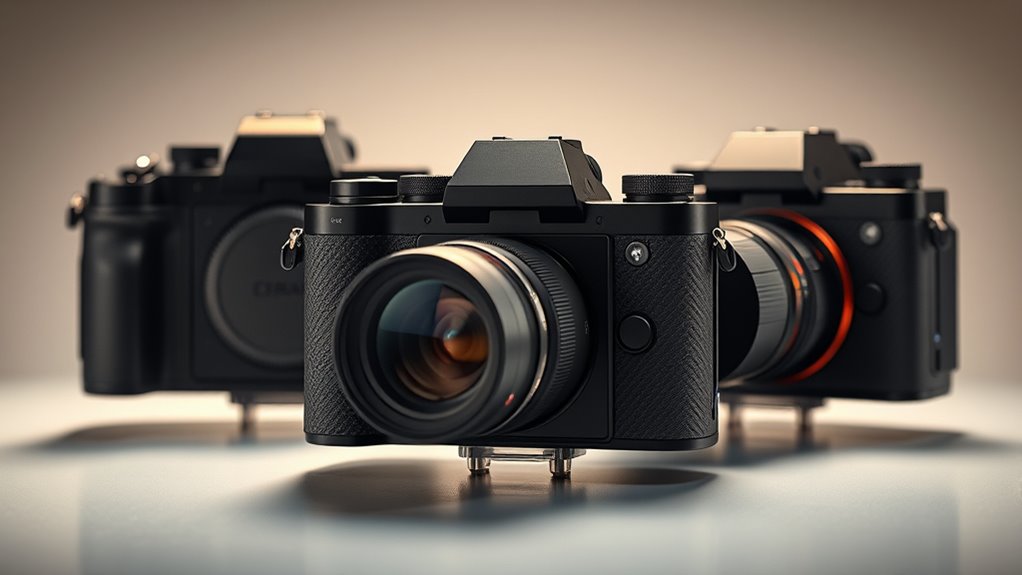

If you’re after the best medium format cameras of 2026 that deliver unmatched image quality and performance, I’d recommend the Fujifilm GFX100RF Black and Silver for their high resolutions, excellent color accuracy, and stylish designs. The Fujifilm GFX100S II offers a lighter, versatile option with advanced autofocus and 4K video. Exploring these options further will help you choose the perfect camera to elevate your photography game. Keep going to discover more details on each model.
Key Takeaways
- The Fujifilm GFX100RF models offer high-resolution sensors, advanced film simulations, and portable designs for superior image quality.
- The Fujifilm GFX100S II provides professional-grade features like AI autofocus, 4K video, and lightweight build for versatile shooting.
- Medium format cameras in 2026 combine large sensors with ergonomic handling to deliver exceptional dynamic range and color fidelity.
- Lens compatibility and intuitive controls enhance usability, ensuring sharp images and seamless operation for demanding professionals.
- Top models balance image excellence with portability, making them ideal for both studio and outdoor high-performance photography.
| Fujifilm GFX100RF Medium Format Camera – Black | Compact Professional | Sensor Resolution: 102-megapixel | Design Type: Rangefinder style | Lens Compatibility: Fixed 35mm lens | VIEW LATEST PRICE | See Our Full Breakdown | |
| Fujifilm GFX100RF Medium Format Camera – Silver | Stylish Versatility | Sensor Resolution: 102-megapixel | Design Type: Rangefinder style | Lens Compatibility: Fixed 35mm lens | VIEW LATEST PRICE | See Our Full Breakdown | |
| Fujifilm GFX100S II Body Mirrorless Medium Format Camera Body | Advanced Ergonomics | Sensor Resolution: 102-megapixel | Design Type: Mirrorless body | Lens Compatibility: Interchangeable GF lens mount | VIEW LATEST PRICE | See Our Full Breakdown |
More Details on Our Top Picks
Fujifilm GFX100RF Medium Format Camera – Black
If you’re looking for a medium format camera that combines professional image quality with portability, the Fujifilm GFX100RF Black is an excellent choice. Its compact, rangefinder-style design makes it easy to handle and carry, perfect for on-the-go shooting. The 102-megapixel sensor delivers stunning detail and clarity, while the 20 Film Simulation modes let me create film-inspired looks effortlessly. The fixed 35mm lens offers outstanding optical quality, and the digital teleconverter adds versatility. The new Aspect Ratio dial provides quick access to different formats, making composition intuitive. Overall, this camera balances power and portability for serious photographers.
- Sensor Resolution:102-megapixel
- Design Type:Rangefinder style
- Lens Compatibility:Fixed 35mm lens
- Image Stabilization:Not specified
- Video Recording:Not specified
- User Interface Features:Aspect Ratio dial
- Additional Feature:Classic rangefinder style design
- Additional Feature:20 Film Simulation modes
- Additional Feature:Digital teleconverter included
Fujifilm GFX100RF Medium Format Camera – Silver
The Fujifilm GFX100RF Medium Format Camera in Silver stands out for photographers who prioritize exceptional image quality in a compact, portable design. Its rangefinder style offers a classic handling experience, making it easy to carry and operate. The 102-megapixel sensor captures incredible detail, while the 20 Film Simulation modes deliver authentic film-inspired looks. The fixed 35mm lens is optically outstanding, with digital teleconverter options for added versatility. A new Aspect Ratio dial allows quick adjustments, enhancing shooting efficiency. Overall, this camera combines high-end image quality with a sleek, lightweight design, making it ideal for both professionals and enthusiasts seeking versatile medium format photography.
- Sensor Resolution:102-megapixel
- Design Type:Rangefinder style
- Lens Compatibility:Fixed 35mm lens
- Image Stabilization:Not specified
- Video Recording:Not specified
- User Interface Features:Aspect Ratio dial
- Additional Feature:Silver finish aesthetic
- Additional Feature:Versatile image styles
- Additional Feature:Suitable for professionals
Fujifilm GFX100S II Body Mirrorless Medium Format Camera Body
Designed for photographers who demand professional image quality in a portable package, the Fujifilm GFX100S II Body delivers impressive performance with its compact, lightweight design and advanced features. Weighing just 883 grams, it’s comparable in size to full-frame cameras, making handheld shooting effortless. Its 102MP CMOS II sensor paired with the X-Processor 5 ensures sharp, detailed images and fast processing. The high-resolution EVF, AI-driven autofocus with face and eye detection, and up to 8 stops of IBIS give you reliability in diverse conditions. Plus, 4K video recording and professional-grade file formats make this body a versatile, powerhouse tool for demanding professionals.
- Sensor Resolution:102-megapixel
- Design Type:Mirrorless body
- Lens Compatibility:Interchangeable GF lens mount
- Image Stabilization:In-body stabilization (up to 8 stops)
- Video Recording:4K/30p with 10-bit in-camera
- User Interface Features:High-resolution EVF and AI autofocus
- Additional Feature:883g lightweight body
- Additional Feature:Advanced CMOS II sensor
- Additional Feature:AI-assisted autofocus system
Factors to Consider When Choosing Medium Format Cameras

When selecting a medium format camera, I consider what I need in image quality, portability, and lens options. It’s also important to evaluate autofocus speed and how well the camera handles video, since these impact my work. Understanding these factors helps me choose a camera that fits my specific shooting style and requirements.
Image Quality Expectations
Choosing a medium format camera ultimately depends on your expectations for image quality, which hinges on several key factors. Larger sensors in these cameras deliver higher resolution and incredible detail, often exceeding 102 MP, making cropping and large prints effortless without sacrificing quality. Sensor size also influences dynamic range and color depth, enabling richer tones and better performance in challenging lighting conditions. Advanced image processing features, like improved noise reduction and superior color accuracy, further elevate image quality. When evaluating your needs, consider the camera’s sensor technology, resolution, dynamic range, and color fidelity. These aspects ensure the camera can meet professional standards or personal expectations for sharpness, tonal richness, and overall image integrity. Ultimately, understanding these factors helps you select a medium format camera that aligns with your photographic ambitions.
Portability and Size
While medium format cameras are known for their exceptional image quality, their size and weight can substantially influence how practical they are for different shooting situations. Larger and heavier models can be challenging to carry and set up quickly, especially for on-the-go photography. Thankfully, some brands have designed compact, lightweight options using ergonomic materials, making handheld shooting more comfortable without sacrificing quality. Smaller, rangefinder-style cameras strike a balance by offering high image quality in a more manageable form factor. When choosing a medium format camera, I recommend considering how its size and weight fit your shooting style and mobility needs. If you shoot often outdoors or travel frequently, a more portable model can make a significant difference in your overall experience.
Lens Compatibility Options
Lens compatibility is a crucial factor to take into account because it directly impacts your creative flexibility and long-term investment in the camera system. Confirming your medium format camera supports lenses from the manufacturer or third-party vendors maximizes versatility and options. Check if the camera has interchangeable lens systems or fixed lenses to match your shooting style. It’s important to verify the mount type, focal lengths, and aperture ranges to ensure they align with your creative needs. Native lenses offer better compatibility and performance, reducing the need for adapters that might cause issues. Additionally, consider the system’s future lens upgrade potential, so your investment remains relevant as your skills and projects evolve. Good lens compatibility guarantees a more seamless and satisfying photographic experience.
Autofocus Performance
Autofocus performance is crucial for capturing sharp images, especially in fast-paced or unpredictable scenes. Modern medium format cameras now feature advanced autofocus systems that leverage AI and subject recognition, such as face and eye detection, to boost accuracy. The number of autofocus points and coverage area also play a significant role, allowing precise focus across the entire frame. Low-light autofocus is another critical factor; cameras rated for performance at specific EV levels rely on sensor sensitivity, lens aperture, and sophisticated algorithms to maintain focus in challenging conditions. Reliable autofocus ensures consistent results, reducing the need for manual adjustments during high-stakes shoots. When choosing a medium format camera, prioritizing autofocus capabilities guarantees sharp, well-focused images even in demanding situations.
Video Capabilities
When evaluating medium format cameras for video, it’s essential to take into account their recording capabilities and how well they support professional workflows. Many models offer 4K recording at 30p or higher, guaranteeing sharp, detailed footage. Support for 10-bit color depth and 4:2:2 sampling allows for more extensive color grading and post-production flexibility. Advanced autofocus with face, eye, and subject detection ensures precise focus during recording, indispensable for professional work. In-body image stabilization (IBIS) helps reduce camera shake, resulting in smoother footage, especially at longer focal lengths. Additionally, compatibility with professional formats like ProRes and Blackmagic RAW provides higher quality, more versatile options for editing and color grading. These features make medium format cameras increasingly capable tools for high-end video production.
Budget Considerations
Choosing a medium format camera involves carefully considering your budget, as these models are typically costly and can quickly add up with accessories and lenses. The initial purchase price can range from several thousand dollars, making it essential to factor in the total cost of ownership, including necessary accessories, lenses, and maintenance. Budget constraints might limit you to more basic models or used equipment, which could impact features and image quality. It’s vital to evaluate whether the superior image quality justifies the higher price compared to full-frame or APS-C systems. Setting a realistic budget helps narrow options, ensuring you select a model that offers the best balance between cost and performance, ultimately making your investment more satisfying and sustainable.
Handling and Ergonomics
Handling and ergonomics play a significant role in selecting the right medium format camera, especially since these models can vary widely in design and usability. I look for cameras with a balanced, natural grip that feels comfortable during extended shoots. Lightweight, around 883 grams, helps me shoot handheld without sacrificing stability. An ergonomic layout with accessible controls and dials, like aspect ratio selectors, allows for quick adjustments. I also consider button placement and viewfinder accessibility, which boost operational efficiency. Whether it’s a rangefinder or mirrorless design, ease of handling directly impacts my shooting experience. A well-designed body supports natural grip and balance, making long sessions less tiring. Good handling ensures I stay focused on capturing stunning images without fumbling with complex controls.
Frequently Asked Questions
How Do Medium Format Cameras Compare to Full-Frame in Low-Light Conditions?
Medium format cameras generally outperform full-frame ones in low-light conditions because they have larger sensors, which gather more light and produce cleaner images with less noise. I find that with their superior sensor size, I can shoot at higher ISO settings without sacrificing image quality. This makes them ideal for low-light photography, especially in challenging environments where capturing detail and clarity matters most.
What Are the Latest Advancements in Medium Format Sensor Technology?
The latest advancements in medium format sensor technology include higher resolution sensors with improved dynamic range and better noise control at higher ISOs. Manufacturers are integrating back-illuminated sensors, which enhance light sensitivity, and incorporating faster readout speeds for real-time processing. These innovations allow me to capture stunning, detailed images even in challenging lighting, making medium format cameras more versatile and powerful than ever before.
Are Medium Format Cameras Suitable for Fast-Paced Photography Like Sports?
Medium format cameras aren’t ideal for fast-paced sports photography because they typically have slower autofocus systems and longer shutter lag compared to smaller formats like full-frame or crop sensors. However, if you’re mainly capturing static scenes or controlled environments, they excel with stunning detail and dynamic range. For sports, I’d recommend a high-end DSLR or mirrorless camera designed specifically for speed and quick autofocus, rather than a medium format.
How Does Battery Life Typically Vary Among Medium Format Camera Models?
Think of battery life in medium format cameras as a river’s flow—some models run steady all day, while others trickle after heavy use. Generally, newer models boast improved stamina, but they still vary. I’ve found that high-end options often last longer, yet frequent shooting or power-intensive features can drain batteries quickly. If you’re planning long shoots, choosing a model with robust battery performance is definitely worth it.
What Are the Maintenance Requirements for High-End Medium Format Cameras?
High-end medium format cameras need regular maintenance to keep them performing at their best. I recommend cleaning the sensor and lens regularly with proper tools, checking and updating firmware, and inspecting the camera body and contacts for dust or corrosion. It’s also wise to have professional servicing periodically to calibrate the system and ensure everything functions smoothly. Proper care helps extend your camera’s lifespan and maintains its image quality.
Conclusion
So, there you have it—three marvels of the medium format world, ready to turn your photos into masterpieces or just really expensive paperweights. Whether you’re drawn to the sleek black or shiny silver, or the versatile GFX100S II, one thing’s clear: these cameras are so good, they might just make your smartphone jealous. But hey, who needs humility when you can have pixel perfection? Happy shooting—may your images be as bold as your camera choices!