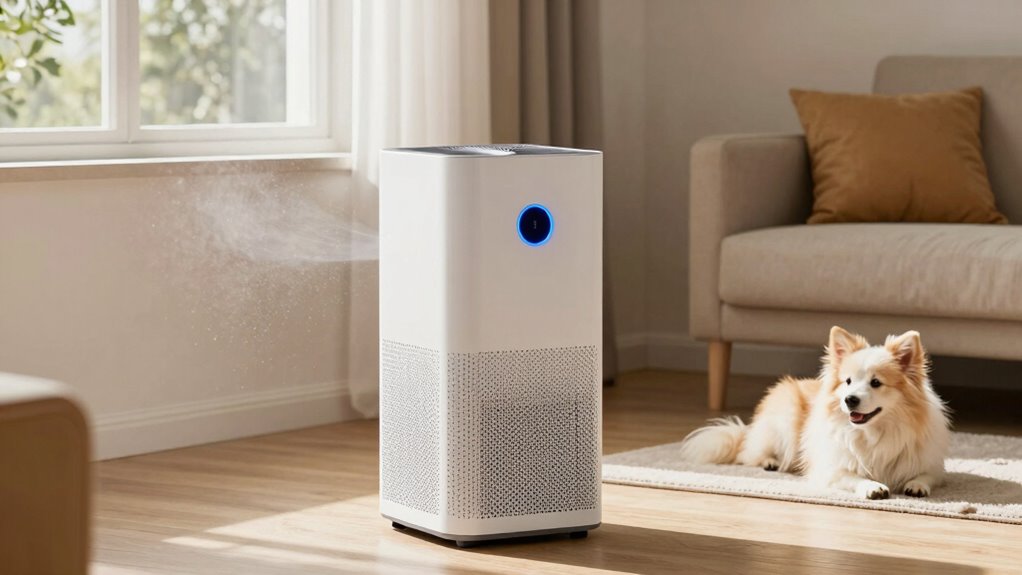

Air purifiers work by continuously pulling in indoor air and filtering out allergens, pet dander, dust, and other pollutants before releasing cleaner air back into your home. HEPA filters trap at least 99.97% of microscopic particles, helping to reduce allergy flare-ups and make breathing easier. Some models include activated carbon filters that absorb odors and VOCs, improving overall air quality. To get the best results, proper maintenance is key, and there’s more to discover about optimizing your air quality.

Get kitchen gear delivered free — and shop member deals
- Fast, free delivery on millions of items
- Access to Prime Big Deal Days deals on October 6–7
- Prime Video, Amazon Music and more included
Key Takeaways
- Air purifiers draw in indoor air and filter out harmful particles, including pet dander, pollen, and dust mites.
- HEPA filters trap at least 99.97% of airborne particles as small as 0.3 microns, reducing allergens effectively.
- Activated carbon filters absorb odors, smoke, and VOCs, neutralizing pet smells and indoor pollutants.
- Regular filter replacement and proper maintenance ensure consistent air purification and optimal performance.
- Improving indoor air quality helps decrease allergy flare-ups and creates a healthier environment for pets and humans.

If you or your pets suffer from allergies, an air purifier can make a noticeable difference in your indoor environment. Modern air purification technology is designed to target and remove common allergens like pet dander, dust mites, pollen, and other airborne particles that can trigger allergy symptoms. When you turn on an air purifier, it continuously pulls in air from your room, filtering out harmful particles before releasing cleaner air back into your space. This constant cycle helps reduce the concentration of allergens floating around, making breathing easier and reducing allergy flare-ups.
Air purifiers reduce allergens like pet dander and pollen, making breathing easier and allergy symptoms less severe.
A vital aspect of effective allergy relief is pet dander removal. Pet dander consists of tiny skin flakes shed by animals, and these particles are often invisible to the naked eye but can cause significant allergic reactions. High-quality air purifiers equipped with HEPA filters excel at trapping these microscopic particles. HEPA filters are capable of capturing at least 99.97% of airborne particles as small as 0.3 microns, which includes pet dander, pollen, and dust mites. When you invest in a purifier with a good HEPA filter, you’re actively reducing the allergen load in your home environment, creating a space where you and your pets can coexist more comfortably.
Air purification technology doesn’t just stop at filtering particles. Many advanced units also incorporate activated carbon filters that adsorb odors, smoke, and volatile organic compounds (VOCs). These features are especially beneficial if you have pets, as they can help neutralize pet smells and other indoor pollutants. Understanding air purification technology can help you choose the most effective device for your needs. Incorporating proper maintenance and regularly replacing filters can further ensure your air purifier continues to operate effectively. Additionally, regular maintenance and understanding how air quality impacts health are crucial for ensuring your purifier continues to perform optimally. Implementing proper filtration techniques can further enhance the overall effectiveness of your air purifier and improve your home’s indoor environment. Recognizing the importance of indoor air quality can lead to healthier living spaces for you and your pets.
As an affiliate, we earn on qualifying purchases.
Frequently Asked Questions
Do Air Purifiers Remove All Types of Pet Dander Effectively?
Air purifiers can markedly reduce pet dander, but they don’t remove all types completely. HEPA filters are effective at capturing most pet dander particles, leading to allergy relief. However, some tiny dander particles might still linger, especially if the purifier isn’t the right size or isn’t used consistently. To maximize allergy relief, combine air purifiers with regular cleaning and pet grooming. This holistic approach helps create a more allergen-free environment.
How Often Should I Replace the Filters in My Air Purifier?
Think of your air purifier’s filters like delicate flowers that need freshening up. Usually, you should replace the filters every 6 to 12 months, depending on usage and air quality. Keep an eye on the filter lifespan indicated by the manufacturer, and don’t wait too long—otherwise, efficiency drops. Regular replacement guarantees your purifier continues to trap allergens and pet dander effectively.
Can Air Purifiers Help With Indoor Mold Problems?
Yes, air purifiers can help with indoor mold problems by capturing mold spores with HEPA filters, reducing their presence in the air. They improve air circulation, which helps prevent mold growth on surfaces by lowering humidity levels and removing airborne spores. Regularly running an air purifier in affected areas can substantially improve indoor air quality, making your home healthier and less prone to mold-related issues.
Are HEPA Filters Safe for Children and Pets?
HEPA filters are safe for children and pets when used correctly, offering reliable protection against allergens and airborne particles. HEPA filter safety is well-established, and they effectively trap dust, pet dander, and mold spores, helping create a healthier environment. For child and pet protection, guarantee the air purifier is appropriately sized and maintained regularly. Avoid tampering with filters, and always follow manufacturer guidelines to keep everyone safe and healthy.
Do Air Purifiers Produce Ozone or Other Harmful Emissions?
Coincidentally, some air purifiers do produce ozone emissions, which can be harmful chemicals. While many models are ozone-free, others, especially those with ionizers or ozone generators, release low levels of ozone that may irritate your lungs or aggravate allergies. It’s crucial to check the specifications to avoid harmful emissions. Opt for certified, ozone-free purifiers to guarantee your home’s air remains safe, especially around children and pets.
air purifier with activated carbon filter
As an affiliate, we earn on qualifying purchases.
As an affiliate, we earn on qualifying purchases.
Conclusion
Now that you know how air purifiers can transform your home, imagine what’s next. With the right purifier, you could finally breathe easier and enjoy your space without allergy or pet worries. But here’s the catch—are you ready to choose the best model that fits your needs? The secret to a truly fresh home might just be within your reach. Don’t wait—your healthier, happier home could be closer than you think.
As an affiliate, we earn on qualifying purchases.
air purifier for pollen and dust
As an affiliate, we earn on qualifying purchases.
As an affiliate, we earn on qualifying purchases.
Fall Picks
fall essentials
As an affiliate, we earn on qualifying purchases.