
To reduce heat buildup in your kitchen before summer, start by upgrading to energy-efficient appliances like induction stoves and microwave ovens. Enhance ventilation by using exhaust fans, range hoods, and opening windows to create cross-breezes. Cook during cooler times of the day and cover pots to trap heat. Keep your airflow systems clean and well-maintained. Organizing your space and managing heat sources can make a big difference—learn more quick tips to keep your kitchen cool.

Get kitchen gear delivered free with Prime
- Fast, free delivery on millions of items
- Prime Video, Amazon Music and more included
- Member-only deals all year
Key Takeaways
- Switch to energy-efficient, smaller appliances like induction cooktops to reduce residual heat.
- Improve ventilation by installing range hoods, using exhaust fans, and creating cross-breezes through open windows.
- Schedule cooking during cooler parts of the day and use cold ingredients to minimize heat release.
- Use fans to increase airflow and maintain clean filters for optimal ventilation system performance.
- Organize the kitchen efficiently to shorten cooking times and limit heat buildup.
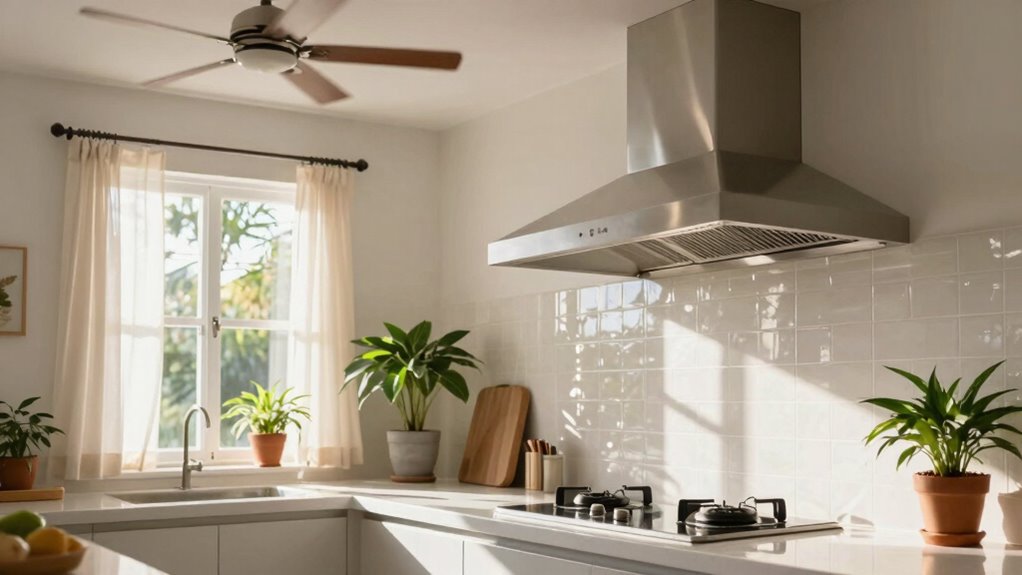
When cooking during hot weather or in a small kitchen, heat buildup can quickly become uncomfortable and even unsafe. The warm air from cooking appliances, combined with limited space, can make your kitchen feel like an oven. To keep things cooler and safer, it’s essential to focus on managing heat effectively. One of the best ways to do this is by optimizing your cooking appliances. Switch to smaller or more energy-efficient appliances that produce less heat, like induction cooktops instead of traditional electric or gas stoves. These appliances heat up quickly but don’t transfer as much residual heat into the room, helping to keep temperatures lower. Also, consider using microwave ovens or slow cookers during the hottest parts of the day, as they generate less ambient heat, reducing the overall temperature in your kitchen.
Optimize your kitchen with energy-efficient appliances like induction cooktops, microwaves, and slow cookers to reduce heat during hot weather.
Equally important is improving your ventilation systems. Good airflow can make a significant difference in heat reduction. If your kitchen has exhaust fans, turn them on before you start cooking. Keep them running throughout the process to vent out heat, steam, and cooking odors. If you don’t have a dedicated range hood, installing one can make a noticeable impact. For kitchens without proper ventilation, opening windows and doors creates a cross-breeze that helps carry away heat and moisture. Using fans—oscillating or box fans—placed near windows or doorways can circulate air more effectively, pulling in cooler outside air and pushing warm indoor air out. Proper ventilation is crucial for maintaining a comfortable kitchen environment, especially during warmer months. Regular maintenance of your ventilation system can also ensure optimal airflow and heat management. Additionally, airflow circulation techniques can further enhance heat dissipation in your space. Incorporating ventilation upgrades can significantly improve your kitchen’s cooling efficiency, especially in older homes. Properly managing energy consumption by choosing appliances wisely can also contribute to reducing heat output and lowering utility costs.
Timing your cooking activities can also help minimize heat buildup. Plan to cook during the cooler parts of the day, like early mornings or late evenings. This way, you’re not adding extra heat when outdoor temperatures are at their peak. Additionally, using cold or room-temperature ingredients instead of hot or warmed items can prevent unnecessary heat release during food prep. Cover pots and pans while cooking to trap heat and moisture, reducing the need for prolonged cooking times and further heat emission. Proper kitchen organization can also streamline cooking, helping you avoid extended periods of heat exposure.
Finally, keep your kitchen well-maintained. Clean filters in your ventilation systems regularly to ensure they work efficiently. Check for any leaks or blockages that could hinder airflow. By combining smarter use of your cooking appliances with effective ventilation, you’ll create a cooler, more comfortable kitchen environment. Being proactive now can save you from the sweltering heat later, making your summer cooking experiences much more pleasant and safe.
energy-efficient induction cooktop
As an affiliate, we earn on qualifying purchases.
As an affiliate, we earn on qualifying purchases.
Frequently Asked Questions
Can Installing Ceiling Fans Help Cool the Kitchen Effectively?
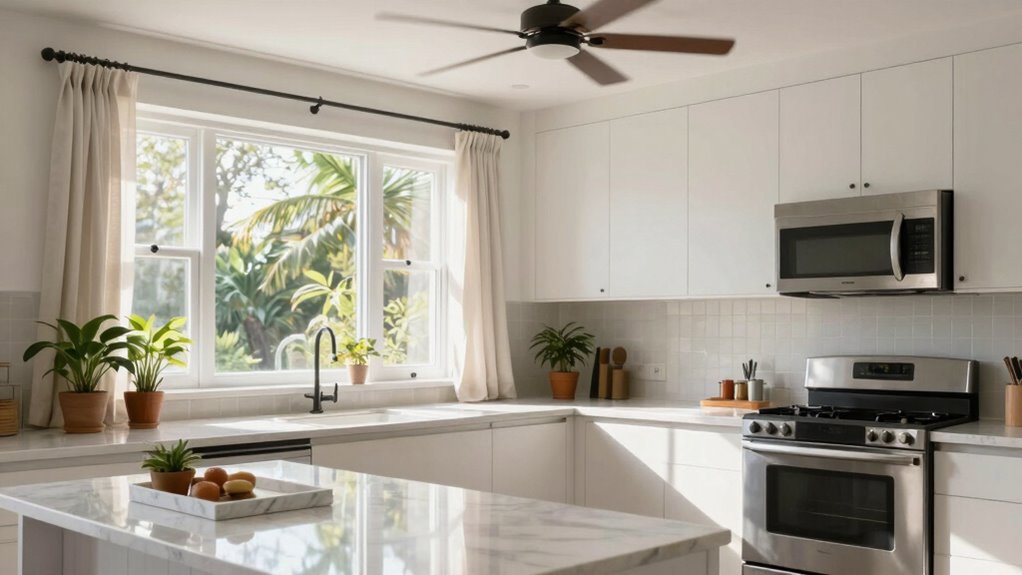
Yes, installing ceiling fans can help cool your kitchen effectively. Ceiling fan benefits include better air circulation and a more comfortable environment. For installation tips, make sure you mount the fan on a sturdy ceiling joist and set the blades to rotate counter-clockwise for maximum cooling. Proper placement and maintenance maximize their cooling benefits, making your kitchen more pleasant during hot summer months.
What Are the Best Plants to Reduce Kitchen Heat Naturally?
You might notice how certain indoor plants, like snake plants and pothos, naturally cool your kitchen by reducing indoor humidity. Placing these plants near heat sources or windows helps maximize their cooling effect. As you consider plant placement, you’ll find that their lush leaves not only add beauty but also help lower temperature and humidity, creating a more comfortable, refreshed kitchen environment before summer heats up.
How Does Insulation Impact Kitchen Temperature Control?
Insulation considerably impacts your kitchen’s temperature control by enhancing insulation effectiveness and acting as a thermal barrier. Proper insulation keeps hot air out and cool air in, reducing heat buildup from appliances and sunlight. This means your kitchen stays more comfortable, especially during summer. By choosing the right insulation materials and ensuring they’re properly installed, you create an energy-efficient space that minimizes heat transfer, making hot days more bearable.
Are Energy-Efficient Appliances Better for Heat Reduction?
Energy-efficient appliances are better for heat reduction because they consume less energy, producing less heat as a byproduct. Think of them as a quiet, efficient engine compared to a noisy, gas-guzzling one. For instance, upgrading to an ENERGY STAR refrigerator can cut your kitchen’s energy consumption and heat output considerably. This not only helps keep your kitchen cooler but also reduces your overall energy bill, making your space more comfortable and eco-friendly.
Can Window Tinting Decrease Indoor Kitchen Temperatures?
Yes, window tinting can decrease indoor kitchen temperatures. By adding solar shading or thermal curtains, you block out direct sunlight and reduce heat transfer. These options help keep your kitchen cooler, especially during hot summer days. Solar shading reflects sunlight away, while thermal curtains insulate against heat. Combining these with window tinting creates an effective barrier against heat buildup, making your kitchen more comfortable without using extra energy.
As an affiliate, we earn on qualifying purchases.
Conclusion
To keep your kitchen cooler before summer hits, take simple steps like using vent fans and avoiding hot appliances during the hottest hours. For example, imagine a family who installed a ceiling fan and started cooking outside on sunny days—now their kitchen stays much cooler, making summer cooking more comfortable. By implementing these strategies, you can enjoy a breezier, more comfortable kitchen all season long. Just a few adjustments can make a big difference!
As an affiliate, we earn on qualifying purchases.
As an affiliate, we earn on qualifying purchases.
Halloween Picks
halloween
As an affiliate, we earn on qualifying purchases.