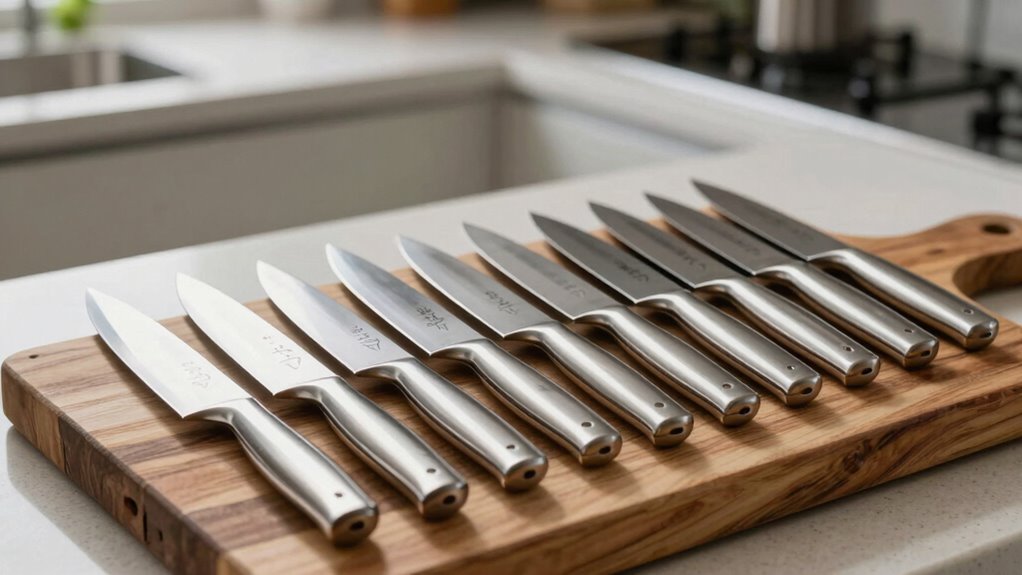
Choosing the right santoku knives can transform your prep work, but the market is flooded with options that vary widely in steel quality and handle comfort. My top overall pick is the Wüsthof Classic 7-Inch Santoku Knife because it offers unmatched durability and a weight that feels substantial without being cumbersome. For those seeking a lighter, more agile feel, the Victorinox Swiss Classic stands out for its affordable reliability and hollow-edge design that prevents food from sticking. The main tradeoff you will face is between long-term edge retention, which usually requires harder, more brittle steel, and ease of maintenance, which favors softer stainless steels. Continue reading to see how these fourteen models stack up against each other in real-world kitchen scenarios.

Get kitchen gear delivered free with Prime
- Fast, free delivery on millions of items
- Prime Video, Amazon Music and more included
- Member-only deals all year
Complete the kit


Key Takeaways
- The Wüsthof Classic dominates the premium tier due to its forged construction and consistent quality control, whereas budget options often suffer from inconsistent blade alignment.
- Blade length matters more than material for most home cooks; the 7-inch models offer better clearance for large vegetables than the 5-inch variants.
- Hollow-edge (Granton) blades, found on the Victorinox and Wüsthof Gourmet, are essential for slicing sticky foods like potatoes and cheese, but they require more frequent honing.
- Japanese-style handles on the HOSHANHO and imarku lines are lighter and more ergonomic for pinch grips, but they offer less protection for the hand compared to Western full-tang handles.
- Value is not just about price; the Mercer Culinary Genesis offers professional-grade performance at a mid-range price, beating several more expensive competitors in sharpness out of the box.
| HOSHANHO 5-Inch Japanese Santoku Chef Knife |  | Best Compact Premium-Style Pick | Knife type: Santoku | Blade length: 5 inches | Blade material: 10Cr15CoMoV high-carbon stainless steel | VIEW ON AMAZON | See Our Full Breakdown |
| Farberware EdgeKeeper 5-Inch Santoku Knife with Sharpening Sheath |  | Best for Low-Fuss Blade Upkeep | Knife type: Santoku | Blade length: 5 inches | Blade material: High-carbon stainless steel | VIEW ON AMAZON | See Our Full Breakdown |
| Wüsthof Gourmet 5-Inch Hollow Edge Santoku Knife |  | Best Lightweight Compact Pick | Knife type: Santoku | Blade length: 5 inches | Blade material: High-carbon stainless steel | VIEW ON AMAZON | See Our Full Breakdown |
| Cuisinart Graphix Collection 7-Inch Santoku Knife |  | Best for Longer Prep Strokes | Model: C77SS-7SAN | Knife type: Santoku | Blade length: 7 inches | VIEW ON AMAZON | See Our Full Breakdown |
| Cuisinart Triple Rivet 7-Inch Santoku Knife |  | Best for a Guarded, Secure Grip | Model: C77TR-7SAN | Knife type: Santoku | Blade length: 7 inches | VIEW ON AMAZON | See Our Full Breakdown |
| HOSHANHO 7-Inch Japanese Santoku Chef Knife |  | Best Premium Performance | Blade Length: 7 inches | Blade Material: 10Cr15CoMoV Stainless Steel | Hardness: 62 HRC | VIEW ON AMAZON | See Our Full Breakdown |
| imarku 7-Inch Santoku Knife |  | Best All-Rounder | Blade Length: 7 inches | Blade Material: High-Carbon Stainless Steel | Edge Angle: 15–18 degrees per side | VIEW ON AMAZON | See Our Full Breakdown |
| HENCKELS Forged Accent 2-Piece Santoku Knife Set |  | Best Value Set | Set Includes: 5-inch and 7-inch santoku knives | Blade Material: German Stainless Steel | Construction: Forged | VIEW ON AMAZON | See Our Full Breakdown |
| Mercer Culinary Genesis 7-Inch Santoku Knife |  | Best for Professional Prep | Blade Length: 7 inches | Blade Material: High-Carbon German Steel | Handle Material: Santoprene | VIEW ON AMAZON | See Our Full Breakdown |
| Victorinox Swiss Classic 7-Inch Santoku Knife with Granton Blade |  | Best for Beginners | Blade Length: 6.69 inches | Blade Material: Stainless Steel | Handle Material: Polypropylene | VIEW ON AMAZON | See Our Full Breakdown |
| Henckels Solution 2-Piece Santoku Knife Set |  | Best Value Set | Set Size: 2 Knives | Blade Lengths: 5.5-inch and 7-inch | Blade Material: Stainless Steel | VIEW ON AMAZON | See Our Full Breakdown |
| imarku 7-Inch Santoku Knife, High-Carbon Stainless Steel |  | Best Hygienic Design | Blade Length: 7 inches | Blade Material: High-Carbon Stainless Steel | Construction: Forged | VIEW ON AMAZON | See Our Full Breakdown |
| Wüsthof Classic 7-Inch Santoku Knife |  | Best Premium Performance | Blade Length: 7 inches | Blade Material: High-Carbon Stainless Steel | Construction: Forged | VIEW ON AMAZON | See Our Full Breakdown |
| imarku 5-Inch Santoku Knife with Pakkawood Handle |  | Best for Precision Work | Blade Length: 5 inches | Blade Material: High-Carbon Stainless Steel | Construction: Forged | VIEW ON AMAZON | See Our Full Breakdown |
| santoku knife | Blade material | Blade length | Handle material | Construction |
|---|---|---|---|---|
| HOSHANHO 5-Inch Japanese Santo | 10Cr15CoMoV high-carbon stainless steel | 5 inches | African pakkawood | — |
| Farberware EdgeKeeper 5-Inch S | High-carbon stainless steel | 5 inches | — | — |
| Wüsthof Gourmet 5-Inch Hollow | High-carbon stainless steel | 5 inches | Polyoxymethylene (POM) | Stamped |
| Cuisinart Graphix Collection 7 | High-carbon stainless steel | 7 inches | Stainless steel | Forged |
| Cuisinart Triple Rivet 7-Inch | Stainless steel | 7 inches | — | Forged |
| HOSHANHO 7-Inch Japanese Santo | 10Cr15CoMoV Stainless Steel | 7 inches | African Pakkawood | Forged, Triple-Layer |
| imarku 7-Inch Santoku Knife | High-Carbon Stainless Steel | 7 inches | Pakkawood | — |
| HENCKELS Forged Accent 2-Piece | German Stainless Steel | — | Stainless Steel | Forged |
| Mercer Culinary Genesis 7-Inch | High-Carbon German Steel | 7 inches | Santoprene | — |
| Victorinox Swiss Classic 7-Inc | Stainless Steel | 6.69 inches | Polypropylene | Stamped |
| Henckels Solution 2-Piece Sant | Stainless Steel | — | ABS Plastic | Precision-Stamped |
| imarku 7-Inch Santoku Knife | High-Carbon Stainless Steel | 7 inches | Stainless Steel (Seamless) | Forged |
| Wüsthof Classic 7-Inch Santoku | High-Carbon Stainless Steel | 7 inches | Polyoxymethylene (POM) | Forged |
| imarku 5-Inch Santoku Knife wi | High-Carbon Stainless Steel | 5 inches | Pakkawood | Forged |
More Details on Our Top Picks
HOSHANHO 5-Inch Japanese Santoku Chef Knife
I’d choose this HOSHANHO when a short, precise santoku matters more than reach. Its 5-inch forged, triple-layer blade uses 10Cr15CoMoV steel, with a stated 62 HRC hardness and 15-degree edge; that combination is aimed at fine slicing and controlled chopping. The African pakkawood handle gives it a different feel from the synthetic-handled Wüsthof Gourmet 5-Inch Hollow Edge Santoku, while the HOSHANHO’s layered construction and harder steel make it the more specification-focused option. The tradeoff is that the compact blade has less working room for large vegetables or broad piles of ingredients, and its 9.6-ounce weight is substantial for this size. I’d also want clear care guidance before treating it as a low-maintenance daily knife.
Pros:- Forged, triple-layer 10Cr15CoMoV blade
- 15-degree edge is suited to precise slicing and chopping
- African pakkawood handle offers an alternative to synthetic handles
- Compact 5-inch blade is easy to control for small prep jobs
Cons:- Five-inch blade can feel restrictive on larger ingredients
- At 9.6 ounces, it is relatively heavy for a compact knife
- Product details provide no care instructions
Best for: Cooks with smaller prep tasks who want a compact santoku, a narrow stated edge angle, and a pakkawood handle.
Not ideal for: Anyone who regularly cuts large produce or wants a lightweight, clearly documented low-maintenance knife.
- Knife type:Santoku
- Blade length:5 inches
- Blade material:10Cr15CoMoV high-carbon stainless steel
- Blade construction:Triple-layer laminated, forged
- Blade hardness:62 HRC
- Blade angle:15 degrees
- Handle material:African pakkawood
- Weight:9.6 ounces
Our verdict“Choose this HOSHANHO for controlled small-scale prep and a forged layered blade, but pick a 7-inch santoku if you need more reach.”
Farberware EdgeKeeper 5-Inch Santoku Knife with Sharpening Sheath
The Farberware’s defining advantage is its sharpening storage sheath: inserting or removing the knife hones the blade, so upkeep is built into its storage routine. That makes it a practical alternative to the Wüsthof Gourmet 5-Inch Hollow Edge Santoku, which has a hollow edge to help food release but no sharpening sheath listed. Oval indentations on the Farberware blade also aim to reduce sticking during repeated cuts. Its 5-inch length suits compact prep, though it gives up the reach of the 7-inch Cuisinart Graphix Collection Santoku when chopping larger vegetables. The convenience comes with a care requirement: hand wash, rinse, and dry immediately. I’d pick it for a cook who values a built-in honing routine, not for someone seeking a longer blade or dishwasher-friendly cleanup.
Pros:- Sheath hones the blade during insertion and removal
- Blade indentations are designed to reduce food sticking
- Contoured handle is designed for a comfortable grip
- Useful for slicing, dicing, chopping, and mincing
Cons:- Requires hand washing and immediate drying
- Five-inch blade has limited reach for larger prep tasks
- The sharpening function is tied to use of the supplied sheath
Best for: Home cooks who want a compact santoku with a storage sheath that hones the blade as part of everyday handling.
Not ideal for: Cooks who need a longer blade for large ingredients or prefer knives that can go in the dishwasher.
- Knife type:Santoku
- Blade length:5 inches
- Blade material:High-carbon stainless steel
- Blade detail:Oval indentations
- Included components:Santoku knife with EdgeKeeper sharpening sheath
- Handle:Contoured
- Care:Hand wash, rinse, and dry immediately
- Manufacturer:Lifetime Brands Inc.
Our verdict“Pick the Farberware if you want compact prep and a built-in honing routine, but choose a 7-inch model for larger cutting jobs.”
Wüsthof Gourmet 5-Inch Hollow Edge Santoku Knife
At a listed 4 ounces, the Wüsthof Gourmet is the clear lightweight choice among these compact santoku knives. Its 5-inch hollow-edge blade is designed to help cut ingredients release, which can make repetitive slicing less fiddly. Compared with the forged, 9.6-ounce HOSHANHO 5-Inch Japanese Santoku Chef Knife, this Wüsthof gives up layered construction and a stated 15-degree edge in favor of lower weight and a POM handle designed to resist fading, heat, discoloration, and impact. The stamped construction is a meaningful distinction for buyers who prioritize a forged blade. Hand washing is recommended, so easy-care materials do not mean dishwasher convenience. I’d favor it for controlled, lighter prep and a familiar synthetic handle, while cooks who want a more substantial forged knife may prefer the HOSHANHO.
Pros:- Listed weight of 4 ounces makes it especially light
- Hollow edge is designed to help food release
- POM handle resists fading, discoloration, heat, and impact
- High-carbon stainless steel blade
Cons:- Stamped construction may not suit buyers seeking a forged blade
- Five-inch blade limits reach on larger ingredients
- Hand washing is recommended
Best for: Cooks seeking a light, compact santoku for small daily prep and a synthetic handle designed to withstand regular kitchen use.
Not ideal for: Buyers who specifically want forged construction, a heavier feel, or dishwasher-safe cleanup.
- Knife type:Santoku
- Blade length:5 inches
- Blade material:High-carbon stainless steel
- Blade edge:Hollow edge
- Construction:Stamped
- Handle material:Polyoxymethylene (POM)
- Weight:4 ounces
- Care:Hand wash only
- Warranty:Limited lifetime
Our verdict“Choose the Wüsthof Gourmet for a lightweight 5-inch santoku with a food-release hollow edge, not for forged construction or longer-blade versatility.”
Cuisinart Graphix Collection 7-Inch Santoku Knife
The Graphix stands out for cooks who want a 7-inch blade without moving to a shorter, compact santoku. That extra length offers more room for broad slicing and repeated chopping than the 5-inch Wüsthof Gourmet Hollow Edge Santoku, though it may feel less nimble for small ingredients. Its forged high-carbon stainless steel blade has a precision-tapered edge, while the textured stainless steel handle is designed to support a secure grip. Compared with the Cuisinart Triple Rivet 7-Inch Santoku, the Graphix is the more straightforward choice: the supplied details emphasize its tapered edge and textured handle rather than a bolster, triple rivets, or blade guard. The listed weight is close to 10 ounces, so buyers wanting a light knife should look elsewhere. A lifetime warranty adds reassurance, but care guidance is not supplied here.
Pros:- Seven-inch blade offers more reach than the 5-inch options
- Forged high-carbon stainless steel construction
- Precision-tapered edge is intended for accurate cutting
- Textured stainless steel handle and lifetime warranty
Cons:- Listed weight of 9.92 ounces may feel heavy to some users
- Longer blade is less compact for small prep tasks
- Product details do not specify care instructions
Best for: Home cooks who prefer a full-length santoku for larger vegetables, broad slicing, and routine chopping.
Not ideal for: Cooks with small hands or compact prep needs who favor a lighter, shorter knife, or buyers who require clear care instructions.
- Model:C77SS-7SAN
- Knife type:Santoku
- Blade length:7 inches
- Blade material:High-carbon stainless steel
- Construction:Forged
- Blade edge:Plain, precision-tapered
- Handle material:Stainless steel
- Weight:9.92 ounces
- Warranty:Lifetime
Our verdict“Choose the Graphix if you want a forged 7-inch santoku with a tapered edge and textured handle, and can accept its substantial weight.”
Cuisinart Triple Rivet 7-Inch Santoku Knife
This Cuisinart is the more control-oriented of the two 7-inch Cuisinart options here. Its extra-wide safety bolster and triple-rivet handle are designed to support stability, while the included blade guard gives the knife a protected storage option. That package makes it a stronger fit for buyers who want a handled, guarded setup than the Cuisinart Graphix Collection 7-Inch Santoku, whose listed strengths center on a precision-tapered edge and textured handle. Both offer forged construction and a 7-inch blade, but the Triple Rivet weighs 8.32 ounces, lighter than the Graphix’s listed 9.92 ounces. Its stainless steel blade is described as suited to mincing and dicing, though the product details give less blade-specific information than the Graphix. Choose it for grip features and storage protection, not for a stated hollow edge or detailed steel specification.
Pros:- Forged construction with an extra-wide safety bolster
- Triple-rivet handle is designed for durability and control
- Includes a matching blade guard
- Listed weight is lower than the Cuisinart Graphix 7-inch model
Cons:- Blade details are limited to stainless steel and a plain edge
- Seven-inch blade may be unwieldy for compact prep tasks
- Product details do not specify care instructions
Best for: Cooks who want a 7-inch forged santoku with a safety bolster, triple-rivet handle, and included blade guard.
Not ideal for: Buyers who prioritize detailed blade specifications, a food-release hollow edge, or a compact knife for small prep.
- Model:C77TR-7SAN
- Knife type:Santoku
- Blade length:7 inches
- Blade material:Stainless steel
- Construction:Forged
- Blade edge:Plain
- Handle:Stainless steel, triple-rivet design
- Weight:8.32 ounces
- Included components:7-inch santoku knife and blade guard
Our verdict“Choose the Triple Rivet for a full-size santoku with a bolster, riveted handle, and blade guard, but look to the Graphix for a more specified cutting edge.”
HOSHANHO 7-Inch Japanese Santoku Chef Knife
This knife stands out for its 62 HRC forged blade, offering a level of edge retention that surpasses softer German steel options like the Mercer Culinary Genesis. The triple-layer laminated construction combines a hard core for sharpness with softer outer layers for durability, reducing the risk of chipping during heavy use. While the African pakkawood handle provides a secure, ergonomic grip that feels more premium than the plastic handles on budget models, the lack of included care instructions is a notable oversight for beginners. Compared to the imarku, this HOSHANHO model feels heavier and more substantial, making it ideal for cooks who prefer a knife with some heft behind the cut. However, the 350-gram weight may cause fatigue during prolonged mincing sessions compared to lighter stamped alternatives.Pros:- High-hardness 62 HRC core retains sharpness longer than standard stainless steel.
- Forged triple-layer construction balances durability with precise cutting ability.
- Ergonomic pakkawood handle offers a comfortable, secure grip.
- 15-degree edge angle allows for finer, cleaner slices.
Cons:- No care or maintenance instructions provided in the listing.
- Heavier weight may cause fatigue during extended prep sessions.
Best for: Home cooks who prioritize edge retention and prefer a heavier, forged knife with a high-hardness core.
Not ideal for: Beginners who need clear maintenance guidance or users who prefer lightweight knives for delicate tasks.
- Blade Length:7 inches
- Blade Material:10Cr15CoMoV Stainless Steel
- Hardness:62 HRC
- Edge Angle:15 degrees
- Handle Material:African Pakkawood
- Weight:350 g
- Construction:Forged, Triple-Layer
Our verdict“Choose this if you want a high-performance forged knife with a hard edge, provided you are confident in your own maintenance routine.”
imarku 7-Inch Santoku Knife
The imarku strikes a compelling balance between performance and accessibility. Its hand-polished 15–18-degree edge is slightly more forgiving than the razor-thin 15-degree edge of the HOSHANHO, making it less prone to chipping if you occasionally cut through harder ingredients. The hollow-edge design effectively prevents food sticking, similar to the Victorinox, but the forged feel and pakkawood handle offer a more traditional, premium aesthetic. This knife is versatile enough for chopping, slicing, and mincing without demanding the specialized care of higher-hardness blades. While it lacks the specific hardness rating of premium competitors, its rust-resistant stainless steel composition makes it a reliable daily driver for most kitchens.Pros:- Hollow-edge design significantly reduces food sticking during slicing.
- Versatile geometry handles chopping, dicing, and mincing effectively.
- Rust and corrosion-resistant high-carbon stainless steel.
- Comfortable pakkawood handle provides a secure grip.
Cons:- Lacks a specific HRC rating, making edge retention hard to gauge.
- Not dishwasher safe, requiring hand washing.
Best for: Cookers who want a versatile, aesthetically pleasing knife that handles most kitchen tasks without requiring specialized maintenance.
Not ideal for: Users who need a knife that can handle bone or frozen foods, as the edge is still relatively fine.
- Blade Length:7 inches
- Blade Material:High-Carbon Stainless Steel
- Edge Angle:15–18 degrees per side
- Handle Material:Pakkawood
- Weight:6.88 ounces
- Edge Type:Hollow Edge
- Thickness:2.5 mm
Our verdict“This is the safe, stylish choice for most home cooks who want a balance of sharpness and durability.”
HENCKELS Forged Accent 2-Piece Santoku Knife Set
For households that need more than one blade, this Henckels set offers exceptional utility by pairing a 7-inch santoku with a 5-inch version. Unlike the single-knife focus of the imarku, this set covers a wider range of prep tasks, from large vegetable cuts to smaller garnishing. The forged German steel construction provides solid balance and durability, though it lacks the specific hardness metrics found in Japanese-style blades like the HOSHANHO. The seamless bolster and curved handles are designed for comfort during long sessions. The ability to run these knives through the dishwasher is a major convenience factor compared to the hand-wash-only requirements of the Mercer Culinary Genesis, making it a practical choice for busy families.Pros:- Includes two useful sizes (5-inch and 7-inch) for varied tasks.
- Dishwasher-safe construction simplifies cleanup.
- Forged stainless steel offers reliable durability and balance.
- Stain and rust-resistant blade material.
Cons:- No specific blade hardness (HRC) rating provided.
- Dishwasher use can dull the edge faster than hand washing.
Best for: Families or households that need multiple knife sizes and prioritize easy cleanup over specialized edge retention.
Not ideal for: Purists who prefer a single, high-performance Japanese-style blade or those who distrust dishwasher cleaning for knives.
- Set Includes:5-inch and 7-inch santoku knives
- Blade Material:German Stainless Steel
- Construction:Forged
- Handle Material:Stainless Steel
- Dishwasher Safe:Yes
- Edge Type:Plain
- Color:Black
Our verdict“Ideal for those who value convenience and versatility across multiple knife sizes over single-blade specialization.”
Mercer Culinary Genesis 7-Inch Santoku Knife
The Mercer Culinary Genesis is built for high-volume, professional-style prep. Its Santoprene handle offers a superior non-slip grip even when wet, a significant advantage over the wooden handles of the imarku or HOSHANHO if you are working in a busy kitchen. The tapered-ground edge with Granton hollows ensures thin slices release cleanly, similar to the Victorinox, but with the added benefit of forged German steel durability. This knife is robust and balanced, designed to withstand daily heavy use. However, the strict hand-wash requirement is a trade-off for the premium materials, meaning it demands more time and attention than the dishwasher-safe Henckels set.Pros:- Santoprene handle provides excellent non-slip grip, even when wet.
- Forged high-carbon German steel offers long-lasting sharpness.
- Lifetime limited warranty provides peace of mind.
- Granton hollows help thin slices release from the blade.
Cons:- Strictly hand-wash only; not dishwasher safe.
- Heavier forged construction may cause fatigue for some users.
Best for: Serious home cooks or line cooks who prioritize grip security and durability during intense, repetitive prep tasks.
Not ideal for: Casual cooks who prefer the convenience of dishwasher-safe tools or those with sensitive joints who dislike heavier forged blades.
- Blade Length:7 inches
- Blade Material:High-Carbon German Steel
- Handle Material:Santoprene
- Edge Type:Taper-ground with Granton Hollows
- Warranty:Lifetime Limited
- Care:Hand Wash Only
- Model:M20707
Our verdict“A workhorse choice for those who value grip security and professional durability over ease of cleaning.”
Victorinox Swiss Classic 7-Inch Santoku Knife with Granton Blade
The Victorinox is the most accessible option in this lineup, thanks to its stamped construction and lightweight design. At just under 4 ounces, it is significantly lighter than the Mercer or HOSHANHO, making it easier to maneuver for those new to knife skills or users with smaller hands. The fluted blade reduces sticking, offering a similar benefit to the hollow edges on other models, but at a much lower entry point. Being dishwasher safe removes the maintenance barrier entirely, unlike the hand-wash-only Mercer. While it lacks the heft and edge retention of forged blades, its durability and Swiss-made reliability make it an excellent starter knife that can grow with a cook’s skills.Pros:- Lightweight and easy to maneuver for precise control.
- Dishwasher safe for maximum convenience.
- Fluted blade reduces food sticking during slicing.
- Swiss-made quality ensures reliable durability.
Cons:- Stamped construction is less durable and balanced than forged blades.
- Lighter weight may feel insubstantial to users accustomed to heavy knives.
Best for: Beginners, students, or anyone who needs a lightweight, low-maintenance knife that can handle the dishwasher.
Not ideal for: Users who need a heavy-duty knife for dense vegetables or those who prefer the balance and feel of a forged blade.
- Blade Length:6.69 inches
- Blade Material:Stainless Steel
- Handle Material:Polypropylene
- Construction:Stamped
- Weight:3.84 ounces
- Dishwasher Safe:Yes
- Origin:Switzerland
Our verdict“The perfect entry-level santoku for those who value convenience, lightness, and easy care.”
Henckels Solution 2-Piece Santoku Knife Set
This set stands out because it offers two distinct blade lengths in one purchase, a feature rarely found at this price point. The lightweight stamped blades reduce hand fatigue during long prep sessions, making them easier to handle than the heavier forged options like the Wüsthof Classic 7-Inch Santoku Knife. While the dishwasher-safe construction adds convenience, it comes with a tradeoff: stamped steel generally holds an edge less effectively than forged alternatives, meaning you may need to hone these knives more frequently. The triple-riveted handles provide a secure grip, though the plastic material lacks the premium feel of wooden or composite handles found on higher-end models. This is a practical choice for those who want versatility without committing to expensive maintenance routines.
Pros:- Includes two different blade sizes for versatile cutting tasks
- Lightweight design reduces wrist strain during extended use
- Dishwasher safe for hassle-free cleanup
Cons:- Stamped blades dull faster than forged alternatives
- Plastic handles feel less premium than wood or composite
- Lacks specific guidance on sharpening methods
Best for: Home cooks who want the flexibility of both a utility and a chef-style Santoku without buying separate knives.
Not ideal for: Professional chefs or enthusiasts who demand long-lasting edge retention and premium handle materials.
- Set Size:2 Knives
- Blade Lengths:5.5-inch and 7-inch
- Blade Material:Stainless Steel
- Construction:Precision-Stamped
- Handle Material:ABS Plastic
- Dishwasher Safe:Yes
- Item Weight:11.2 ounces (Total)
Our verdict“This is the smart pick for budget-conscious cooks who prioritize convenience and size variety over premium edge retention.”
imarku 7-Inch Santoku Knife, High-Carbon Stainless Steel
The seamless stainless steel handle is this knife’s defining feature, eliminating the crevices and rivets where food particles and bacteria typically accumulate. This makes it significantly easier to sanitize compared to the Henckels Solution 2-Piece Santoku Knife Set, which relies on riveted handles. The hollow edge (Granton) design effectively reduces friction, allowing thin slices of meat or fish to fall away cleanly rather than sticking to the blade. However, the solid steel construction adds noticeable weight, which might feel cumbersome during rapid chopping sessions compared to lighter stamped options. While it is dishwasher safe, the lack of a distinct handle material means it can feel cold and less ergonomic in the hand over long periods.
Pros:- Seamless handle prevents bacterial growth in crevices
- Hollow edge reduces food sticking for cleaner cuts
- Forged construction offers superior durability and balance
Cons:- Solid steel handle feels heavier than plastic or wood
- Metal-on-metal grip can feel cold or slippery
- Minimalist design lacks finger guards or bolsters
Best for: Health-conscious cooks and families who prioritize hygiene and easy sanitation over traditional handle aesthetics.
Not ideal for: Users with smaller hands or those who prefer a lighter knife for delicate, high-speed chopping.
- Blade Length:7 inches
- Blade Material:High-Carbon Stainless Steel
- Construction:Forged
- Handle Material:Stainless Steel (Seamless)
- Blade Edge:Hollow (Granton)
- Dishwasher Safe:Yes
- Total Length:12 inches
Our verdict“Choose this if you want a modern, highly hygienic knife that excels at slicing wet ingredients without sticking.”
Wüsthof Classic 7-Inch Santoku Knife
This knife represents the gold standard for balance and precision in the Santoku category. The forged high-carbon steel blade holds a razor-sharp edge far longer than the stamped blades in the Henckels Solution 2-Piece Santoku Knife Set, reducing the frequency of sharpening. The full bolster and full tang construction provide exceptional stability, offering a weight-forward balance that guides the cut rather than forcing it. The tradeoff for this durability is strict care requirements: unlike the dishwasher-safe imarku or Henckels options, this knife must be hand washed and dried immediately to prevent corrosion. It is an investment piece designed for cooks who value tactile control and are willing to maintain their tools meticulously.
Pros:- Forged blade offers exceptional edge retention and sharpness
- Full bolster and tang provide superior balance and stability
- High-carbon steel resists chipping and corrosion well
Cons:- Hand wash only; no dishwasher convenience
- Higher price point reflects premium construction
- Heavier than lightweight stamped alternatives
Best for: Serious home cooks and professionals who demand top-tier edge retention and precise balance.
Not ideal for: Busy households or casual cooks who prefer dishwasher-safe convenience and low-maintenance tools.
- Blade Length:7 inches
- Blade Material:High-Carbon Stainless Steel
- Construction:Forged
- Handle Material:Polyoxymethylene (POM)
- Blade Edge:Hollow
- Care Instructions:Hand Wash Only
- Item Weight:6.24 ounces
- Total Length:11.93 inches
Our verdict“This is the definitive choice for those who prioritize cutting performance and build quality over convenience.”
imarku 5-Inch Santoku Knife with Pakkawood Handle
The 5-inch blade makes this the ideal tool for detailed tasks where a 7-inch Santoku feels unwieldy, such as mincing herbs or trimming fat. The hand-polished 15–18° edge is significantly sharper out of the box than standard 20–22° edges, allowing for cleaner cuts with less pressure. Compared to the larger imarku 7-Inch Santoku Knife, this model is lighter and more agile, though it lacks the versatility for breaking down large vegetables or proteins. The Pakkawood handle offers a warm, ergonomic grip that contrasts with the cold steel of the 7-inch model, but users should note that wood-composite handles require more careful drying to prevent degradation over time.
Pros:- Compact size offers superior control for intricate cuts
- Sharp 15–18° edge reduces tearing of delicate foods
- Ergonomic Pakkawood handle provides a comfortable grip
Cons:- Short blade struggles with large ingredients
- No specific care instructions provided for the wood handle
- Less versatile than 7-inch models for general cooking
Best for: Cooks who perform a lot of detailed prep work, garnishing, or small-ingredient chopping.
Not ideal for: Users who need a single all-purpose knife for heavy chopping and large ingredient processing.
- Blade Length:5 inches
- Blade Material:High-Carbon Stainless Steel
- Construction:Forged
- Edge Angle:15–18°
- Handle Material:Pakkawood
- Blade Thickness:2.3 mm
- Item Weight:3.2 ounces
Our verdict“This is a specialized companion knife best suited for precision tasks rather than heavy-duty cooking.”

How We Picked
I evaluated these santoku knives based on three primary pillars: cutting performance, ergonomic comfort, and long-term durability. Cutting performance was judged by the sharpness out of the box and how well the blade geometry handled dense foods like squash versus delicate herbs. Ergonomic comfort focused on handle balance and grip security, specifically looking for models that reduce fatigue during prolonged prep sessions. Long-term durability considered the steel type (stainless vs. high-carbon) and the construction method (forged vs. stamped), as these factors dictate how often the knife needs sharpening and how well it resists corrosion.
The ranking logic prioritizes versatility and reliability. A knife that is extremely sharp but difficult to maintain or balance poorly ranks lower than a moderately sharp knife that stays consistent over years of use. I also weighed the price-to-performance ratio heavily, ensuring that budget options were only included if they offered a viable alternative to premium models, rather than just being cheap. This approach helps identify which knives deliver genuine utility versus those that rely on marketing hype.
| santoku knife | Construction |
|---|---|
| HOSHANHO 5-Inch Japanese Santo | — |
| Farberware EdgeKeeper 5-Inch S | — |
| Wüsthof Gourmet 5-Inch Hollow | Stamped |
| Cuisinart Graphix Collection 7 | Forged |
| Cuisinart Triple Rivet 7-Inch | Forged |
| HOSHANHO 7-Inch Japanese Santo | Forged, Triple-Layer |
| imarku 7-Inch Santoku Knife | — |
| HENCKELS Forged Accent 2-Piece | Forged |
| Mercer Culinary Genesis 7-Inch | — |
| Victorinox Swiss Classic 7-Inc | Stamped |
| Henckels Solution 2-Piece Sant | Precision-Stamped |
| imarku 7-Inch Santoku Knife | Forged |
| Wüsthof Classic 7-Inch Santoku | Forged |
| imarku 5-Inch Santoku Knife wi | Forged |
Factors to Consider When Choosing Santoku Knives
Selecting a santoku knife is not just about picking the sharpest blade; it is about matching the tool to your cooking style and maintenance habits. Here are the critical factors to weigh before making a purchase.Blade Geometry and Length
Most santoku knives range from 5 to 7 inches in blade length. The 7-inch blade is generally better for home cooks who prepare whole vegetables like butternut squash or cabbage, as it provides enough length to slice through wide items in one motion without sawing. The 5-inch blade is more agile for chopping herbs or mincing garlic but can feel cramped when slicing large proteins. Consider your typical prep tasks: if you frequently cut large produce, skip the 5-inch options. If you have small hands or limited counter space, a shorter blade offers better control. The tip shape also varies; a flatter tip is better for rocking, while a pointed tip aids in precision work like scoring fish skin.
Hollow Edge vs. Flat Edge
A hollow edge (Granton) blade features scalloped indentations along the side of the blade. These dimples create air pockets that reduce friction, preventing sticky foods like potatoes, cucumbers, and cheese from adhering to the metal. This feature is highly beneficial for specific tasks but comes with a tradeoff: the indentations can trap food particles, requiring more careful cleaning. Furthermore, hollow edges can be slightly more difficult to sharpen evenly at home compared to a flat edge. If your cooking involves a lot of wet, starchy, or sticky ingredients, a hollow edge is a worthwhile feature. For general-purpose chopping where food doesn’t stick, a flat edge is simpler to maintain and often provides a more stable cutting surface.
Steel Hardness and Maintenance
The Rockwell Hardness (HRC) scale measures how hard the steel is, which directly impacts edge retention and brittleness. Softer steels (54-56 HRC), common in budget and mid-range knives, are tougher and easier to sharpen but dull faster. Harder steels (60+ HRC), found in premium Japanese knives, hold an edge much longer but are more brittle and prone to chipping if used on hard bones or frozen foods. You must decide if you are willing to invest time in learning proper sharpening techniques for harder steel or if you prefer the forgiving nature of softer stainless steel. High-carbon stainless steel offers a middle ground, providing better edge retention than standard stainless while resisting rust better than pure carbon steel.
Handle Ergonomics and Balance
Handle design dictates how you hold the knife and how much fatigue you feel after chopping for twenty minutes. Western-style handles (like those on Wüsthof or Henckels) are typically full-tang, meaning the metal extends through the handle, providing weight and durability. They are often heavier and better for a ‘hammer’ grip. Japanese-style handles are usually lighter, octagonal, and made of wood or pakkawood, encouraging a pinch grip for precision. If you are transitioning from a standard chef’s knife, a Western handle may feel more familiar. However, if you aim to improve your knife skills, a Japanese handle promotes better technique. Always check for a bolster (the thick part where the blade meets the handle); a full bolster can make sharpening difficult because it prevents the entire edge from touching the whetstone.
Forged vs. Stamped Construction
Forged knives are heated and hammered into shape, resulting in a denser steel structure that is generally stronger and better balanced. This process is more expensive, which is why forged knives like the Wüsthof Classic cost more. Stamped knives are cut from a sheet of steel like a cookie cutter. They are lighter, cheaper, and perfectly adequate for many tasks. Do not assume stamped means poor quality; brands like Victorinox produce stamped knives that outperform many forged competitors in sharpness. The main advantage of forged construction is durability and balance, as the handle materials are often more robust. If you drop your knives often or want a tool that feels solid in the hand, forged is worth the premium. If you prefer a light, nimble tool and don’t mind replacing it sooner, stamped is a smart choice.
Frequently Asked Questions
Can I use a santoku knife as my only knife?
For most home cooks, a santoku can serve as the primary kitchen knife, replacing a traditional chef’s knife. Its flat edge and pointed tip allow for slicing, dicing, and chopping most vegetables and proteins. However, it lacks the curved belly of a chef’s knife, so it cannot rock back and forth for mincing herbs. If you frequently mince garlic or herbs, you may still need a smaller utility knife or a rocking chef’s knife. For a minimalist setup, a 7-inch santoku is versatile enough to handle 90% of prep tasks.
Are santoku knives better than chef’s knives?
Neither is objectively better; they serve different cutting styles. A santoku is designed for an up-and-down cutting motion, making it excellent for clean slices and efficient dicing. A chef’s knife has a curved blade that facilitates a rocking motion, which is superior for mincing and rocking through herbs. If you prefer a push-cut or pull-cut technique, you will likely prefer a santoku. If you rely on rocking, a chef’s knife will feel more natural. Many professional chefs own both, choosing the tool based on the specific ingredient being prepared.
How do I sharpen a hollow-edge santoku knife?
Sharpening a hollow-edge blade requires a bit more care than a flat edge. You can use a whetstone or a pull-through sharpener, but you must ensure the abrasive material reaches the bottom of the scallops. A ceramic honing rod is effective for maintaining the edge between full sharpenings. Avoid using coarse diamond stones, as they can damage the delicate geometry of the hollow edge. If you are new to sharpening, consider taking your knife to a professional service occasionally to maintain the integrity of the scallops.
Why are Japanese santoku knives so light?
Japanese knives are traditionally lighter because they use thinner blade profiles and lighter handle materials like wood or pakkawood. This design reduces resistance when cutting through food, allowing for cleaner slices with less effort. The weight reduction also helps reduce wrist fatigue during long prep sessions. However, some users accustomed to heavy Western knives may find them too light, feeling they lack the ‘weight’ to help drive the blade through hard items. This is a matter of preference; if you like letting the knife’s weight do the work, a heavier Western-style santoku might suit you better.
Is high-carbon steel worth it for a home cook?
High-carbon steel offers superior sharpness and edge retention compared to standard stainless steel, but it requires more maintenance. It is more prone to rust and discoloration, so you must dry it immediately after washing. For a home cook who washes knives by hand and stores them properly, high-carbon steel is a great investment for performance. If you tend to leave knives in the sink or use a dishwasher, stick to stainless steel to avoid corrosion. The performance gain is noticeable, but the maintenance burden is real.
Conclusion
Choosing the right santoku knives depends on your cooking habits and maintenance preferences. For the best overall balance of performance, durability, and brand reputation, the Wüsthof Classic 7-Inch Santoku Knife is the clear winner. If you are on a tight budget but need a reliable workhorse, the Victorinox Swiss Classic offers incredible value with its hollow-edge design. For those who prioritize a traditional Japanese feel with a lightweight, ergonomic handle, the imarku 7-Inch Santoku Knife is an excellent choice. Beginners should look at the Cuisinart Triple Rivet for its forgiving nature and familiar Western handling. No matter which model you choose, investing in a good sharpening stone will extend the life and performance of your new knife significantly.