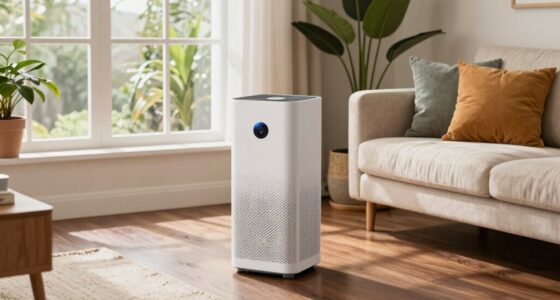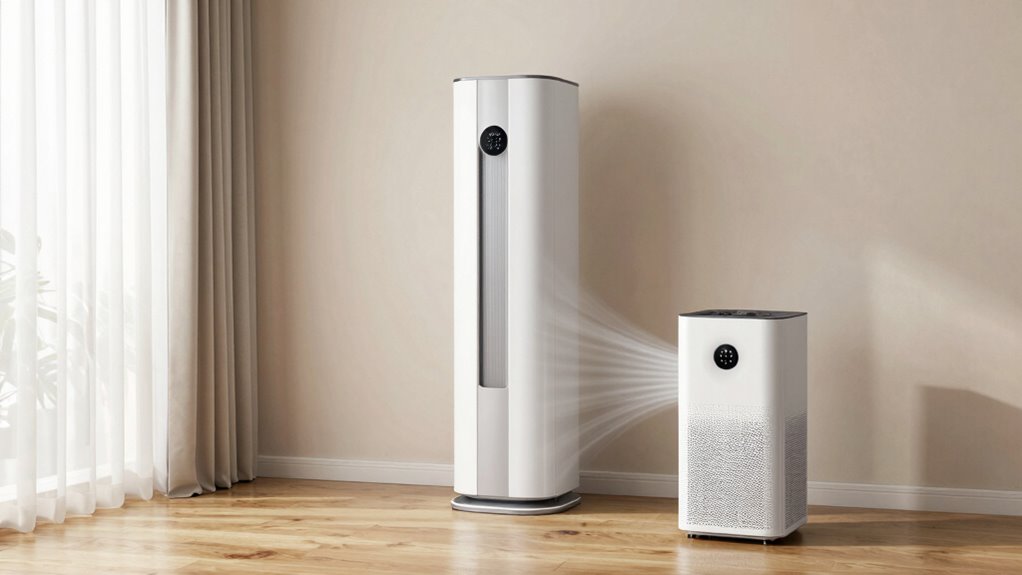
If you’re choosing between whole-house air purifiers and room units, consider your home’s size and specific needs. Whole-house systems are integrated into your HVAC and cover all rooms at once, making them more discreet and energy-efficient long-term. Room units are portable, ideal for targeted spaces, and easier to install. Your choice depends on your budget, air quality concerns, and convenience. Keep exploring to find out which option suits your lifestyle best.

Get kitchen gear delivered free with Prime
- Fast, free delivery on millions of items
- Prime Video, Amazon Music and more included
- Member-only deals all year
Key Takeaways
- Whole-house purifiers integrate into HVAC systems for comprehensive coverage, while room units target specific areas for localized air cleaning.
- Whole-house systems are more energy-efficient long-term but require higher upfront installation costs.
- Room units are more affordable and portable but may increase energy use if multiple units are needed.
- Whole-house systems require less maintenance, whereas room units need regular filter replacements.
- Effectiveness depends on needs: whole-house for broad issues, room units for specific problem areas.
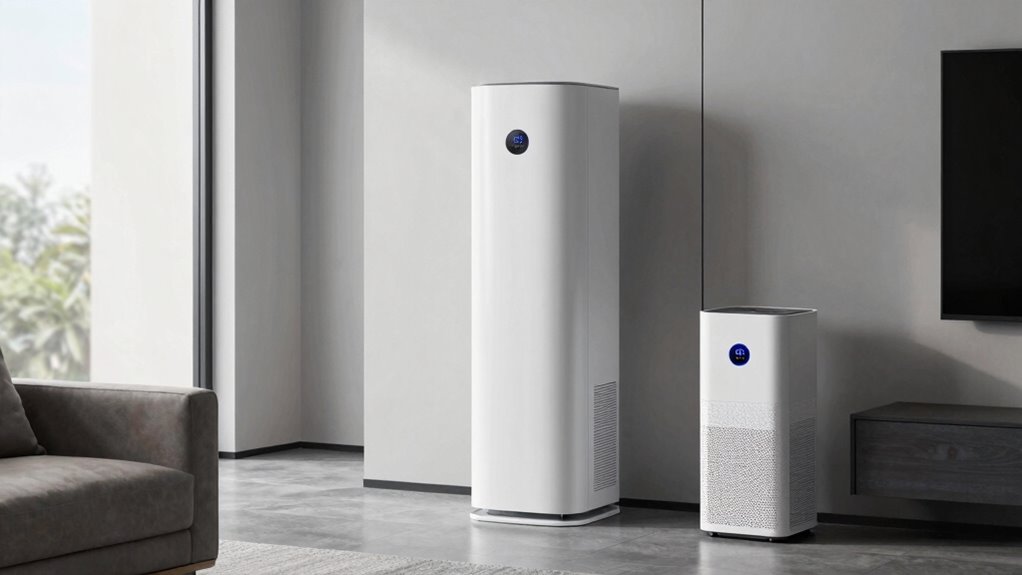
When it comes to improving indoor air quality, choosing between whole-house air purifiers and room units can seem overwhelming. Both options aim to reduce pollutants, allergens, and odors, but they differ significantly in how they operate and what they offer. Your decision largely depends on your specific needs, budget, and priorities, especially when considering factors like air quality and energy efficiency. Whole-house systems are integrated into your home’s ductwork, allowing them to clean the air throughout every room simultaneously. This setup is ideal if you want consistent air purification across your entire living space without having to switch devices from room to room. These systems tend to be more energy-efficient over time because they are designed to run continuously without consuming excessive power, especially models with variable-speed fans. Plus, because they’re built into your existing HVAC system, they can be more discreet and require less maintenance, making them a seamless part of your home environment. On the other hand, room units are standalone devices that target specific areas. They’re often more affordable upfront and easier to install, making them attractive for renters or those unable to modify their ductwork. Room units can be moved from room to room depending on your needs, offering flexibility that whole-house systems can’t match. However, they might consume more energy if you use multiple units across your home, and their effectiveness depends on proper placement and size relative to the space. When it comes to air quality, both options can be highly effective if chosen correctly. Whole-house purifiers generally have larger filtration capacities, making them better suited for addressing widespread issues like dust, pet dander, or airborne viruses. Room units excel at targeting localized problems, such as a single bedroom or office space, and often come with features like HEPA filters or activated carbon filters to remove specific pollutants. Additionally, advancements in air filtration technology have made room units more efficient and capable of handling a broader range of pollutants. Moreover, sustainability considerations are increasingly influencing consumer choices, prompting manufacturers to develop energy-efficient and eco-friendly options. It is also important to consider maintenance requirements, as different systems may need regular filter replacements or servicing to maintain optimal performance. Proper air quality monitoring can help you assess the effectiveness of whichever system you choose, ensuring your space remains healthy. When evaluating energy usage, it’s worth noting that energy consumption can vary widely depending on the model and usage patterns, affecting overall cost and environmental impact. Regarding energy efficiency, whole-house systems tend to be more cost-effective over the long term because they operate within the framework of your HVAC system, which is already running for heating or cooling. In contrast, multiple room units can add to your electricity bill if used extensively. Ultimately, your choice hinges on your priorities: if you want comprehensive, low-maintenance air purification with energy efficiency at the core, a whole-house system is likely the better fit. If you prefer targeted, portable air cleaning solutions with a lower initial investment, room units might suit you better.
As an affiliate, we earn on qualifying purchases.
Frequently Asked Questions
What Maintenance Is Required for Whole-House Air Purifiers?
You need to regularly replace filters in your whole-house air purifier, typically every 3 to 6 months, depending on usage and filter type. Additionally, you should perform system cleaning, including checking for dust buildup and cleaning vents or ducts connected to the unit. These steps guarantee your purifier works efficiently, maintains good air quality, and prolongs its lifespan. Stay consistent with maintenance to keep your home’s air fresh and healthy.
How Do Room Units Compare in Energy Efficiency?
Think of room units as nimble dancers, moving efficiently across your space. They generally consume less energy than whole-house systems, making them more power-efficient for small areas. Their compact design means lower energy consumption, but they might need more frequent operation if you want continuous purification. Overall, room units excel in energy efficiency for individual rooms, helping you save on electricity while maintaining cleaner air.
Can Both Systems Remove All Types of Indoor Pollutants?
Both systems can markedly improve indoor air quality, but neither removes all pollutants completely. You’ll find that whole-house purifiers excel at indoor allergen removal and odor elimination across your entire home, while room units target specific areas effectively. However, for extensive coverage and tackling a wide range of pollutants, using a combination of both might be your best bet. Keep in mind, regular maintenance enhances their performance.
What Is the Typical Lifespan of Each Type of Purifier?
Generally, whole-house purifiers last about 5 to 10 years, while room units typically endure 3 to 5 years. You’ll want to watch for filter replacement needs, as clogged filters can compromise system durability. Regular maintenance boosts lifespan, so stay proactive. With proper care, both systems can serve reliably for years, but remember, the longevity depends heavily on usage, filter quality, and consistent upkeep.
Are Installation Costs Significantly Different Between the Two Options?
Installation costs for whole-house air purifiers are generally higher due to increased installation complexity, often requiring professional setup and integration with your HVAC system. Room units, on the other hand, are simpler and quicker to install, making their costs lower upfront. When doing a cost comparison, consider that whole-house systems may save money long-term through better coverage, but initial installation is more involved and costly.
portable room air purifier with HEPA filter
As an affiliate, we earn on qualifying purchases.
As an affiliate, we earn on qualifying purchases.
Conclusion
When choosing between whole-house air purifiers and room units, consider your home’s size, your health needs, and your budget. Whole-house systems are like the mighty giants of air purification, covering every corner effortlessly, while room units are nimble and perfect for targeted spaces. Whichever you pick, you’re making a powerful move toward cleaner, more invigorating air—because your home deserves nothing less than a gust of fresh air that’s as pure as mountain spring water.
energy-efficient air purifier for large home
As an affiliate, we earn on qualifying purchases.
As an affiliate, we earn on qualifying purchases.
air purifier for bedroom with activated carbon
As an affiliate, we earn on qualifying purchases.
As an affiliate, we earn on qualifying purchases.
Halloween Picks
halloween
As an affiliate, we earn on qualifying purchases.