To remove stubborn carpet stains yourself, start by identifying the stain type and blotting excess liquid. For tough stains, mix baking soda with water to create a paste and apply it, then let it dry before vacuuming. For pet stains, use a mix of equal parts white vinegar and water, applying it gently. Always test solutions in a hidden area first. There’s more effective tips and tricks to make certain your carpet stays stain-free.
Key Takeaways
- Identify the stain type and test cleaning solutions in an inconspicuous area before applying them to avoid damage.
- For pet stains, mix equal parts white vinegar and water, blot the area, and let it sit to neutralize odors.
- Create a baking soda paste for tough stains like red wine or ink, apply it, and let it dry before vacuuming.
- Allow cleaning solutions to sit for a few minutes to enhance effectiveness, then vacuum thoroughly afterward.
- Use enzyme-based cleaners for organic stains and follow product instructions for the best results; consider professional help if needed.
When you discover a stubborn carpet stain, it can feel frustrating, especially if you’ve tried multiple cleaning methods without success. You might’ve tackled spills, pet accidents, or even mysterious marks that just won’t budge. Before you throw in the towel and consider professional help, there are some DIY tricks that can save your carpet and your wallet.
Stubborn carpet stains can be frustrating, but DIY tricks may save you both your carpet and your wallet.
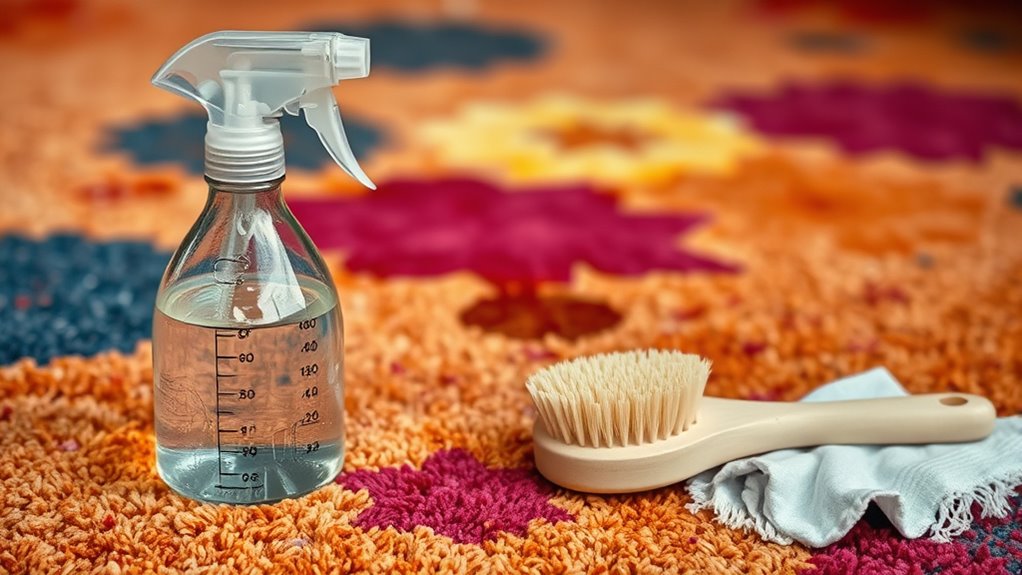
First, it’s essential to identify the type of stain you’re dealing with. If it’s a pet stain, you’ll want to focus on pet stain removal techniques. These stains often come with accompanying odors, which can be just as problematic. Start by blotting the area with a clean cloth to soak up any excess liquid. Avoid rubbing, as this can spread the stain further. Next, mix a solution of equal parts white vinegar and water. Apply this mixture to the stain, letting it sit for a few minutes before blotting it again. The acidity in the vinegar can help break down the stain while neutralizing the odor.
While vinegar works wonders, you may also want to explore other cleaning products. If you’re doing a cleaning product comparison, consider enzyme-based cleaners specifically designed for pet stains. These products contain enzymes that break down organic materials, making them highly effective. When using these cleaners, follow the instructions on the label for best results. They often require you to let the product sit for a while, so be patient.
For tougher stains, like red wine or ink, you might want to try a baking soda paste. Mix baking soda with a bit of water to create a thick paste, then apply it directly to the stain. Let it dry completely before vacuuming it up. The baking soda will absorb odors and can lift the stain from the carpet fibers. It’s also beneficial to know that enzyme-based cleaners are often recommended by professionals for their effectiveness in removing tough stains.
Every carpet type is different, so it’s wise to test any cleaning solution in an inconspicuous area first. This will ensure that the cleaner doesn’t damage your carpet. Additionally, make sure you’re using a gentle approach to avoid fraying or discoloring the fibers.
Frequently Asked Questions
Can I Use Vinegar on All Types of Carpets?
You can’t use vinegar on all carpet types. Vinegar’s acidity can damage certain materials, like wool or silk, leading to discoloration or degradation. For synthetic carpets, it’s generally safe, but always test a small, hidden area first. Make sure to dilute it with water to minimize any potential harm. If you’re unsure about your carpet material, check the manufacturer’s guidelines for vinegar safety before applying it directly to your carpet.
How Do I Test a Cleaner on My Carpet?
Before you plunge into carpet cleaning, imagine your carpet as a delicate canvas. To test a cleaner, apply a small amount on an inconspicuous spot, like a hidden corner. Wait a few minutes, then blot it with a clean cloth. If the color stays vibrant and the fabric remains unchanged, you’re good to go! This simple test can save you from potential stain disasters and help with future stain prevention.
Will Scrubbing Damage My Carpet Fibers?
Yes, scrubbing can damage your carpet fibers, especially if you use the wrong cleaning tool. To maintain carpet fiber integrity, choose a gentle brush or cloth that won’t fray or pull at the fibers. Instead of vigorous scrubbing, opt for blotting to lift the stain without compromising the carpet. Always test your cleaning method in an inconspicuous area first, ensuring you protect your carpet while effectively tackling tough stains.
How Long Should I Let a Stain Remover Sit?
You should let a stain remover sit for about 5 to 15 minutes, depending on the product and the stain’s severity. This waiting period allows the cleaner to penetrate the fibers effectively. For stain prevention, maintain a regular cleaning frequency, addressing spills immediately to minimize lasting damage. The sooner you treat a stain, the less likely it’ll set, making your carpet care routine more effective in the long run.
What Should I Do if the Stain Reappears?
If the stain reappears, don’t panic! Studies show that nearly 60% of carpet stains can return if not treated properly. First, reapply your stain remover and blot gently. Then, rinse the area with water to remove any residue. To prevent recurrence, verify the carpet is well-cleaned and consider using a stain repellent. Regular vacuuming and addressing spills immediately can also help keep your carpet looking fresh and stain-free.
Conclusion
You’ve armed yourself with these DIY tricks, but what happens when that stubborn stain just won’t budge? Don’t lose hope! With a bit of persistence and creativity, you can conquer even the toughest stains. Picture the satisfaction of a clean carpet, free from those pesky reminders of spills and accidents. So, roll up your sleeves, grab your supplies, and take that first step. You’re closer to a stain-free home than you think—will you rise to the challenge?