
To clean and organize your garage deep freezer, start by emptying it out and checking expiration dates. Discard any expired food. Next, unplug the freezer to defrost and use towels to soak up water. Clean the interior with warm water and baking soda to tackle odors. Use clear, labeled bins for storage and place older items at the front. Maintain airflow and check seals to prevent frost buildup. Discover more tips for ideal freezer maintenance!
Key Takeaways
- Empty the freezer, discarding expired items and inspecting all food for freshness to create a clean slate for organization.
- Unplug the freezer and allow frost to melt, using towels to soak up excess water for efficient defrosting.
- Clean the interior with warm water and baking soda to eliminate odors and maintain a fresh environment.
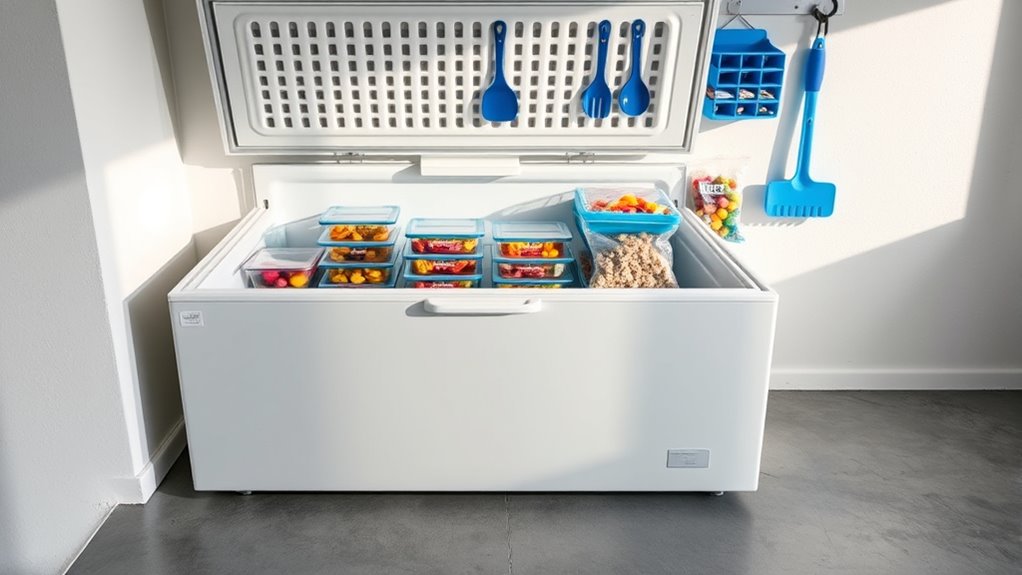
- Use clear, labeled bins to categorize food items and place older items at the front for easy access and rotation.
- Regularly check seals and avoid overloading to ensure even temperatures and prevent frost buildup for optimal freezer performance.
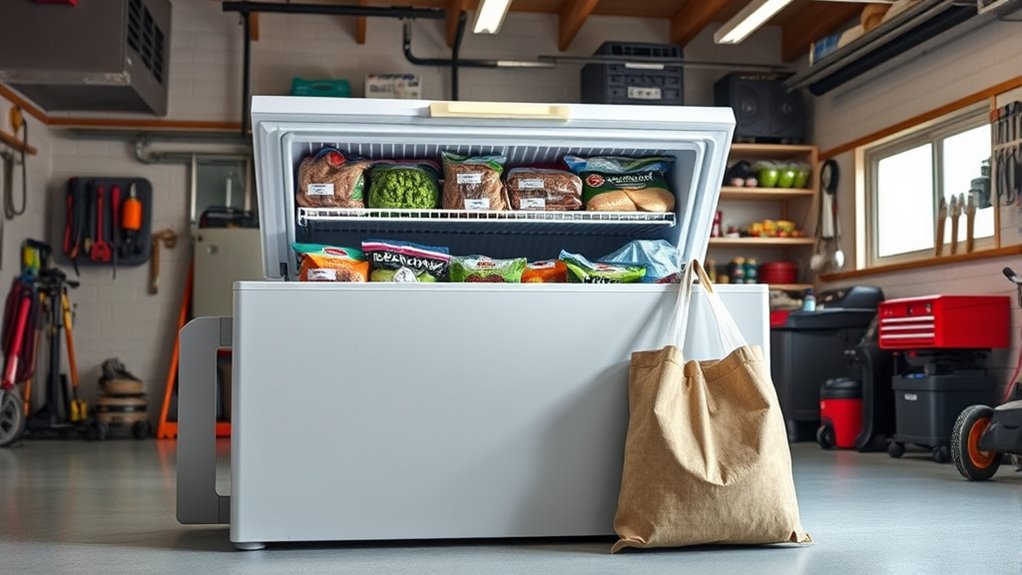
When you finally decide to tackle your garage deep freezer, you’ll discover it’s not just about making space; it’s about preserving your food and saving money. A well-organized freezer helps you keep track of what you have, reduces waste, and ensures your food stays fresh longer. Start by emptying the entire freezer. As you do this, take a close look at each item. Check for expiration dates and toss anything that’s past its prime. This will not only free up space but also help you breathe easier knowing you’re not storing expired food.
Once it’s emptied, it’s time to tackle that pesky frost buildup. Frost can make your freezer less efficient and take up valuable space. If the frost is excessive, you might need to defrost the freezer completely. Unplug it, and let the ice melt naturally. Keep towels handy to soak up the water. You can speed up the process by placing a bowl of hot water inside; the steam will help loosen the frost. Once it’s defrosted, give the interior a good clean with a mixture of warm water and baking soda. This will eliminate odors and keep your freezer smelling fresh.
Tackle frost buildup by defrosting your freezer and using warm water and baking soda for a fresh clean.
Now that your freezer’s clean, it’s time to think about storage tips. Consider investing in clear, stackable bins to categorize food items. Label the bins for easy identification. For example, you might have one bin for meats, another for vegetables, and another for prepared meals. This way, you won’t have to dig through everything to find what you need. When organizing, place older items at the front to ensure they’re used first, and don’t forget to rotate your stock regularly. Additionally, keep in mind that proper organization can enhance efficiency and make food retrieval easier.
As you fill the freezer back up, remember to leave some space for air circulation. Overloading can cause uneven temperatures and affect the quality of your food. If you notice frost building up again, check the seals on the door; a faulty seal can let warm air in, causing frost creation. Regularly check your freezer every few months to ensure everything’s in order.
Frequently Asked Questions
How Often Should I Defrost My Deep Freezer?
You should defrost your deep freezer every six months to maintain its efficiency. Regular freezer maintenance helps prevent ice buildup, which can reduce energy efficiency and make your appliance work harder. If you notice frost exceeding a quarter-inch, it’s time to defrost. Keeping your freezer clean and organized will also make this process easier. By staying on top of defrosting, you’ll save energy and prolong the life of your deep freezer.
Can I Store Food in the Freezer Without Packaging?
You shouldn’t store food in the freezer without packaging. Packaging materials protect your food from freezer burn and maintain its quality. When you organize your freezer, use airtight containers or freezer bags to keep items fresh and prevent odors from mixing. Label everything for easy access and consider grouping similar foods together. Proper packaging not only helps with freezer organization but also extends the lifespan of your frozen items.
What Temperatures Are Best for Freezing Food?
For best results, keep your freezer at 0°F (-18°C) or below. Think of your freezer like a snow globe; the colder it gets, the better it preserves everything inside. Following temperature guidelines guarantees freezer efficiency, preventing freezer burn and maintaining flavor. If your freezer’s too warm, you risk compromising your food quality. Regularly check your settings, and don’t overload it, so that cold air circulates freely for ideal preservation.
Is It Safe to Refreeze Thawed Food?
Yes, it’s generally safe to refreeze thawed food, but it depends on how you thawed it. If you used safe methods, like the refrigerator or cold water, you can refreeze without worries. However, if you thawed it at room temperature, food safety becomes a concern, and you should avoid refreezing. Always check the food’s texture and smell before deciding, as quality may decrease after refreezing.
How Can I Reduce Freezer Burn on My Food?
To reduce freezer burn on your food, you’ll want to wrap items tighter than a drum! Use airtight containers or heavy-duty freezer bags, squeezing out as much air as possible. Vacuum sealing is another fantastic option for food preservation. Portion your food before freezing to minimize exposure, and avoid overloading the freezer, allowing for better airflow. Remember, keeping your freezer at 0°F (-18°C) also helps prevent freezer burn!
Conclusion
Now that you’ve tackled the mess and organized your garage deep freezer, it’s time to enjoy the fruits of your labor. Like a well-stocked treasure chest, your freezer is now a haven of delicious meals waiting to be discovered. Remember to maintain it regularly, so it stays as neat as a pin. With a little effort, you’ll always have easy access to your frozen favorites, making meal prep a breeze. Happy freezing!