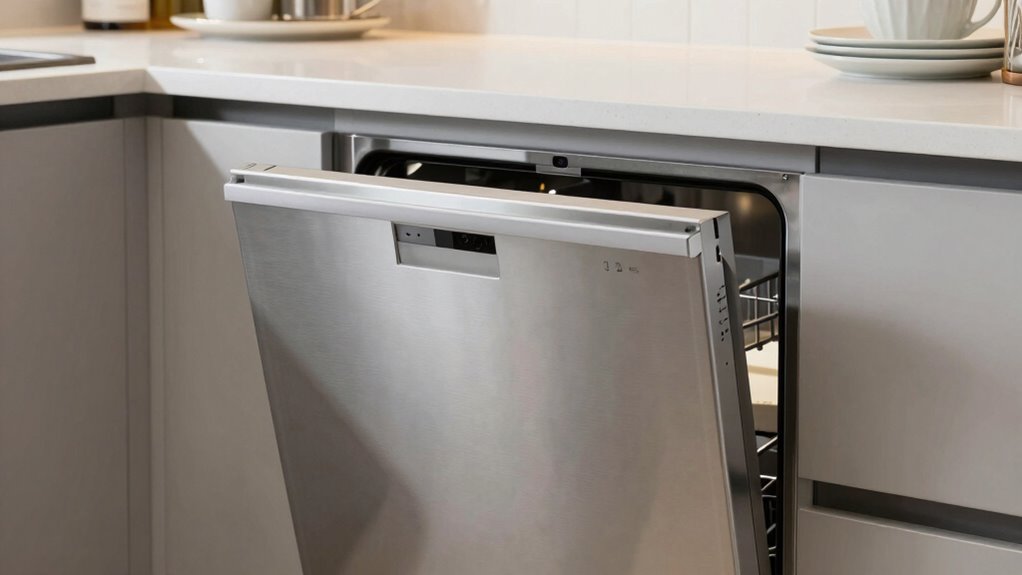

Built-in dishwashers become more efficient over time thanks to smart technology that learns your usage patterns and firmware updates that improve performance. Their modern design allows for better insulation, precise water control, and integration into your cabinetry, reducing waste. Regular maintenance keeps parts working smoothly, while water recycling and adaptive cycles lower ongoing costs. If you want to discover how these features continually boost efficiency, keep exploring what makes these appliances stand out.

Get kitchen gear delivered free with Prime
- Fast, free delivery on millions of items
- Prime Video, Amazon Music and more included
- Member-only deals all year
Key Takeaways
- Seamless integration and precise fitting reduce water and energy waste during operation.
- Advanced energy-saving modes optimize power and water use based on load and soil level.
- Smart sensors adjust water levels and cycle times for efficient cleaning and minimal resource consumption.
- Regular maintenance and firmware updates ensure sustained performance and improved energy efficiency.
- Water recycling systems and insulation minimize heat loss, conserving resources over the appliance’s lifespan.

Built-in dishwashers are designed to seamlessly integrate into your kitchen, offering both convenience and efficiency. Over time, their design and features make them more cost-effective and environmentally friendly compared to portable models. One of the key ways they achieve this is through advanced energy-saving modes. Modern built-in dishwashers come equipped with multiple cycles tailored for different levels of dirt and load sizes. Energy-saving modes optimize water and power use, ensuring you don’t waste resources on unnecessary cycles. These modes typically operate at lower temperatures and extend wash times slightly, which reduces electricity consumption while still delivering clean dishes. As you use your dishwasher regularly, you’ll notice that these modes help cut your energy bills considerably over months and years. Additionally, their design often includes effective insulation, which minimizes heat loss and further enhances energy efficiency during operation. Water consumption is another critical factor that enhances the efficiency of built-in dishwashers over time. Because they’re designed to fit seamlessly into your cabinetry, they generally have precise water control systems that minimize waste. Modern models use sensors to assess the load size and soil level before starting, adjusting water levels accordingly. This means you’re not using more water than necessary for each wash cycle. Over time, this efficiency translates to less frequent refilling and reduced water bills, especially if you run multiple loads weekly. Additionally, many built-in dishwashers feature water recycling systems or aerators that further reduce overall water usage without compromising cleaning performance. Furthermore, some models now incorporate smart technology that can optimize operation based on usage patterns, further improving efficiency over time. Regular maintenance, such as cleaning filters and inspecting spray arms, can also help ensure that your dishwasher continues to operate at peak efficiency and prevent breakdowns, extending its lifespan. The longer lifespan of these appliances means you won’t need to replace them as often, which also contributes to their overall efficiency. The continuous updates from manufacturers, including firmware improvements, can help ensure your dishwasher maintains optimal performance and energy efficiency over its lifespan. Moreover, staying informed about latest advancements can help you maximize the benefits of your appliance’s features.
Products Worth Considering

De'Longhi 3-in-1 Specialty Coffee Brewer, 8-Cup

Cuisinart PerfecTemp Electric Kettle, 1.7 L

Vitamix 5200 Professional-Grade Blender, 64 oz. Container, Black
As an affiliate, we earn on qualifying purchases.
Frequently Asked Questions
How Often Should I Clean the Dishwasher’s Filters for Optimal Efficiency?
You should clean your dishwasher’s filters at least once a month for peak efficiency. Regular filter maintenance prevents buildup of food particles and debris, which can clog the system and reduce cleaning power. If you notice water draining slowly or odors, increase the cleaning frequency. Keeping the filters clean guarantees your dishwasher works effectively, saves energy, and prolongs its lifespan. Make it a routine to check and clean filters regularly.
Do Energy-Efficient Dishwashers Cost More Upfront?
Energy-efficient dishwashers typically cost more upfront, but they save you money over time through energy savings. The initial investment might be higher, but a better cost comparison shows you’ll reduce utility bills and extend the appliance’s lifespan. Over time, these models become more economical. You get the benefit of lower operating costs and eco-friendliness, making the higher initial price worth it for long-term savings and efficiency.
Can I Run a Built-In Dishwasher During Off-Peak Hours?
Coincidentally, you can run your built-in dishwasher during off-peak hours to maximize energy savings. By doing so, you avoid high electricity rates during peak hours, saving you money over time. Many utility companies offer off-peak rates, making it easier to reduce energy consumption and costs. Planning your dishwashing schedule around these hours not only benefits your wallet but also helps the environment by lowering overall energy demand.
Are There Specific Detergents That Improve Efficiency?
Yes, using the right detergents can improve your dishwasher’s efficiency. Make certain to choose detergent compatibility with your model to prevent issues. Eco-friendly detergents are a great option because they often work well at lower temperatures, saving energy and water. They also help reduce environmental impact. Always follow your manufacturer’s recommendations to guarantee peak performance and avoid damage, which keeps your dishwasher running efficiently over time.
How Does Load Size Affect Dishwasher Energy Consumption?
A larger load size increases water usage and energy consumption because your dishwasher works harder to clean more dishes. To save energy, avoid overloading, which can hinder cleaning efficiency, or underloading, which wastes water and power. Properly loading your dishwasher guarantees maximum water and energy use, making it more efficient over time. Keep in mind, smaller, well-organized loads generally consume less energy and water, improving overall efficiency.
Conclusion
By choosing a built-in dishwasher, you’re embracing a blend of brilliance and durability that boosts efficiency over time. With proper maintenance and mindful use, you’ll maximize performance, minimize waste, and make the most of your machine’s magic. Remember, small steps sustain your dishwasher’s service, saving you time, treasure, and trouble. So, step up, stay savvy, and let your built-in dishwasher serve you smarter and longer, turning everyday chore chaos into consistent convenience.