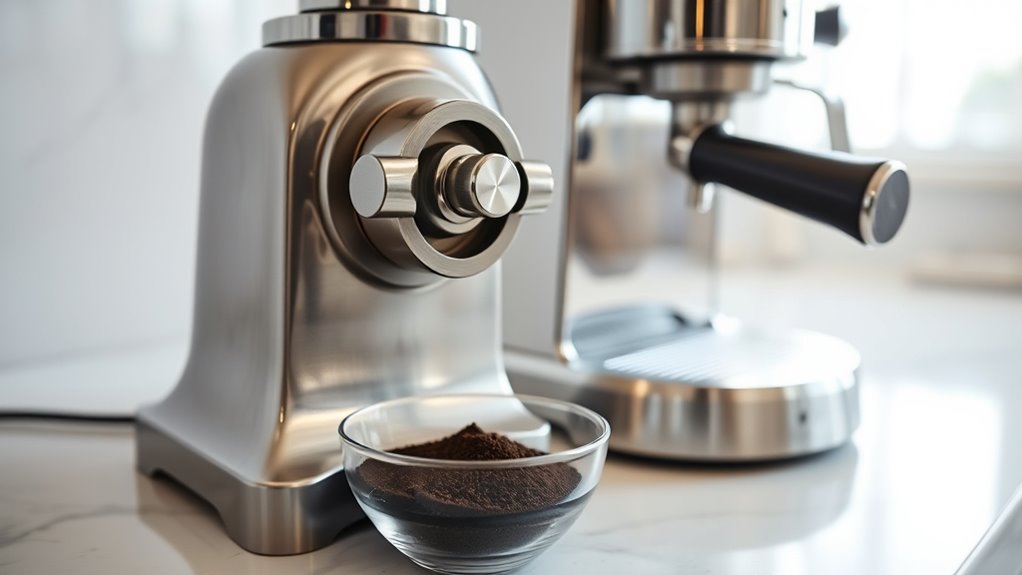
To calibrate your burr grinder for perfect espresso, start by checking burr alignment. Remove the top burr and inspect for consistent gaps; adjust as needed. Set an initial grind size to medium-fine and test grind a small batch. Look for uniformity and adjust if you find inconsistencies. Fine-tune your settings with incremental adjustments, grinding again until you achieve ideal consistency. Finally, brew a shot and evaluate the flow and flavor to refine your grind. Discover more tips to elevate your espresso game!
Key Takeaways
- Inspect burr alignment by removing the top burr and ensuring a consistent gap between them for even grinding.
- Set an initial grind size to medium-fine and grind a small batch to check for uniformity.
- Make small adjustments to grind size based on the consistency of the grounds, avoiding large chunks or fine powder.
- Pull a shot of espresso to evaluate extraction; the flow should resemble warm honey and the crema should be thick.
- Fine-tune grind size based on shot timing and taste until achieving the desired flavor profile and extraction.
When you want to brew the perfect cup of coffee, calibrating your burr grinder is vital for achieving the ideal grind size. This process not only enhances the flavor but also guarantees grind consistency, which plays a pivotal role in how your espresso turns out. To start, you’ll need to understand the importance of burr alignment. Misaligned burrs can lead to uneven grinding, resulting in a mix of fine and coarse particles that can ruin your shot.
Calibrating your burr grinder is essential for achieving the perfect grind size, enhancing flavor and ensuring consistency in your espresso.
To check your burr alignment, remove the top burr and inspect it closely. You should see a consistent gap between the burrs when they’re assembled. If they don’t seem to line up correctly, adjust the screws or bolts that hold the burrs in place. Once you’ve ensured the burrs are aligned, it’s time to set the grind size. Start with a medium-fine setting, which is typically a good starting point for espresso.
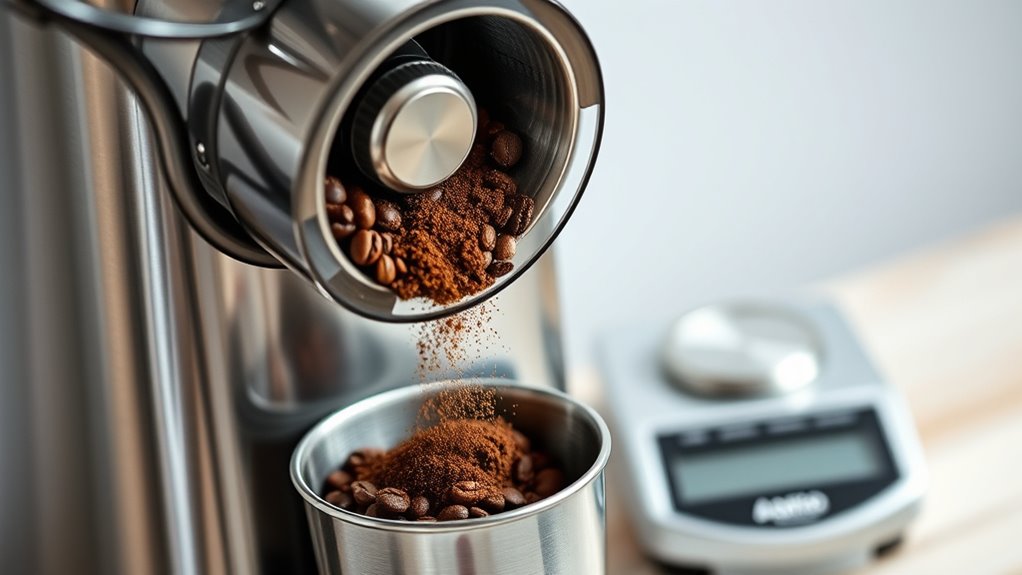
Next, grind a small amount of coffee and prepare to dial in your grinder. After grinding, take a look at the grounds. You want them to be uniform in size. If you see too many larger chunks or a lot of fine powder, make adjustments. A consistent grind is vital because it affects how quickly water flows through the coffee, influencing extraction and flavor.
Adjust the grind size slightly, either coarser or finer, depending on what you observed. Keep grinding small batches and testing until you achieve that sweet spot. It’s often a trial-and-error process, but that’s part of the fun. Once you’re satisfied with the grind consistency, it’s time to brew your espresso.
Pull a shot and watch the extraction closely. A good espresso flows like warm honey, and the crema should be thick and rich. If it’s pouring too quickly, you might need a finer grind; if it’s too slow, go coarser. Each adjustment you make should be based on taste and timing.
Frequently Asked Questions
How Often Should I Calibrate My Burr Grinder?
You should calibrate your burr grinder every few weeks to maintain grinder consistency. If you notice changes in flavor or extraction times, it’s a good idea to check the calibration sooner. Factors like humidity and bean freshness can affect your grind, so stay attentive. Regular calibration ensures you’re always brewing at your best, making your espresso experience enjoyable. Pay attention to these calibration frequencies to keep your coffee game strong!
Can I Use a Burr Grinder for Other Brewing Methods?
Absolutely, you can use a burr grinder for other brewing methods! Whether you’re making French press, pour-over, or cold brew, a burr grinder provides the grind size you need. Just remember to adjust your settings accordingly. Proper grinder maintenance is essential, as it guarantees flavor consistency across all your brews. Regularly cleaning your grinder will help preserve those delightful flavors, making every cup as enjoyable as the last. Enjoy experimenting!
What Type of Burr Grinder Is Best for Espresso?
When it comes to finding your perfect burr grinder, you’ll want a model that excels in producing espresso grind consistency. Flat burr grinders often shine here, as they provide uniform particle size, enhancing extraction. However, conical burr grinders aren’t to be overlooked; they offer versatility for various brewing methods. Choose a grinder that fits your style, and you’ll be well on your way to crafting that rich, velvety espresso you’ve been dreaming of.
Does the Grind Size Affect the Crema Quality?
Yes, the grind size considerably affects crema quality. When you achieve the right grind consistency, you enhance the extraction process, leading to a richer and thicker crema. If your grind is too coarse, it can dilute the flavors, resulting in a weak crema. On the other hand, a grind that’s too fine may cause over-extraction, negatively impacting taste. So, fine-tuning your grind size is essential for that perfect espresso crema enhancement.
How Do I Clean My Burr Grinder After Calibration?
Imagine your grinder as a loyal steed, needing care to keep performing at its best. To clean your burr grinder after calibration, first unplug it. Use a soft brush to remove coffee grounds and wipe the burrs with a cloth. For deeper cleaning, run some uncooked rice through it to absorb oils. Establish a regular cleaning schedule to maintain peak performance and guarantee your espresso remains rich and flavorful.
Conclusion
Now that you’ve mastered the art of calibrating your burr grinder, you’re one step closer to espresso nirvana. Just like a skilled barista crafting the perfect shot, patience and practice will lead you to that rich, aromatic bliss. Remember, every adjustment is a brushstroke on your canvas of flavor. So, keep experimenting and savoring the journey—after all, even Da Vinci had to mix a few colors before creating his masterpieces! Enjoy your brewing adventure!