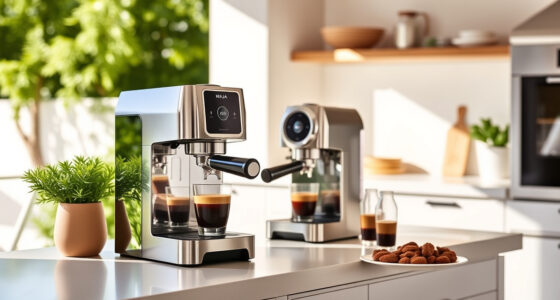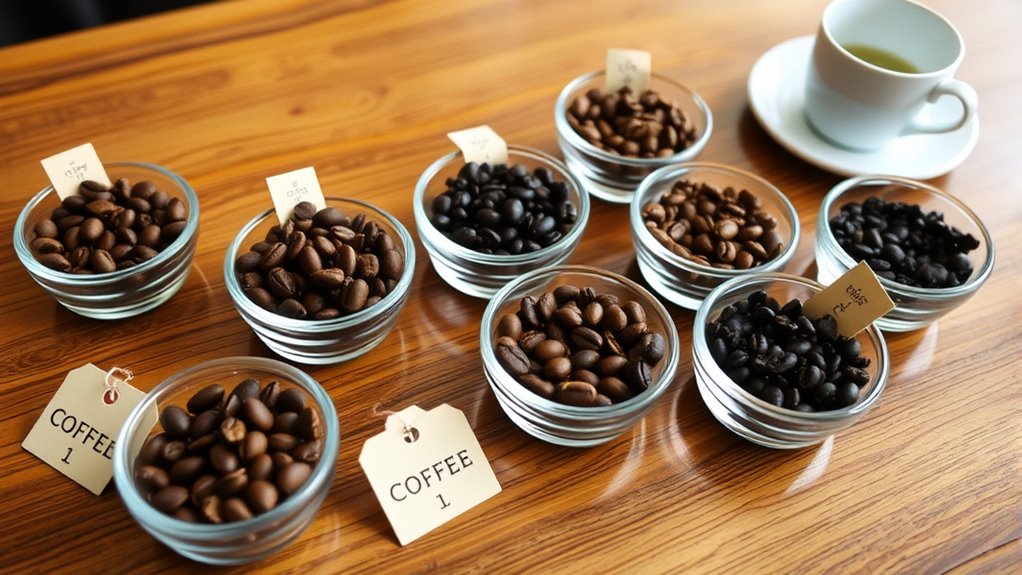

To develop your coffee palate, start by tasting a variety of coffees from different regions. Notice the unique flavors, like the fruity notes in Ethiopian beans or the chocolatey undertones in Brazilian varieties. Experiment with brewing methods—try a French press for richness or pour-over for clarity. Take notes on aroma, acidity, and mouthfeel to refine your preferences. Engaging with baristas can also enrich your journey. Keep going, and you’ll discover even more exciting insights about coffee.

Get kitchen gear delivered free — and shop member deals
- Fast, free delivery on millions of items
- Access to Prime Big Deal Days deals on October 6–7
- Prime Video, Amazon Music and more included
Key Takeaways
- Sample a variety of coffee beans from different regions to identify and refine your preferred flavor profiles.
- Take detailed notes on aroma, acidity, body, and finish to enhance your tasting experience and understanding.
- Experiment with various brewing methods and variables like grind size and water temperature to uncover new flavor dimensions.
- Engage with coffee experts or baristas to gain insights on flavor profiles and brewing techniques.
- Practice swirling and savoring each sip to fully appreciate the complexity and nuances of different coffees.
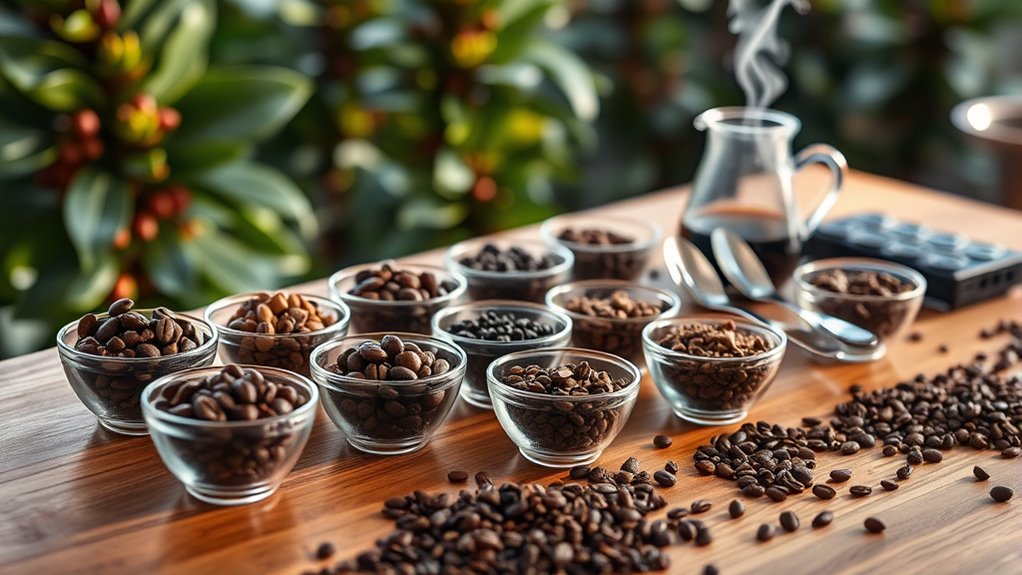
Coffee Tasting 101
If you’ve ever sipped a cup of coffee and wondered why some varieties taste so different, you’re not alone. The world of coffee is vast, with an array of flavor profiles that can be influenced by numerous factors. To truly appreciate these differences, developing your palate is essential. You might be surprised by how much your brewing techniques affect the final taste, and understanding this will elevate your coffee experience.
First, let’s explore flavor profiles. Coffee can range from fruity and acidic to rich and chocolatey, and everything in between. Each region produces beans with distinct characteristics—think Ethiopian coffees with their vibrant berry notes, or Brazilian beans that often boast nutty, chocolate undertones. By sampling a variety of coffees, you’ll start to identify which flavor profiles resonate with you. It’s like learning a new language; the more you taste, the more fluent you become in recognizing the subtleties. Don’t hesitate to take notes; jotting down what you like or dislike can help you refine your preferences.
Explore the diverse flavor profiles of coffee, from fruity to chocolatey, and refine your palate by sampling and taking notes.
Next up, let’s talk about brewing techniques. How you brew your coffee influences its flavor profile markedly. For example, a French press allows oils to remain in the cup, giving you a fuller-bodied experience, while a pour-over method tends to yield a cleaner taste. Experimenting with different brewing methods will open up a new world of flavors you might not have noticed before. Try varying the grind size, water temperature, and brew time; these factors can dramatically change the final cup.
When you’re tasting coffee, take a moment to evaluate its aroma, acidity, body, and finish. Swirl the liquid in your mouth and let it linger before swallowing. This process allows you to discover the complexities hidden within each cup. You may find that some coffees have a bright, crisp finish, while others might leave a smooth, lingering taste.
Finally, don’t shy away from asking questions at your local coffee shop or roastery. Baristas are often passionate about coffee and can provide valuable insights into different flavor profiles and brewing techniques. Engaging in discussions about your experiences can enhance your understanding and appreciation for this beloved beverage. As you continue to explore, you’ll develop a deeper connection with each cup, turning your coffee-drinking routine into a delightful adventure. Additionally, understanding color accuracy in coffee brewing can help you appreciate the nuances in flavor and aroma more fully.
Frequently Asked Questions
What Equipment Do I Need for Coffee Tasting?
For coffee tasting, you’ll need a few fundamental items. Start with a scale to measure your coffee accurately. A grinder’s vital for fresh grounds, and a French press or pour-over setup helps highlight coffee flavor profiles. Don’t forget cupping bowls to assess aroma development and tasting notes. A thermometer guarantees your water temperature is just right. Finally, a notebook’s handy for jotting down observations as you explore different blends and flavors.
How Should I Store My Coffee Beans?
To keep your coffee bean freshness intact, store them in airtight storage containers. A common myth is that refrigeration helps, but it actually introduces moisture and odors. Instead, find a cool, dark place in your kitchen, away from heat sources and sunlight. If you buy in bulk, consider using a vacuum-sealed bag for longer storage. By following these tips, you’ll guarantee your beans stay flavorful for your next brew.
Can I Taste Coffee Without Professional Training?
Absolutely, you can taste coffee without professional training! Start with home tasting by selecting a few different beans. Pour hot water over them and let them steep. Once brewed, engage in casual sampling; take sips and note the flavors you experience. Focus on aromas, acidity, and body. Don’t worry about being an expert; just enjoy the process. The more you taste, the more your palate will develop naturally!
What Is the Best Time of Day for Tasting Coffee?
The best time of day for tasting coffee is in the morning when you can enjoy that morning freshness. Your palate’s more receptive, allowing you to appreciate the flavors fully. However, if you’re an afternoon preference type, you can still taste coffee later in the day. Just be mindful of your body’s fatigue levels, as they might affect your ability to discern subtle notes. Ultimately, it’s about what works best for you!
How Does Brewing Method Affect Coffee Flavor?
Brewing methods can create two completely different experiences in your cup. If you prefer a bold flavor, a French press gives you a rich brew strength with a high extraction level, capturing more oils. In contrast, a pour-over allows for a cleaner taste, often resulting in a lighter body and subtle notes. Each method influences extraction differently, so experimenting will help you discover what flavors resonate with your palate. Enjoy the journey!
Conclusion
As you begin your coffee tasting journey, let each sip transport you to sun-drenched plantations, where vibrant cherries burst with flavor. With practice, you’ll uncover the rich tapestry of aromas and notes that dance on your palate, from chocolatey depths to fruity highs. Embrace the subtle nuances and let your senses awaken. Remember, coffee tasting isn’t just about drinking; it’s an adventure that invites you to savor the world, one cup at a time.
Evergreen bestsellers Picks
bestsellers
As an affiliate, we earn on qualifying purchases.