To brew the perfect cup of coffee, you need to master the coffee-to-water ratio for each method. For a French press, use about 1 oz of coffee per 15 oz of water. An espresso requires a stronger mix, around 1 oz of coffee per 2 oz of water. Adjust these ratios based on your taste preference for a bolder or lighter flavor. Keep exploring to find the ideal balance for your favorite brewing style.
Key Takeaways
- French press: Use 1 oz of coffee per 15 oz of water for a rich and balanced flavor.
- Espresso: Aim for 1 oz of coffee per 2 oz of water to achieve a strong and concentrated brew.
- Adjust ratios based on brewing methods to optimize flavor extraction and ensure the best results.
- Experiment with coffee-to-water ratios to find your personal preference for bolder or lighter tastes.
- Consistent measurements using a kitchen scale help replicate the same great coffee experience every time.
Have you ever wondered why your coffee sometimes tastes off? You might be surprised to learn that the coffee-to-water ratio plays a vital role in determining the flavor and overall quality of your brew. It’s not just about the beans; how much water you use can drastically affect coffee strength and brewing consistency. Getting this ratio right guarantees that your coffee is neither too weak nor too strong, allowing you to enjoy that perfect cup every time.
The coffee-to-water ratio is crucial for achieving the perfect brew—balance it right for a consistently delightful cup.
When you think about it, every brewing method requires a specific coffee-to-water ratio for ideal flavor extraction. For instance, if you’re using a French press, a common guideline is to use about one ounce of coffee for every 15 ounces of water. This ratio gives you a rich, full-bodied flavor without overwhelming bitterness. On the other hand, if you’re brewing espresso, you’ll need a much stronger concentration—typically, one ounce of coffee for every two ounces of water. This difference highlights how essential it is to adjust your ratio based on the method you choose.
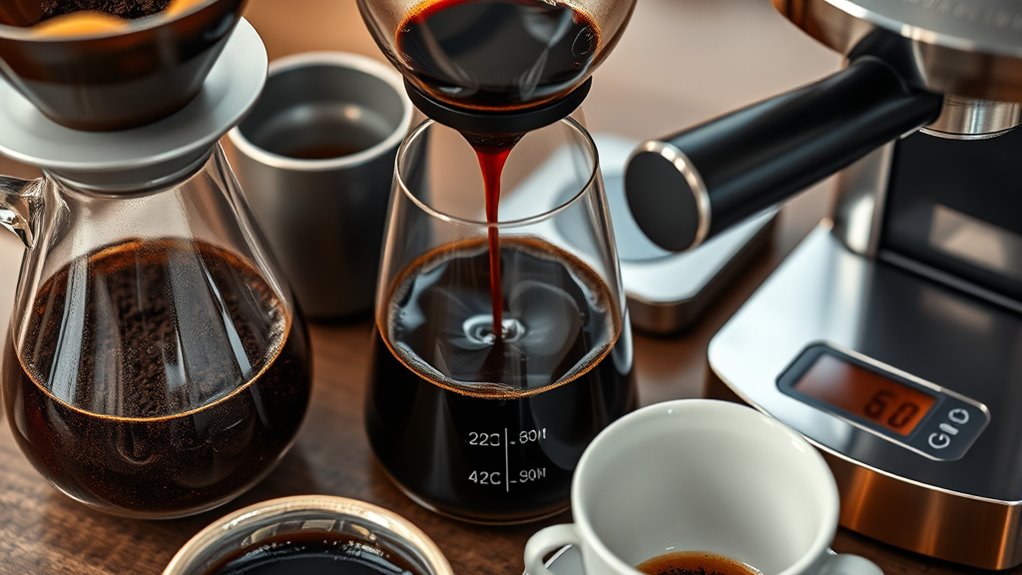
Brewing consistency matters immensely, especially if you’re aiming for the same delightful cup time after time. If you’ve ever brewed coffee that didn’t taste quite right, it could be due to inconsistency in your measurements. By keeping track of how much coffee and water you use, you can replicate your best brews with ease. Investing in a kitchen scale can help you achieve that precision, guaranteeing your ratios are accurate each time.
If you’re experimenting with different brewing methods, don’t hesitate to adjust your ratios further to suit your taste preferences. Some people enjoy a bolder flavor, while others may prefer something lighter and more delicate. It’s all about finding that sweet spot that works for you. Don’t be afraid to tweak your coffee-to-water ratio until you find the perfect match for your palate.
Ultimately, understanding the importance of the coffee-to-water ratio will elevate your brewing game. You’ll not only improve your coffee strength but also enhance the overall experience of your daily cup. With a little practice and attention to detail, you’ll be able to brew consistently delicious coffee that satisfies your cravings and impresses your friends. So grab your coffee beans, measure accurately, and start brewing that perfect cup today!
Frequently Asked Questions
How Does Grind Size Affect Coffee Extraction?
Grind size considerably affects your coffee extraction. Finer grinds increase surface area, leading to faster extraction times, while coarser grinds slow it down. You’ll want to maintain grind consistency for ideal results. If your grind’s uneven, some coffee might over-extract, becoming bitter, while others under-extract, tasting weak. Adjust your grind size based on your brewing method to achieve that perfect balance, ensuring a rich, flavorful cup every time you brew.
Can I Use Flavored Coffee With These Ratios?
Absolutely, you can use flavored coffee with those brewing ratios! Think of flavored coffee as a canvas; it can enhance the art of your brew. Just remember, the strength and intensity of the flavor can vary, so you might need to adjust your brewing ratios slightly to achieve that perfect balance. Experiment a bit to find what works best for your taste buds, and enjoy the delicious journey!
What Water Temperature Is Ideal for Brewing?
The ideal brewing temperature for coffee is between 195°F and 205°F. This range helps extract the best flavors while considering water chemistry. If your water’s too hot, it can lead to over-extraction and bitterness. Too cold, and you won’t get the full flavor profile. Keep your water within this temperature range, and you’ll enjoy a well-balanced cup that highlights the unique qualities of your beans. Happy brewing!
How Long Should I Brew My Coffee?
If you’re brewing a French press, aim for a brew time of about four minutes. This allows for an ideal extraction balance, where the flavors develop nicely without becoming overly bitter. If you brew for too long, your coffee can taste harsh. Conversely, brewing for too short might leave it weak. So, stick to that four-minute mark, and you’ll enjoy a rich, flavorful cup every time. Enjoy your brewing!
Does the Type of Coffee Bean Matter?
Yes, the type of coffee bean does matter. Different coffee bean types, like Arabica and Robusta, offer unique flavors and aromas. You’ll notice how the roasting levels also impact the taste; light roasts highlight acidity, while dark roasts bring out rich, bold flavors. Experimenting with various beans and roasts can elevate your coffee experience, so don’t hesitate to try different combinations to find what suits your palate best!
Conclusion
So, whether you’re a pour-over perfectionist or a French press fanatic, remember: the perfect coffee-to-water ratio is your golden ticket to caffeine nirvana. Just don’t let anyone catch you measuring—after all, who wants to ruin the romance of brewing by being precise? Embrace your inner mad scientist, throw caution (and those pesky scales) to the wind, and let your taste buds guide you. After all, life’s too short for bad coffee, unless you’re into that sort of thing!