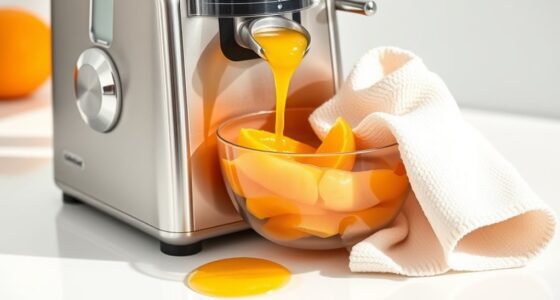
To make fresh juice without a juicer using a blender, start by selecting ripe, fresh fruits and vegetables, wash them thoroughly, and chop into smaller pieces. Add softer ingredients first, then layer tougher ones, blending in short, pulsing bursts at moderate speed. Once smooth, strain the mixture through a fine sieve or cheesecloth to separate the pulp from the juice. For better flavor, add herbs or citrus, and store in an airtight container. Continue exploring tips for perfecting your homemade juice.
Key Takeaways
- Select ripe, firm produce and wash thoroughly to ensure clean, vibrant ingredients for blending.
- Add softer ingredients first, then layer harder produce, and blend in short pulses for a smooth mixture.
- Strain the blended mixture through a fine mesh or cheesecloth to separate pulp from juice.
- Adjust blending speed, add liquids early, and scrape sides to achieve a smooth, clump-free juice.
- Store in airtight containers, serve chilled with garnishes, and enjoy fresh within 24 hours.
Selecting the Right Fruits and Vegetables
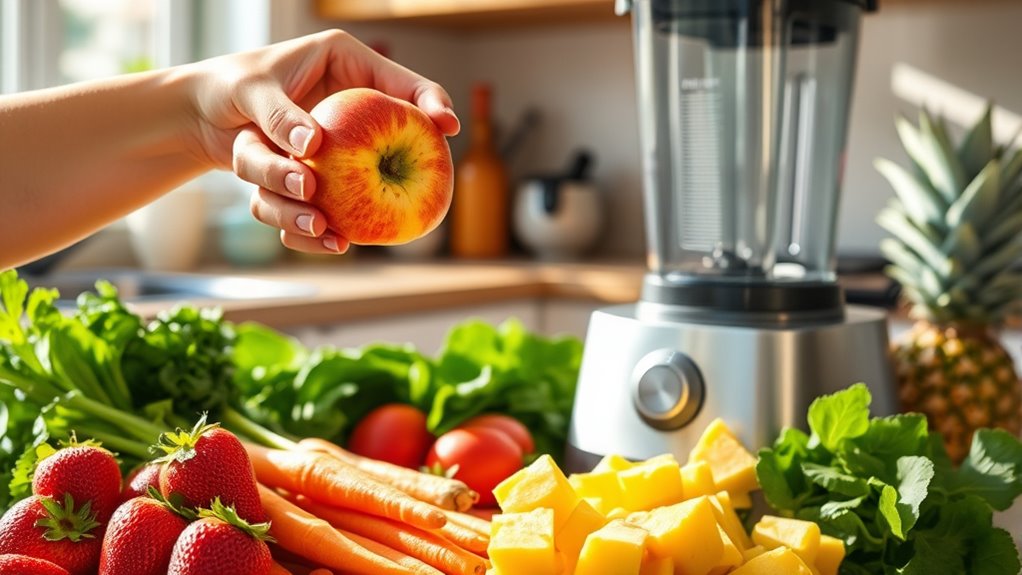
Choosing the right fruits and vegetables is essential for making fresh juice that tastes great and provides maximum nutrients. Start with good fruit selection by choosing ripe, fresh options that feel firm but not hard. Look for vibrant colors and avoid bruised or soft spots. When selecting vegetable varieties, opt for crisp, fresh produce free of wilting leaves or blemishes. Leafy greens like spinach or kale work well, along with crunchy cucumbers and sweet carrots. Variety is key to balancing flavor and nutrients, so mix different textures and tastes. Prioritize seasonal produce for better flavor and affordability. By carefully selecting high-quality fruits and vegetables, you ensure your homemade juice will be both delicious and packed with essential vitamins.
Preparing Your Ingredients for Blending
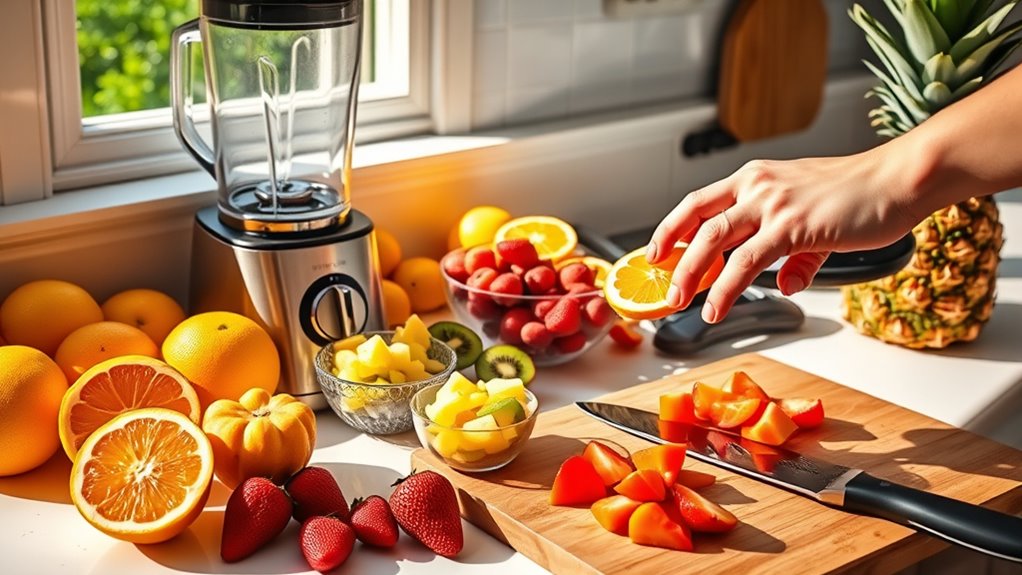
Start by selecting fresh, high-quality produce for the best flavor and nutrition. Before blending, wash all your ingredients thoroughly to remove dirt and pesticides. Proper preparation guarantees your juice tastes great and is safe to drink. Additionally, ensuring your produce has accurate color reproduction can enhance the visual appeal of your juice. For optimal results, consider the horsepower of electric dirt bikes to understand how powerful your blender’s motor should be to handle tougher ingredients. Being aware of kitchen appliance capabilities can help you choose the right blender for your needs.
Choose Fresh Produce
How do you guarantee your juice tastes vibrant and fresh? The key is choosing the right fresh produce. Start with seasonal produce, which is at its peak flavor and nutrition. Fresh fruits and vegetables not only taste better but blend more smoothly, giving you a richer juice. Think about fruit pairings that complement each other—like apples with carrots or berries with citrus—for balanced sweetness and acidity. Look for produce that’s firm, free of blemishes, and vibrant in color. Avoid produce that’s soft or dull, as it may be past its prime. Using fresh, in-season ingredients ensures your juice is bursting with flavor and nutrients, making each glass satisfying and delicious. Additionally, understanding produce freshness indicators can help you select the best ingredients for your juice. Incorporating proper storage techniques can further extend the freshness of your produce before blending. Paying attention to produce ripeness can also enhance the overall taste and quality of your homemade juice. Maintaining awareness of seasonal availability can help you plan your ingredients better and enjoy the freshest produce year-round.
Properly Wash Ingredients
Once you’ve selected your vibrant, seasonal produce, it’s time to guarantee every ingredient is properly cleaned before blending. Good fruit handling and hygiene practices are essential to remove dirt, bacteria, and pesticides. Start by rinsing fruits and vegetables under cold running water. For items with crevices or thick skins, use a brush or cloth to scrub gently. Avoid soaps or chemicals. Here’s a quick guide:
| Fruit/Vegetable | Cleaning Method | Notes |
|---|---|---|
| Berries | Rinse gently in water | Use a colander |
| Apples, Pears | Rinse and scrub with brush | Remove wax coating |
| Leafy Greens | Soak, then rinse thoroughly | Remove grit |
| Root Vegetables | Scrub with brush | Peel if desired |
Proper washing ensures your juice is safe and fresh. Additionally, understanding proper hygiene practices can further enhance the safety of your ingredients. To maintain cleanliness, consider washing your produce just before use to prevent spoilage and food safety concerns. Proper produce handling not only keeps your ingredients safe but also preserves their nutritional value for a more flavorful juice.
Blending Techniques for Smooth Juice
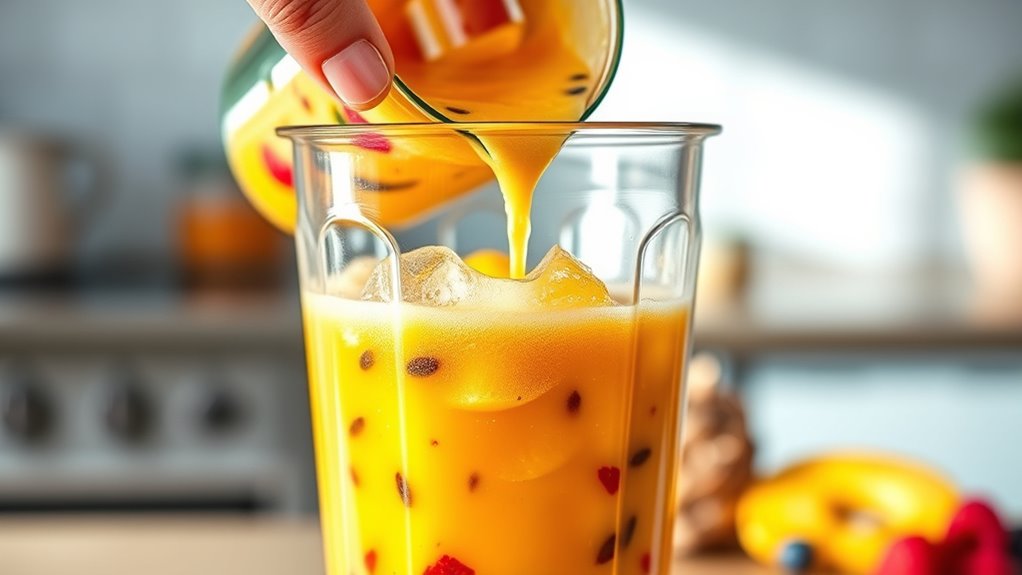
To achieve a smooth juice when blending, selecting the right combination of ingredients and blending techniques is essential. Start by establishing a good texture balance; add softer ingredients like bananas or yogurt first to create a smooth base. Then, layer harder fruits and vegetables on top, which helps the blades process everything evenly. Use short, pulsing bursts instead of continuous blending to better control texture and prevent over-processing. Keep the blender’s speed moderate, gradually increasing if needed, to avoid splattering and ensure consistent blending. If your mixture isn’t smooth enough, stop and scrape down the sides, then blend again. Proper ingredient layering and blending technique help you attain a silky, uniform juice without unnecessary chunks or separation. Incorporating techniques to detect passive voice can also improve clarity and engagement in your instructions. Paying attention to blending speed and duration is crucial for achieving the desired consistency. Additionally, understanding the importance of ingredient order can make a significant difference in the final texture of your juice. Using the correct blending duration ensures thorough mixing without overworking delicate ingredients. Being mindful of proper ingredient prep can also enhance the overall smoothness and flavor of your juice.
Straining and Extracting the Juice

After blending your ingredients, the next step is to strain and extract the juice to achieve a smooth, pulp-free beverage. This process is essential for fiber separation and pulp removal, giving you a clean drink. Here’s what to do:
- Place a fine mesh strainer or cheesecloth over a bowl or pitcher.
- Pour the blended mixture slowly, allowing the liquid to pass through while trapping pulp.
- Use the back of a spoon or spatula to press gently, squeezing out every drop of juice.
- Discard the remaining pulp or save it for other recipes, knowing your juice is clear and smooth.
- To ensure maximum yield and clarity, consider understanding water chemistry principles that can improve filtration efficiency and taste.
This step transforms a chunky blend into a revitalizing, pulp-free drink that’s perfect for any time of day.
Tips for Achieving the Perfect Consistency
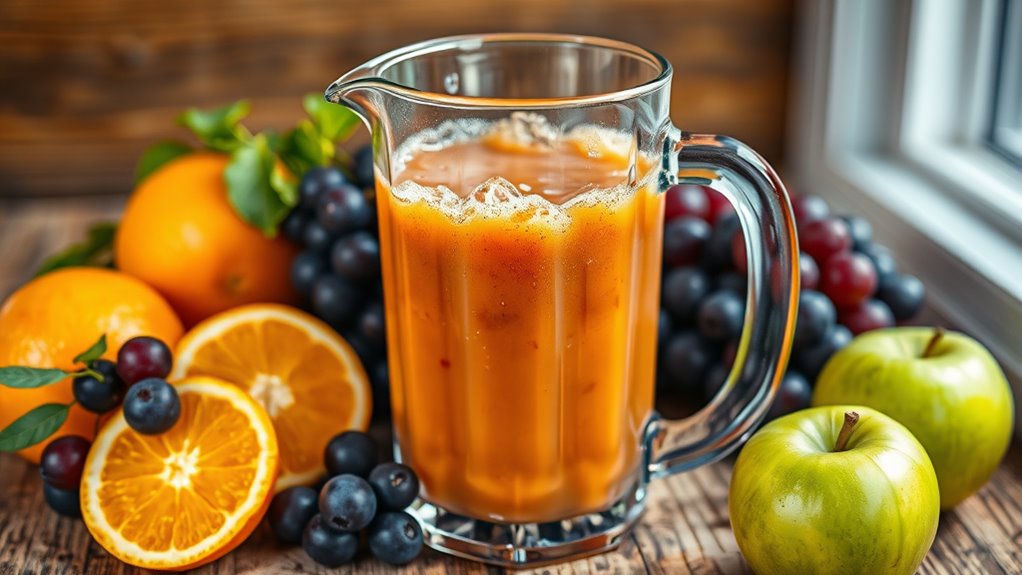
Achieving the perfect juice consistency depends on balancing your ingredients and adjusting your technique. To get the right texture, start by experimenting with texture adjustments, such as adding a splash of water or a bit more fruit to thin or thicken your blend. Controlling blending speed is key—begin with a low setting to break down larger pieces, then increase to high for smoothness. If your juice feels too gritty or chunky, blend longer or incorporate a little liquid to help achieve a uniform texture. Conversely, if it’s too thin, blend briefly to allow natural pulp to settle or strain again. Remember, patience and small adjustments make a big difference in reaching your ideal consistency.
Enhancing Flavor With Additional Ingredients

Adding extra ingredients can boost your juice’s flavor and make it more interesting. You can elevate your blend by adding herbs like mint or basil, which provide a fresh, aromatic touch. To balance sweetness, consider including a splash of lemon juice or a pinch of sea salt—these enhance flavor without overpowering. Here are some ideas to inspire you:
Enhance your juice with fresh herbs, citrus, honey, or a pinch of sea salt for added flavor and complexity.
- Add fresh herbs for vibrant aroma and complexity.
- Incorporate a squeeze of citrus to brighten the taste.
- Use a small amount of honey or agave to subtly sweeten.
- Mix in a pinch of sea salt to deepen and balance flavors.
Troubleshooting Common Blending Issues
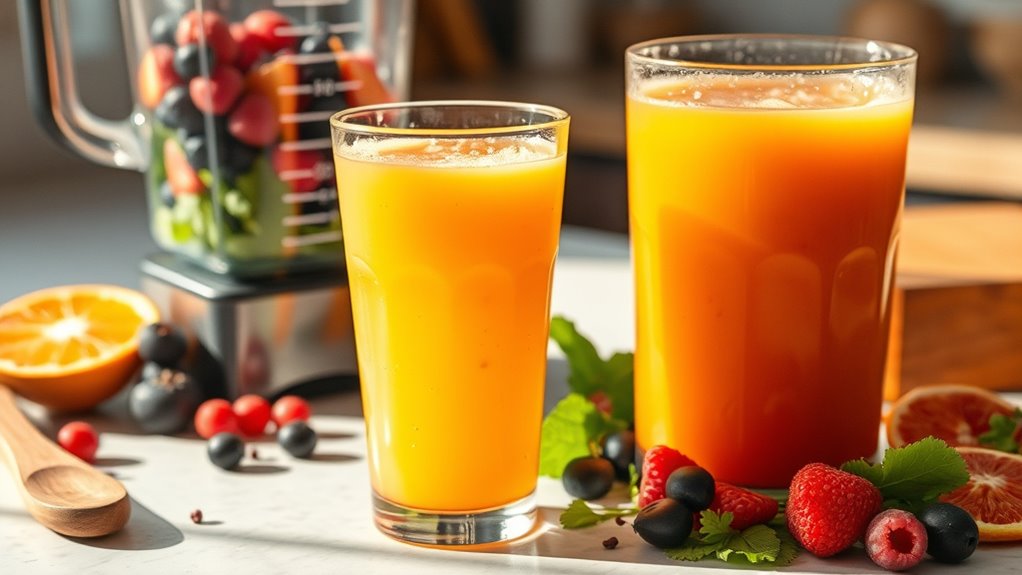
If your juice isn’t smooth enough, try adding a bit more liquid or chopping ingredients smaller before blending. To prevent clumping, occasionally stop and scrape down the sides of your blender or use a tamper to keep everything moving. Addressing these issues helps you achieve a consistently silky texture every time. Incorporating proper blending techniques can also improve the overall consistency of your juice, and understanding the importance of equipment maintenance ensures your blender performs optimally over time. Additionally, being mindful of food preparation methods allows you to optimize the texture and flavor of your blended juices, just as coaching experience can enhance athletic performance and results.
Achieving Smooth Consistency
Sometimes, blending fresh fruits and vegetables can result in a chunky or uneven juice. To achieve a smooth consistency, focus on texture control and ingredient emulsification. First, pulse your ingredients gradually; this prevents overloading your blender and ensures even blending. Second, add small amounts of liquid—like water or juice—to help ingredients move freely. Third, scrape down the sides of the blender jar regularly, promoting uniform emulsification. Fourth, blend in short bursts rather than continuous speed, allowing you to monitor progress. Fifth, choosing the right blender or blending technology can significantly impact the smoothness of your juice. These steps help break down fibrous elements and create a silky texture. Additionally, understanding vintage appliances can guide you in selecting the best equipment for achieving optimal blending results. Proper technique guarantees your juice is smoothly blended, free of chunks, and has an appealing consistency that’s enjoyable to drink. Incorporating blending techniques that are suited to your specific appliance can further improve the final texture. Moreover, paying attention to energy efficiency of your blender can save power while maintaining blending performance.
Preventing Ingredient Clumping
Clumping can occur when ingredients stick together, making blending uneven and difficult. To prevent this, control your blending speed; start slow to break down ingredients without causing ingredient oxidation or overheating. Increasing speed gradually helps evenly distribute ingredients and reduces clumping. Additionally, adding small amounts of liquid or using softer ingredients first can improve flow. Be cautious of over-blending, which accelerates oxidation and causes sticky clumps. Use the following table to optimize your blending process:
| Technique | Effect |
|---|---|
| Slow start | Prevents clumping and oxidation |
| Gradual speed increase | Ensures even consistency |
| Add liquids early | Improves flow and reduces sticking |
| Use softer ingredients first | Facilitates smoother blending |
| Short bursts | Avoids overheating and clumping |
Balancing blending speed and ingredient management keeps your juice smooth and free of clumps.
Serving and Storing Your Fresh Juice
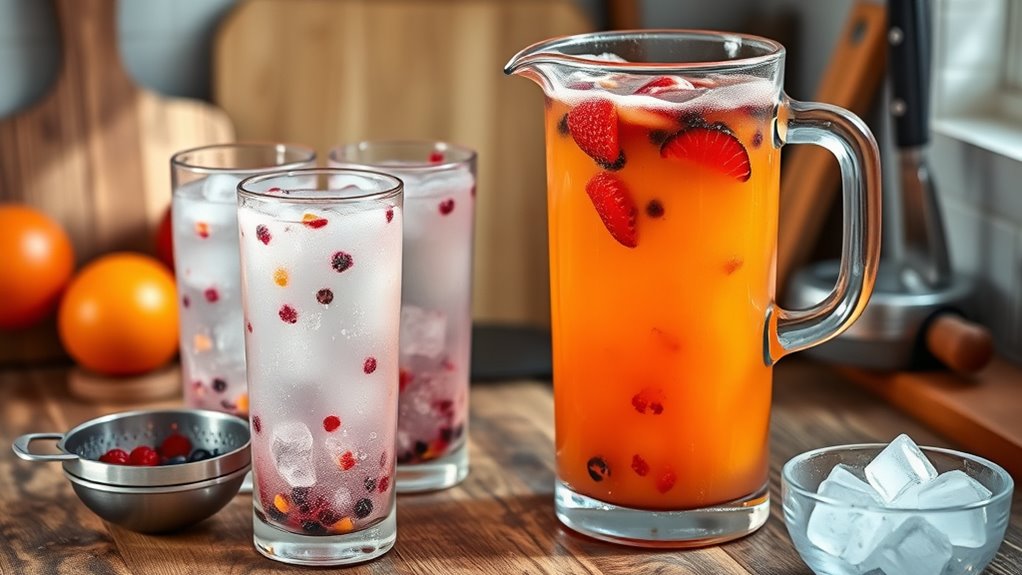
Ever wondered the best way to enjoy and keep your freshly made juice? Proper serving and storage make all the difference. To preserve freshness, use airtight container storage, which prevents oxidation and maintains flavor. When serving, consider these tips:
- Pour into a glass and add ice for immediate refreshment.
- Use a straw to enhance sipping enjoyment.
- Garnish with a slice of fruit for visual appeal.
- Serve chilled to maximize flavor.
Storing your juice in a sealed container in the fridge keeps it fresh for up to 24 hours. Always shake or stir before drinking, as ingredients may settle. These simple steps ensure your juice stays delicious and ready whenever you crave a healthy boost.
Creative Variations and Recipes to Try
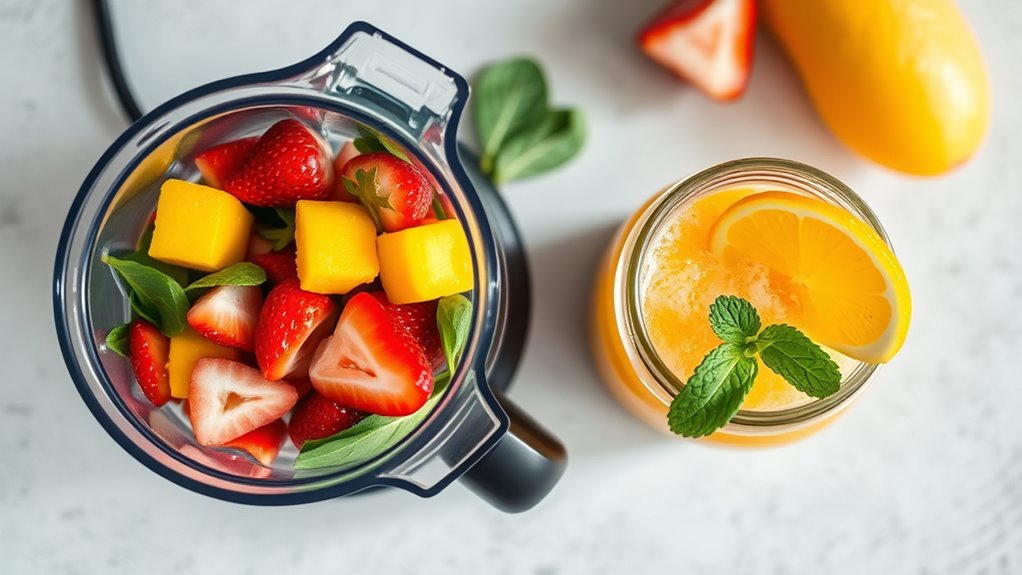
Creative variations and recipes can elevate your homemade juice experience by adding exciting flavors and nutritional boosts. Experiment with different fruit combinations like pineapple and mango for a tropical twist or berries and apples for a balanced sweetness. Incorporate herbal infusions such as mint, basil, or ginger to enhance flavor and provide added health benefits. You can also blend in vegetables like spinach or cucumber for more nutrients without sacrificing taste. Try adding a splash of coconut water or a squeeze of lemon to brighten the flavor profile. These creative variations allow you to customize your juice to suit your preferences, making the process fun and versatile. Don’t be afraid to mix and match ingredients to discover new favorite recipes.
Frequently Asked Questions
How Do I Clean My Blender Afterward?
After blending, you should rinse your blender immediately to prevent residue from sticking. For effective post-blend cleanup, add warm water and a few drops of dish soap, then blend for 30 seconds to loosen debris. Use a sponge or brush to scrub the blades and container, paying attention to hard-to-reach spots. Rinse thoroughly and dry. Regular cleaning tips keep your blender in top shape and guarantee fresh, tasty juice every time.
Can I Use Frozen Fruits Instead of Fresh?
Back in the day, using frozen fruits is totally doable for fresh juice. You’ll want to slightly thaw them first to prevent overly thick texture modification, which might strain your blender. Frozen fruits are great for fruit preservation, locking in flavor and nutrients. Just keep in mind, their colder temperature can make blending a bit tougher, but it’s a handy way to enjoy seasonal flavors year-round without sacrificing freshness or taste.
How Long Can I Store Homemade Juice Safely?
You can store homemade juice in the refrigerator for up to 24 to 48 hours for peak freshness and safety. Always use airtight containers and keep the juice chilled to slow bacterial growth. Stir or shake the juice before drinking, as separation may occur. For longer storage, consider freezing it in portions, but consume it within a month to maintain flavor and nutrients. Proper refrigeration tips help guarantee your homemade juice stays fresh and safe.
What Are Alternative Liquids to Water for Blending?
Did you know that blending with alternative liquids can boost your juice’s nutritional value? You can try fruit infusions like coconut water, almond milk, or herbal teas for richer flavor and added health benefits. These flavor additives not only enhance taste but also provide unique nutritional profiles. Experimenting with different liquids makes your homemade juice more exciting and customized to your preferences, turning simple blends into delightful, nutritious beverages.
Is It Safe to Blend Citrus Fruits With Other Ingredients?
Yes, it’s safe to blend citrus fruits with other ingredients, but you should remove citrus seeds first, as they can be bitter or slightly toxic. To improve pulp consistency, blend until you reach your desired texture—adding a bit of water or alternative liquids helps achieve a smoother juice. Always be cautious with seeds, and enjoy your fresh citrus blend for a tasty, nutritious drink!
Conclusion
Now that you’ve mastered the blender method, creating fresh, vibrant juice at home becomes effortless. With a little practice, you’ll enjoy delicious drinks tailored to your taste and health goals. Isn’t it rewarding to turn simple ingredients into a flavorful, nutritious treat without expensive equipment? Keep experimenting with different fruits, veggies, and add-ins—your perfect juice recipe is just a blend away. Cheers to your homemade juice adventures!