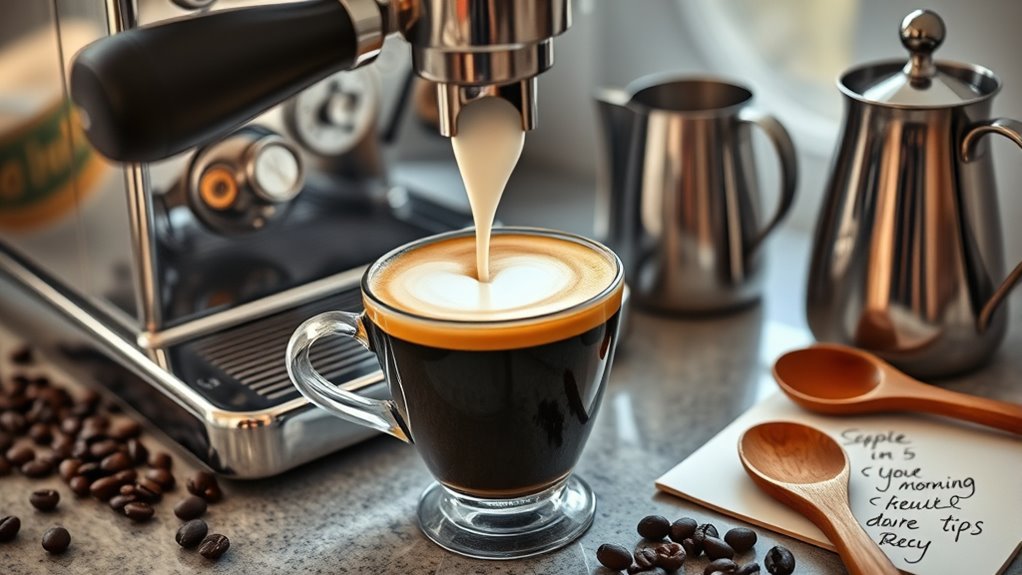

To make a cappuccino at home, start by brewing a double shot of espresso using fresh, high-quality coffee beans. Froth about 6 ounces of whole milk until it reaches a velvety microfoam consistency. Pour the espresso into your cup first, then gently add the frothed milk, creating that signature layered effect. If you’re feeling creative, try some latte art on top. There’s more to master for the perfect cappuccino, and you’re just getting started!
Key Takeaways
- Select fresh, high-quality coffee beans and grind them just before brewing for optimal flavor, using 18-20 grams for a double shot of espresso.
- Brew espresso using an espresso machine at around 9 bars of pressure, or use alternatives like a Moka pot or Aeropress.
- Heat and froth about 6 ounces of whole milk to approximately 150°F, aiming for a velvety microfoam consistency.
- Pour the brewed espresso into a cup first, then gently add the frothed milk on top to create a layered effect.
- Practice pouring techniques for latte art to enhance the visual appeal of your homemade cappuccino.
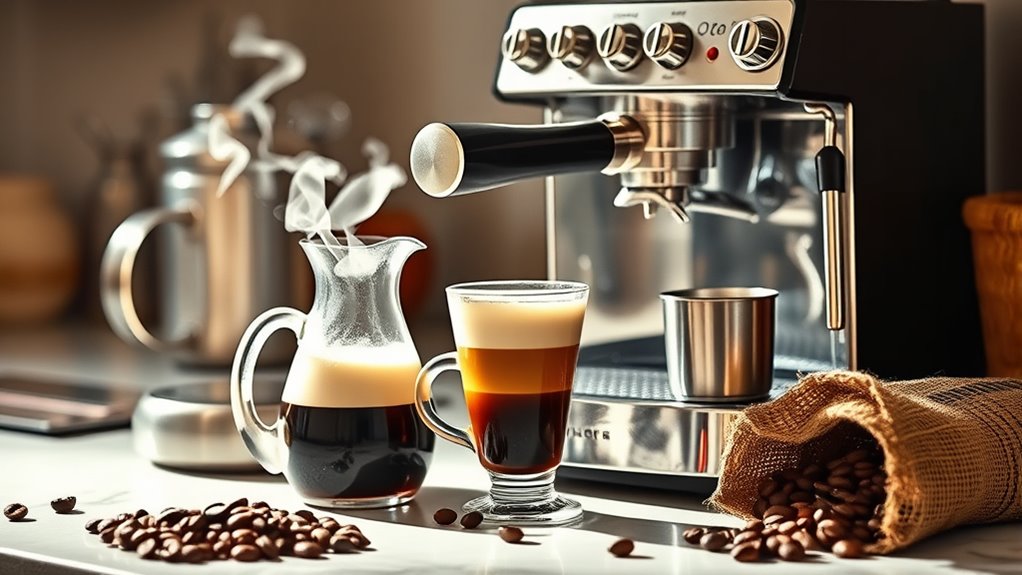
Have you ever wondered how to create the ideal cappuccino at home? It’s easier than you might think, and with a bit of practice, you’ll impress your friends and yourself with your barista skills. The key to a great cappuccino lies in the quality of your coffee, the right brewing methods, and, of course, that beautiful coffee art you’ll want to master.
Start with fresh, high-quality coffee beans. Whether you prefer a light roast or a dark roast, make sure to grind them just before brewing for maximum flavor. A burr grinder is ideal for achieving a consistent grind size. You’ll want your coffee grounds to be fine but not too powdery. About 18-20 grams of coffee for a double shot of espresso usually works well.
Now, let’s talk about brewing methods. If you’ve got an espresso machine, you’re in luck! Brew your espresso shot using around 9 bars of pressure, which is essential for extracting those rich, aromatic flavors. If you don’t have an espresso machine, you can use a stovetop Moka pot or an Aeropress as alternatives. Make sure the water temperature is around 200°F for supreme extraction. After brewing, you should have a robust shot of espresso ready to go.
Next, it’s time to froth your milk. Whole milk works best because its higher fat content creates a creamier texture. Pour about 6 ounces of milk into a frothing pitcher and heat it to around 150°F. Use a steam wand if you have one, angling it so that the milk swirls, introducing air until it reaches a velvety microfoam consistency. If you’re using a frother or whisk, keep it moving until you achieve that delightful froth.
Once your milk is frothed, it’s all about the pour. Start by pouring the espresso into your cup, then gently add the frothed milk. The goal is to create a layered effect, with the espresso at the bottom and the milk on top. For that coffee art finish, you can use a spoon to hold back the foam at first, then let it flow over the top, swirling or creating hearts and rosettas as you go.
Additionally, understanding the mechanics of French press can enhance your overall coffee brewing experience. With a little practice, you’ll not only enjoy a delicious cappuccino but also showcase your skills in coffee art. So grab your ingredients, embrace the brewing methods, and get ready to craft the perfect cappuccino in the comfort of your home!

CASABREWS CM5418 Espresso Machine 20 Bar, Compact Espresso Maker with Steam Milk Frother, Stainless Steel Coffee Machine with 34oz Removable Water Tank for Cappuccino, Small Latte Machine, Silver
Make Your Favorite Espresso Coffee At Home: The CASABREWS coffee machine with milk frother allows you to prepare…
As an affiliate, we earn on qualifying purchases.
As an affiliate, we earn on qualifying purchases.
Frequently Asked Questions
What Type of Milk Is Best for Cappuccino?
The best milk for cappuccino is whole milk, as its fat content creates a rich, creamy froth. However, if you prefer non-dairy options, oat milk and almond milk work well, too. These alternatives can froth nicely, giving you that desired texture. Just remember to choose barista versions for the best results. Whichever milk you choose, make sure it’s fresh to enhance the flavor and frothing ability for a perfect cappuccino experience.
Can I Use Instant Coffee for Cappuccino?
Sure, you can use instant coffee for a cappuccino, but let’s be honest—it’s like using a microwave for gourmet cooking. While it won’t give you that rich espresso flavor, it can work in a pinch. Pair it with milk alternatives like oat or almond milk for a creamy texture. Just mix the instant coffee with hot water, froth your milk alternative, and you’ve got a quick caffeine fix, even if it’s not traditional!
How Do I Clean My Espresso Machine?
To clean your espresso machine, start by using a suitable cleaning solution designed for espresso machine maintenance. First, remove the portafilter and rinse it under hot water. Then, run a cleaning cycle with the solution in the water reservoir, ensuring you follow the manufacturer’s instructions. Don’t forget to clean the steam wand and drip tray as well. Regular maintenance keeps your machine in top shape, ensuring great-tasting coffee every time!
What Alternatives Exist for Dairy Milk?
When it comes to finding alternatives for dairy milk, you’ve hit the jackpot with plant-based options! Almond, soy, oat, and coconut milk are all great choices that can add their unique flavors to your drinks. If you want to kick things up a notch, consider flavor enhancements like vanilla or caramel syrups. These alternatives not only cater to dietary needs but also open up a world of delicious possibilities for your cappuccino!
How Long Does Cappuccino Stay Fresh?
A cappuccino stays fresh for about 30 minutes after you’ve made it. After that, the milk frothing can cause a change in texture and flavor, which might not be enjoyable. To maintain coffee freshness, drink it soon after brewing. If you’ve made extra, consider chilling it for later use, but be aware that reheating can alter the taste. Enjoy your cappuccino while it’s at its peak for the best experience!

SIMPLETASTE Milk Frother, 4-in-1 Electric Milk Frother and Steamer, Automatic Warm and Cold Foam Maker and Milk Warmer for Latte, Cappuccinos, Dark Blue
4-in-1 Multifunctional: Customize your favorite café-style drinks at home with this versatile milk frother. Choose from warm dense…
As an affiliate, we earn on qualifying purchases.
As an affiliate, we earn on qualifying purchases.
Conclusion
Now that you know how to make a delicious cappuccino at home, you can impress your friends or simply enjoy a café-quality drink whenever you want. Remember, practice makes perfect, so don’t be afraid to experiment with the ratios of espresso, milk, and foam to find your ideal balance. With a little patience and creativity, you’ll soon have it down to a fine art. After all, every great journey begins with a single step!
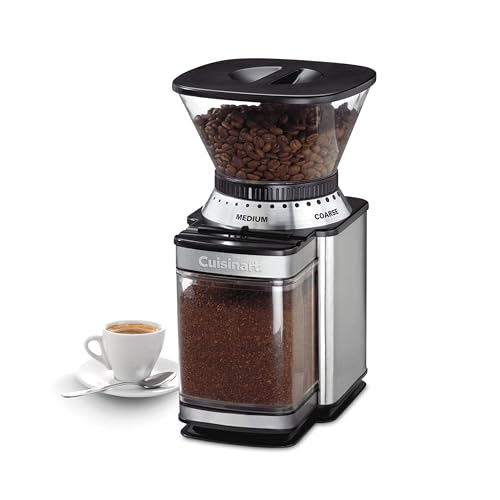
Cuisinart Coffee Grinder, Electric One-Touch Automatic Burr Coffee Grinder with 18-Position Grind Selector, Cup Size Selector for 4 – 18 Cups, DBM-8P1, Black Stainless
ENJOY OPTIMUM FLAVOR: The Cuisinart Coffee Grinder with 18-position slide-dial grind selector provides a uniform grind from ultra-fine…
As an affiliate, we earn on qualifying purchases.
As an affiliate, we earn on qualifying purchases.

Primula Classic Stovetop Espresso and Coffee Maker, Moka Pot for Italian and Cuban Café Brewing, Greca Coffee Maker, Cafeteras, 6 Espresso Cups, Silver
CRAFT COFFEE AT HOME: Produces six demitasse/espresso servings of rich, smooth espresso coffee in minutes. Craft your own…
As an affiliate, we earn on qualifying purchases.
As an affiliate, we earn on qualifying purchases.