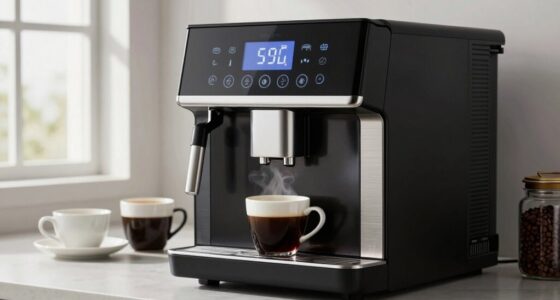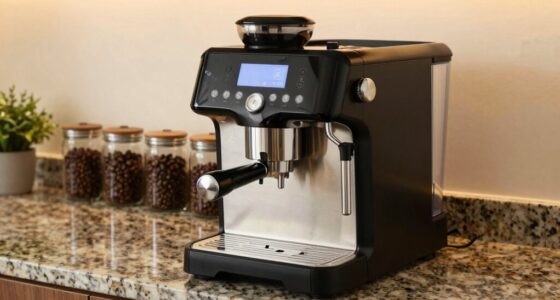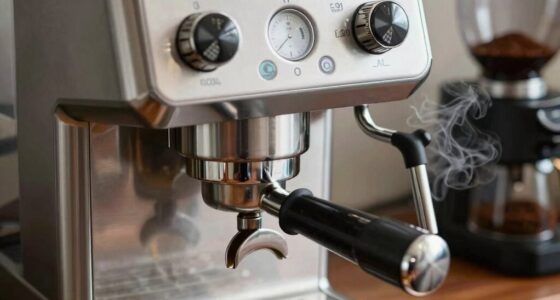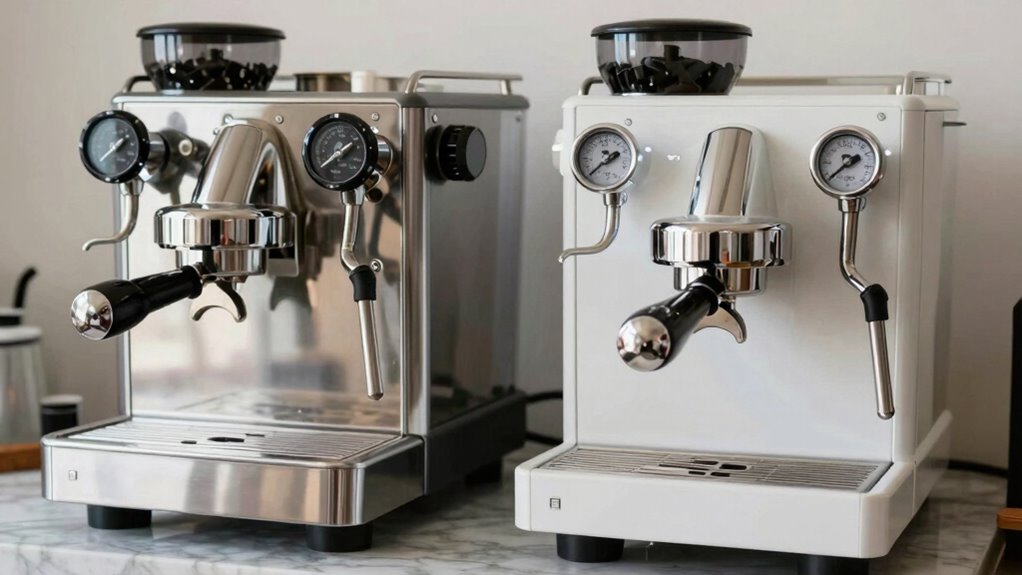
If you want consistent temperature control for easier brewing, a dual boiler machine is a great choice, especially if you’re a beginner or want more stability. It simplifies workflow and reduces the need for adjustments, making it easier to dial in espresso. On the other hand, a heat exchanger setup offers a more compact, budget-friendly option but requires more skill to manage temperature swings. Keep exploring to see which setup best matches your routine and preferences.
Key Takeaways
- Dual boilers offer stable, precise temperatures ideal for consistent espresso quality and easier dialing in for beginners and professionals.
- Heat exchanger machines are more affordable and space-efficient, suitable for users who can manage temperature fluctuations.
- Dual boilers facilitate quicker workflow with less need for adjustments during brewing and steaming processes.
- Heat exchangers require more skill to maintain optimal extraction due to temperature variability.
- Your choice depends on your budget, space, skill level, and desire for ease versus control in brewing.
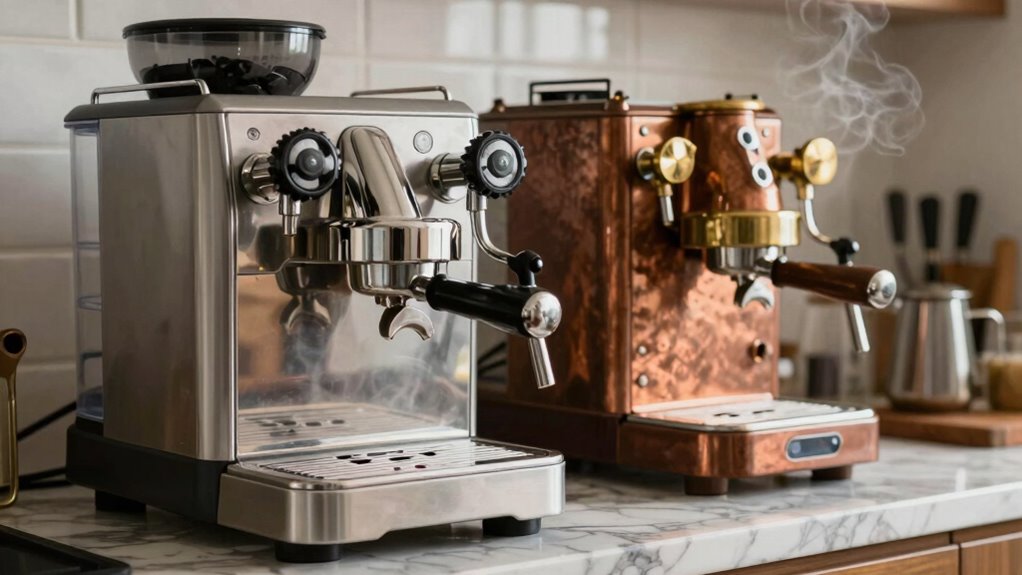
Choosing the right espresso setup can profoundly impact your brewing experience, especially if you want consistent, high-quality shots. Whether you prefer a dual boiler or a heat exchanger machine, understanding how each influences your process is key. Both setups allow you to brew espresso at home, but they handle temperature control differently, which can affect your workflow and results. To get the best shots, you need to pay attention to details like grind size and tamp pressure, as these are critical regardless of the machine type. The grind size influences extraction; a finer grind generally increases resistance and extraction time, while a coarser grind speeds things up. Tamp pressure, on the other hand, helps create an even, compact coffee puck that resists water flow uniformly. With a dual boiler, you typically get separate boilers for brewing and steaming, allowing you to maintain precise temperatures for both processes simultaneously. This consistency makes it easier to dial in your grind size and tamp pressure because you can adjust each parameter without worrying about temperature fluctuations. You can fine-tune your grind size to get the ideal extraction, and tamp pressure becomes more predictable when your machine maintains stable temperatures. On the flip side, heat exchanger machines share a single boiler for both brewing and steaming, which means the temperature fluctuates depending on the cycle. This requires more skill and attention as you need to manage your grind size and tamp pressure carefully to compensate for slight temperature shifts. You might find yourself adjusting grind size slightly more often or tamping with different pressure to get the shot just right. Because of the fluctuating temperature, consistency in tamp pressure becomes even more critical; too much or too little can lead to over- or under-extraction. A dual boiler setup provides a more forgiving environment for beginners and seasoned baristas alike, offering stable conditions that simplify the process. Additionally, understanding regional flavors and their influence on espresso can help you tailor your brewing approach for unique taste profiles. Moreover, considering machine maintenance and how it impacts performance can further enhance your brewing routine. Proper machine calibration is essential to ensure your espresso machine operates at optimal conditions over time, maintaining the quality of your shots. Ultimately, your choice depends on your routine: if you prioritize consistency, ease of use, and precision, a dual boiler might serve you best. If you’re comfortable managing a slightly more complex machine and want to save some space and money, a heat exchanger could work well. Either way, mastering grind size and tamp pressure will elevate your espresso game, ensuring you craft shots that are rich, balanced, and satisfying every time.
Frequently Asked Questions
How Does Boiler Size Affect Espresso Quality?
A larger boiler size improves espresso quality by providing better temperature stability, which is essential for consistent brewing. When your boiler holds more water, it maintains a steady temperature longer, reducing fluctuations that can affect flavor. This brewing consistency ensures each shot tastes as good as the last, especially during busy brewing sessions. So, choosing a boiler size aligned with your routine helps you attain reliably excellent espresso every time.
Can a Heat Exchanger Machine Make Milk-Based Drinks?
A heat exchanger machine can make milk-based drinks, but it’s not as effortless as a dual boiler. Remember, “practice makes perfect,” so with skill, you can master milk steaming on a heat exchanger. Its machine versatility allows you to steam milk and brew espresso simultaneously, though it might require more attention. If you want convenience and consistency, a dual boiler might be the better choice, but a heat exchanger can still deliver great milk drinks.
Which Setup Is More Energy-Efficient?
A heat exchanger setup is generally more energy-efficient because it heats water on demand, reducing unnecessary energy consumption. Dual boilers, while faster and more consistent, consume more electricity due to maintaining two separate boilers. If you’re concerned about environmental impact and want to lower energy consumption, a heat exchanger machine is the better choice. It uses less power overall, helping you save energy and reduce your carbon footprint.
How Long Does It Take to Heat Each System?
A dual boiler heats up faster, typically taking around 15-20 minutes, offering quick temperature stability for both brewing and steaming. In contrast, a heat exchanger takes longer, about 20-30 minutes, but once warmed, it maintains stable temperatures for consistent espresso shots. Your choice depends on how quickly you need temperature stability and heating speed, with dual boilers providing rapid readiness and heat exchangers offering steady performance.
Are Dual Boilers Easier to Maintain Than Heat Exchangers?
Imagine opening a sturdy, well-oiled machine—dual boilers often feel that way, offering simpler maintenance with fewer delicate parts. They tend to have higher component durability, making cleaning and repairs more straightforward. Heat exchangers, with their intricate plumbing, can be trickier to maintain and prone to buildup. So, if ease of upkeep matters, a dual boiler system usually wins, providing peace of mind and long-lasting performance.
Conclusion
Choosing between a dual boiler and a heat exchanger is like selecting the perfect dance partner—each has its rhythm and flair. If you crave precision and speed, the dual boiler is your trusted partner, ready to perform. But if you prefer a more hands-on, versatile dance, the heat exchanger offers flexibility. Ultimately, your routine shapes your choice, turning your espresso setup into a dance floor where your mornings find their perfect rhythm.