
To cook multiple dishes efficiently, start with those that need the longest cook time at the lowest temperature, like roasts, and place them on a lower rack. Add quicker-cooking items near the end, adjusting racks and temperatures as needed. Rotate dishes if hot spots develop and leave space for air circulation. Planning your sequence and arrangement helps make certain everything finishes perfectly—keep exploring for more tips on timing and arrangement.
Key Takeaways
- Start with dishes that require longer cooking times and lower temperatures to utilize oven space efficiently.
- Preheat the oven and plan the sequence to stagger dish addition, ensuring even cooking without overcrowding.
- Place denser, heavier dishes on lower racks and delicate items on higher racks to optimize heat distribution.
- Rotate dishes during cooking to counteract hot spots and promote uniform browning and doneness.
- Adjust rack positions or tent with foil as needed to control browning and ensure all dishes finish simultaneously.
Effective Strategies for Cooking Multiple Dishes in One Oven
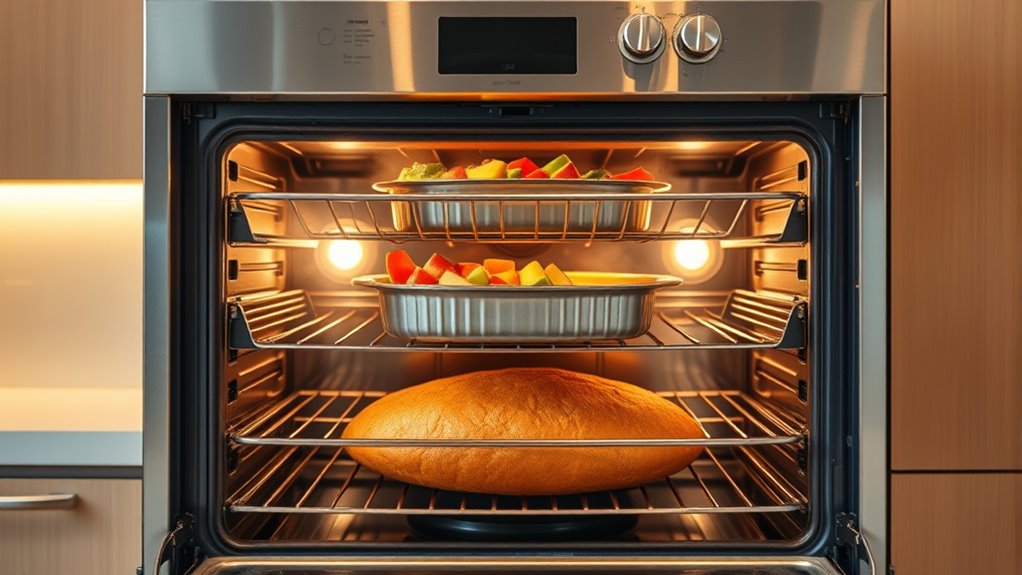
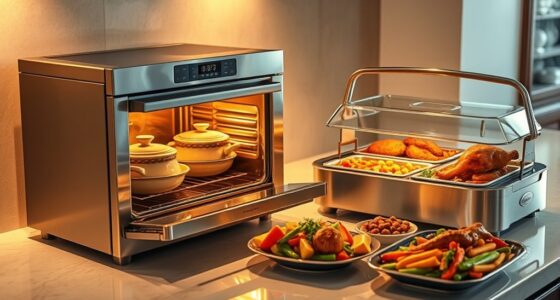
Cooking multiple dishes in one oven can be efficient and convenient, but it requires careful planning to guarantee everything turns out perfectly. One of the most important aspects to contemplate is oven temperature and dish compatibility. Not all dishes need the same heat, so you need to think about how to adjust or accommodate different oven settings to prevent overcooking or undercooking. Start by checking each recipe’s recommended oven temperature. If one dish requires 350°F and another needs 400°F, you’ll need to decide whether to cook them sequentially or find a middle ground that works for both. Sometimes, you can adjust cooking times or tweak recipes slightly to match the oven’s temperature, but always keep in mind how these changes might affect the final result. Dish compatibility also plays a role in how you arrange your oven. Heavy, dense dishes like roasts or casseroles should go on the lower racks, where heat rises, while delicate items like baked goods or soufflés are better placed higher up to prevent excessive heat exposure. Being aware of oven hot spots can also help you prevent uneven cooking and ensure each dish bakes evenly.
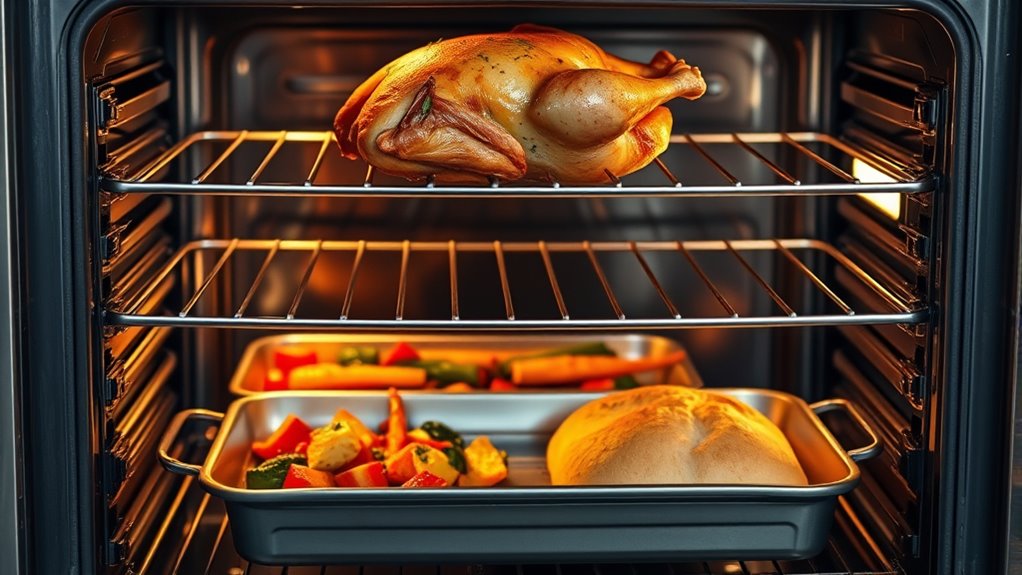
Timing is vital. You want to start with dishes that take longer to cook and need lower temperatures, then add quicker or more temperature-sensitive items later. For example, if you’re roasting a large chicken at 375°F, you might begin with that, then add baked vegetables or bread during the last 20-30 minutes. This way, everything finishes around the same time without overcooking. When managing different oven temperatures, you can use techniques like tenting dishes with foil to slow down browning or adjusting rack positions to modify heat exposure. If you notice a dish is browning too quickly, lowering its rack or reducing oven temperature slightly can help. Conversely, if a dish isn’t cooking fast enough, raising it or increasing the temperature temporarily might be necessary, but always monitor carefully to avoid uneven results.
Preheating your oven properly is another key step. It ensures the temperature stabilizes before you start cooking multiple dishes, giving you better control over timing and heat distribution. Additionally, considering oven hot spots can help you avoid uneven cooking by rotating dishes during the process. Remember, the goal is to avoid overcrowding, which can trap heat and cause uneven cooking. Leave enough space between dishes so hot air can circulate freely. By considering oven temperature, dish compatibility, and proper placement, you can streamline your multi-dish cooking process. Planning your timing and arrangement carefully helps guarantee everything is cooked to perfection, saving you time and energy while delivering delicious, evenly cooked meals.
Frequently Asked Questions
How Do I Prevent Flavors From Mixing Between Dishes?
To prevent flavor contamination and aroma transfer between dishes, always use separate oven-safe dishes or trays, and cover each one tightly with foil or lids. Placing dishes on different racks or using parchment paper can also help minimize contact. Additionally, avoid overcrowding the oven, which can cause flavors to mingle. These steps make certain each dish retains its unique flavor, keeping aromas distinct and preventing unwanted transfer.
What Is the Maximum Number of Dishes I Can Cook Simultaneously?
Cooking multiple dishes at once is like juggling fireworks—exciting but delicate. You can usually fit 4-6 dishes, depending on your oven size. Use dish stacking wisely, placing taller items on the back or sides, and optimize oven rack placement for even heat. Be mindful of space to prevent crowding, which can affect cooking times and flavors. Adjust as needed for your oven’s capacity and the dishes’ size.
How Can I Adjust Cooking Times for Different Dishes?
To modify cooking times for different dishes, start by reviewing each recipe’s instructions for temperature and duration. Use timing modifications based on dish size and ingredients—smaller or thinner items need less time. When combining recipes, monitor closely, and consider using foil or racks to change heat exposure. Making recipe adjustments ensures everything cooks evenly, preventing overcooking or undercooking, so your dishes turn out perfectly.
What Are the Best Oven Accessories for Multi-Dish Cooking?
You should use oven racks and baking sheets to maximize your multi-dish cooking. Oven racks help you create multiple levels, allowing you to cook different dishes simultaneously without crowding. Baking sheets are versatile for roasting, baking, or holding dishes that need direct heat. Smart placement of racks and sheets guarantees even cooking, saves time, and makes cleanup easier, giving you the best results for multi-dish meals.
How Do I Ensure Even Heat Distribution for Multiple Trays?
To guarantee even heat distribution when cooking multiple trays, always set your oven to the correct baking temperature and avoid overcrowding. Use multiple oven racks, placing trays on different levels, and rotate them halfway through cooking. Keep an eye on the trays, and switch their positions if needed, to promote uniform baking. Proper airflow and rack placement help prevent hot spots and deliver consistent results across all dishes.
Conclusion
Now that you know the best way to time your dishes, picture your oven as a busy kitchen symphony. As you start each course, it’s like orchestrating a smooth dance—fragrant aromas filling the air, sizzling and baking in harmony. With thoughtful planning, your oven becomes a culinary stage where every dish emerges perfectly cooked and delicious. So, trust your timing, stay organized, and enjoy the satisfying symphony of flavors you’ve created.