
Making DIY fermented foods like sauerkraut and pickles is easier than you think! Start with fresh cabbage or cucumbers, add salt, and let nature work its magic. Use glass jars and keep your veggies submerged for best results. After a few days at room temperature, you can taste for tanginess. Once it’s just right, pop the jars in the fridge for longer storage. Exciting flavors and health benefits await you in your kitchen, so let’s explore how to get started!
Key Takeaways
- Start with fresh cabbage and salt for sauerkraut; slice and massage cabbage until wilted to create brine.
- Use whole or cut cucumbers for pickles, combining them with salt, water, and spices like dill or garlic.
- Pack ingredients tightly into clean glass jars, ensuring the brine covers them completely to prevent exposure to air.
- Allow jars to ferment at room temperature for several days, tasting periodically until the desired tanginess is reached.
- Transfer jars to the fridge to slow fermentation, extending shelf life and enhancing flavors for weeks or months.
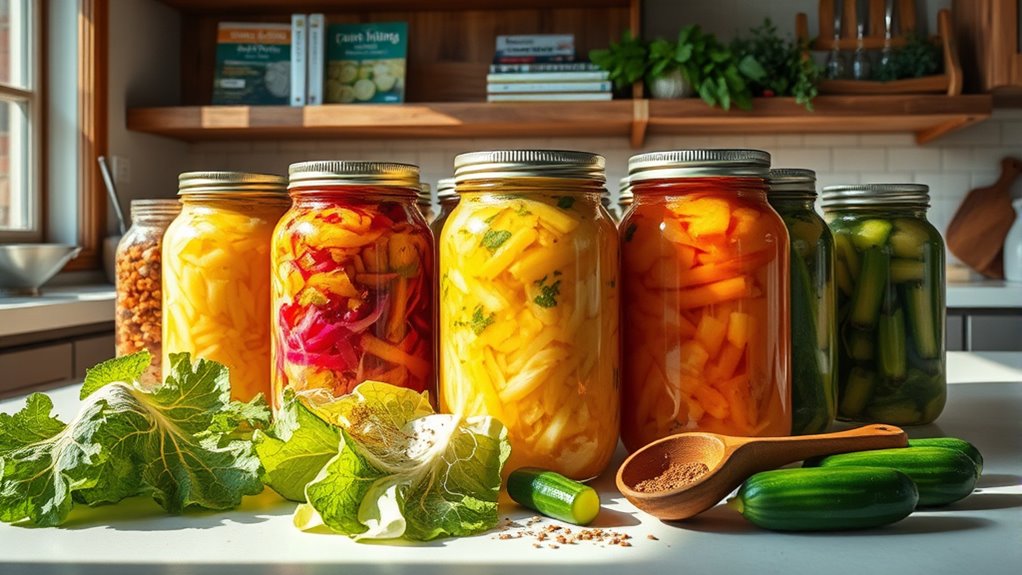
Fermented foods are not just a trend; they’re a delicious way to boost your health and enhance your meals. When you immerse yourself in DIY fermented foods like sauerkraut and pickles, you’re not only exploring unique flavors but also reaping the fermentation health benefits. These tasty treats can improve digestion, strengthen your immune system, and may even elevate your mood. If you haven’t tried making your own, now’s the perfect time to get started!
Discover the delightful world of DIY fermented foods and boost your health with tasty, gut-friendly creations!
To begin your fermentation journey, you’ll need a few equipment essentials. First, gather glass jars or containers with tight-fitting lids. Mason jars work great, but any container that can hold the ingredients securely will do. You’ll also need a good knife for chopping your veggies, a cutting board, and a mixing bowl. If you plan to make larger batches, consider investing in a fermentation crock, which can help regulate the environment for your food. A weight or a clean stone to keep your veggies submerged in the brine is also essential; this prevents unwanted mold from forming.
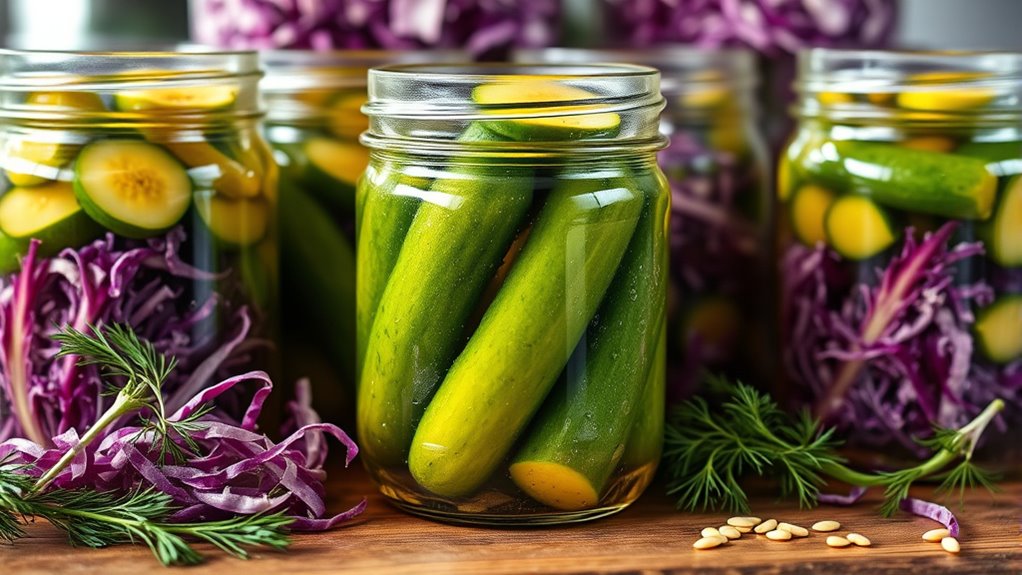
Once you’ve got your equipment set, it’s time to choose your ingredients. For sauerkraut, all you need is fresh cabbage and salt. The salt draws out the cabbage’s natural juices, creating a brine in which the fermentation process can thrive. Slice the cabbage thinly, mix it with salt, and massage it until it’s wilted. Pack it tightly into your jar, ensuring the brine covers the cabbage completely. If you’re making pickles, cucumbers are a must. You can use whole cucumbers or cut them into spears. Add salt, water, and any spices you love, such as dill or garlic, for extra flavor.
After preparing your jars, let them sit at room temperature for several days, depending on your taste preference. You’ll want to check them daily to ensure they’re submerged and to taste-test along the way. Once they reach the desired tanginess, transfer your jars to the fridge. The cool temperature will slow fermentation, allowing you to enjoy your creations for weeks or even months.
DIY fermented foods can be a fun and rewarding experience. With the right equipment essentials and a few ingredients, you’ll enjoy the myriad fermentation health benefits while savoring delicious, homemade delicacies. Home Charging can also be made simpler, allowing you to focus more on your culinary adventures. So roll up your sleeves, and get ready to transform your kitchen into a fermentation haven!
Frequently Asked Questions
How Long Can Homemade Sauerkraut and Pickles Be Stored?
You can store homemade sauerkraut and pickles for several months, typically up to 6 months when kept in proper storage conditions. The fermentation shelf life depends on factors like temperature and light exposure. Make sure to keep them in a cool, dark place, ideally in the refrigerator. Keeping the jars sealed and submerged in brine helps maintain their quality, allowing you to enjoy your delicious creations for an extended time.
Can I Use Non-Organic Vegetables for Fermentation?
Yes, you can use non-organic vegetables for fermentation, but it’s important to be aware of potential chemical residues and pesticide effects. These substances might affect the flavor and health benefits of your fermented foods. If you’re concerned about these issues, consider rinsing your vegetables thoroughly or opting for organic options when possible. This way, you can enjoy your fermented creations without worrying about unwanted chemicals impacting your health or taste.
What Equipment Do I Need for Fermenting at Home?
You’ll need a few key items to start fermenting at home. First, grab fermentation containers, like glass jars with tight-fitting lids, to keep your veggies safe. Then, gather essential kitchen tools—think cutting boards, knives, and measuring cups. You might also want airlocks for those bubbling creations. Can you feel the excitement building? With the right equipment, you’re just steps away from crafting delicious, tangy treats that’ll impress your taste buds!
How Can I Tell if My Fermentation Has Gone Wrong?
If you notice unusual smells or flavors, your fermentation might’ve gone wrong. Look for signs of fermentation spoilage, like off-putting odors or excessive bubbles. Mold development is another red flag; if you see fuzzy patches on the surface, it’s best to discard the batch. Always trust your senses—if something doesn’t seem right, it probably isn’t. Remember, it’s better to be safe than sorry when it comes to fermented foods!
Is It Safe to Eat Fermented Foods While Pregnant?
Yes, you can safely eat fermented foods while pregnant, but you should be cautious. The probiotic benefits of fermented foods can support your gut health. However, make certain you’re consuming properly fermented products to avoid any fermentation safety issues. Always choose pasteurized options or make sure your homemade ferments are done correctly. If you have any concerns, it’s best to consult your healthcare provider to ensure you’re making safe choices for you and your baby.
Conclusion
In the vibrant world of DIY fermented foods, you’re not just creating sauerkraut and pickles; you’re crafting little jars of tangy magic that dance on your taste buds. As you plunge into this delicious adventure, remember that each crunch is a celebration of flavor and health. So grab your cabbage and cucumbers, let the fermentation begin, and watch as ordinary ingredients transform into extraordinary delights that brighten your meals and nourish your soul!