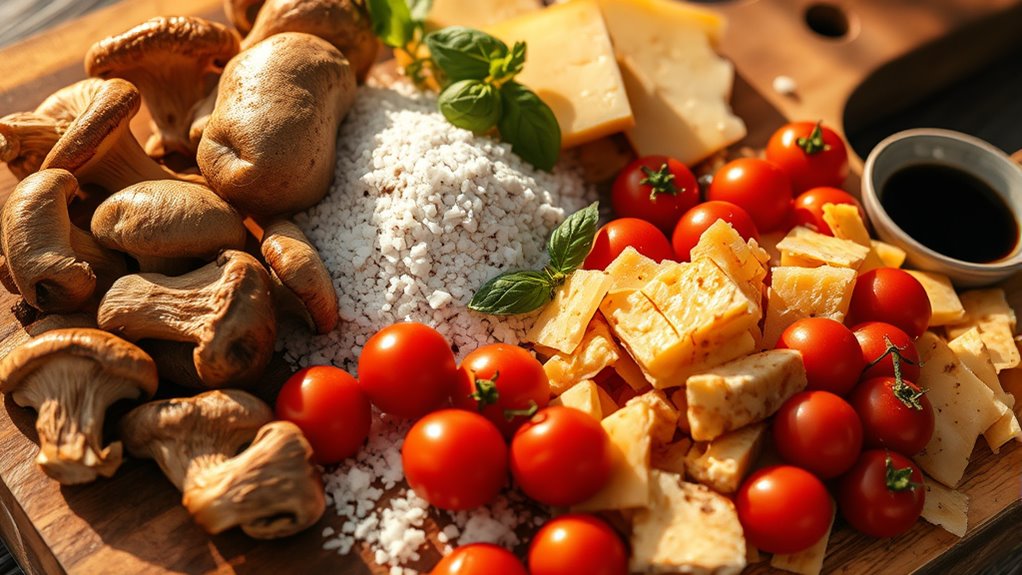

Umami is the fifth basic taste that gives your dishes a savory, rich flavor. It comes from ingredients like aged cheeses, mushrooms, and fermented products such as soy sauce. To boost umami in your cooking, add small amounts of these ingredients to enhance flavors without changing the recipe. Slow cooking and layering umami-rich bases can create delicious depth. If you want to elevate your culinary game, discover more ways to incorporate umami flavors effectively.
Key Takeaways
- Umami is a savory taste that enhances the richness and satisfaction of dishes, making them more delicious.
- Common sources of umami include aged cheeses, mushrooms, and fermented products like soy sauce and miso.
- Boost umami by incorporating small amounts of ingredients like miso or soy sauce into your recipes.
- Cooking techniques like slow cooking and simmering amplify umami flavors, creating depth in stews and braises.
- A sprinkle of salt can enhance umami flavors, making dishes more fulfilling and enjoyable.
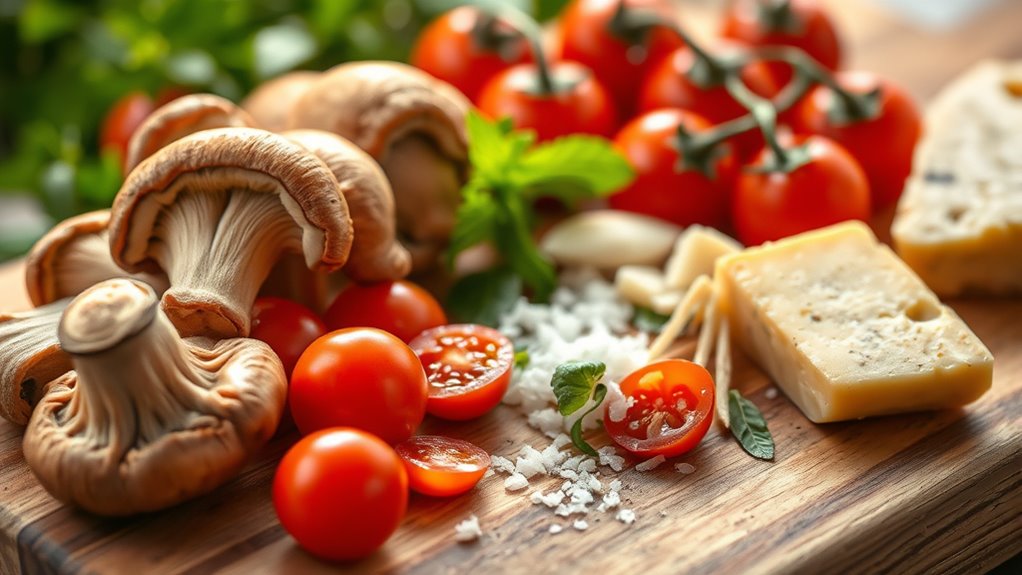
Have you ever wondered why some foods leave your taste buds wanting more? You might be experiencing umami, one of the five basic tastes that can elevate your culinary creations to new heights. Often described as savory or meaty, umami is distinguished by a deep, rich flavor that enhances the overall taste of dishes. Understanding umami can help you make your meals more satisfying and delicious.
Umami, the savory taste that enriches dishes, can elevate your meals and leave you craving more.
Umami is commonly derived from amino acids like glutamate, which you can find in various foods. Aged cheeses, such as Parmigiano-Reggiano, are packed with this flavor, making them a great addition to pasta or salads. Mushrooms, particularly varieties like shiitake and porcini, also offer a natural umami kick. If you’re looking to add depth to your sauces or broths, consider incorporating fermented products like soy sauce or miso. These ingredients not only bring umami to your dishes but can also provide a complexity that’ll keep your taste buds engaged.
To boost umami in your cooking, start by experimenting with these ingredients. You don’t need to overhaul your recipes; just a tablespoon of miso or a sprinkle of aged cheese can make a significant difference. When you’re sautéing vegetables, consider adding a splash of soy sauce or a handful of mushrooms. The umami compounds in these foods can heighten the flavors of everything around them, creating a harmonious balance in your dish.
Don’t forget about the power of slow cooking. When you simmer a dish for an extended period, the flavors meld together beautifully, allowing the umami to shine. This is especially true for stews and braises, where the combination of meat, vegetables, and seasonings creates an irresistible depth. If you’re ever in doubt, think about layering flavors—start with a base that has umami, like a rich broth, and build upon it with more umami-rich ingredients.
Lastly, consider the role of salt in enhancing umami. A little sprinkle of salt can amplify the savory notes in your food, making the umami flavor more pronounced. Interestingly, this depth of flavor can also be found in insulated jackets for winter, which can enhance your culinary experience by keeping you warm while you cook. Whether you’re cooking a simple dish or a complex meal, embracing umami can transform your cooking experience. So, the next time you’re in the kitchen, think about how you can incorporate this savory taste into your dishes. You’ll find that your meals become more fulfilling and enjoyable, leaving your taste buds truly satisfied.
Frequently Asked Questions
Is Umami a Taste or a Flavor Profile?
Umami’s a taste distinction that’s part of the broader flavor classification in cooking. It’s often described as savory or meaty, enhancing the overall experience of a dish. When you bite into something rich in umami, like aged cheese or ripe tomatoes, you’re experiencing that unique taste. So, next time you’re cooking, think about how you can incorporate umami to elevate the flavors, giving your meals depth and satisfaction.
Can Umami Be Found in Desserts?
Absolutely, you can find umami in desserts! Think of a rich chocolate cake or a salted caramel treat; both can have that savory depth. You might even explore umami in beverages like coffee or matcha, enhancing your sweet experience. For snacks, consider pairing chocolate with nuts or cheese, which adds that savory kick. So, next time you whip up a dessert, don’t shy away from incorporating those umami elements—your taste buds will thank you!
How Does Umami Enhance Vegetarian Dishes?
Umami enhances vegetarian dishes by adding depth and richness that elevate the overall flavor profile. You can boost flavor in plant-based dishes by incorporating vegetarian umami sources like mushrooms, tomatoes, fermented foods, and nutritional yeast. These ingredients bring a savory, satisfying taste that complements vegetables and grains, making your meals more enjoyable. Experimenting with these umami-rich foods lets you create hearty, flavorful vegetarian dishes that even meat lovers will appreciate.
Are There Any Health Benefits of Umami?
Umami isn’t just a tasty addition; it can actually offer health benefits, especially as you age. Studies show that incorporating umami-rich foods can improve your overall diet quality by enhancing flavors, making healthier options more appealing. In various cuisines, like Japanese or Italian, umami plays a vital role in balancing meals. By enjoying these flavors, you might find yourself eating more nutrient-dense foods, supporting better health as you grow older.
What Are Common Umami-Rich Ingredients to Use?
You’ll find plenty of umami-rich ingredients to enhance your dishes. Common options include various mushroom varieties like shiitake and portobello, which add depth to soups and stir-fries. Aged cheeses, such as Parmesan or Gouda, bring a savory complexity to pasta and salads. Don’t forget soy sauce and miso for an extra punch of flavor. Experimenting with these ingredients will make your meals more satisfying and delicious!
Conclusion
Incorporating umami into your cooking is like adding a secret ingredient that takes your dishes to the next level. By experimenting with foods rich in this savory flavor, such as mushrooms, tomatoes, and aged cheeses, you can elevate your meals and impress your friends and family. So, don’t just settle for ordinary—dive into the world of umami and watch your culinary creations shine. It’s time to spice up your kitchen game!