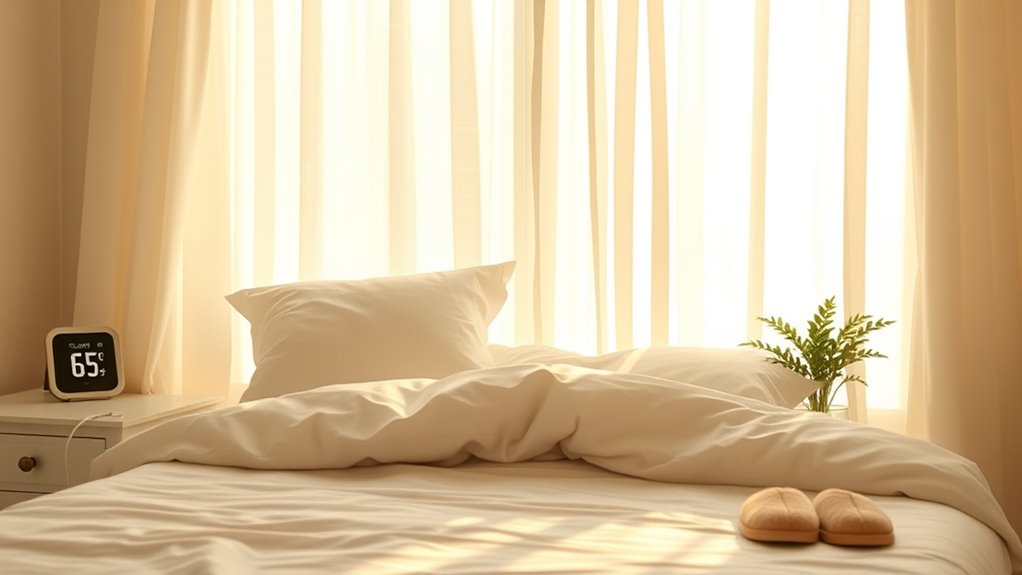
The best temperature for sleeping is between 60 to 67°F (15.5 to 19.5°C). This range helps your body drop its core temperature, promoting deeper, uninterrupted sleep. To stay comfortable, use breathable bedding and wear lightweight, moisture-wicking sleepwear. Make sure to maintain a consistent temperature with fans or heaters if needed. Remember, adjusting your sleep environment can markedly enhance your sleep quality. Want to discover more tips for optimizing your sleep sanctuary?
Key Takeaways
- Maintain room temperature between 60 to 67°F (15.5 to 19.5°C) for optimal sleep quality.
- Use a good quality thermostat and fans to regulate and circulate air effectively.
- Choose breathable bedding materials like cotton or linen to wick away moisture and enhance comfort.
- Wear lightweight, moisture-wicking sleepwear to avoid overheating during the night.
- Adjust your sleep environment based on personal preferences and partner’s temperature needs for better rest.

Have you ever wondered what the ideal temperature for a good night’s sleep is? You’re not alone in this inquiry. Many people struggle with finding that perfect balance in their sleep environment, and it can make all the difference in how well you rest. The ideal room temperature for sleep generally falls between 60 to 67 degrees Fahrenheit. This range helps your body drop its core temperature, which is essential for promoting deeper sleep. If your room’s too hot or too cold, you might toss and turn all night, waking up feeling groggy and unrested.
To achieve this ideal climate control, consider the tools available to you. A good quality thermostat can help you maintain a consistent temperature throughout the night. If you have trouble regulating the temperature of your room, think about using fans or heaters strategically. A ceiling fan can circulate air, preventing stuffiness, while a space heater can add warmth on chilly nights. Just make sure you monitor these devices to avoid dramatic temperature swings, as consistency is *essential* for *best* sleep.
Your bedding can also play a significant role in maintaining a comfortable sleep environment. Opt for breathable materials like cotton or linen, which help wick away moisture and keep you cool. If you tend to get cold at night, layer your bedding with a lightweight blanket that you can easily kick off if you start to feel too warm. This way, you’re prepared for whatever temperature fluctuations occur during your sleep cycle.
Another factor to *think about* is your sleepwear. Wearing lightweight, moisture-wicking fabrics can help regulate your body temperature while you sleep. Avoid heavy pajamas or materials that trap heat, as they can lead to discomfort and disrupt your sleep.
If you share your bed with a partner, be mindful of their temperature preferences, too. It might take some experimentation to find a comfortable compromise, but adjusting your bedding or using separate blankets can help.
In short, creating the ideal sleep environment involves a combination of climate control, appropriate bedding, and suitable sleepwear. By fine-tuning these elements, you’ll set yourself up for a night of restful, rejuvenating sleep. So, take the time to assess your sleep environment and make the necessary adjustments. Your body will thank you for it! Additionally, proper climate control can significantly enhance your sleep quality, so don’t underestimate its importance.
Frequently Asked Questions
Does Humidity Affect My Sleep Temperature Preferences?
Yes, humidity levels definitely affect your sleep temperature preferences. When the air is more humid, you might feel warmer and stickier, making it harder to sleep comfortably. Seasonal variations can also play a role; during hot, humid summer months, you might need a cooler environment to rest well. Meanwhile, in drier seasons, you may prefer slightly warmer temperatures. Adjusting your sleeping conditions according to humidity can help you achieve better sleep quality.
How Can I Cool Down a Hot Bedroom?
If your bedroom feels hotter than the surface of the sun, it’s time to cool things down! Start by improving air circulation with fans or by cracking windows. You can also place a bowl of ice in front of a fan for a DIY air conditioner effect. Consider using temperature sensors to monitor the room’s heat. Thick curtains can block out sunlight, keeping your space invigorating and comfortable for a good night’s sleep.
What Sleepwear Is Best for Temperature Regulation?
For temperature regulation, choose sleepwear made from breathable fabrics like cotton or bamboo. These materials allow air circulation, helping you stay cool. Avoid heavy materials that trap heat. Look for lightweight options with thermal insulation properties, as they can keep you cozy without overheating. If you tend to get chilly, consider layering with a thin, breathable top. Overall, prioritize comfort and moisture-wicking qualities to enhance your sleep experience.
Can Sleep Position Influence My Temperature Comfort?
Did you know that about 75% of people experience temperature discomfort while sleeping? Your sleep posture can markedly influence body heat dissipation. If you sleep on your back, it allows for better airflow, keeping you cooler. However, curling up in a fetal position may trap heat, making you feel warmer. Experiment with different positions to find what helps you regulate your temperature best, ensuring a more restful night’s sleep.
Are There Specific Bedding Materials That Help With Temperature Control?
Yes, specific bedding materials can considerably help with temperature regulation. When you choose breathable fabrics like cotton or linen, they allow air circulation and wick away moisture, keeping you cool. On the other hand, materials like flannel or fleece trap heat, which can be too warm for some. Look for moisture-wicking sheets or cooling mattress toppers to enhance your comfort and guarantee a restful night’s sleep, no matter the season.
Conclusion
As you drift off into the domain of dreams, remember that the perfect sleeping temperature is like a gentle lullaby, cradling you in its embrace. By keeping your space cool, you invite the soothing whispers of sleep to wrap around you like a cozy blanket. So, adjust that thermostat and let your worries melt away, allowing the night to transform into a sanctuary where you can recharge, rejuvenate, and awaken refreshed, ready to embrace a new day.