
You should change your home’s air filters every three months for ideal indoor air quality and HVAC efficiency. However, this can vary. If you have pets or live in a dusty area, consider changing them every 1-2 months. Look for visual signs like discoloration or reduced airflow, and pay attention to any allergy symptoms. Keeping track of your filter’s condition is key, and you’ll learn more about this in the following sections.
Key Takeaways
- Change air filters every 3 months as a general guideline, or more frequently based on usage and type.
- In homes with pets or high dust levels, replace filters every 1-2 months to maintain efficiency.
- Look for visual signs like discoloration or dust buildup to determine if a filter needs replacing.
- Monitor allergy symptoms and reduced airflow as indicators of a clogged or ineffective filter.
- Regular replacements improve indoor air quality, reduce energy costs, and prevent HVAC system strain.
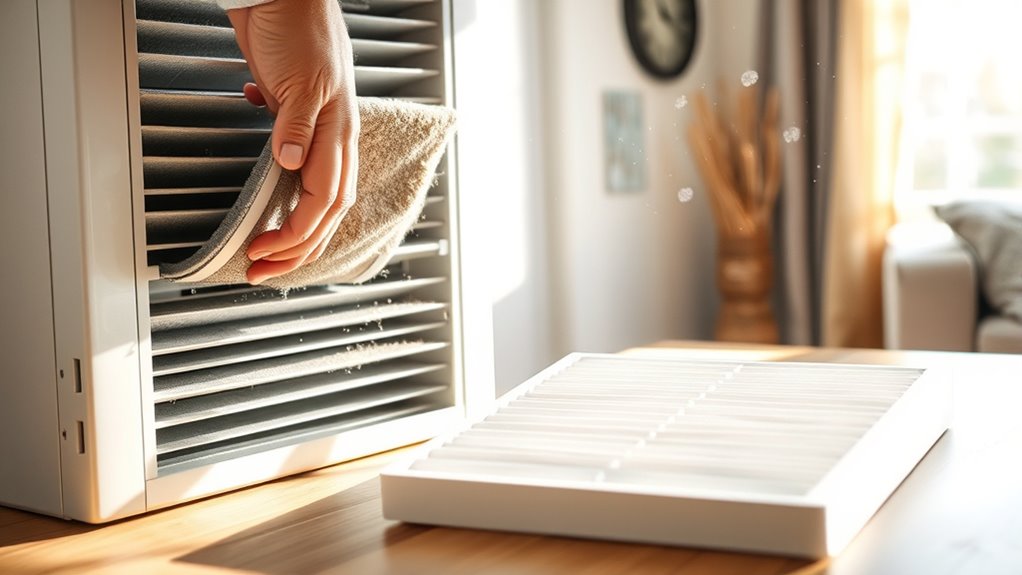
Have you ever wondered how often you should change your home air filters? It’s a common question and one that’s essential for maintaining your indoor air quality. Air filters play a critical role in trapping dust, allergens, and other pollutants, ensuring that you breathe cleaner air. However, their effectiveness diminishes over time as they collect particles. So, how do you know when it’s time to replace them?
Wondering how often to change your air filters? It’s crucial for maintaining clean indoor air quality.
The general recommendation is to change your air filters every three months, but this can vary depending on several factors. Your filter lifespan can be influenced by the type of filter you use, the size of your home, and even your local environment. For instance, if you have a high-efficiency particulate air (HEPA) filter, it might last longer than standard filters, but it’s important to check manufacturer guidelines. If you live in an area with high pollen counts or dust, you might need to change your filters more frequently. Pets can also impact filter lifespan; if you have furry friends, consider swapping filters every one to two months.
Another factor to consider is your home’s air quality. If you notice an increase in allergy symptoms or respiratory issues among your family, it might be time to check your filters. A clogged filter can reduce airflow, making your HVAC system work harder and potentially leading to higher energy bills. Keeping an eye on your filter’s condition can help you avoid these problems. Remember that filter indicators can be helpful in monitoring when to change your filters.
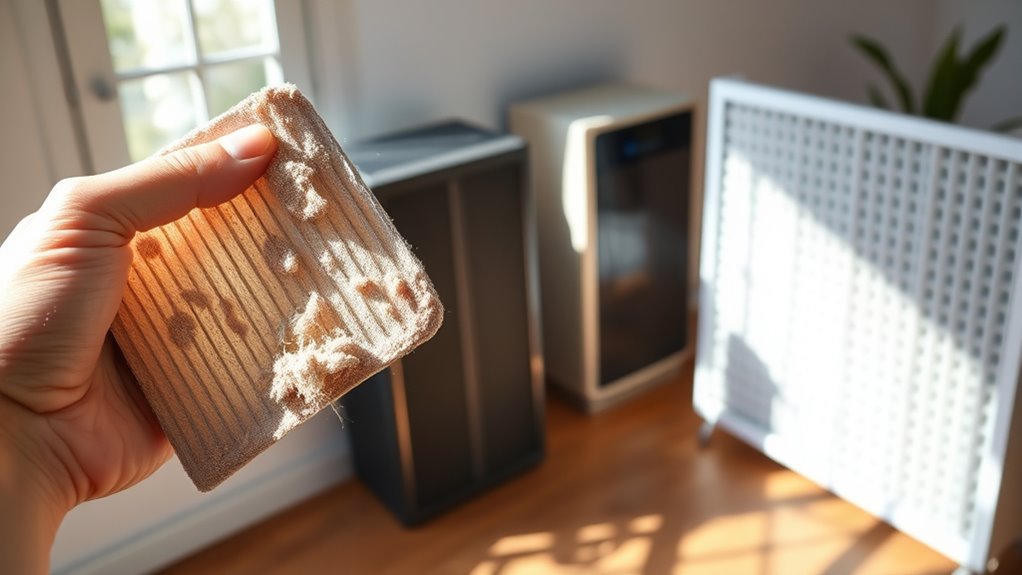
You can also perform a simple visual inspection of your filters. If they appear discolored or covered in dust, it’s a clear sign they need replacing. Most filters come with a color indicator to help you determine their condition. Additionally, if you can’t remember when you last changed your filters, it’s probably a good idea to do it now.
Lastly, setting a reminder on your phone or calendar can help you keep track of when to change your filters. Regular maintenance ensures that your home remains comfortable and your air quality stays high. So, don’t overlook this simple yet essential task. By being proactive about changing your air filters, you’re investing in your health and comfort, ensuring that your living space remains a safe haven for you and your loved ones.
Frequently Asked Questions
What Type of Air Filter Is Best for My Home?
The best air filter for your home depends on your needs. If you’re looking for superior filtration, go for a HEPA filter; it captures 99.97% of particles, making it ideal for allergy sufferers. If you need something more budget-friendly, standard fiberglass or pleated filters work well for everyday dust and debris. Consider the air filter materials and your specific concerns to choose the right option that balances efficiency and cost.
Can I Wash and Reuse My Air Filters?
When it comes to washing and reusing your air filters, you can’t have your cake and eat it too. Most disposable filters aren’t meant for cleaning and reuse, so you’ll need to stick to reusable filters for effective filter maintenance. These are specifically designed to be washed and used multiple times. Just remember to follow the manufacturer’s guidelines to guarantee they work properly and keep your air quality in top shape!
What Symptoms Indicate a Clogged Air Filter?
If you’re experiencing poor air quality, frequent sneezing, or increased allergy symptoms, your air filter might be clogged. You might notice dust accumulating more quickly or your HVAC system struggling to maintain temperature. These signs indicate that it’s time to check your filter. For allergy relief and better airflow, addressing a clogged filter can make a significant difference in your home’s environment, helping you breathe easier and feel more comfortable.
How Do I Properly Dispose of Old Air Filters?
You can properly dispose of old air filters by recycling them, which is more environmentally friendly. Did you know that about 20 billion air filters end up in landfills each year? To recycle, check if your local waste management program accepts them or find a specialized recycling facility. If recycling isn’t an option, wrap the filter in plastic before tossing it in the trash to minimize environmental impact. Make sure to stay green!
Do Pets Affect How Often I Should Change Filters?
Yes, pets definitely affect how often you should change your filters. If you have pets, especially during shedding seasons, you’ll find that pet dander and hair can clog your filters more quickly. It’s a good idea to check your filters monthly and change them every 1-2 months, depending on how much your pets shed. This helps maintain good air quality and keeps your HVAC system running efficiently.
Conclusion
So, while you might think changing your air filters is just a mundane chore, it’s actually a secret to breathing easier. Who knew that such a simple task could keep your home fresh and your HVAC system running smoothly? By changing those filters regularly, you’re not just preventing dust bunnies from staging a coup; you’re also saving yourself from unexpected repair bills. It turns out, the key to a healthier home is hiding in plain sight—just behind that filter!