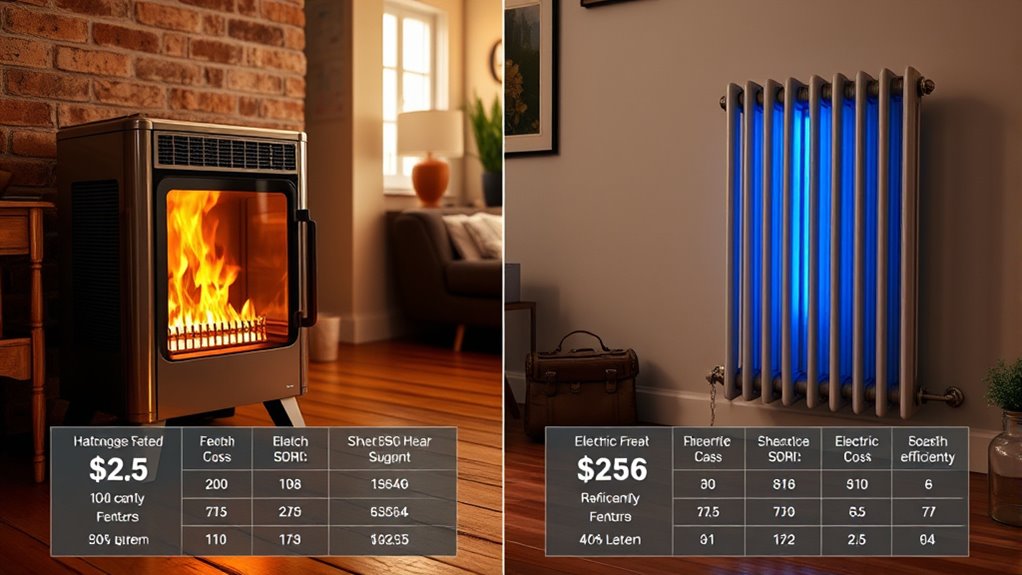

When deciding between gas heat and electric heat, you’ll find pros and cons in both options. Gas systems typically offer higher efficiency and lower long-term costs, but they come with higher installation expenses and maintenance needs. Electric systems are generally cheaper to install and require less upkeep, especially when powered by renewable energy. However, they may lead to higher utility bills without efficient upgrades. Each choice impacts your budget and the environment, so consider these factors carefully to make the best decision for your home.
Key Takeaways
- Gas heating generally has higher upfront installation costs due to furnace, ductwork, and gas line requirements.
- Electric systems typically have lower initial installation expenses but may require electrical upgrades.
- Gas systems demand regular maintenance for safety, increasing long-term costs compared to electric systems.
- Electric heating can be more environmentally friendly when powered by renewable energy sources, unlike gas systems.
- The choice between gas and electric heating should consider home infrastructure, budget, energy efficiency, and environmental impact.

When it comes to heating your home, choosing between gas heat and electric heat can feel overwhelming, especially with the pros and cons of each option. One of the first things you’ll want to consider is energy efficiency. Gas heating systems typically operate at a higher efficiency than electric systems. This means that for the same amount of heat produced, gas systems tend to use less energy, which can lead to lower utility bills over time. However, electric heat has improved substantially in recent years, and modern electric heaters can also be quite efficient, especially when paired with renewable energy sources.
Choosing between gas heat and electric heat involves considering energy efficiency, installation costs, and environmental impact.
Next, let’s talk about installation costs. If you’re looking to install a new heating system, gas heat usually comes with higher upfront installation costs. You’ll need to consider the price of the furnace, ductwork, and possibly a gas line installation, especially if your home isn’t already equipped for gas heating. This can add up quickly, making gas heat a more considerable investment right from the start. In contrast, electric heating systems generally have lower installation costs. You might need to upgrade your electrical panel or wiring, but overall, the initial expense is often less intimidating.
It’s also essential to think about maintenance and repair costs. Gas heating systems require regular maintenance to ensure safety and efficiency, including checks for gas leaks and carbon monoxide emissions. This can add to your long-term expenses. Electric systems, on the other hand, often require less maintenance since they don’t have combustion components. This could mean more savings for you in the long run.
Another factor to consider is environmental impact. If you’re concerned about your carbon footprint, electric heat can be more appealing, especially if your electricity comes from renewable sources. Gas heating, while efficient, does involve burning fossil fuels, which contributes to greenhouse gas emissions. Additionally, energy efficiency plays a crucial role in determining both your utility costs and environmental impact.
Ultimately, your choice between gas heat and electric heat hinges on your specific needs and circumstances. It’s important to evaluate your home’s infrastructure, your budget for installation costs, and your priorities regarding energy efficiency and environmental impact. Taking the time to weigh these factors will help you make an informed decision that keeps your home warm and your wallet happy.
Frequently Asked Questions
How Do Gas and Electric Heat Systems Impact Air Quality?
Gas heat systems can contribute to indoor air pollution due to combustion byproducts, while electric systems typically don’t emit harmful gases. However, both types benefit from proper ventilation improvement. With good ventilation, you can reduce pollutants, ensuring cleaner air in your home. If you’re using gas heat, make sure to maintain your system and ventilate adequately to minimize risks. With electric heat, focus on ensuring airflow for ideal air quality.
What Are the Maintenance Requirements for Gas and Electric Heating Systems?
When you think about maintaining your heating system, what comes to mind? For gas systems, you’ll need regular inspections, checking for leaks and ensuring proper ventilation. Electric systems require less maintenance, but you should still clean filters and check wiring. Prioritizing fuel efficiency in your maintenance routine can enhance system longevity, ensuring your home stays warm without wasting energy. By staying on top of these tasks, you’ll keep your heating running smoothly.
Which Heating Option Is Better for the Environment?
When it comes to being better for the environment, electric heating’s often the winner, especially if you use renewable energy sources. By choosing solar or wind power, you can considerably reduce your carbon footprint. Gas heating, while effective, typically relies on fossil fuels, which contribute to greenhouse gas emissions. So, if you’re aiming for an eco-friendly option, consider going electric and harnessing renewable energy to keep your home warm sustainably.
How Do Installation Costs Compare Between Gas and Electric Heating?
When you compare installation costs, you’ll find gas systems generally require more upfront investment due to their system complexity, including venting and gas line installation. Electric systems, on the other hand, often have lower installation costs since they’re simpler and require less extensive work. However, consider your long-term expenses as well; cheaper installation might not always translate to lower overall costs. Evaluate both options carefully before making your decision.
Can I Convert From Gas to Electric Heating Easily?
You can convert from gas to electric heating, but it often comes with conversion challenges. First, you’ll need to assess your home’s electrical system; it might require upgrades to handle the new load. Depending on your current setup, you may face additional costs or complications. It’s best to consult with a professional to guarantee the conversion is safe and efficient, so you can enjoy your new heating system without any hassles.
Conclusion
In the battle of gas heat versus electric heat, both have their perks and pitfalls. Gas heats up quickly and can be more cost-effective, while electric heat offers safety and easy installation. Ultimately, it comes down to your specific needs and preferences. Just remember, whether you choose the warmth of gas or the convenience of electric, you’re not just choosing how to heat your home—you’re picking your comfort zone for the modern age, like a cozy little hobbit hole!