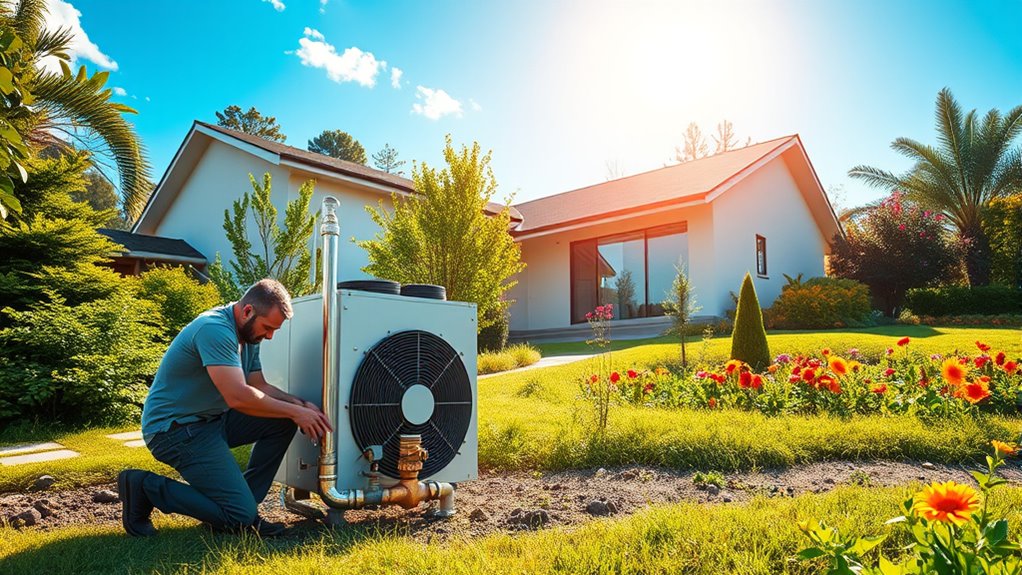

Geothermal HVAC systems use the earth’s constant temperature to heat and cool your home efficiently. By circulating fluid through underground pipes, these systems absorb heat from the ground in winter and expel it in summer. They’re known for their impressive energy efficiency, often exceeding 300%-600% compared to traditional HVAC systems. With fewer moving parts and less maintenance, they can save you money while being eco-friendly. Discover how they can transform your energy use and comfort.
Key Takeaways
- Geothermal HVAC systems use the earth’s stable temperature for energy-efficient heating and cooling throughout the year.
- They utilize ground loops to exchange heat, absorbing warmth in winter and expelling heat in summer.
- The systems offer significant energy savings, with heat pump efficiency often exceeding 300%-600% compared to traditional HVAC systems.
- Geothermal systems have fewer moving parts and a longer lifespan, requiring minimal maintenance and repairs.
- By reducing reliance on fossil fuels, they contribute to a more environmentally friendly and sustainable home.
Geothermal HVAC 101: What Is Geothermal Heating and Cooling?
Geothermal HVAC
Have you ever wondered how you can harness the earth’s natural heat to keep your home comfortable year-round? Geothermal HVAC systems might just be the answer you’re looking for. These systems use the constant temperature of the earth to provide heating and cooling, making them an incredibly efficient option for homeowners. With heat pump efficiency being a significant factor, you can save on energy bills while enjoying a consistently comfortable indoor environment.
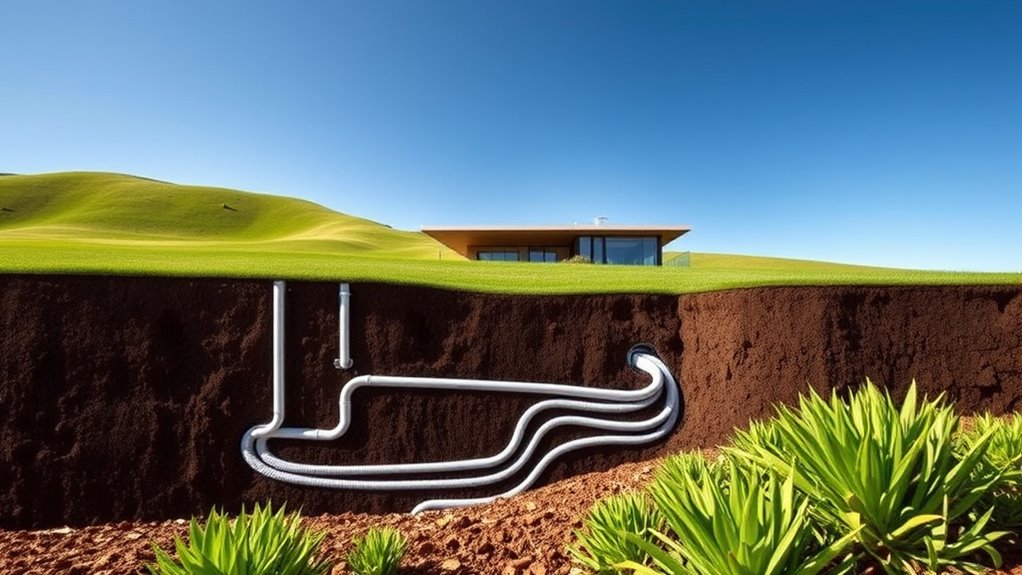
When you think about installing a geothermal system, it’s vital to understand the installation process. Unlike traditional HVAC systems, which rely on outside air, geothermal systems use the ground as a heat source in the winter and a heat sink in the summer. This means they require a series of underground pipes, known as a ground loop, to be installed on your property. The installation can be a bit complex and may require digging trenches or drilling deep wells, depending on your land’s characteristics. It’s essential to work with a qualified technician who can assess your property and design a system that fits your needs.
Once installed, the geothermal heat pump operates by circulating a fluid through the ground loop. In winter, it absorbs heat from the earth and brings it into your home. Conversely, in summer, it expels heat from your home back into the ground, providing a cooling effect. This constant exchange of heat allows geothermal systems to achieve remarkable heat pump efficiency, often exceeding traditional systems by 300% to 600%. This means you’re not just using less energy; you’re also getting more out of every unit of energy you put in.
The geothermal heat pump efficiently exchanges heat, providing exceptional savings and comfort year-round.
Maintenance is relatively straightforward too. With fewer moving parts and no outdoor condenser units, geothermal systems tend to have a longer lifespan and require less upkeep than their conventional counterparts. Just a regular check-up every few years can keep everything running smoothly.
Investing in geothermal HVAC isn’t just about immediate comfort. It’s about long-term savings and environmental benefits. By reducing your reliance on fossil fuels, you’re contributing to a more sustainable future. Additionally, understanding the heat pump efficiency of geothermal systems can help you make informed decisions about your home’s energy use. So, if you’re ready to take the plunge, consider how geothermal heating and cooling can transform your home into an energy-efficient haven. You’ll not only enjoy a comfortable environment but also feel good about your impact on the planet.
Frequently Asked Questions
How Much Does a Geothermal HVAC System Cost?
A geothermal HVAC system typically costs between $10,000 and $30,000 for initial installation, depending on your home’s size and location. While the upfront investment might seem high, you’ll see significant long-term savings on your energy bills. Many homeowners enjoy reduced utility costs, often recouping their investment in about 5 to 10 years. Plus, you’ll benefit from a more sustainable and efficient heating and cooling solution for years to come.
What Is the Lifespan of a Geothermal System?
You might be surprised to learn that a geothermal system can last 25 years or more, making it one of the most durable options available! With ongoing technology advancements, these systems are becoming even more reliable. Imagine enjoying consistent heating and cooling while knowing your investment is built to last. However, regular maintenance is key to revealing that longevity. So, take care of your system, and it’ll take care of you for years to come!
Can Geothermal Systems Work in All Climates?
Yes, geothermal systems can work in various climates, but their efficiency may vary. They’re highly adaptable, performing well in moderate climates, while extreme temperatures can pose challenges. Geographic limitations, such as soil composition and groundwater availability, also play a vital role. If you live in an area with stable ground temperatures, your geothermal system will likely thrive, providing you with reliable heating and cooling throughout the year.
How Are Geothermal Systems Installed?
Did you know that geothermal systems can reduce energy bills by up to 70%? To install one, you first undergo a drilling process to create boreholes in your yard. This allows for the installation of underground loops that circulate fluid. Once the loops are in place, you connect them to your home’s heating and cooling system. Finally, you’ll fill in the holes, ensuring everything is sealed and ready for efficient operation.
What Maintenance Is Required for Geothermal HVAC Systems?
To keep your geothermal HVAC system running efficiently, follow a regular maintenance schedule. Check the air filters monthly and replace them as needed to improve air quality and system efficiency. Annually, have a professional inspect the ground loop and heat pump components. You should also clean the heat exchanger and check the fluid levels. Staying on top of these tasks will guarantee your system operates smoothly and lasts longer.
Conclusion
In the dance of earth and sky, geothermal HVAC turns the ground’s steady warmth into comfort for your home. Just as roots draw nourishment from the soil, you tap into the earth’s energy, nurturing your space with efficiency and sustainability. It’s not just a system; it’s a harmony of nature and technology, embracing the seasons like a gentle breeze. So, take the leap—let geothermal heating and cooling be your guiding star in creating a cozy, eco-friendly sanctuary.