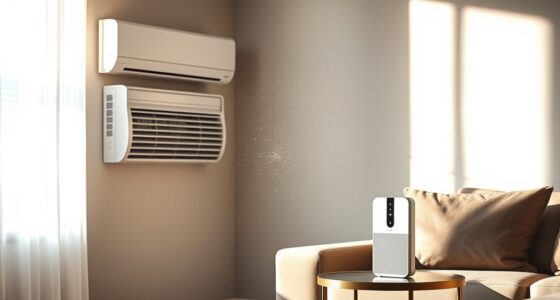
Humidifiers add moisture to the air, reducing dryness, easing breathing, and protecting your home’s materials. Diffusers disperse essential oils, creating a calming, aromatic atmosphere that promotes relaxation. While humidifiers focus on improving air quality and comfort, diffusers enhance mood through scents. Understanding their differences helps you choose the right device for your needs. Stay with us to explore how each can best benefit your home environment.
Key Takeaways
- Humidifiers add moisture to dry air, improving comfort and air quality, while diffusers disperse essential oils for aromatherapy and relaxation.
- Humidifiers primarily focus on increasing indoor humidity levels; diffusers mainly enhance ambiance with scents.
- Humidifiers can help prevent mold, dust, and respiratory irritation; diffusers promote mood enhancement and stress relief.
- Humidifiers come in evaporative, ultrasonic, and warm mist types, whereas diffusers include reed and nebulizer models.
- For health and comfort, choose a humidifier to manage dryness and a diffuser to create a calming environment.
How Humidifiers Improve Indoor Air Quality

Humidifiers improve indoor air quality by adding moisture to dry environments, which can help reduce respiratory irritation and discomfort. By increasing humidity levels, they support better air purification, making it easier to breathe and lessening airborne irritants. Proper humidity also prevents the growth of mold and mildew, which thrive in damp conditions but are less likely to develop when moisture levels are controlled. This not only promotes healthier air but also protects your home’s structure and belongings. Maintaining ideal humidity with a humidifier can diminish dust and other allergens, further improving overall air quality. Regularly using a humidifier creates a cleaner, more comfortable indoor environment, especially during dry seasons or in heated spaces. Additionally, air quality can be significantly improved by controlling indoor moisture levels, which can help reduce the presence of airborne pollutants. Furthermore, understanding the benefits of humidity control can help optimize your home’s air quality and comfort. Moreover, maintaining appropriate humidity levels can also enhance respiratory health and reduce symptoms of dry skin and irritation. Ensuring proper humidity levels can also prevent the growth of mold, contributing to a healthier indoor environment.
The Role of Diffusers in Creating a Calming Atmosphere
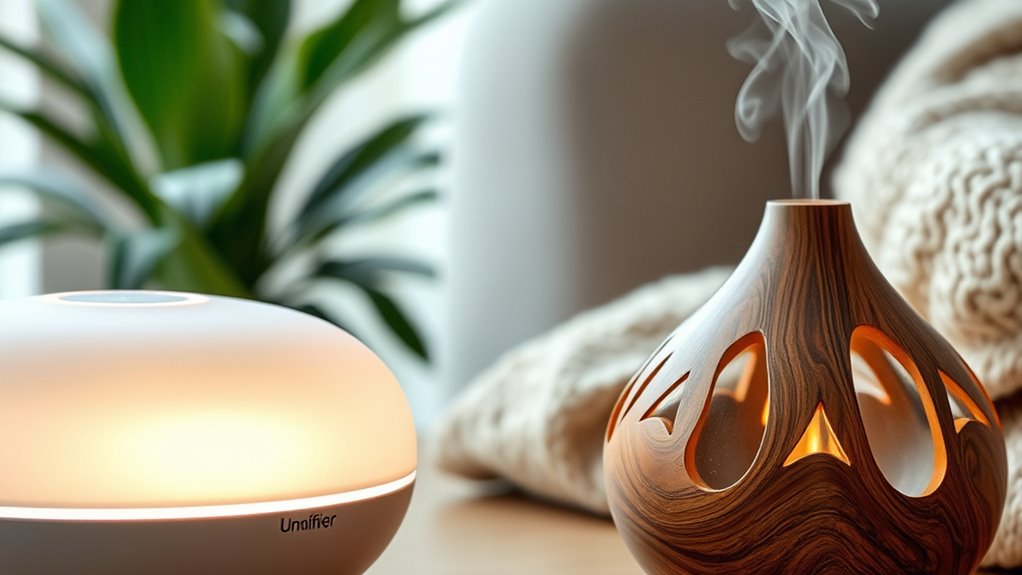
While humidifiers help improve air quality by adding moisture and reducing irritants, diffusers focus on creating a calming environment through aromatherapy. Essential oil diffusion plays a key role in establishing a soothing ambiance, helping you relax after a long day. Here are four ways diffusers enhance your space:
- Disperse calming scents like lavender or chamomile that promote relaxation.
- Improve your mood by releasing fragrant essential oils into the air.
- Help reduce stress and anxiety with consistent, gentle aroma diffusion.
- Create a peaceful atmosphere conducive to meditation or sleep. Incorporating aromatherapy with diffusers can further enhance overall well-being and comfort in your living space. Additionally, using ultrasonic diffuser technology ensures a quieter and more efficient scent dispersal, enriching your environment without disturbance.
Different Types of Humidifiers and Their Features

You’ll find that evaporative humidifiers use a wick filter to add moisture, while ultrasonic models produce a fine mist with vibrations. Cool mist humidifiers are great for everyday use and safety, but warm mist units can help warm your space and reduce bacteria. Understanding these differences helps you choose the right humidifier for your needs. Additionally, some humidifiers include filter replacement reminders to ensure optimal performance and air quality. Proper maintenance, such as filter change frequency, can significantly extend the lifespan of your device and improve air purification efficiency. Regularly monitoring humidity levels can help prevent over-humidification, which is important for maintaining a healthy indoor environment. Choosing the appropriate humidifier type based on your specific needs can enhance your overall comfort and air quality at home.
Evaporative vs. Ultrasonic
When choosing between evaporative and ultrasonic humidifiers, understanding their key differences can help you make an informed decision. Evaporative units use a wick filter and a fan to add moisture, while ultrasonic models vibrate a metal diaphragm to produce a fine mist. To keep your humidifier functioning well, consider these points:
- Evaporative humidifiers are generally easier to maintain due to simpler components.
- Ultrasonic models operate quietly but require regular diffuser cleaning to prevent mineral buildup.
- Evaporative units are self-regulating, adjusting output based on humidity levels, reducing over-humidification.
- Ultrasonic humidifiers can produce a cooler mist, often making them more comfortable in warmer environments.
- Proper humidifier maintenance practices can extend device lifespan and improve air quality.
- Being aware of potential mineral buildup is important to maintain optimal performance of ultrasonic devices.
- Some humidifiers, especially ultrasonic ones, may benefit from distilled water to minimize mineral deposits and ensure cleaner mist.
Both types demand proper humidifier maintenance, and understanding these differences helps ensure healthier air quality in your home.
Cool Mist vs. Warm Mist
Choosing between cool mist and warm mist humidifiers depends on your specific needs and preferences. Cool mist models are ideal if you want to improve air quality without adding extra heat, making them safer around children and pets. They also tend to be more energy-efficient. Warm mist humidifiers, on the other hand, heat water to create vapor, which can help reduce bacteria and germs, potentially leading to better air quality. However, they require more frequent device maintenance because mineral deposits and bacteria can build up faster. Consider your environment and comfort preferences when selecting a type. Regular cleaning is essential regardless of your choice to ensure reliable performance and maintain healthy air quality in your home. Additionally, water quality can impact the performance and longevity of your humidifier, so using distilled or filtered water is often recommended.
Various Diffuser Designs and How They Disperse Essential Oils
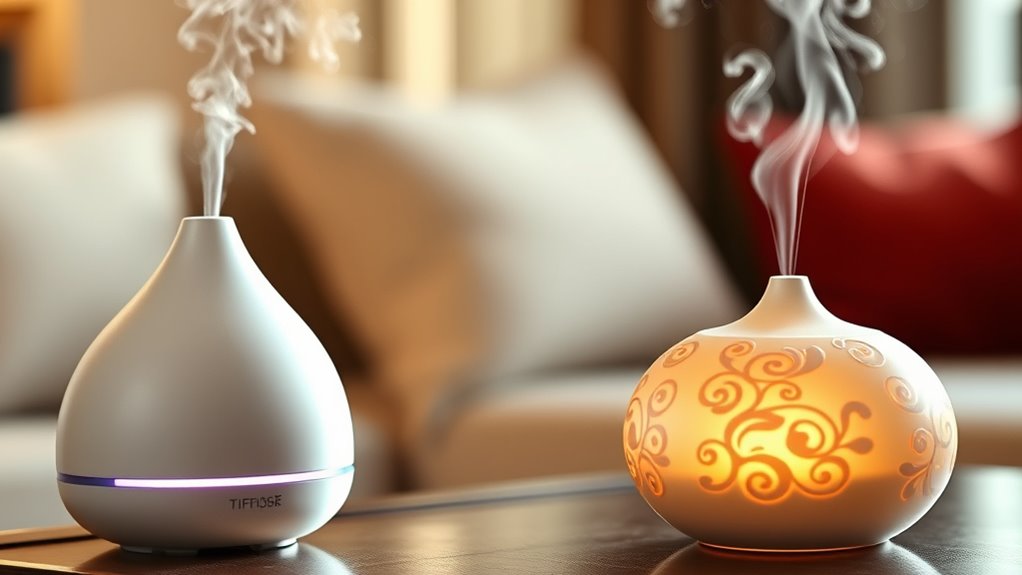
There are several diffuser designs that help disperse essential oils effectively. Ultrasonic diffusers use vibrations to create a fine mist, while reed and nebulizer diffusers rely on different mechanisms to release scents. Understanding how each design works can help you choose the best option for your space.
Ultrasonic Diffuser Mechanics
Ultrasonic diffusers use high-frequency vibrations to turn water and essential oils into a fine mist, effectively dispersing aroma molecules into the air. This ultrasonic technology creates a cool mist that enhances mist dispersion without heat, preserving the integrity of the oils. Within these devices, the core components include:
- Ultrasonic plate or diaphragm that vibrates rapidly to generate mist
- Water reservoir that holds the water-oil mixture
- Motor to power the ultrasonic vibrations
- Fan that helps distribute the mist evenly throughout the space
These elements work together to produce a consistent, fine mist, making ultrasonic diffusers both efficient and quiet. By leveraging ultrasonic technology, they deliver a steady aroma experience while maintaining the therapeutic properties of your essential oils. Wave and wind play significant roles in the natural dispersion of scents and aroma molecules in open environments, complementing the diffusion process indoors.
Reed and Nebulizer Methods
Reed and nebulizer diffusers use different mechanisms to disperse essential oils into the air, offering various benefits depending on your preferences. Reed diffusers rely on reed filtration, where porous reeds absorb oil and slowly release fragrance into your space. They require minimal maintenance and provide a steady, continuous scent without heat or electricity. Nebulizer therapy employs a small device that atomizes essential oils into fine particles through pressurized air, delivering a potent and pure aroma directly into the environment. Nebulizers don’t need water or heat, preserving the oils’ therapeutic properties. While reed diffusers are simple and low-maintenance, nebulizer diffusers are more intense and ideal for therapeutic use. Both methods offer unique ways to enjoy essential oils, tailored to your desired scent strength and application.
Benefits of Using a Humidifier in Dry Climates
In dry climates, using a humidifier offers immediate relief by adding moisture to the air, which can considerably improve your comfort and health. Proper humidifier maintenance ensures it functions efficiently and prevents mold or bacteria growth. Benefits include:
- Reducing respiratory irritation and dry skin.
- Easing allergy symptoms and sinus congestion.
- Protecting wooden furniture and musical instruments from cracking.
- Improving sleep quality by maintaining ideal humidity levels.
- Choosing the right humidifier ensures optimal performance and health benefits. Regularly cleaning your humidifier prevents mineral buildup and bacteria, just as diffuser cleaning keeps it functioning properly. Using a humidifier consistently enhances indoor air quality, making your environment more comfortable. When maintained correctly, it’s a simple yet effective way to combat the effects of dry air on your well-being. Incorporating proper maintenance routines can extend the lifespan of your device and improve its efficiency.
Aromatherapy and Mood Enhancement With Diffusers
Diffusers enhance your environment by releasing essential oils that promote relaxation and uplift your mood. By choosing the right essential oil blends, you can target specific feelings or health benefits through aromatherapy benefits. For example, lavender calms, while citrus energizes. The scent disperses evenly, creating a soothing atmosphere and improving mental clarity. To deepen your understanding, consider this table:
| Essential Oil Blends | Aromatherapy Benefits |
|---|---|
| Lavender & Chamomile | Relaxation and stress relief |
| Lemon & Peppermint | Energizing and alertness boost |
| Eucalyptus & Tea Tree | Respiratory support |
| Ylang-Ylang & Bergamot | Mood uplifting and calming |
Using a diffuser, you actively craft an ambiance conducive to well-being and emotional balance. Diffuser effectiveness can vary depending on the placement and the quality of the device, ensuring optimal benefits from your chosen blends. Additionally, selecting a high-quality diffuser with proper dispersal technology can significantly enhance the aromatherapy experience. Regular cleaning and the use of quality essential oils are essential for maintaining long-term durability and ensuring your diffuser performs at its best. Incorporating essential oil blends tailored to your needs can further customize your aromatherapy experience and promote overall wellness.
Choosing the Right Device Based on Your Home Needs

Choosing the right humidifier or diffuser depends on your home’s specific needs and the space you want to improve. Consider these factors:
Selecting the ideal humidifier or diffuser depends on your home’s unique needs and space requirements.
- Air purification: If you need to improve air quality, opt for a humidifier with filters or an air purifier feature.
- Noise levels: For bedrooms or quiet spaces, select devices with low noise operation to avoid disturbance.
- Room size: Larger rooms require bigger capacity units, while smaller spaces need compact models.
- Functionality: Decide if you want a diffuser mainly for aromatherapy or a humidifier for moisture, and choose accordingly.
- Device automation can enhance convenience by maintaining optimal humidity or scent levels automatically.
Matching these factors guarantees you get a device that enhances air quality, maintains comfort, and fits your home’s requirements seamlessly.
Frequently Asked Questions
Can a Humidifier or Diffuser Help Relieve Allergy Symptoms?
Yes, a humidifier or diffuser can help relieve allergy symptoms by improving air quality and providing aromatherapy effects. A humidifier adds moisture to dry air, reducing congestion and irritation, while a diffuser disperses essential oils that may soothe respiratory issues. Both devices can create a more comfortable environment, easing allergy symptoms and promoting better breathing. Just guarantee regular cleaning to prevent mold and bacteria buildup for ideal benefits.
How Often Should I Clean My Humidifier or Diffuser?
You should clean your humidifier or diffuser at least once a week to maintain a proper maintenance schedule. Use gentle cleaning techniques, like scrubbing with vinegar or mild soap, to remove mineral buildup and mold. If you notice any musty odors or discoloration, clean it more frequently. Regular cleaning keeps your device functioning properly, prevents bacteria growth, and guarantees you breathe clean, healthy air.
Are There Health Risks Associated With Using Essential Oils in Diffusers?
Using essential oils in diffusers can pose health risks if you’re not cautious. Essential oil safety is vital; some oils may trigger respiratory concerns, especially if you have allergies or asthma. Always dilute oils properly and use high-quality, pure products. Ventilate your space well, and avoid prolonged exposure. If you notice any irritation or breathing issues, stop use immediately and consult a healthcare professional to guarantee your safety.
Can a Humidifier or Diffuser Be Used Together Effectively?
Yes, you can use a humidifier and diffuser together like a perfect duet, creating diffuser synergy and enhancing your home’s atmosphere. Just guarantee humidifier compatibility by choosing models that don’t interfere with each other’s functions. Keep them at safe distances and follow manufacturer instructions. Combining both can boost humidity and fill your space with calming scents, making your environment more comfortable and inviting without any health risks.
What’s the Best Device for a Small Bedroom Versus a Large Living Room?
For a small bedroom, choose a compact humidifier or diffuser with a smaller device size, ensuring it’s compatible with limited space and effectively covers the room. In contrast, for a large living room, opt for a larger device designed for room compatibility, providing sufficient coverage without needing multiple units. Always consider the device’s capacity and coverage area to match your room size for ideal comfort and air quality.
Conclusion
Did you know that using a humidifier can reduce airborne viruses by up to 80%? Whether you want to improve air quality or create a calming space with essential oils, understanding the difference helps you choose the right device. By selecting a humidifier or diffuser suited to your needs, you’ll boost comfort and well-being at home. Make the right choice today and enjoy healthier, more relaxing indoor air every day.