In 2025, you’ll experience kitchen innovations that combine smart technology with eco-friendly design. AI-enabled appliances will track groceries and suggest recipes tailored to your preferences. You’ll find sustainable materials, like recycled glass countertops and reclaimed wood cabinets, enhancing both style and environmental responsibility. Energy-efficient fixtures will conserve resources while smart connectivity makes meal preparation easier than ever. With these advancements, you’ll elevate your culinary environment. Stay tuned to discover how these innovations can transform your kitchen!
Key Takeaways
- AI-integrated smart appliances will personalize meal suggestions, track groceries, and manage cooking times for enhanced convenience and efficiency.
- Sustainable materials like recycled glass countertops and reclaimed wood cabinets will dominate kitchen designs for eco-friendly aesthetics.
- Energy-efficient appliances, including dishwashers and water-saving faucets, will promote resource conservation and reduce household utility costs.
- Advanced connected cooking technology will enable seamless integration of kitchen devices, allowing for automated meal preparation and real-time adjustments.
- The kitchen will evolve into a smart sanctuary, combining innovative technology with sustainability to support a responsible lifestyle.
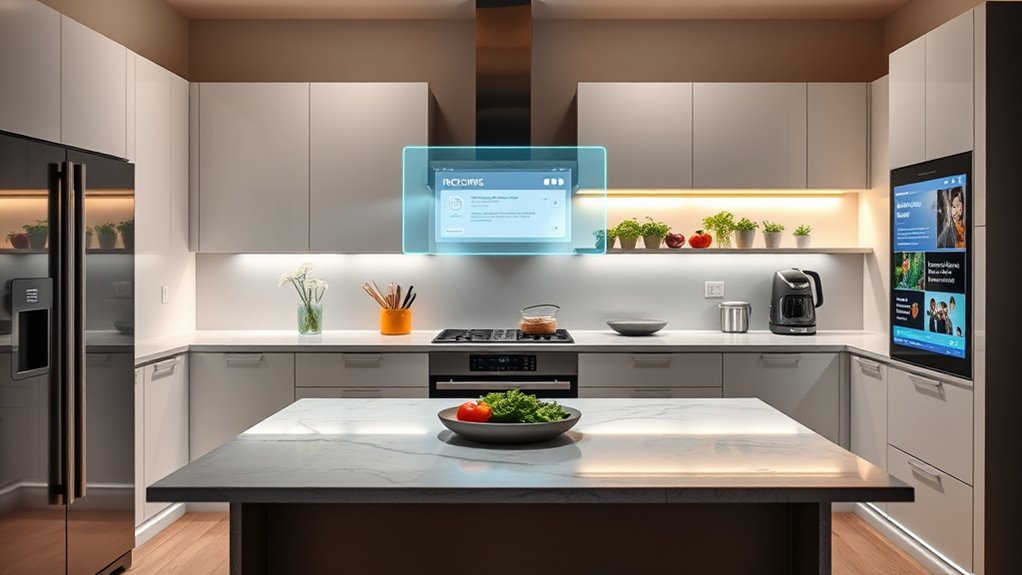
As you step into the kitchen of 2025, you’ll immediately notice how technology has transformed this space into a hub of innovation. Gone are the days of traditional cooking methods and outdated appliances. Instead, you’re greeted by a range of smart appliances designed to make your culinary experience efficient and enjoyable. Your refrigerator, for instance, isn’t just a place to store food; it’s equipped with artificial intelligence that tracks your groceries, suggests recipes based on what you have, and even reminds you when items are about to expire. Imagine opening the fridge and seeing a display that gives you meal ideas tailored to your preferences and dietary needs.
Step into the kitchen of 2025, where smart appliances revolutionize cooking with AI-driven efficiency and personalized meal suggestions.
The smart oven adds another layer of convenience. It’s connected to your smartphone, allowing you to preheat it remotely or adjust cooking times while you’re out. You’ll appreciate its ability to automatically adjust temperatures and cooking times based on the recipe you’ve selected, ensuring perfect results every time. If you’re in a hurry, you can choose a rapid-cook setting that uses advanced heating technology to get your meal ready in record time.
In 2025, the focus on sustainable materials has also changed the landscape of your kitchen. You’ll find countertops made from recycled glass and cabinets crafted from reclaimed wood, reflecting a growing awareness of environmental impact. These materials not only look stunning but also contribute to a more sustainable lifestyle. The eco-friendly trend extends to your flooring as well, with options like bamboo or cork that are both durable and renewable.
The integration of smart technology with sustainable materials creates a harmonious balance in your kitchen. While you enjoy the benefits of cutting-edge appliances, you’re also making choices that are good for the planet. Water-saving faucets and energy-efficient dishwashers help you conserve resources without sacrificing performance. You’ll likely find yourself feeling good about your kitchen choices, knowing they contribute to a healthier environment. Furthermore, these innovations are the result of a growing emphasis on connected cooking, which enhances both efficiency and enjoyment in meal preparation.
As you navigate this innovative culinary space, it becomes clear that the kitchen of 2025 is more than just a place to prepare meals; it’s a smart, sustainable sanctuary. You’re not only cooking with efficiency and style but also participating in a movement toward a more responsible and connected lifestyle. Embrace these advancements, and you’ll transform your cooking experience into something truly extraordinary.
Frequently Asked Questions
How Will Kitchen Innovations Impact Food Sustainability in 2025?
In 2025, you’ll see kitchen innovations substantially impact food sustainability by promoting sustainable packaging and enhancing food waste reduction. You’ll use smarter appliances that help manage inventory, ensuring you buy only what you need. These innovations will encourage you to choose eco-friendly packaging options, reducing your environmental footprint. With better meal planning tools, you’ll minimize leftovers and optimize your food usage, leading to a healthier planet and a more sustainable lifestyle.
What Are the Potential Health Benefits of Smart Kitchen Devices?
Imagine cooking without worrying about hidden allergens or missing essential nutrients. Smart kitchen devices enhance your health by providing nutrition tracking and allergen detection. They help you create balanced meals tailored to your dietary needs, ensuring you stay on track with your wellness goals. Plus, they can alert you to potential allergens in your food, giving you peace of mind. Embracing these innovations means you’re investing in a healthier, safer lifestyle.
How Can I Integrate These Innovations Into My Small Kitchen?
To integrate innovations into your small kitchen, focus on space-saving solutions like multi-functional appliances that combine several tasks into one. Opt for wall-mounted shelves to free up counter space and consider using smart storage bins. For aesthetic enhancements, choose sleek, modern designs that complement your decor. You can also add smart lighting to create a more inviting atmosphere. Prioritize these elements to maximize functionality while maintaining style in your compact kitchen.
Are These Kitchen Technologies Energy-Efficient and Eco-Friendly?
Absolutely, these kitchen technologies are like the green superheroes of energy conservation. They’re designed to minimize your energy consumption, making them eco-friendly and efficient. By using advanced materials and smart designs, they reduce waste and lower your utility bills. You’ll find appliances made from eco-friendly materials that not only help the planet but also elevate your cooking experience. Embracing these innovations means you’re cooking with a conscience, benefitting both you and the environment.
What Is the Cost Range for These Innovative Kitchen Products?
Pricing estimates for innovative kitchen products can vary widely, typically ranging from $100 to several thousand dollars. Affordability factors include brand reputation, functionality, and materials used. For instance, basic appliances might cost less, while high-tech gadgets come with a premium price tag. It’s important to take into account your own budget and needs when shopping. You’ll want to balance quality with affordability to ensure you’re making a smart investment in your kitchen.
Conclusion
As you navigate the culinary landscape of 2025, think of your kitchen as a ship sailing the seas of innovation. Each new gadget is a trusty crew member, helping you chart a course through meal prep and cooking with ease. Embrace these advancements, and you’ll find your culinary journey more enjoyable and efficient. So, hoist the sails of creativity, and let the winds of technology guide you to delicious discoveries in your kitchen!