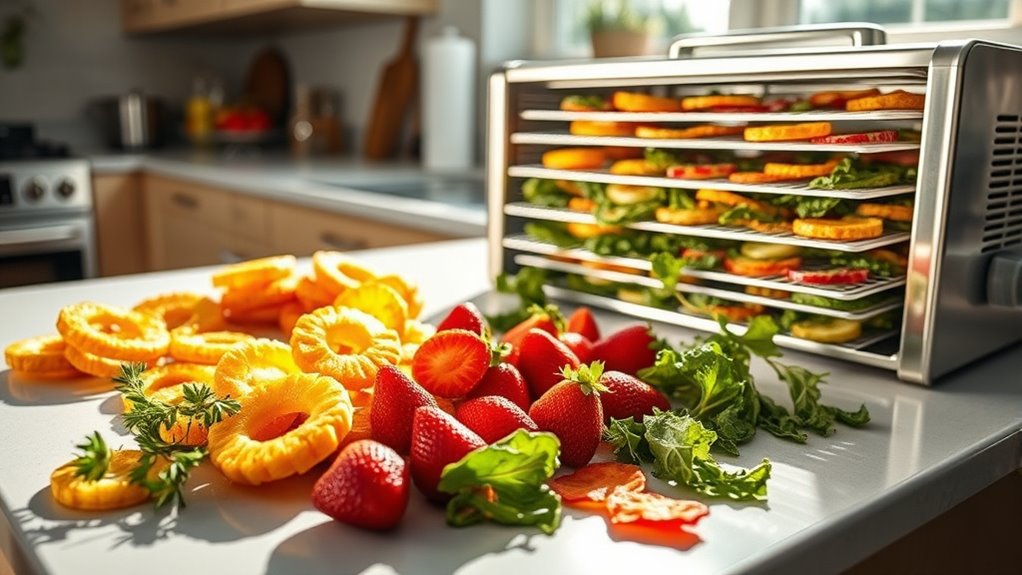

A food dehydrator’s benefits are hard to overlook. It extends the shelf life of fruits, vegetables, and herbs while preserving essential nutrients and flavors. You can create healthier snacks at home, control ingredients, and produce protein-packed jerky without additives. Plus, it supports culinary creativity by concentrating flavors and encouraging experimentation. By minimizing food waste and promoting healthier eating habits, a dehydrator becomes a must-have tool in your kitchen. Discover even more advantages and ideas to maximize your food preservation skills.
Key Takeaways
- A food dehydrator extends the shelf life of fruits and vegetables, reducing food waste and allowing seasonal produce to be enjoyed year-round.
- It facilitates the creation of healthy, homemade snacks, providing control over ingredients and eliminating preservatives and added sugars.
- Dehydrators enable the preparation of homemade jerky and protein snacks, offering customizable flavors and healthier options for on-the-go eating.
- They promote culinary creativity by concentrating flavors and enhancing dishes with dried herbs and fruits, inspiring innovation in food preparation.
- Using a dehydrator supports sustainable practices by minimizing food waste and empowering consumers to make healthier food choices.

If you’re looking to preserve your favorite fruits, vegetables, and herbs, a food dehydrator could be your best friend. This handy appliance lets you dry out your produce, extending its shelf life while retaining essential nutrients and flavor. Unlike traditional methods, using a dehydrator allows for consistent heat and air circulation, ensuring your food dries evenly. You won’t just save money by reducing waste; you’ll also create tasty snacks that are both healthy and satisfying.
One of the most appealing aspects of a food dehydrator is its ability to facilitate snack preservation. Imagine having a stash of perfectly dried apples, pears, or even kale chips at your fingertips. You can whip up healthy snacks that are far superior to store-bought options, which are often packed with preservatives and added sugars. With a dehydrator, you control the ingredients, making it easy to cater to your dietary preferences or restrictions. Plus, the process is simple and fun, turning your kitchen into a mini food factory.
Another fantastic use of a dehydrator is making homemade jerky. You can turn lean cuts of meat into delicious jerky without the additives found in commercial brands. By marinating your chosen protein and following the dehydration process, you can create custom flavors that suit your palate. Whether you prefer beef, turkey, or even tofu, homemade jerky is a protein-packed snack that can be enjoyed on the go. It’s an excellent way to fuel your day, especially during hikes or road trips.
Using a food dehydrator not only promotes healthy eating but also fosters creativity in the kitchen. You can experiment with various fruits, vegetables, and herbs, transforming them into concentrated flavors that can enhance your cooking. Remember, dried herbs can elevate your dishes, and dehydrated fruits can be tossed into granola or oatmeal for added texture.
In a world where convenience often trumps nutrition, a food dehydrator empowers you to take control of your food choices. It allows you to preserve seasonal bounty, minimize food waste, and make nutritious snacks that satisfy your cravings. So, if you’re ready to elevate your culinary game and embrace healthier eating habits, investing in a food dehydrator might just be one of the best decisions you make.
Frequently Asked Questions
Can I Dehydrate Food Without a Food Dehydrator?
Yes, you can definitely dehydrate food without a food dehydrator! You can use alternative drying methods like your oven or even the sun if you’re in a warm climate. Set your oven to a low temperature, around 140°F, and leave the door slightly ajar for airflow. You can also explore kitchen appliance options like a microwave on low power. Just keep an eye on your food to avoid over-drying or burning.
How Long Does Dehydrated Food Last?
Dehydrated food can last anywhere from six months to several years, depending on the type of food and your storage longevity methods. To maximize preservation techniques, store your dehydrated items in airtight containers, away from light and moisture. Properly sealed, fruits often last up to a year, while vegetables and meats can last even longer. Regularly check for signs of spoilage to guarantee your dehydrated food stays safe and delicious.
Is Dehydrated Food Safe to Eat?
Dehydrated food’s safe to eat, but isn’t it ironic that something dried out can last longer than fresh? Thanks to the dehydration process, moisture’s removed, making it harder for bacteria to thrive. Still, you should guarantee proper food safety practices, like using clean equipment and storing it in airtight containers. So, while you might think drying food’s risky, it actually helps preserve it safely for your future snacking adventures!
Can I Dehydrate Meat or Fish?
Yes, you can dehydrate both meat and fish! For jerky preservation, make sure to slice the meat thinly and marinate it to enhance flavor. Use a dehydrator or an oven on low heat to guarantee even drying. For fish, fish drying techniques like brining can add taste while removing moisture. Just remember to store your dehydrated products in airtight containers to keep them fresh longer. Enjoy your homemade snacks!
What Types of Foods Are Best for Dehydrating?
Fruits and vegetables are perfect for dehydrating, with studies showing that dried fruit retains about 80% of its nutrients. You’ll find that apples, bananas, and berries make excellent snacks when dehydrated, providing a healthy alternative to processed treats. For vegetables, consider carrots, bell peppers, and zucchini; they transform into crunchy snacks packed with flavor. Dehydrating these foods not only aids in fruit preservation but also makes nutritious munchies for your busy lifestyle.
Conclusion
Incorporating a food dehydrator into your kitchen can be a game-changer. Not only does it help reduce food waste, but did you know that dehydrated fruits and vegetables can retain up to 97% of their nutrients? Plus, it’s a fun way to experiment with flavors and create healthy snacks. So, if you love fresh, nutritious options, investing in a dehydrator might just be the perfect addition to your culinary toolkit!