
To fix uneven cooking in your oven, start by checking its calibration with an oven thermometer. If there’s a significant difference, recalibrate it to improve consistency. Next, choose light-colored, reflective cookware for even heating and avoid overcrowding the oven to promote proper airflow. Position your racks in the center and rotate dishes halfway through cooking. If uneven cooking persists, it may be time to upgrade your oven for better performance. You’ll discover even more tips ahead!
Key Takeaways
- Use an oven thermometer to check for temperature accuracy and recalibrate if significant discrepancies are found.
- Choose light-colored, reflective cookware to ensure even heat distribution and prevent uneven cooking results.
- Avoid overcrowding the oven to enhance airflow and reduce hot spots; position racks centrally for optimal cooking.
- Rotate dishes halfway through cooking to expose all sides to heat and promote consistent results.
- Regularly maintain your oven and consider upgrading if it shows signs of age-related temperature fluctuations.
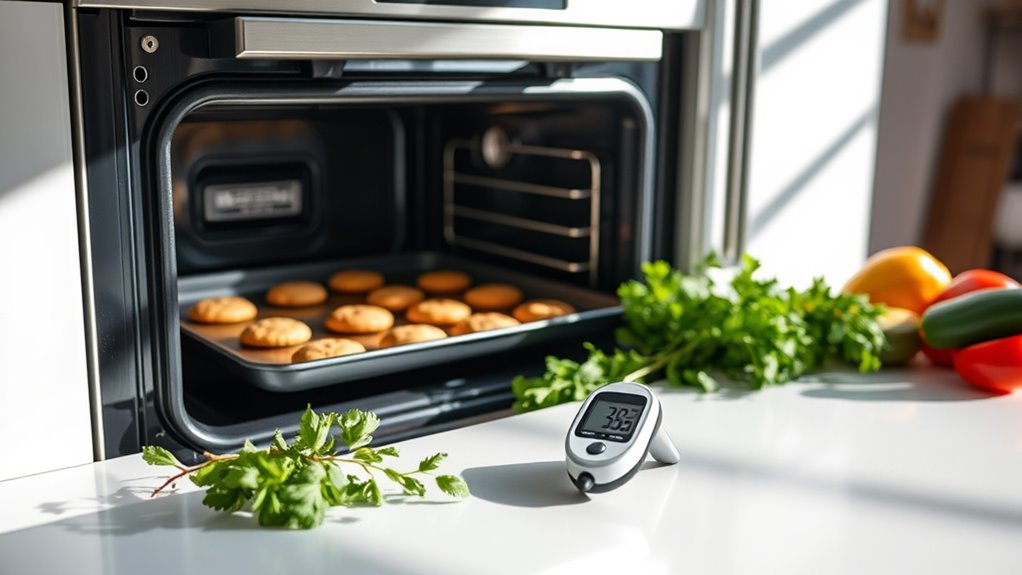
If you’ve ever pulled a dish from the oven only to find that one side is perfectly cooked while the other is still raw, you know how frustrating uneven cooking can be. This issue often stems from hot spots in your oven, which can lead to disappointing results. Luckily, you can take steps to fix this problem and attain more consistent cooking.
First, contemplate oven calibration. Many ovens aren’t perfectly calibrated, meaning they don’t heat to the temperature you set. You can check this by placing an oven thermometer inside and comparing the reading to the temperature you selected. If there’s a significant difference, your oven may need recalibrating. Check your owner’s manual for instructions on how to do this, or consult a professional if you’re unsure. A well-calibrated oven can drastically improve your cooking consistency, ensuring that your dishes are cooked evenly.
Consider checking your oven’s calibration; a well-calibrated oven ensures even cooking and improved results.
Another key factor in achieving uniform cooking is cookware selection. Using the right pans can make a huge difference. Light-colored, reflective pans tend to promote even cooking, while dark, non-stick cookware can absorb heat and cause uneven results. If you find that your dishes are consistently overcooked on the bottom but undercooked on top, consider switching to a lighter pan. Additionally, ensure that the cookware you choose is oven-safe and appropriate for the type of dish you’re preparing.
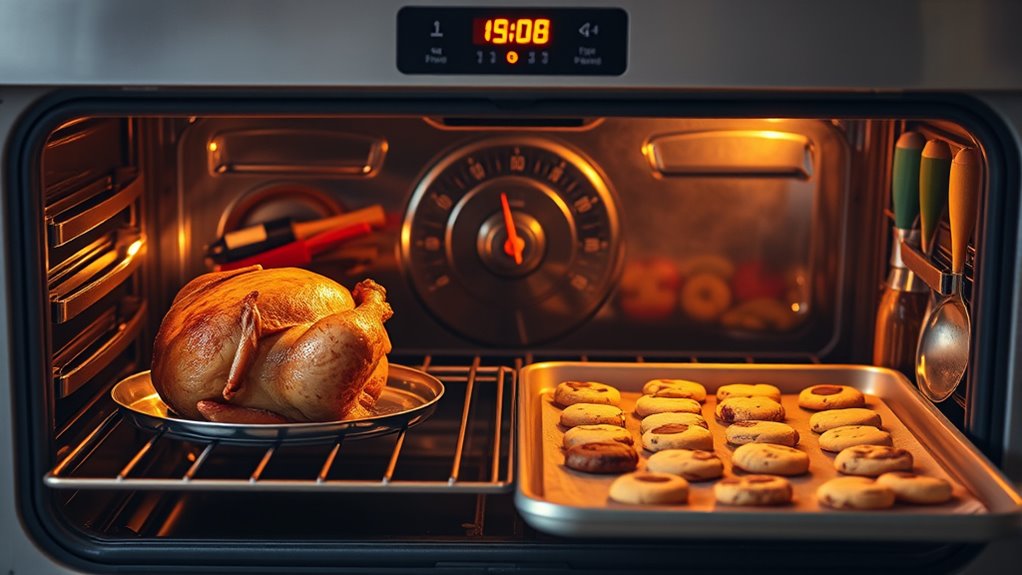
Placement in the oven also matters. Avoid crowding the oven, as this can limit airflow and cause hot spots. When using multiple racks, rotate your dishes halfway through cooking to ensure they receive equal heat. If you’re baking, it might help to position your oven rack in the center for ideal heat distribution.
Lastly, keep an eye on your oven’s insulation. If your oven is older, it may not retain heat as well as newer models. If you notice that your oven takes longer to preheat or struggles to maintain temperature, it might be time to consider an upgrade. Additionally, investing in energy-efficient cloud solutions can help you discover innovative ways to manage your kitchen appliances more effectively.
Frequently Asked Questions
What Causes Hot Spots in My Oven?
Hot spots in your oven often occur due to uneven heat distribution, which leads to oven temperature variance. Factors like a malfunctioning heating element, poor insulation, or even the placement of your oven racks can contribute to hot spot formation. If the airflow is restricted, it can also cause certain areas to heat up more than others. Regularly checking your oven’s calibration can help identify and reduce these issues for better cooking results.
How Can I Tell if My Oven Is Calibrated Correctly?
You can tell if your oven’s calibrated correctly by using an oven thermometer. Preheat your oven to a specific temperature, then place the thermometer inside. After about 20 minutes, check the thermometer reading. If it differs markedly from your oven’s set temperature, your calibration accuracy is off. Adjust the temperature settings accordingly, or consult the manual for recalibration instructions. Regular checks ensure your oven temperature remains reliable for consistent cooking results.
Is It Normal for My Oven to Take Longer to Preheat?
Yes, it’s normal for an oven to take longer to preheat, especially if it’s dirty or hasn’t been cleaned in a while. Grease and food buildup can affect heat distribution, making it take longer. If you’re noticing significant delays, consider cleaning your oven thoroughly. If that doesn’t help, it might be time for an oven replacement. Regular maintenance can keep your oven running efficiently and reduce preheating time.
Can Baking Pans Affect Cooking Results in My Oven?
Yes, baking pans can definitely affect your cooking results. The material of your baking pan plays a big role; for instance, metal pans conduct heat better than glass ones, leading to quicker browning. Additionally, using a pan that’s too small or too large can impact cooking times and how evenly your food cooks. Make sure to choose the right material and size for the best results in your oven.
Should I Rotate Food During Cooking to Prevent Unevenness?
Absolutely, you should rotate food during cooking to achieve even cooking. Imagine pulling out a perfectly golden dish, only to find one side burnt! By practicing food rotation, you guarantee that every part gets equal exposure to heat. It’s a simple yet effective technique that can dramatically improve your results. Just remember to give your dish a gentle turn halfway through cooking for that delightful uniformity you crave. Happy cooking!
Conclusion
To wrap it up, tackling uneven cooking in your oven is like tuning a guitar; a little adjustment can make a world of difference. By rearranging your racks, rotating your pans, and keeping an eye on those hot spots, you’ll create a harmonious cooking environment. Don’t forget to give your oven a good clean and check its temperature accuracy. With these simple steps, you’ll enjoy perfectly baked meals that sing with flavor every time!