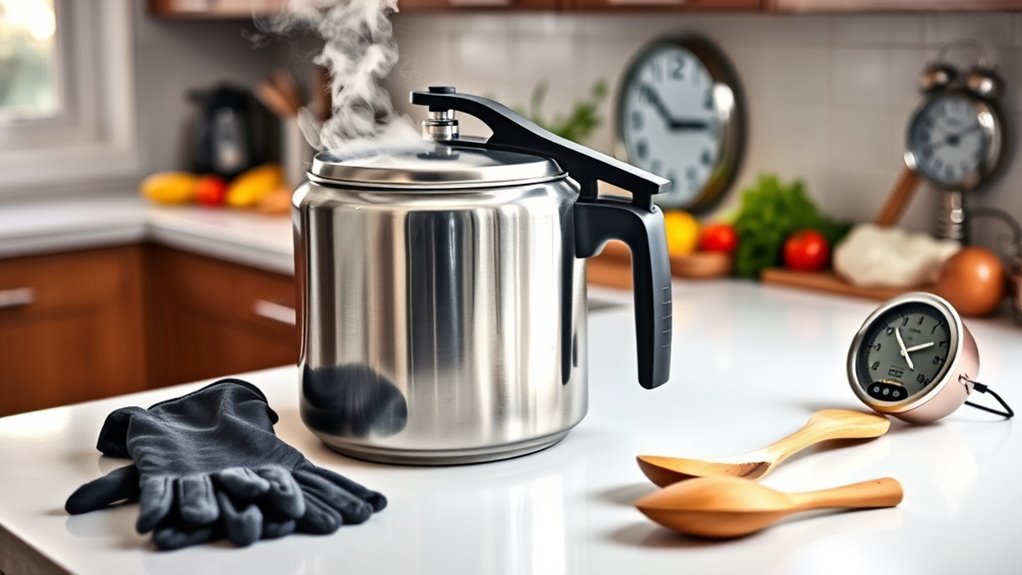

To use a pressure cooker safely, always make certain the lid’s locked properly before heating. Familiarize yourself with your model’s locking mechanism and read the manufacturer’s instructions. Understand the difference between natural and quick release methods, and use them appropriately to prevent overcooking. When releasing pressure, stand clear of steam vents, and never force the lid open while pressure remains. Regular maintenance, like cleaning the vent and seal, is essential for safe operation. Want to know more tips?
Key Takeaways
- Ensure the lid is securely locked before heating to prevent steam leaks or lid blow-offs.
- Use appropriate pressure release methods: natural release for grains, quick release for vegetables.
- Stand clear of steam vents and use long utensils to safely release pressure.
- Never attempt to open the pressure cooker while it is still under pressure.
- Regularly clean and maintain the cooker, checking for wear or damage to ensure safe operation.
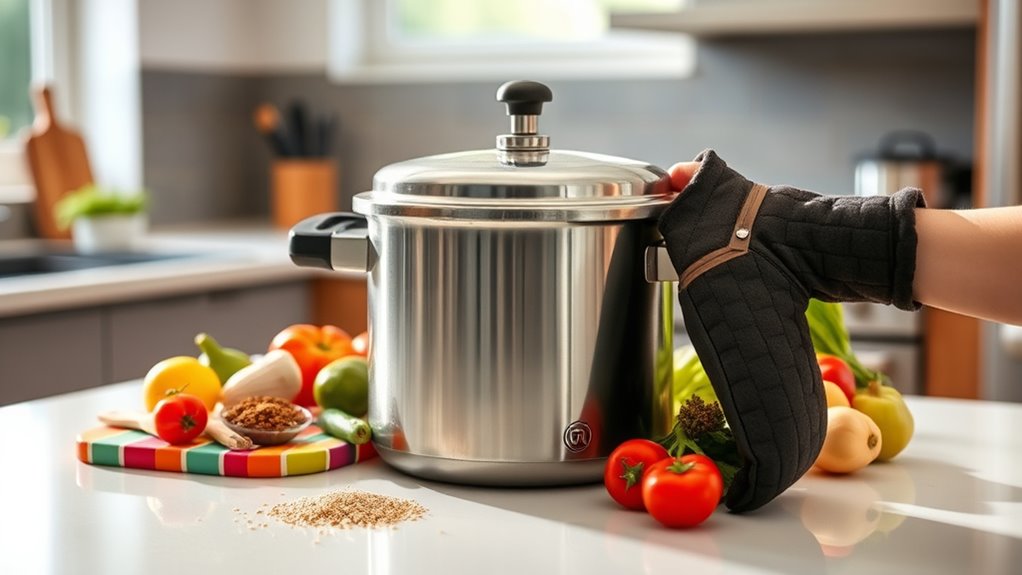
When you use a pressure cooker, safety should always be your top priority. These handy devices can substantially cut down your cooking time, but they can also pose risks if not used correctly. One of the most essential aspects of using a pressure cooker safely is understanding how to handle the lid and pressure release effectively.
Before you even start cooking, make sure your pressure cooker lid is locking properly. An improperly secured lid can lead to dangerous situations, including steam escaping unexpectedly or, worse, the lid blowing off during cooking. Familiarize yourself with your specific model’s locking mechanism. Each pressure cooker has its own way of ensuring the lid is secure, so take a minute to read the manufacturer’s instructions. Once you’ve got the lid locked, double-check that it’s in place before you begin heating your cooker.
As you cook, you’ll need to pay close attention to the pressure release method. There are generally two types of pressure release: natural and quick. Natural pressure release allows the pressure to decrease on its own, which is often recommended for foods like beans or grains. Quick pressure release, on the other hand, is used for foods that cook quickly, like vegetables. It’s important to know which method to use for your recipe to avoid overcooking or creating a mess.
When it’s time for pressure release, make sure you’re standing clear of the steam vent. The steam can be extremely hot and can cause burns if you’re not careful. Use a long utensil, like a spoon, to turn the pressure release valve, if your model has one. This way, you’re keeping your hands and face at a safe distance. Always wait for the pressure indicator to show that it’s safe to open the lid, as this is a key sign that the cooker has released enough pressure. Additionally, regular cleaning and monitoring for signs of infection risks are crucial to maintaining a safe cooking environment.
Finally, never attempt to open the lid while the cooker is still under pressure. This is a common mistake that can lead to accidents. If the lid won’t budge, it’s a clear indication that there’s still pressure inside. Be patient and allow the cooker to cool down before trying again. By following these safety tips, you can enjoy the convenience of pressure cooking without compromising your safety in the kitchen.
Frequently Asked Questions
Can I Use a Pressure Cooker for Canning Food Safely?
Yes, you can use a pressure cooker for canning food safely, but it’s essential to guarantee you’re using a pressure canner, not just any regular pressure cooker. Pressure canning helps you achieve the high temperatures needed for proper food preservation, preventing spoilage and bacteria growth. Always follow tested recipes and guidelines for canning to make certain your food is safe to eat. Remember, proper technique is critical for successful food preservation!
What Types of Food Should Not Be Cooked in a Pressure Cooker?
You shouldn’t cook certain foods in a pressure cooker, like dairy products, pasta, and large cuts of meat. Did you know that nearly 25% of pressure cooker accidents involve improper food choices? These unsuitable foods can expand or foam, leading to pressure cooker limitations and potential hazards. Stick to recipes designed for pressure cooking, and you’ll keep your meals safe and delicious, avoiding any unwanted mishaps in the kitchen.
How Do I Know if My Pressure Cooker Is Still Safe to Use?
To know if your pressure cooker is still safe to use, check the pressure release valves for any blockages and verify they function properly. Inspect the gasket integrity; if it’s cracked or worn out, replace it. Also, look for any signs of rust or damage on the pot itself. Regular maintenance and inspection can help you keep your pressure cooker in safe working condition, ensuring delicious meals without worry.
What Are the Signs of a Malfunctioning Pressure Cooker?
If your pressure cooker starts acting like a ticking time bomb, it’s definitely malfunctioning! Look for signs like steam escaping from the sides instead of the pressure release valve. A gasket failure can lead to a messy kitchen explosion! If you hear hissing noises or notice any odd smells, it’s time to stop using it. Trust your instincts—if something feels off, don’t risk it; safety should always come first!
Is It Safe to Open a Pressure Cooker Immediately After Cooking?
No, it’s not safe to open a pressure cooker immediately after cooking. You need to allow the pressure to dissipate naturally or use a quick release method, following safety precautions. If you open it too soon, hot steam can escape rapidly, leading to burns or injuries. Always check the pressure indicator to verify it’s safe to open, and handle the lid carefully to avoid any accidents while releasing steam.
Conclusion
Now that you know how to use a pressure cooker safely, you can whip up delicious meals without the stress. Just remember to keep an eye on the pressure and never ignore the safety features—after all, we’re not living in the Stone Age anymore! With these tips in mind, you’ll be cooking like a pro in no time, impressing your friends and family with your culinary skills. So, get ready to enjoy those tasty, tender dishes!