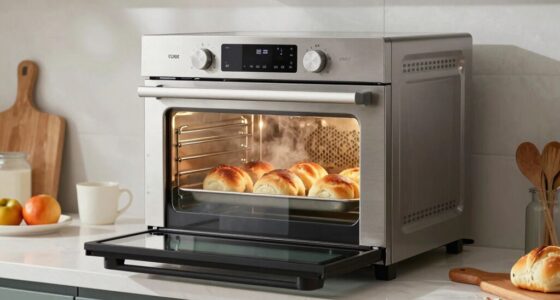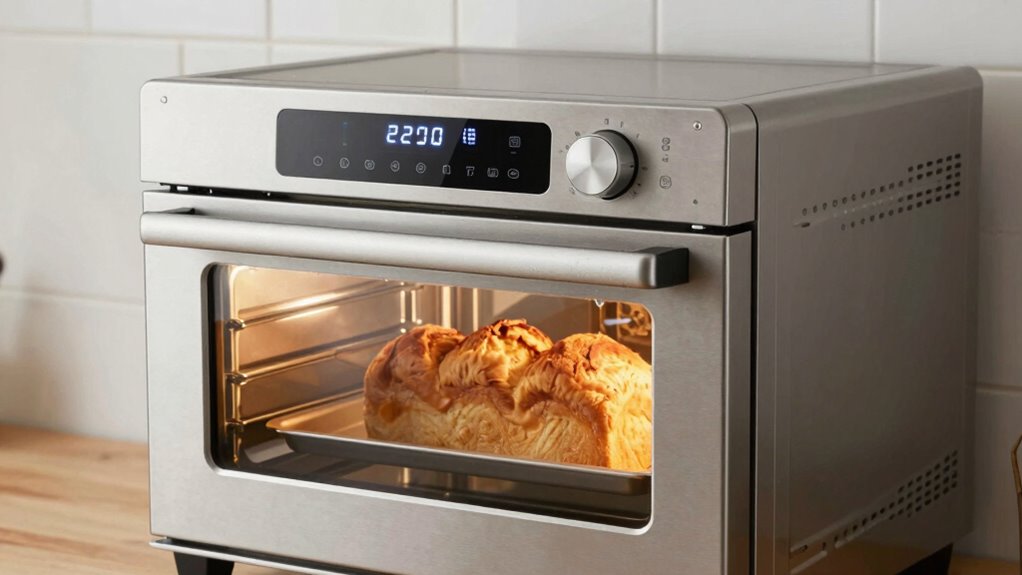
Countertop ovens are typically more energy-efficient than traditional ovens because they heat up quickly and use less power for small tasks like toasting or reheating. Their smaller size and quick heating reduce energy waste, especially if you use them for daily small meals. However, factors like wattage, features, and how often you cook influence overall savings. If you want to understand how to maximize your appliance’s efficiency, there’s more to uncover below.
Key Takeaways
- Countertop ovens are energy-efficient for small tasks due to quick heating and lower wattage compared to traditional ovens.
- Their energy savings depend on usage patterns, oven size, features, and cooking duration.
- Quick heating reduces energy waste by minimizing heat-up time, making them ideal for reheating and small meals.
- High-end models with convection and smart controls further enhance energy efficiency.
- Choosing the right countertop oven based on personal habits maximizes energy savings and kitchen efficiency.
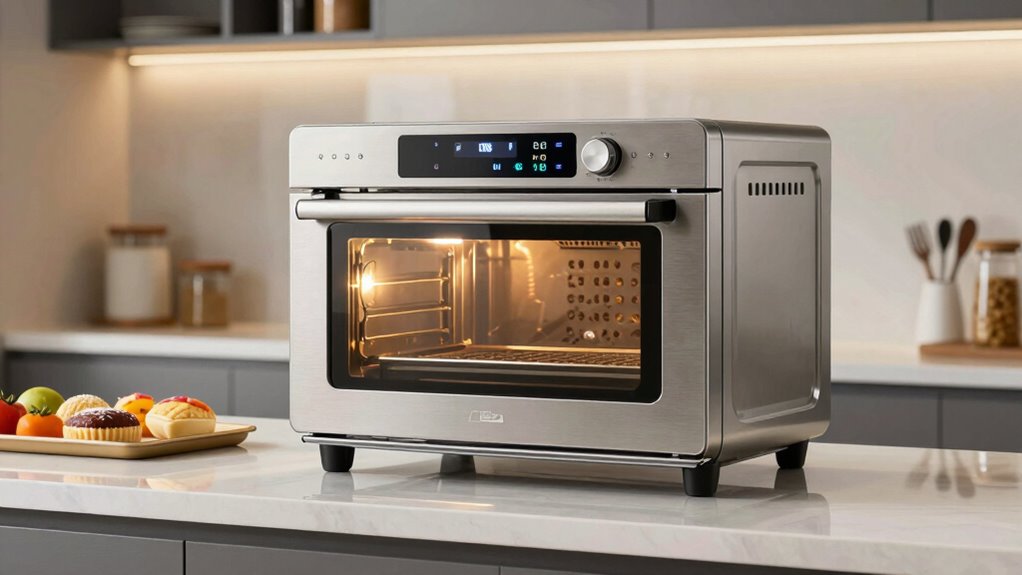
Have you ever wondered how much energy your countertop oven consumes compared to your regular oven? It’s a common question, especially when you’re trying to cut down on energy bills or make eco-friendly choices. When you think about appliance comparison, a key factor is energy efficiency. Countertop ovens are often marketed as more energy-efficient options, and in many cases, they are. Because they’re smaller and heat up faster, they typically use less power for quick tasks like toasting, reheating, or baking small portions. This means they can be a smarter choice for everyday use, reducing overall energy consumption. But it’s important to understand that not all countertop ovens are created equal, and their energy use can vary depending on size, features, and how you use them.
Countertop ovens are often more energy-efficient for small tasks due to their size and quick heating.
The main advantage of a countertop oven is its ability to heat up quickly. Unlike traditional ovens, which need time to reach the desired temperature and often maintain heat for longer periods, countertop models heat up in just a few minutes. This quick start-up not only saves time but also reduces energy waste, especially if you’re only cooking small meals or snacks. When conducting an appliance comparison, you’ll find that the energy efficiency of a countertop oven depends on its wattage and how long it runs. Since most countertop ovens operate at a lower wattage than full-sized ovens, they tend to consume less electricity per session. However, if you use a small oven for long periods or for large meals, the energy savings may diminish. Additionally, understanding energy consumption patterns can help you make more informed choices about which appliance best fits your lifestyle. Recognizing the importance of technological advancements in appliance design can lead to more energy-conscious purchasing decisions. Incorporating energy-saving features into your selection process can further enhance your appliance’s efficiency and reduce your carbon footprint. Staying aware of modern innovations can guide you toward appliances that maximize efficiency while maintaining performance.
Another factor to consider is how often you actually use your appliances. If your regular oven is only used once a week for large meals, switching to a countertop oven for daily reheating or quick baking can save significant energy over time. It’s also worth noting that some high-end countertop models come with energy-saving features like convection fans or smart temperature controls that optimize power use. These features can further improve energy efficiency, giving you more reasons to consider a countertop oven when comparing appliances.
In the end, understanding your cooking habits and comparing the energy consumption of different appliances helps you make smarter choices. While a countertop oven can be a more energy-efficient option for many tasks, the key is matching the right appliance to your needs. Doing an appliance comparison with energy efficiency in mind will help you reduce waste and save money, all while keeping your kitchen running smoothly.
Frequently Asked Questions
Do Countertop Ovens Contribute to Indoor Heat Buildup?
Countertop ovens can contribute to indoor heat buildup, especially if you cook frequently or use them for extended periods. You’ll notice increased indoor heat, so proper ventilation considerations are essential. To keep your space comfortable, make sure your kitchen is well-ventilated—use exhaust fans or open windows. This helps dissipate heat and prevents the oven from making your indoor environment uncomfortably warm.
How Do Different Wattages Affect Energy Consumption?
Did you know that a 1500-watt countertop oven uses about 1.5 kWh per hour? The wattage impact is significant—higher wattage models consume more energy, increasing your electricity bill. Choosing a lower wattage oven can lead to energy savings without sacrificing performance. By understanding this, you can make smarter decisions, cut costs, and reduce your environmental footprint while still enjoying delicious baked meals.
Are There Energy-Efficient Models Available?
Yes, there are energy-efficient countertop oven models available. You can achieve energy savings by choosing appliances with better insulation, lower wattage, or advanced features designed to reduce power consumption. Upgrading to these models helps you cut energy costs and minimizes environmental impact. Look for certifications like Energy Star, which indicate the appliance meets high efficiency standards, ensuring you get the most out of your investment in appliance upgrades.
How Often Should I Use My Countertop Oven to Save Energy?
You should use your countertop oven sparingly to save energy. Incorporate energy-saving tips like batch cooking and avoiding preheating when possible. Limit usage frequency to essential meals, and try to cook multiple items at once to maximize efficiency. By controlling how often and how long you operate your oven, you reduce energy consumption and lower your utility bills, making your cooking habits more eco-friendly and cost-effective.
Can Countertop Ovens Replace Full-Sized Ovens Completely?
Can a countertop oven fully replace a full-sized oven? It depends on your kitchen design and cooking needs. Countertop ovens are great for small meals and quick tasks, but they might not handle large batches or complex baking. To keep them performing well, you’ll want to practice proper appliance maintenance. While they can supplement your main oven, they might not be the complete solution for every cooking situation.
Conclusion
So, if you’re worried that a countertop oven might spike your energy bills, think again. These appliances are generally more efficient than heating up a full-sized oven, saving you both energy and money in the long run. Plus, they heat up faster, helping you cook quicker and cut down on wasted electricity. So don’t hesitate—adding a countertop oven could be a smart, energy-saving move for your kitchen.