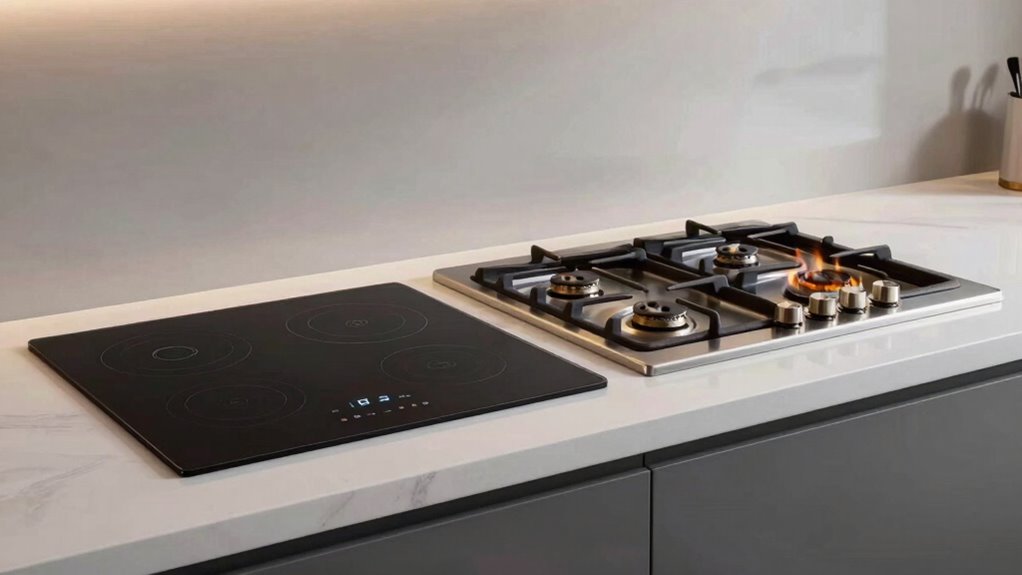
If you’re choosing between induction and gas cooktops for your modern kitchen, consider efficiency and safety. Induction models heat cookware directly with electromagnetic fields, making them quicker, more energy-efficient, and safer since their surfaces stay cooler. Gas cooktops provide instant heat and precise control but pose higher safety risks like gas leaks and open flames. Both options have advanced safety and tech features, so exploring more details can help you find the perfect fit for your needs.
Key Takeaways
- Induction cooktops are more energy-efficient and environmentally friendly due to direct electromagnetic heating.
- Gas cooktops offer precise flame control, favored by professional chefs for cooking versatility.
- Induction surfaces are safer with cooler tops and automatic shut-off features, reducing burn risks.
- Gas models pose safety risks like leaks and open flames, requiring proper ventilation and safety devices.
- Technological advancements are enhancing safety, efficiency, and smart features in both induction and gas cooktops.
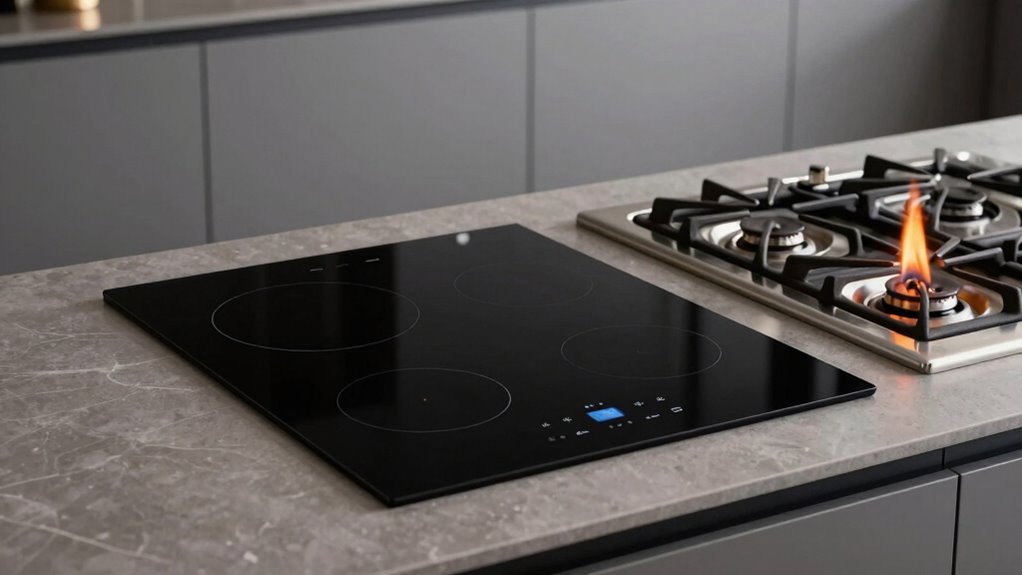
When choosing between induction and gas cooktops, understanding their key differences can help you make an informed decision. Energy efficiency is a major factor to consider. Induction cooktops heat cookware directly through electromagnetic fields, which means less energy is wasted. They heat up quickly and respond immediately to temperature adjustments, making them more efficient overall. Gas cooktops, on the other hand, generate heat through open flames, which can lead to more heat loss around the burners and less efficient energy use. If you’re looking to save on energy costs and reduce your environmental impact, induction cooktops tend to be the better option. They convert a higher percentage of energy into heat, making them more environmentally friendly and cost-effective over time. Additionally, energy transfer methods differ significantly between the two, influencing overall efficiency. Safety features are another crucial aspect when comparing these two options. Induction cooktops are generally safer because they only heat the cookware, not the surface itself. This means the cooktop remains relatively cool to the touch, reducing the risk of burns. Additionally, most induction models have built-in safety features like auto shut-off and pan detection, which turn off the heat when no cookware is present or if overheating occurs. Gas cooktops, while providing immediate visual feedback with open flames, pose more safety risks. Gas leaks, accidental fires, and burns are real concerns, especially if your home isn’t properly ventilated or if you forget to turn off the burners. However, modern gas cooktops often include safety features like flame failure devices that cut off the gas if the flame goes out, adding a layer of security. Still, the presence of an open flame inherently carries more risk than the electromagnetic heating of induction units. Moreover, understanding the safety implications can help homeowners make better choices to prevent accidents and ensure a safer kitchen environment. Additionally, Energy efficiency can significantly influence long-term operating costs and environmental impact. Incorporating technological advancements in both types of cooktops can further enhance safety and efficiency, making modern options more appealing for various households. Advances in smart technology are also making both options more user-friendly and safe to operate.
induction cooktop with auto shut-off
As an affiliate, we earn on qualifying purchases.
As an affiliate, we earn on qualifying purchases.
Frequently Asked Questions
Are Induction Cooktops Suitable for Professional Restaurant Kitchens?
Induction cooktops can be suitable for professional restaurant kitchens if they meet commercial compatibility standards. They offer rapid heating, energy efficiency, and precise temperature control, which benefits busy environments. However, you should consider maintenance considerations, as induction units may require specialized cleaning and repairs. While they work well for many tasks, gas cooktops still excel in high-heat cooking and visual flame control, making them a preferred choice for some professional chefs.
How Does Energy Efficiency Compare Between Induction and Gas Cooktops?
Induction cooktops are more energy-efficient than gas cooktops because they use electromagnetic energy to directly heat cookware, reducing energy consumption. This means less wasted heat and faster cooking times. Additionally, induction cooktops have a lower environmental impact since they produce fewer emissions and use electricity more efficiently. If you’re looking to save energy and minimize your environmental footprint, induction is the smarter choice for your modern kitchen.
Can Induction Cooktops Be Used With All Types of Cookware?
You might think induction cooktops work with any cookware, but that’s not the case. They rely on magnetic requirements, so only certain cookware will work. If your pots and pans are made of ferrous metals like cast iron or stainless steel, you’re in luck. Non-magnetic materials like aluminum or glass won’t activate the surface. Before upgrading, check your cookware’s compatibility to guarantee seamless cooking on this sleek, modern surface.
What Are the Safety Concerns Specific to Gas Cooktops?
Gas cooktops pose safety concerns like gas leaks, which can lead to potential fires or explosions if not properly maintained. You should also be aware of carbon monoxide buildup, especially in poorly ventilated areas, as this odorless, deadly gas can accumulate without warning. Regularly check for leaks and guarantee proper ventilation to reduce these risks, and consider installing a carbon monoxide detector for added safety.
How Easy Is It to Install Induction Cooktops in Existing Kitchens?
Installing induction cooktops in your existing kitchen is relatively straightforward. During kitchen remodeling, you’ll need to guarantee your electrical requirements are met, as induction cooktops typically need a dedicated, higher-capacity circuit. If your current wiring isn’t suitable, a licensed electrician can quickly upgrade it. This process usually involves minimal modifications, making induction cooktops a convenient and modern upgrade that fits seamlessly into your kitchen without major renovations.
gas cooktop with flame failure device
As an affiliate, we earn on qualifying purchases.
As an affiliate, we earn on qualifying purchases.
Conclusion
Choosing between induction and gas cooktops depends on your cooking style and priorities. Did you know that 60% of modern kitchens now favor induction for its speed and efficiency? If you value safety and easy cleanup, induction is a smart choice. But if you prefer precise control and a traditional feel, gas might suit you better. Either way, both options bring modern convenience to your kitchen, making your cooking experience faster, safer, and more enjoyable.
energy-efficient induction stove
As an affiliate, we earn on qualifying purchases.
As an affiliate, we earn on qualifying purchases.
professional gas cooktop for home
As an affiliate, we earn on qualifying purchases.
As an affiliate, we earn on qualifying purchases.