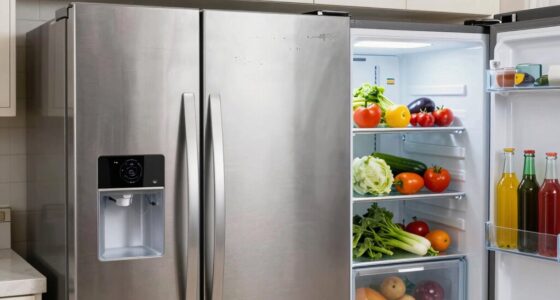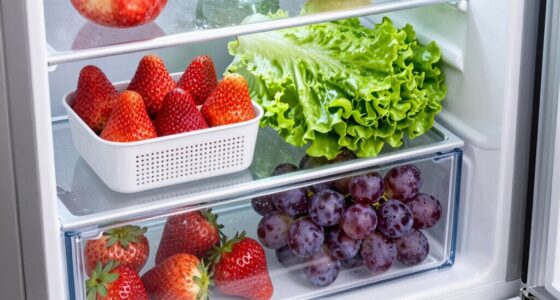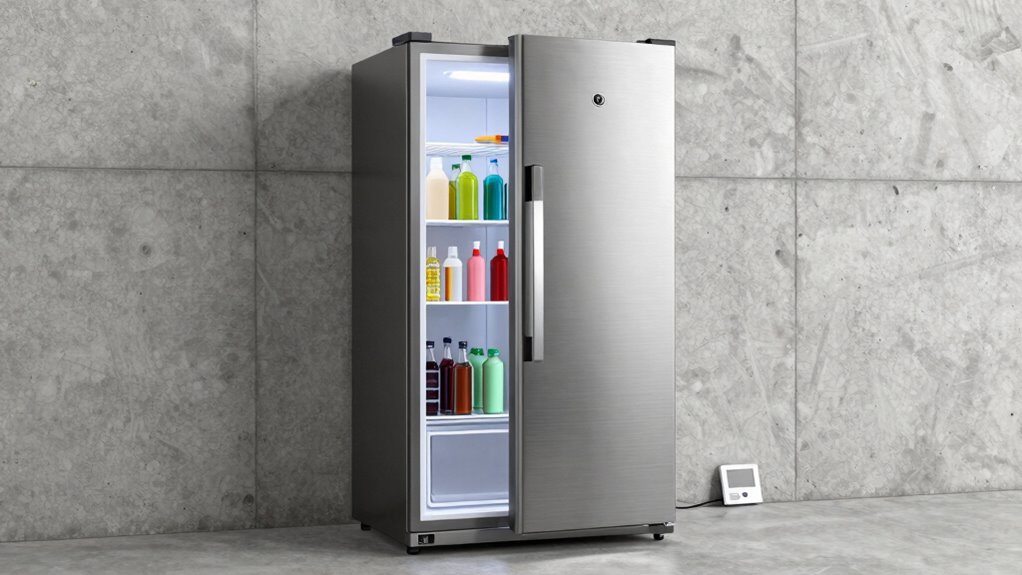

To keep your secondary fridge efficient in a garage or utility room, place it away from heat sources and guarantee good ventilation. Regularly clean coils and check door seals for gaps. Maintain proper temperature using a thermometer, aiming between 37°F and 40°F. Keep it well-organized and nearly full to stabilize temperature. Proper placement and routine maintenance can save energy, and you’ll find more tips to maximize efficiency if you keep exploring.

Get kitchen gear delivered free — and shop member deals
- Fast, free delivery on millions of items
- Access to Prime Big Deal Days deals on October 6–7
- Prime Video, Amazon Music and more included
Key Takeaways
- Position the fridge away from heat sources and ensure proper ventilation to reduce compressor strain.
- Maintain consistent internal temperature between 37°F and 40°F using a thermometer.
- Insulate the garage walls and add insulating panels behind the fridge for temperature stability.
- Keep the fridge well-organized with full or partially full contents to stabilize internal temperature.
- Perform regular cleaning and maintenance to prevent dust buildup and ensure optimal performance.
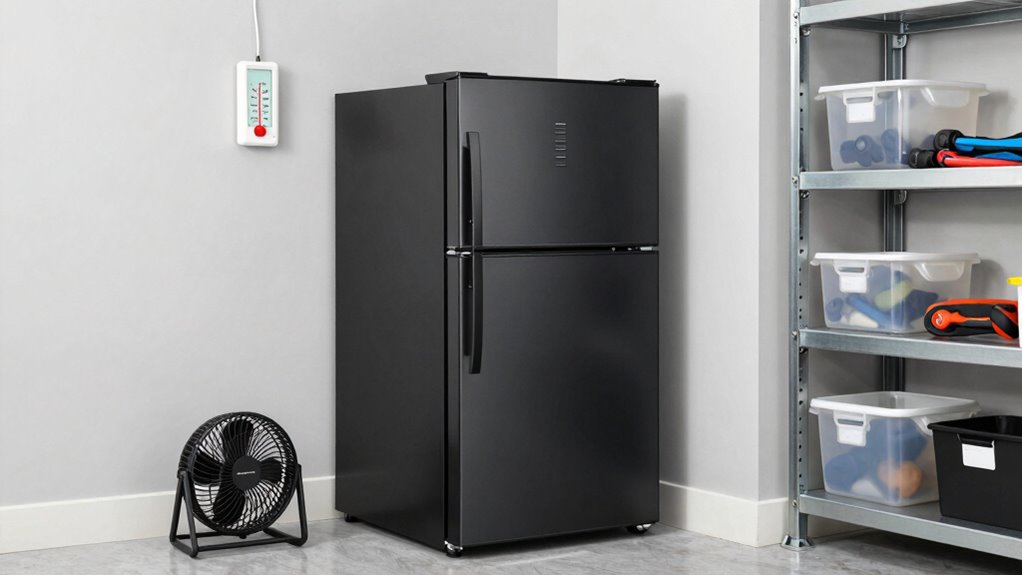
If you have a secondary fridge in your garage or utility room, you know it can be a convenient way to store extra food and beverages. However, keeping it running efficiently requires attention to how you manage its energy consumption and temperature. To start, focus on energy saving tips that can help reduce electricity bills and extend the lifespan of your appliance. One of the most effective methods is ensuring your fridge is well-maintained. Regularly clean the coils at the back or underneath the unit to prevent dust buildup, which can hinder heat transfer and make the fridge work harder. Also, check the door seals for cracks or gaps; a tight seal keeps cold air inside and hot air out, reducing unnecessary energy use.
Temperature regulation plays a vital role in maintaining efficiency. Set your secondary fridge to the ideal temperature—usually between 37°F and 40°F (3°C to 4°C)—to keep food fresh without wasting energy. Too cold, and you’ll be using more power than necessary; too warm, and your food could spoil. Use a thermometer to verify the temperature and adjust the thermostat accordingly. Avoid frequent door openings, especially in a garage or utility room where ambient temperatures fluctuate. Each time you open the door, cold air escapes, forcing the compressor to work harder to restore the set temperature. To minimize this, organize your items so you can quickly find what you need without unnecessary door openings.
Placement also impacts efficiency. Position your secondary fridge away from heat sources like the garage door, furnace, or direct sunlight, as external heat causes the compressor to run more often. A spot with good ventilation helps dissipate heat and reduces strain on the compressor. Additionally, avoid overpacking the fridge, which can obstruct airflow and make cooling less effective. Conversely, a nearly empty fridge wastes energy because the compressor cycles more frequently to maintain temperature. Keep it filled with water bottles or containers to help stabilize internal temperature and improve energy efficiency. Proper placement and ventilation are crucial to ensuring your fridge doesn’t have to work harder than necessary. Regularly checking temperature settings and adjusting them as needed can further enhance efficiency and extend the life of your appliance. Proper airflow within the unit also contributes significantly to optimal cooling performance. Ensuring good insulation around the fridge and storage area can further reduce energy consumption by minimizing heat transfer from the environment. Additionally, you might consider adding insulating panels to the garage wall behind the fridge to help maintain a more consistent temperature around the appliance.
As an affiliate, we earn on qualifying purchases.
Frequently Asked Questions
How Often Should I Defrost My Secondary Fridge?
You should defrost your secondary fridge when ice buildup reaches about a quarter-inch thick, which typically happens every 3 to 6 months. Regular defrosting is crucial for energy saving tips and maintaining efficiency. Incorporate maintenance routines like cleaning coils and checking door seals to prevent excessive ice buildup. Keeping your fridge ice-free ensures peak performance, reduces energy consumption, and extends its lifespan.
Can I Leave My Secondary Fridge Plugged in During a Power Outage?
Think of your secondary fridge as a loyal guardian of your supplies—leaving it plugged in during a power outage isn’t ideal. During outages, unplug it to prevent power surges when electricity returns, and avoid unnecessary energy use. Follow power outage precautions and fridge maintenance tips by keeping the door closed to preserve cold, and consider a generator if outages are frequent. This keeps your fridge safe and efficient.
What Temperature Should I Set for Optimal Efficiency?
Set your secondary fridge to around 37°F (3°C) for maximum efficiency. This temperature balances food safety and energy saving, preventing overworking the compressor. Regularly calibrate the thermostat to guarantee accuracy, especially if you notice temperature fluctuations. Keeping it at the right setting reduces energy consumption, prolongs appliance life, and maintains fresh food. Avoid setting it colder than necessary, as this wastes energy without providing additional benefits.
How Do I Prevent Mold and Odors Inside the Fridge?
To prevent mold and odors inside your fridge, regularly clean it with a mixture of baking soda and water to tackle mold prevention and odor control. Keep the door sealed tightly to avoid moisture buildup, and guarantee good airflow by not overcrowding. Leave the door slightly open when not in use, and check for expired or spoiled items frequently. These steps help maintain a fresh, mold-free environment inside your secondary fridge.
Is It Okay to Store Only Beverages in the Secondary Fridge?
Storing only beverages in your secondary fridge is perfectly fine, but it might surprise you how it impacts food preservation. You risk uneven temperature distribution or forgotten items that could spoil. Keep a close eye on the fridge’s temperature and airflow to maintain efficiency. This way, your beverage storage remains ideal, and you prevent any odor or mold issues, ensuring your secondary fridge serves you well for both drinks and other essentials.
As an affiliate, we earn on qualifying purchases.
Conclusion
Keeping your secondary fridge running smoothly is like tending a garden—you need to give it attention and care. By maintaining proper temperature, sealing leaks, and keeping it clean, you’ll guarantee it doesn’t become a drain on your energy bill. Think of it as giving your appliance a fresh gust, helping it perform at its best. With a little effort, your garage fridge will stay efficient, serving your needs without breaking a sweat.
energy-efficient utility room fridge
As an affiliate, we earn on qualifying purchases.
As an affiliate, we earn on qualifying purchases.
As an affiliate, we earn on qualifying purchases.
Fall Picks
fall essentials
As an affiliate, we earn on qualifying purchases.