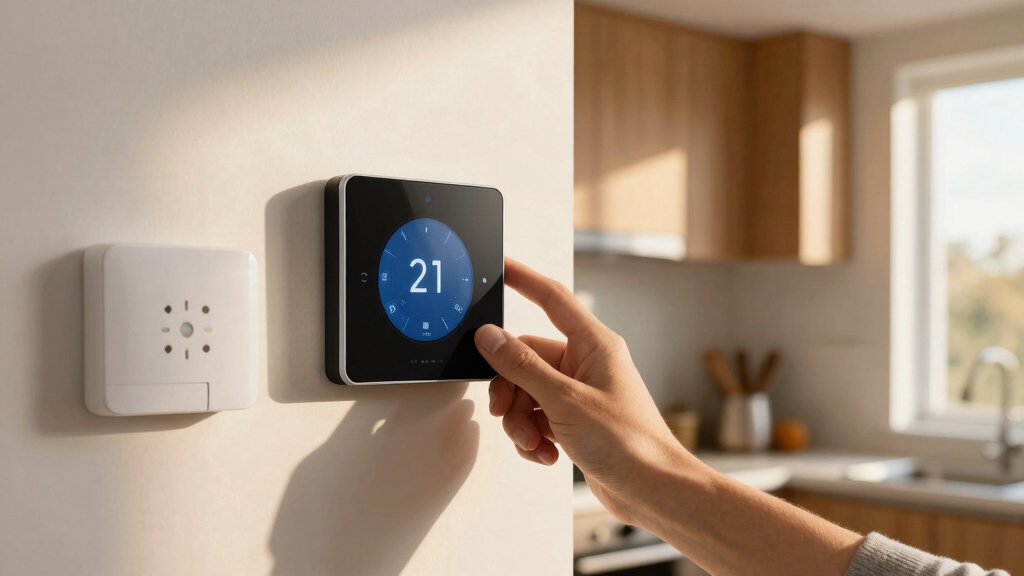

If you’re searching for the best smart thermostat with room sensors, you’re likely after a device that offers precise temperature control across different areas of your home. The ecobee Smart Thermostat Essential stands out as the overall best choice because of its energy efficiency and compatibility with major voice assistants. For those prioritizing advanced features, the ecobee Smart Thermostat Premium offers enhanced air quality monitoring and additional sensors. Other standout options, like the Honeywell Home T9 and the Google Nest Learning Thermostat, excel in ease of use and learning capabilities. The main tradeoffs include balancing feature sets against cost and installation complexity. Continue reading for a detailed comparison to help you find the ideal fit for your home.
Key Takeaways
- The best smart thermostats with room sensors combine compatibility with multiple voice assistants and easy installation.
- Higher-end models like ecobee Premium offer integrated air quality monitoring, though at a higher price point.
- Many options include multiple sensors, but the number and placement of sensors significantly impact performance.
- Ease of use and setup vary widely—models like Nest are more intuitive for beginners, while others offer advanced customization.
- Price often correlates with additional features; balancing budget with desired capabilities is key to choosing the right model.




More Details on Our Top Picks
ecobee Smart Thermostat Essential – Energy Star Certified programmable Wi-Fi Thermostat – Works with Siri, Alexa, and Google Assistant
This model stands out for its straightforward setup, compatibility with most HVAC systems, and integration with major smart home ecosystems like Apple HomeKit, Google Assistant, and Alexa, making it ideal for users seeking versatility. Compared to the Honeywell X8S, the ecobee Essential offers a more intuitive color touchscreen and broader ecosystem support, though it lacks some advanced IAQ features. The SmartSensor compatibility enhances comfort in key rooms, and its energy savings potential of up to 23% can quickly offset the purchase cost. Its biggest tradeoff is the absence of built-in air quality monitoring or occupancy sensors, which are available on higher-end ecobee models. This pick makes the most sense for homeowners wanting a reliable, easy-to-install thermostat with broad smart home compatibility.
Pros:- Broad compatibility with 85% of HVAC systems and major smart home platforms
- Color touchscreen for easy control and configuration
- SmartSensor support for targeted comfort
Cons:- Lacks built-in indoor air quality monitoring
- No occupancy sensors included, relying on external SmartSensors
Best for: Homeowners who prioritize ecosystem integration and easy DIY installation.
Not ideal for: Users requiring advanced air quality monitoring or occupancy sensing in a single device.
- Controller Type:Wi-Fi
- Display Type:LCD Touchscreen
- Connectivity Technology:Wi-Fi
- Power Source:Battery Powered
- Control Method:Touchpad
- Smart Home Compatibility:Apple HomeKit, Google Assistant, Alexa
Bottom line: Ideal for users seeking a versatile, user-friendly thermostat compatible with multiple smart home ecosystems.
Honeywell Home X8S Smart Thermostat with Room Sensor, Video Doorbell Compatibility, IAQ Control, and Customizable Touchscreen Display, Black
This pick excels for its integration with video doorbells like Ring and First Alert VX1, allowing you to see and speak to visitors directly from the thermostat, which is ideal for security-conscious users. Compared with the ecobee Smart Thermostat Essential, the X8S offers a large 5” customizable touchscreen and built-in IAQ controls, but it requires a C-wire for installation. The included wireless Room Sensor enables precise zone control, enhancing comfort in key areas, though its overall compatibility is limited to systems with 24VAC wiring. The ability to connect with video doorbells and control IAQ makes it more feature-rich for smart security-focused homes, but it doesn’t support Apple HomeKit or as many voice assistants as ecobee. This model makes sense for users wanting security features combined with advanced comfort controls.
Pros:- Supports video doorbell intercom and live streaming
- Large, customizable 5” touchscreen display
- Includes wireless room sensor for zone-specific comfort
Cons:- Requires C-wire for installation
- Limited compatibility outside 24VAC HVAC systems
- No support for Apple HomeKit
Best for: Homeowners who want integrated security features with temperature and IAQ control.
Not ideal for: People without existing 24VAC wiring or those seeking broad smart home ecosystem support.
- Display Type:Touchscreen
- Control Method:Touchscreen
- Connectivity Technology:Wi-Fi
- Smart Home Compatibility:Amazon Alexa, Google Assistant, Ring
- Power Source:C-Wire required
- Additional Features:Video intercom, IAQ control
Bottom line: Best for users seeking combined security and comfort features in a smart thermostat.
Sensi Touch 2 Smart Thermostat with Touchscreen Color Display, 100 Years of Expertise, Programmable, Wi-Fi, Data Privacy, Easy DIY, Works with Alexa, Energy Star Certified, ST76, C-Wire Required
This thermostat makes a strong case for DIY installers due to its guided app setup, compatibility with most HVAC systems, and emphasis on data privacy. Compared to the ecobee Smart Thermostat Premium, the Sensi Touch 2 offers a more straightforward installation process with a dedicated app, but it lacks the advanced IAQ and occupancy sensors found on ecobee’s premium models. Its 100-year heritage in thermostat manufacturing provides confidence in reliability, though its limited smart home integrations make it less suitable for those wanting a fully connected ecosystem. The C-wire requirement is standard for many homes, and its energy-saving features help users reduce costs. This device is ideal for those who value easy installation, privacy, and proven brand reliability.
Pros:- Easy DIY installation with comprehensive app guidance
- Energy Star certified for savings
- Strong brand heritage with proven reliability
Cons:- No occupancy or IAQ sensors included
- Limited smart home platform integration
- Requires C-wire for installation
Best for: DIY homeowners who prioritize privacy and straightforward setup.
Not ideal for: Users wanting extensive smart home ecosystem compatibility or IAQ features.
- Display Type:Touchscreen
- Connectivity Technology:Wi-Fi
- Control Method:App
- Power Source:C-wire required
- Energy Certification:Energy Star
- Additional Features:Temperature scheduling, data privacy
Bottom line: Perfect for privacy-focused, DIY-inclined homeowners seeking a reliable, easy-to-install thermostat.
ecobee Smart Thermostat Premium with Smart Sensor and Air Quality Monitor – Programmable Wifi Thermostat – Works with Siri, Alexa, Google Assistant, Black
This premium ecobee model makes a compelling choice for those wanting advanced comfort, IAQ monitoring, and a sleek, high-end aesthetic. Compared with the Honeywell X8S and Sensi Touch 2, the ecobee Premium offers a built-in air quality monitor, a large vibrant display, and occupancy sensing with radar technology, making it ideal for tech-savvy users. The included SmartSensor extends comfort to multiple rooms, improving upon basic zone controls. Its compatibility with Siri, Alexa, and Google Assistant ensures broad voice control, but the setup can be more complex due to additional features. The energy savings potential of up to 26% is higher, but the higher price point reflects its premium feature set. This is best for homeowners who want top-tier comfort and air quality management in an elegant package.
Pros:- Built-in air quality monitor and air quality tips
- Vibrant, cinematic display interface
- Includes SmartSensor for multi-room comfort
Cons:- Higher price point compared to standard models
- Setup complexity with advanced features
- Requires compatibility check for existing systems
Best for: Homeowners seeking a premium, feature-rich thermostat with indoor air quality controls.
Not ideal for: Budget-conscious buyers or those with simple HVAC systems lacking C-wire support.
- Display Type:Vibrant LCD
- Smart Home Compatibility:Siri, Alexa, Google Assistant
- Additional Features:Air quality monitor, radar occupancy sensing
- Connectivity Technology:Wi-Fi
- Power Source:Wired
- Energy Savings:Up to 26%
Bottom line: Best for users wanting a premium experience with superior IAQ and sleek design.
Provirtec Smart Thermostat for Home with Room Sensor, 7 Days Programmable, Energy Saving WiFi Thermostats for House,APP & Touchscreen Control, C Wire Required, 3.95 Inch Large Screen
This thermostat offers essential programmable features with a large touchscreen and decent energy savings, making it suitable for budget-conscious buyers who want basic control without high-end extras. Compared to the ecobee Premium or Honeywell X8S, the Provirtec provides a larger screen and straightforward app control but falls short on integration and advanced sensors. Its compatibility with most 24VAC systems and simple setup process appeal to DIYers, though the lower user ratings suggest possible reliability concerns or limited features. Its 3.95-inch large screen enhances visibility, but the limited smart features and lack of occupancy sensors mean it’s less suitable for those wanting a fully connected, smart home experience. This model makes sense for those seeking basic, affordable temperature control with easy installation.
Pros:- Large, easy-to-read touchscreen display
- Supports most 24VAC HVAC systems
- Simple app and installation process
Cons:- Lower user ratings indicating potential reliability issues
- Limited smart features and sensors
- No compatibility with major smart platforms like Alexa or Google
Best for: Budget-minded DIY homeowners wanting basic programmable control.
Not ideal for: Smart home enthusiasts seeking advanced sensors or extensive ecosystem integrations.
- Display Type:Large LCD
- Control Method:App & Touchscreen
- Connectivity Technology:Wi-Fi
- Power Source:C-Wire required
- Programmability:7-day
- Additional Features:Large display, energy saving
Bottom line: Best for budget-conscious DIYers needing straightforward, basic thermostat control.
Honeywell Home X8S Smart Thermostat with Room Sensor, Video Doorbell Compatibility, IAQ Control, and Customizable Touchscreen Display, White
This Honeywell X8S stands out for its seamless integration with video doorbells like Ring and First Alert VX1, offering a unique combination of comfort, security, and air quality control. Its sleek 5-inch touchscreen is highly customizable, making it easy to match your home decor. Compared to the ecobee Smart Sensor 2 Pack, it provides more targeted comfort with its wireless room sensors that extend up to 200 feet. However, its setup can be complex for less tech-savvy users, especially since additional HVAC equipment may be needed for IAQ features. The app control is reliable, and compatibility with Alexa, Google Assistant, and Apple Home makes it versatile. The main tradeoff is the higher price point, which might deter budget-conscious buyers. This pick makes the most sense for homeowners seeking a highly customizable, feature-rich thermostat that integrates security and IAQ controls into a smart home ecosystem.
Pros:- Highly customizable touchscreen display to match home decor
- Excellent integration with video doorbells and smart home systems
- Wireless room sensors with extended range for targeted comfort
Cons:- Higher price compared to basic models
- Setup and installation can be complex for non-technical users
- Requires additional HVAC equipment for full IAQ functionality
Best for: Tech-savvy homeowners who want a versatile, ecosystem-compatible thermostat with advanced IAQ and security features
Not ideal for: Simpler households or those with limited budgets who prefer straightforward installation and minimal features
- Display Size:5 inches
- Compatibility:Up to 3 heat/2 cool systems
- Connectivity:Wi-Fi, Alexa, Google Assistant, Apple Home
- Sensor Range:Up to 200 feet
- Air Quality Control:Humidity and ventilation monitoring
- Video Doorbell Compatibility:First Alert VX1, Ring
Bottom line: Ideal for homeowners wanting a premium, highly adaptable thermostat with integrated security and air quality features.
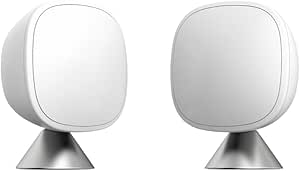
ecobee Smart Sensor 2 Pack – Comfort, Security, Energy Savings, Temperature and Occupancy Detection – Compatible with ecobee Thermostats for Home
Compared with the Honeywell X8S, the ecobee Smart Sensor 2 Pack offers a straightforward way to enhance comfort and energy savings through occupancy detection and temperature control. Its easy magnet-based placement and long-range wireless communication up to 60 feet make it suitable for larger homes or multi-room setups. However, it lacks the security features and video doorbell compatibility that the Honeywell X8S provides. Its primary strength is the occupancy and temperature sensing, which helps prevent energy waste in unoccupied rooms. The sensors work best with ecobee thermostats, so users outside this ecosystem should consider compatibility. The modest price makes it appealing, but the absence of IAQ control or advanced integrations limits its scope. This product is ideal for budget-conscious households prioritizing occupancy-based energy savings and simple installation.
Pros:- Easy to install with magnetic mounts
- Long wireless communication range up to 60 ft
- Effective occupancy detection for energy savings
Cons:- Limited to ecobee ecosystem, not compatible with other thermostats
- No security or security alerts included
- Lacks IAQ control options
Best for: Homeowners looking for affordable, reliable occupancy sensors to optimize comfort and energy efficiency with ecobee thermostats
Not ideal for: Users seeking integrated security features, video doorbell control, or advanced IAQ monitoring
- Range:Up to 60 ft
- Number of Sensors:2
- Power:Wireless, magnetically mounted
- Connectivity:Infrared communication
- Compatibility:ecobee thermostats
- Sensor Type:Temperature and occupancy
Bottom line: Best suited for budget-conscious ecobee users wanting simple, effective occupancy sensing for energy savings.
Honeywell Home T9 WiFi Smart Thermostat with 1 Smart Room Sensor, Touchscreen Display, White
The Honeywell T9 excels in multi-room temperature management with its single included smart room sensor, making it suitable for users who want to focus comfort on key areas. Its guided installation process and app control make it accessible for DIY enthusiasts, especially with the optional low-voltage power adapter for homes without C-wire. Unlike the ecobee Sensor 2 Pack, it offers only one sensor in the package, which may limit its coverage unless additional sensors are purchased. The T9’s occupancy sensing and scheduling features are reliable, but some users report connectivity issues with its Wi-Fi setup, and its sensor mounting relies on tape, which might not be suitable for all homes. It’s an excellent choice for those who want a flexible, easy-to-install smart thermostat with room-specific control. This model suits homeowners seeking a flexible, easy DIY option with room-focused comfort features.
Pros:- Easy DIY installation with guided setup
- App control with scheduling and occupancy detection
- Low-voltage power adapter included for homes without C-wire
Cons:- Includes only one sensor in the package, additional sensors cost extra
- Tape mounting may be unreliable for some walls
- Connectivity issues reported by some users
Best for: DIY-savvy homeowners wanting a flexible, room-specific thermostat with simple installation and app control
Not ideal for: Households needing multiple sensors out of the box or security/security alert features
- Display Size:4.3 inches
- Compatibility:Up to 3 heat/2 cool systems
- Sensor Included:1
- Connectivity:Wi-Fi
- Installation:DIY with guidance
- Sensor Mounting:Tape or optional screws
Bottom line: Great for DIY homeowners who want a flexible, room-focused thermostat with straightforward setup and control.
Honeywell Home X7S Smart Thermostat with Advanced Occupancy Sensing, Humidity Monitoring, and Customizable Touchscreen Display, White
The Honeywell X7S offers a compelling blend of occupancy sensing, humidity monitoring, and a customizable 4.3-inch touchscreen. Its occupancy sensor helps automate comfort and energy efficiency, similar to the ecobee Sensor 2 Pack, but with added humidity control for healthier indoor air. Its compatibility with multiple HVAC systems makes it versatile, though it does require a C-wire, and some users find the sensor placement options limited, as tape mounting may not always be reliable. Compared to the Google Nest Learning Thermostat, it provides more direct control over humidity and occupancy but lacks the advanced learning features. It’s ideal for those wanting a balance of comfort, humidity, and occupancy detection in a straightforward package. This model suits households prioritizing humidity and occupancy management alongside smart control.
Pros:- Occupancy sensor automates comfort and saves energy
- Humidity monitoring and control for indoor air quality
- Customizable touchscreen display
Cons:- Requires a C-wire for installation
- Sensor placement via tape may be unreliable in some homes
- Limited advanced learning or security features
Best for: Homeowners needing occupancy and humidity control within a flexible, easy-to-install smart thermostat
Not ideal for: Users seeking advanced learning capabilities or video doorbell integration
- Display Size:4.3 inches
- Compatibility:Multiple HVAC systems
- Sensor Type:Occupancy and humidity
- Connectivity:Wi-Fi
- Installation:Requires C-wire
- Features:Auto occupancy and humidity monitoring
Bottom line: Perfect for households focusing on occupancy and humidity management with straightforward controls.
Google Nest Learning Thermostat (4th gen) + Nest Temperature Sensor (2nd gen) – Obsidian
The Google Nest Learning Thermostat is renowned for its ability to learn your schedule and optimize energy use, with the added benefit of the Nest Temperature Sensors for multi-room comfort. Its intuitive design and automatic adjustments make it ideal for busy households that want a set-it-and-forget-it experience. Compared to the Honeywell X8S, the Nest excels in its adaptive learning and natural temperature adjustments based on outdoor conditions, but it doesn’t have the security or video doorbell integrations that the Honeywell offers. Its compatibility with most 24V systems and no need for a C-wire in many cases makes installation easier. However, the initial cost is high, and some users report that the learning algorithm can take time to fully optimize comfort. This thermostat is best for users who want a highly intelligent, adaptive solution that learns your preferences over time.
Pros:- Learns user preferences for automatic temperature adjustments
- Includes Nest Temperature Sensors for multi-room comfort
- No C-wire needed in most cases, easy to install
Cons:- High initial cost
- Learning curve before optimal comfort is achieved
- Limited direct security features
Best for: Users seeking a sleek, intelligent, and adaptive thermostat that learns routines and adjusts automatically
Not ideal for: Households requiring integrated security, video doorbell control, or quick manual adjustments
- Display Size:60% larger
- Compatibility:Most 24V systems
- Sensors:Nest Temperature Sensors (2nd gen)
- Connectivity:Wi-Fi, Alexa, Google Assistant, Siri
- Learning Features:Auto-schedule and adaptive eco
- Power:No C-wire required in many cases
Bottom line: Best for tech-savvy users wanting a smart, self-learning thermostat that adapts to their routines.
Honeywell Home X7S – White Model Number X7SWF3W/W
The Honeywell X7S offers a compelling package with occupancy sensing, humidity control, and a customizable touchscreen, making it suitable for those who want a comprehensive yet straightforward smart thermostat. Its occupancy sensor improves comfort and reduces energy waste, similar to the ecobee but with Honeywell’s reliability. Its compatibility with multiple HVAC systems and humidity management makes it versatile, but the tape mounting can be unreliable, and some users wish for more sensors included. Unlike the Nest, it does not have learning algorithms but compensates with occupancy and humidity features. Its C-wire requirement is standard for this level of functionality. This thermostat makes sense for users who want a balance of occupancy, humidity, and control without complex setup. This product is ideal for those seeking a reliable, feature-rich thermostat with humidity and occupancy sensors.
Pros:- Occupancy sensing automates comfort and efficiency
- Humidity monitoring enhances air quality
- Customizable touchscreen for easy control
Cons:- Requires a C-wire for installation
- Sensor mounting via tape may be unreliable in some environments
- No advanced learning or security features
Best for: Homeowners prioritizing occupancy and humidity control with straightforward installation and reliable performance
Not ideal for: Users seeking advanced AI learning features or integrated security options
- Display Size:4.3 inches
- Compatibility:Multiple HVAC systems
- Sensor Type:Occupancy and humidity
- Connectivity:Wi-Fi
- Installation:Requires C-wire
- Features:Occupancy detection and humidity control
Bottom line: Great for households wanting occupancy and humidity management paired with simple, reliable operation.
Google Nest Learning Thermostat (4th gen) + Nest Temperature Sensor (2nd gen) – Obsidian
The Nest Learning Thermostat’s strength lies in its ability to learn your schedule and adjust automatically for maximum energy savings and comfort. The included Nest Temperature Sensors extend its multi-room functionality, allowing different zones to be managed intelligently. It’s especially suitable for busy households or those who prefer a set-it-and-forget-it approach. It differs from the Honeywell X8S by focusing more on AI-driven learning rather than manual occupancy detection and air quality control. Installation is straightforward, often without a C-wire, and its sleek design with a larger display makes it a centerpiece of modern homes. Some users find the initial setup and learning process slow, but long-term energy savings are significant. This thermostat suits users who value intelligent learning and adaptive comfort over manual control.
Pros:- Learns routines for automatic adjustments
- Includes multiple Nest Temperature Sensors for zone control
- No C-wire needed in many installations
Cons:- Higher purchase price
- Learning period required before full benefits
- Limited security features
Best for: Tech-oriented users who want a smart, self-learning thermostat with multi-zone capabilities
Not ideal for: Households needing security, video integration, or immediate manual control without a learning period
- Display Size:60% larger
- Compatibility:Most 24V systems
- Sensors:Nest 2nd gen Temperature Sensors
- Connectivity:Wi-Fi, Alexa, Siri, Google Assistant
- Learning Features:Auto schedule, adaptive eco
- Power:No C-wire needed in many cases
Bottom line: Ideal for users who want a highly intelligent, adaptive thermostat that reduces manual input over time.
Lux TQX Thermostat with Remote Sensor, WiFi Thermostat Works with Matter, Alexa, Apple Home, Google, App & Voice Control, Programmable Smart Thermostat, C-Wire and wall Plates Included
The Lux TQX Thermostat stands out for its seamless integration with major smart-home ecosystems, thanks to its Matter compatibility. Unlike the ecobee Smart Thermostat Premium, which emphasizes air quality monitoring, the TQX focuses on comprehensive occupancy sensing and smart-home automation. Its ability to connect with up to five remote sensors offers better coverage for larger homes, though it doesn’t support independent room regulation—it’s a collective system. The inclusion of an intelligent light sensor and occupancy learning enhances comfort without constantly fiddling with settings. Compared to the Honeywell X8S, the TQX’s reliance on a centralized system means it might not suit those needing strict individual room control but excels in homes where holistic temperature management suffices. The main tradeoffs involve its limited direct room control and lack of a display touchscreen, which some users might prefer for quick adjustments.
Pros:- Supports Matter, making it compatible with a wide range of smart-home devices
- Includes an occupancy sensor and up to five remote sensors for better coverage
- Features an intelligent light sensor and occupancy learning for enhanced comfort
- Works with Alexa, Google Assistant, Apple Home, and smart speakers
Cons:- Does not support independent control of individual rooms, only collective temperature adjustment
- Lacks a built-in touchscreen for quick manual operation
- Requires C-wire for installation, which may complicate some setups
Best for: Homeowners seeking a smart thermostat that integrates effortlessly with existing ecosystems and offers multiple remote sensors for whole-house comfort.
Not ideal for: Those needing precise, independent room-by-room temperature control or a built-in touchscreen for manual adjustments.
- Connectivity:WiFi, Matter, Alexa, Google, Apple Home
- Remote Sensors:Up to 5, additional 4 available
- Occupancy Technology:Millimeter wave occupancy detection, learning system
- Display:Ambient light sensor, no touchscreen
- Compatibility:Conventional, heat pump, PTAC, fan coil systems
- Power:C-wire required
Bottom line: This thermostat makes sense for users who want a well-connected, sensor-rich system that integrates seamlessly into broader smart-home setups without needing to control each room separately.

How We Picked
These products were selected based on their integration of room sensors, usability, feature set, build quality, and value. We prioritized models that support multiple sensors and offer reliable connectivity, as these determine how effectively the thermostat manages different zones. Ease of installation and setup also played a significant role, especially for DIY users. Finally, we evaluated each thermostat’s compatibility with popular smart home ecosystems and their overall value for money. The ranking emphasizes devices that deliver consistent performance, versatile features, and good user experiences.Factors to Consider When Choosing Best Smart Thermostat With Room Sensors
Choosing the best smart thermostat with room sensors involves considering several factors that impact performance, ease of use, and long-term value. Understanding these can help you avoid common pitfalls and ensure your investment meets your specific needs.Number and Placement of Sensors
More sensors typically mean better temperature management across different rooms, but their placement matters just as much as quantity. Properly positioned sensors ensure the thermostat accurately detects temperature variations, preventing hotspots or cold spots. Overloading on sensors without thoughtful placement can lead to confusing data and inconsistent comfort. Consider your home’s layout and choose a system that supports enough sensors for your space without becoming overly complex to manage.
Compatibility with Ecosystems and Voice Assistants
Many smart thermostats work seamlessly with voice assistants like Alexa, Google Assistant, or Siri, but not all do. Compatibility determines how easily you can integrate the thermostat into your existing smart home setup. If you already own smart speakers or hubs, select a device that supports those ecosystems to maximize convenience. Beware of models that require additional hubs or complicated setups, which can add to the cost and complexity.
Ease of Installation and Use
While some models are designed for DIY installation, others may require professional help, especially if your home lacks a C-wire. User-friendly interfaces are vital, particularly for those less tech-savvy. Features like guided setup, clear app instructions, and intuitive controls make a significant difference in ongoing use. Don’t overlook customer reviews that mention installation challenges; these can save you time and frustration.
Smart Features and Customization
Beyond basic temperature control, look for features like learning algorithms, energy reports, and programmable schedules. These add layers of customization that can optimize comfort and save money. However, more advanced features often come with higher prices and complexity. Decide which capabilities are essential for your lifestyle—some users prefer simple controls, while others want extensive automation and monitoring options.
Cost and Long-Term Value
Prices vary widely, from budget-friendly options to premium models with extensive sensors and features. While paying more can mean better reliability and future-proofing, it isn’t always necessary for everyone. Consider your home’s size, your comfort preferences, and how much you’re willing to invest. Often, a slightly higher initial cost yields savings through improved energy efficiency and smarter management over time.
Frequently Asked Questions
Do I need a C-wire to install a smart thermostat with room sensors?
Many smart thermostats require a C-wire for continuous power, especially those with advanced features or multiple sensors. If your home lacks a C-wire, some models offer alternative power options or require an adapter, but this can complicate installation. It’s wise to check your existing wiring before purchasing and consider professional installation if you’re unsure. This step can prevent issues related to power loss or connectivity problems later on.
How many room sensors should I get for my home?
The number of sensors depends on your home’s size and layout. For smaller homes or single-story layouts, one or two sensors may suffice. Larger or multi-story homes benefit from multiple sensors placed in key zones to ensure even temperature distribution. Overloading your space with too many sensors might complicate setup without adding much benefit, so aim for a balanced approach based on your home’s design.
Can I use a smart thermostat with room sensors if I have a traditional HVAC system?
Yes, most smart thermostats with room sensors are compatible with standard HVAC systems, including central air, heat pumps, and boilers. However, compatibility depends on your wiring and system type. Verify that your system supports the thermostat’s requirements, such as C-wire support or specific wiring configurations, to ensure a smooth installation and reliable operation.
Are smart thermostats with room sensors worth the extra cost?
In many cases, investing in a thermostat with room sensors pays off through improved comfort and energy savings. Sensors help balance temperatures across different zones, preventing hot or cold spots, which is especially useful in larger homes. While the initial cost may be higher, the long-term savings on energy bills and increased comfort often justify the expense, particularly if you prioritize precise climate control.
How often do I need to replace or recharge the sensors?
Most room sensors are designed to last several years without replacement, as they typically use batteries with long life spans. Some sensors are rechargeable, but this is less common. Regularly checking sensor batteries or power sources ensures continued accuracy and connectivity. If sensors become unresponsive over time, replacing batteries or the sensor itself is usually straightforward and cost-effective.
Conclusion
The best overall choice for most users is the ecobee Smart Thermostat Premium, thanks to its advanced air quality features and multiple sensors. If you want a budget-friendly yet reliable option, the ecobee Smart Thermostat Essential offers excellent value with core smart features and compatibility. For beginners or those seeking simplicity, the Google Nest Learning Thermostat provides intuitive setup and learning capabilities, though it has fewer sensor options. Homeowners focused on maximum customization and smart integrations should consider the Lux TQX or Honeywell Home T9. Your choice hinges on balancing features, ease of use, and budget to match your home’s specific needs.