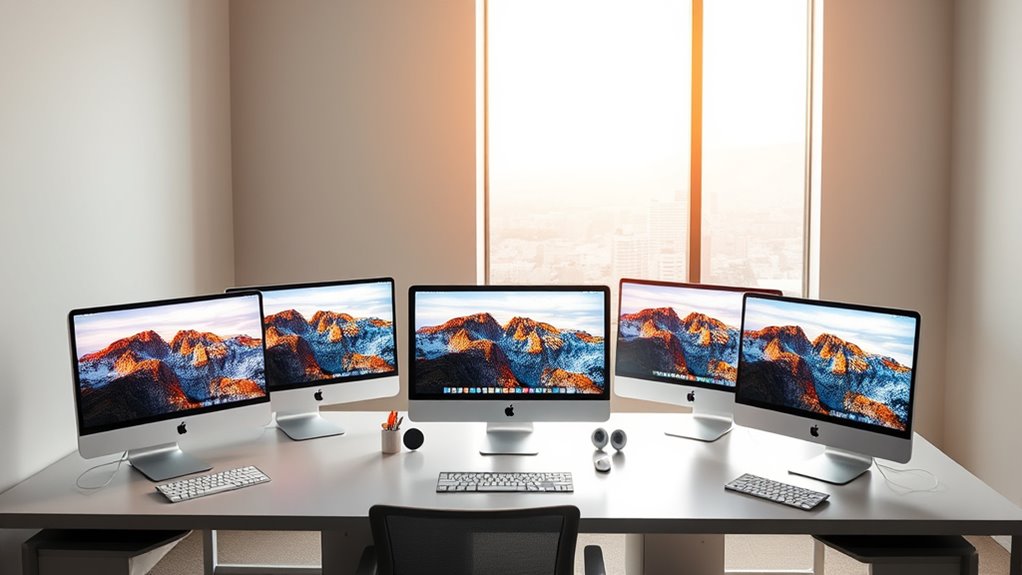
If you’re looking for the best iMacs for photographers in 2025, I recommend considering models with stunning displays like the Retina 4.5K or 6K options, powerful M4 chips, and ample RAM to handle large files smoothly. Connectivity and external display support are also key for your workflow. If you continue exploring, you’ll discover how each model stacks up to help you create amazing visuals with confidence.
Key Takeaways
- The latest iMacs feature 4.5K Retina displays with billion-color support for precise editing and vibrant visuals.
- Equipped with powerful M4 chips, they offer fast processing and multitasking for demanding photo workflows.
- Multiple Thunderbolt and USB-C ports enable seamless connection to external displays and professional peripherals.
- Stylish, all-in-one designs with vibrant color options blend aesthetics with functionality.
- Advanced thermal management and optimized airflow ensure consistent performance during intensive editing sessions.
Apple 2024 iMac Desktop Computer with M4 Chip

If you’re a photographer looking for a sleek, powerful desktop that can handle your editing workflow, the Apple 2024 iMac with M4 chip is an excellent choice. Its stunning 24-inch Retina 4.5K display supports a billion colors, making your images pop with vibrant detail. The all-in-one design is slim, colorful, and fits seamlessly into any space. Powered by the M4 chip with an 8-core CPU and GPU, it delivers fast performance for editing, rendering, and multitasking. With 16GB of unified memory and 256GB SSD storage, you’ll work smoothly and efficiently, making this iMac a perfect tool for creative professionals.
Best For: creative professionals, especially photographers and designers, seeking a powerful, sleek all-in-one desktop with vibrant display and seamless Apple ecosystem integration.
Pros:
- Stunning 24-inch Retina 4.5K display with support for a billion colors enhances visual work.
- Powered by the efficient M4 chip with 8-core CPU and GPU for fast, smooth performance.
- Seamless integration with Apple ecosystem and support for multiple external displays.
Cons:
- Limited storage options starting at 256GB SSD, which may require external solutions for large files.
- High price point typical of Apple’s premium desktops.
- The all-in-one design may limit upgradeability or future hardware customization.
Apple 2024 iMac Desktop Computer with M4 Chip
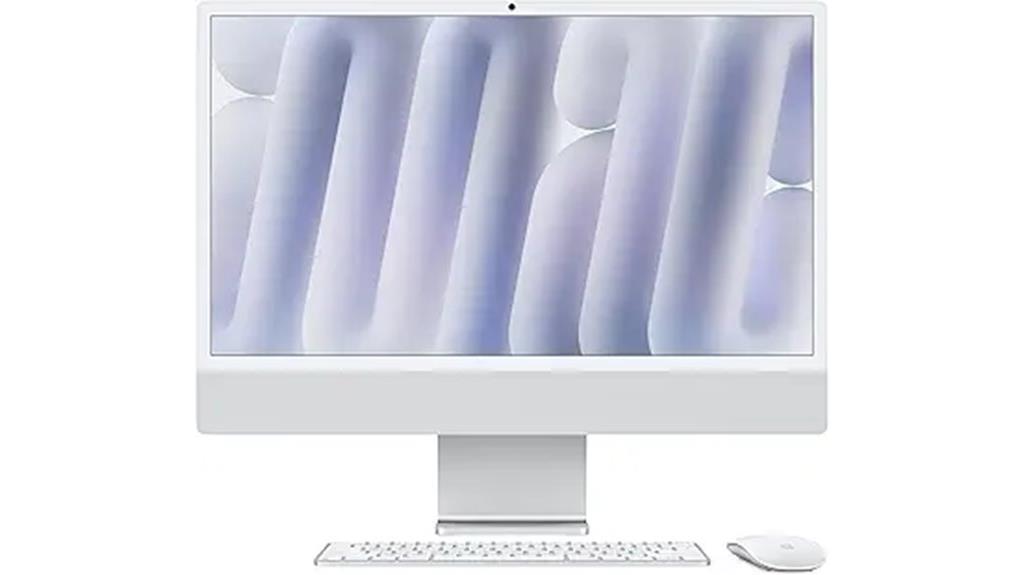
The Apple 2024 iMac with M4 chip stands out as an ideal choice for photographers who need powerful performance combined with stunning visuals. Its 10-core CPU and GPU deliver fast, smooth editing, while the 24-inch Retina display supports up to a billion colors at 500 nits brightness, ensuring every detail pops. The sleek, all-in-one design comes in seven vibrant colors, adding style to any workspace. With 24GB of unified memory and a 512GB SSD, it handles multitasking and large files effortlessly. Connectivity is exceptional, supporting dual 6K displays and seamless integration with other Apple devices. It’s a perfect blend of form, function, and performance.
Best For: photographers and creative professionals seeking a powerful, visually stunning all-in-one desktop with seamless Apple ecosystem integration.
Pros:
- Stunning 24-inch 4.5K Retina display supporting up to a billion colors for vibrant visuals
- Powerful M4 chip with 10-core CPU and GPU for fast, efficient multitasking and editing
- Seamless connectivity options including dual 6K display support and Apple device integration
Cons:
- Limited to 512GB SSD storage, which may require external solutions for large files
- All-in-one design reduces upgradeability and internal customization options
- Higher price point compared to some other all-in-one desktops with similar specs
Apple 2024 iMac Desktop Computer with M4 Chip
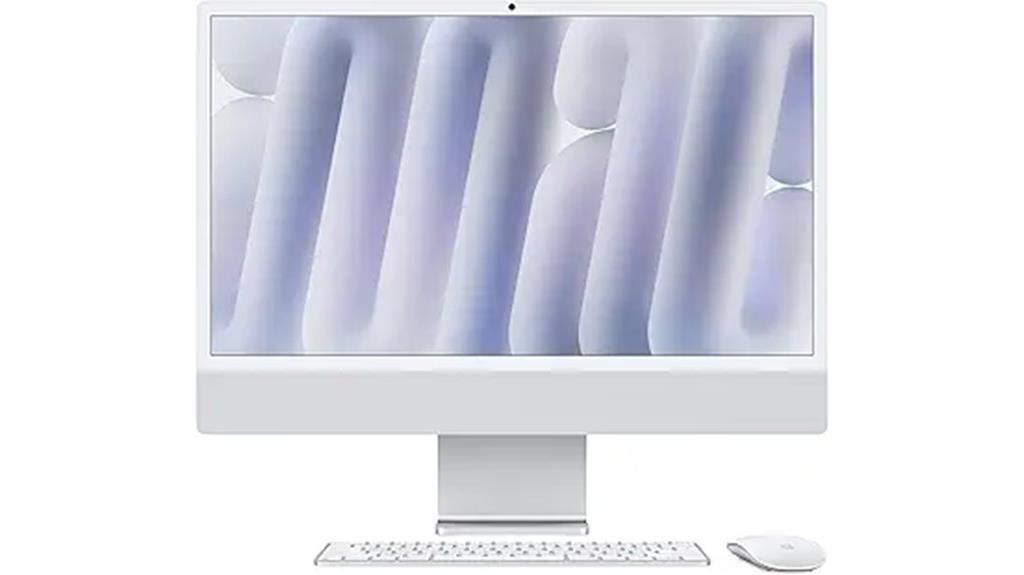
Photographers seeking a sleek, vibrant, and high-performance desktop will find the Apple 2024 iMac with M4 chip to be an excellent choice. Its stunning 24-inch 4.5K Retina display supports up to 1 billion colors and 500 nits brightness, delivering stunning visuals for editing and retouching. Powered by the M4 chip with a 10-core CPU and GPU, it handles demanding tasks effortlessly. With 16GB of unified memory and 512GB SSD, multitasking and data access feel smooth and quick. The all-in-one design, vibrant color options, and seamless Apple ecosystem integration make it a stylish yet powerful tool for any photographer’s workflow.
Best For: photographers and creative professionals seeking a sleek, vibrant, and high-performance desktop for editing, retouching, and multitasking.
Pros:
- Stunning 24-inch 4.5K Retina display with support for up to 1 billion colors and 500 nits brightness
- Powerful M4 chip with 10-core CPU and GPU ensures fast performance for demanding tasks
- Seamless integration with the Apple ecosystem, including features like iPhone Mirroring, Messages, and FaceTime
Cons:
- Limited to 512GB SSD storage, which may require external storage for large files
- Higher price point compared to some Windows-based alternatives with similar specs
- All-in-one design offers less upgradeability over time
Apple 2024 iMac Desktop Computer with M4 Chip
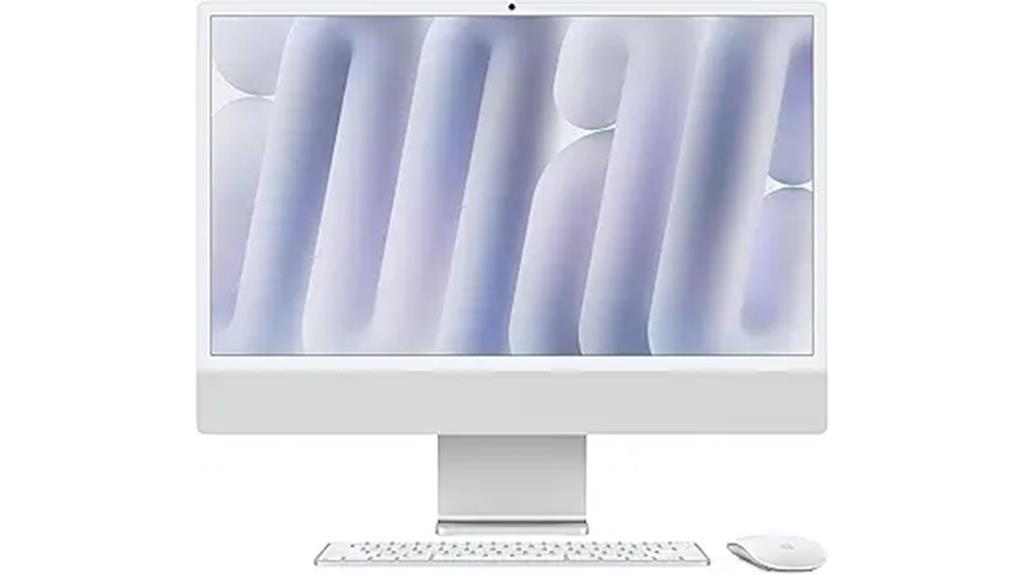
With its stunning 24-inch 4.5K Retina display supporting up to a billion colors, the Apple 2024 iMac with M4 chip delivers vibrant, detailed visuals that make it an ideal choice for photographers seeking precision and accuracy in their work. Its sleek, ultra-thin design available in seven vibrant colors adds style to any workspace. Powered by the M4 chip with a 10-core CPU and GPU, it offers lightning-fast performance for editing, rendering, and multitasking. The 16GB unified memory and 512GB SSD ensure smooth workflow and quick data access. Seamless integration with Apple’s ecosystem, advanced camera, and audio features make this iMac a versatile powerhouse for creative professionals.
Best For: creative professionals, photographers, and multitaskers seeking a stylish, high-performance all-in-one desktop with stunning visuals and seamless Apple ecosystem integration.
Pros:
- Vibrant 24-inch 4.5K Retina display with support for up to a billion colors for detailed visuals
- Fast performance with the M4 chip, 10-core CPU and GPU, 16GB unified memory, and 512GB SSD
- Elegant ultra-thin design available in seven vibrant colors that enhances any workspace
Cons:
- Limited upgradability due to the all-in-one design and integrated hardware
- Higher price point compared to some Windows-based all-in-one desktops
- Fewer ports may require additional adapters for extensive connectivity needs
Apple 2024 iMac Desktop Computer with M4 Chip
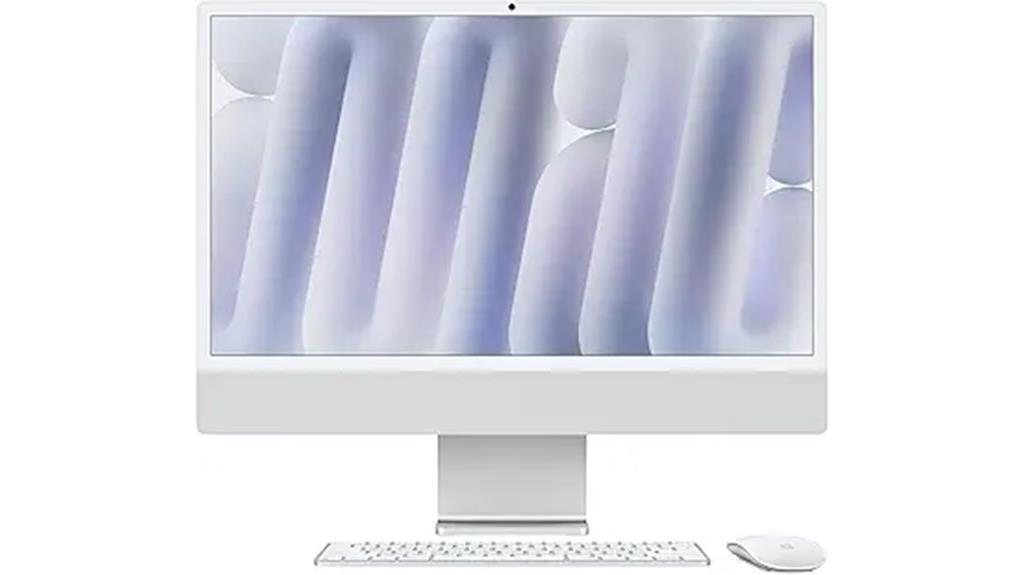
If you’re searching for a powerful all-in-one desktop that delivers stunning visuals and seamless performance, the Apple 2024 iMac with M4 chip is an excellent choice. Its 24-inch Retina display with Nano-Texture Glass offers vibrant colors and incredible detail, perfect for editing photos. Powered by the 10-core M4 chip, it handles multitasking and demanding creative tasks effortlessly. With 16GB of unified memory and a 256GB SSD, you get quick responsiveness and ample space for your projects. The sleek, colorful design fits effortlessly into any workspace, making it both a functional tool and a stylish centerpiece for any photographer’s setup.
Best For: creative professionals, photographers, and users seeking a powerful, stylish all-in-one desktop with stunning visuals and seamless performance.
Pros:
- Vibrant 24-inch Retina display with Nano-Texture Glass for incredible color accuracy and detail
- Powered by the efficient M4 chip with a 10-core CPU and GPU for smooth multitasking and demanding tasks
- Seamless integration with the Apple ecosystem and support for multiple external displays
Cons:
- Limited storage capacity with 256GB SSD may require additional external storage options
- Higher price point compared to some other all-in-one desktops with similar specs
- Limited upgradeability due to its all-in-one design
Apple 2024 iMac Desktop Computer with M4 Chip

The Apple 2024 iMac Desktop Computer with M4 Chip stands out as a top choice for creative professionals seeking powerful performance and stunning visuals. Its 10-core CPU and GPU deliver lightning-fast editing, multitasking, and even gaming capabilities. The vibrant 24-inch 4.5K Retina display supports up to a billion colors, ensuring every photo pops with rich detail and accuracy. The sleek, colorful design fits seamlessly into any workspace, while the 16GB unified memory and 256GB SSD provide smooth operation and ample storage. Integrated Apple Intelligence and flawless ecosystem connectivity make this iMac a versatile, efficient tool for photographers aiming for top-tier results.
Best For: creative professionals and power users seeking a sleek, high-performance all-in-one desktop with stunning visuals and seamless Apple ecosystem integration.
Pros:
- Vibrant 24-inch 4.5K Retina display with support for up to a billion colors for immersive visuals
- Powerful M4 chip with 10-core CPU and GPU for fast editing, multitasking, and gaming
- Seamless connectivity with up to four Thunderbolt 4 ports, Wi-Fi 6E, and Bluetooth 5.3
Cons:
- Limited storage options with 256GB SSD, which may require external drives for large files
- Relatively higher price point compared to other all-in-one desktops with similar specs
- Fixed 24-inch display size, offering less flexibility for users needing larger screens
Factors to Consider When Choosing an Imac for Photographers

When choosing an iMac for photography, I focus on display quality and resolution to guarantee my edits are precise. I also consider color accuracy standards, processing power, and RAM options to handle large files efficiently. Finally, connectivity features are vital for seamless workflows and device integration.
Display Quality and Resolution
Choosing the right iMac for photography relies heavily on display quality and resolution. A high-resolution display, like the 24-inch Retina 4.5K screen supporting a billion colors, allows me to see every detail and guarantees accurate photo editing. Brightness levels of 500 nits or more improve visibility, especially in different lighting conditions, making my work clearer. An expansive color gamut, capable of displaying billions of colors, helps me with precise color grading and editing. Wide viewing angles and consistent color reproduction are essential for evaluating my work from various perspectives without distortion. Additionally, features like Nano-Texture Glass reduce glare and reflections, providing a clearer, more detailed visual workspace. These factors combine to give me confidence in my edits, knowing my display truly reflects my creative vision.
Color Accuracy Standards
Ensuring accurate color reproduction on an iMac is essential for professional photographers, and supporting wide color gamuts like P3 is a key factor. A display that covers the P3 spectrum allows for richer, more vibrant colors that match real-world scenes. High color depths, up to a billion colors, enable subtle gradations vital for precise editing. Brightness levels of 500 nits or higher guarantee that colors stay consistent across different lighting environments. Features like Nano-Texture Glass and high-resolution Retina screens minimize glare and reflections, helping me see true colors without distraction. Additionally, factory calibration and built-in calibration tools guarantee that the display maintains professional-grade color accuracy over time. These standards are crucial for achieving consistent, reliable results in my photography work.
Processing Power Needs
Photographers need powerful processing capabilities to handle large image files and demanding editing software without delays. A multi-core CPU, like a 10-core processor, can drastically cut down rendering times and boost multitasking efficiency. Faster processors ensure that resource-intensive applications such as Adobe Photoshop and Lightroom run smoothly, allowing for seamless editing sessions. High processing power is essential for managing high-resolution images and complex workflows without lag or crashes. Investing in a system with robust processing capabilities not only enhances current editing performance but also future-proofs your setup as software and image quality demands evolve. When choosing an iMac, prioritize models with high-performance CPUs to keep your workflow efficient and your creative process uninterrupted.
RAM and Storage Options
When selecting an iMac for photography, prioritizing ample RAM and storage options is essential for smooth workflow and efficient editing. I recommend at least 16GB of RAM or more to handle large image files and multitasking without lag. Higher RAM capacity allows for seamless editing in programs like Photoshop and Lightroom, especially when working on complex projects. Storage is equally important; a 512GB SSD or larger provides enough space for high-resolution photos and quick access to files. Faster SSDs substantially reduce load times, boosting productivity. Many iMacs offer upgradable or configurable RAM, letting you customize based on your needs. Striking the right balance between RAM and storage ensures exceptional performance and ample space for your professional photography projects.
Connectivity Features
Choosing the right connectivity options on an iMac is essential for maintaining an efficient workflow. I look for multiple Thunderbolt 4 ports because they support fast data transfer and are critical for connecting external storage devices needed for high-resolution photo editing. Supporting external 6K displays is necessary, too, as it allows me to work on large, color-accurate screens in real time. Fast Wi-Fi 6E and Bluetooth 5.3 ensure seamless connection to wireless peripherals and cloud services, streamlining my editing process. I also check for enough USB and Thunderbolt ports to connect card readers, external drives, and other accessories without hassle. Finally, I verify that these connectivity features align with my existing equipment and future expansion plans, guaranteeing long-term versatility.
Compatibility With Editing Software
A high-resolution Retina display is essential for accurate photo editing, so I always check that the iMac offers at least a 4.5K or 6K screen. This ensures I can view fine details and color nuances precisely. Beyond the display, I verify that the iMac’s hardware, including a powerful processor and ample RAM, can handle editing software smoothly. Compatibility with programs like Adobe Photoshop, Lightroom, and Capture One is crucial, so I confirm the iMac supports their latest versions. I also look for support for external color calibration tools and high-resolution displays, which are vital for professional workflows. Lastly, fast connectivity options like Thunderbolt 4 ports are a must to transfer large files efficiently and connect external storage devices seamlessly.
Port Selection and Expansion
Selecting an iMac with the right port options guarantees smooth workflow and easy connectivity for all your photography needs. I look for models with multiple Thunderbolt 4 ports, guaranteeing high-speed data transfers and seamless peripheral connections. Support for external display expansion, especially with at least two 6K monitors, is vital for detailed editing. USB-C ports are essential for connecting external drives, card readers, and printers without hassle. I also check if the port setup allows future upgrades or additional peripherals without relying on extra hubs or adapters. Compatibility with my existing equipment, like SD card readers and specialized storage devices, matters too. A well-rounded port selection ensures I can work efficiently, stay organized, and avoid disruptions during my creative process.
Design and Space Fit
When considering an iMac for photography work, it’s essential to guarantee it fits comfortably within your workspace without overwhelming or underutilizing the area. I recommend checking the overall dimensions and weight to verify it suits your desk size. The display size, such as a 24-inch Retina 4.5K screen, is key for accurate photo editing and clarity. Also, look at the all-in-one design’s thickness and form factor to see how well it complements your studio or editing space. Aesthetic appeal matters too—select a color option that matches your style and decor. In conclusion, make sure there’s enough room for proper airflow and easy access to ports for peripherals. Balancing these factors helps create an efficient, comfortable editing environment.
Frequently Asked Questions
How Does the Imac’s Display Color Accuracy Compare to Professional Monitors?
The iMac’s display color accuracy is impressive, but it doesn’t quite match high-end professional monitors. I find that the iMac offers vibrant, true-to-life colors perfect for most creative work, but for precise color grading, I prefer calibrated professional monitors. They provide more consistent color reproduction and better control over color profiles. Still, for general photography and editing, the iMac’s display is more than sufficient and offers excellent visual quality.
Can the Imac Handle 8K Photo Editing Smoothly?
Can the iMac handle 8K photo editing smoothly? Absolutely, it’s like having a powerful engine in a sleek frame. The latest iMacs, especially with M3 chips, deliver impressive processing power and graphics performance, making 8K editing seamless. I’ve worked on high-res images without lag, and the stunning 4.5K Retina display enhances every detail. Whether you’re retouching or compositing, these iMacs are built to keep up with your creative flow.
What Are the Best Storage Options for Large Photo Libraries?
I recommend using a combination of fast SSD storage and external drives for large photo libraries. The iMac’s built-in SSD offers quick access and smooth editing, but for massive collections, I add an external SSD or RAID setup for extra space and backup. Cloud storage is also handy for sharing and off-site backups. This mix keeps my workflow seamless, fast, and secure.
Is Upgradability a Concern With the 2024 Imac Models?
Upgradability is pretty much a locked vault with the 2024 iMacs. I see it like buying a painting—you get a masterpiece, but you can’t change the colors later. For photographers, this means choosing a model with future-proof specs now, because upgrading internal components later isn’t an option. So, if you want flexibility, consider other Macs or external upgrades to keep your setup versatile and ready for tomorrow’s demands.
How Does the Imac Perform in Long-Term Color Calibration Consistency?
I’ve found that the iMac performs exceptionally well in maintaining long-term color calibration consistency. Its integrated hardware calibration tools and high-quality display guarantee colors stay accurate over time. I regularly calibrate mine, and it consistently delivers reliable, true-to-life visuals, which is essential for my photography work. Overall, I trust the iMac’s calibration stability, making it a great choice for photographers who need precision and consistency.
Conclusion
In the end, choosing the right iMac is like finding the perfect canvas for your artistry. While each model offers its own charm, I believe the best choice gently aligns with your creative needs and future aspirations. Trust your instincts, and don’t rush—sometimes, the subtle details make all the difference. With a little patience, you’ll discover the ideal companion to elevate your photography to new heights, turning every project into a true masterpiece.