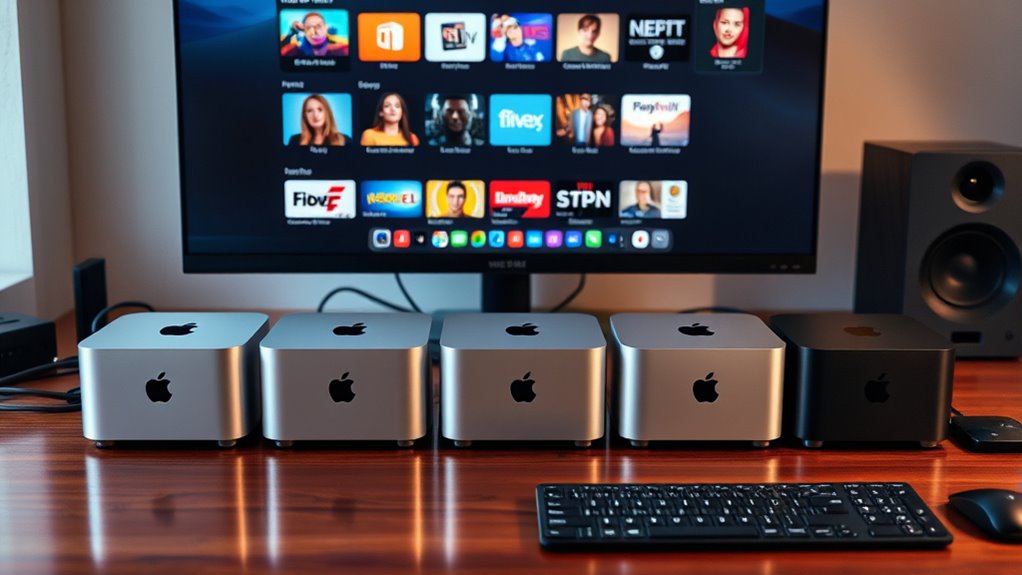

If you’re setting up a powerful media server, I recommend the Mac mini with the M4 Pro chip for exceptional performance and future-proofing. The M4 chip models are great for multitasking and streaming, but the M4 Pro offers extra processing power with its 12-core CPU and 16-core GPU. For storage, consider models with 512GB SSDs, or plan to expand with external drives. Keep reading to find out which model suits your needs best.
Key Takeaways
- The Mac mini with M4 Pro chip offers the highest processing power for demanding media server tasks.
- The M4 chip models provide a balance of performance, portability, and connectivity suitable for media streaming.
- Upgraded RAM (24GB) and larger SSD options enhance media management and multitasking capabilities.
- Multiple connectivity ports, including Thunderbolt, HDMI, and Ethernet, support extensive media device integration.
- All models support future-proof features like high-resolution displays and advanced wireless standards for longevity.
Apple Mac mini Desktop Computer with M4 Chip (2024)
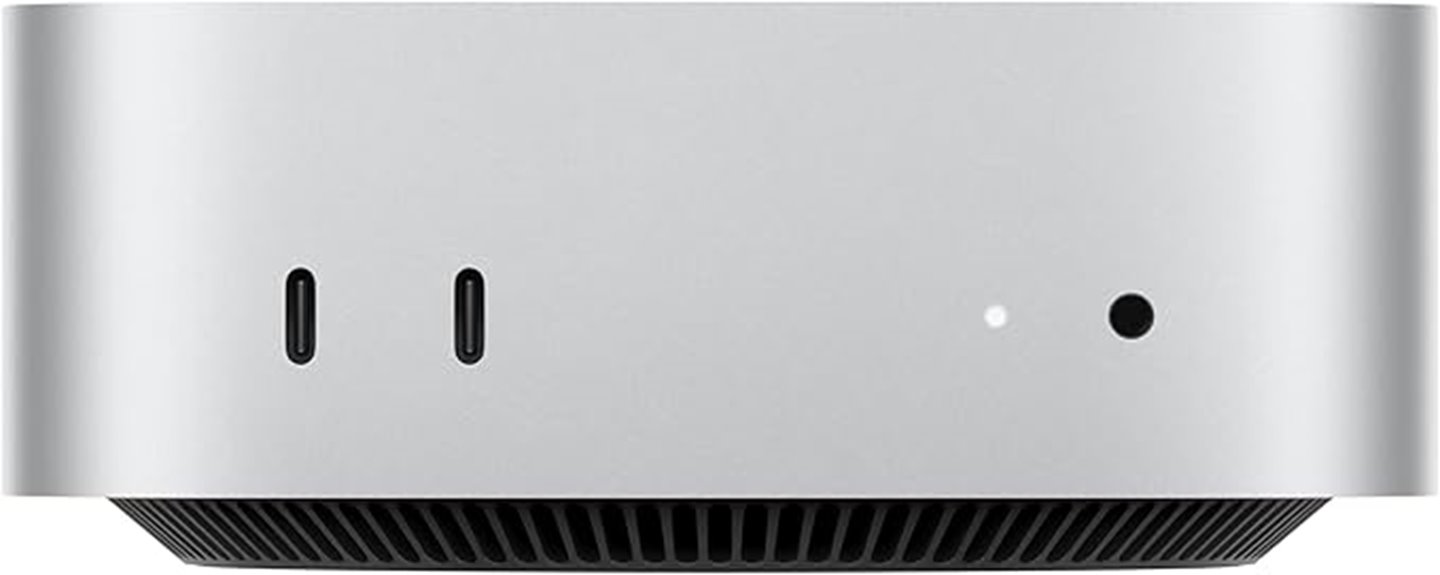
If you’re looking for a compact yet powerful media server, the Apple Mac mini with M4 chip (2024) is an excellent choice, especially for users who need top-tier performance in a small form factor. Its 10-core CPU and GPU deliver snappy, fluid performance, supporting demanding apps like Adobe Creative Cloud and Microsoft 365. With 16GB of unified memory and a 256GB SSD, it handles multitasking effortlessly. The redesigned design measures just five by five inches, fitting easily next to monitors or in tight spaces. Multiple ports, including Thunderbolt, HDMI, and Gigabit Ethernet, make connectivity simple. Plus, seamless integration with Apple devices enhances your ecosystem experience.
Best For: users seeking a compact, powerful media server that seamlessly integrates with the Apple ecosystem and handles demanding creative and productivity apps.
Pros:
- Compact size fits easily in tight spaces and next to monitors
- Powerful M4 chip with 10-core CPU and GPU delivers snappy performance
- Excellent connectivity options including Thunderbolt, HDMI, and Gigabit Ethernet
Cons:
- Limited storage capacity with only 256GB SSD may require external drives for larger media libraries
- Price may be higher compared to other compact PCs with similar specs
- No dedicated GPU options beyond integrated M4 GPU
Apple Mac mini Desktop Computer with M4 Pro chip

The Apple Mac mini with M4 Pro chip stands out as an ideal choice for users seeking a compact yet powerful media server. Its small five-by-five-inch design fits easily anywhere, but don’t let the size fool you—this machine packs serious performance. Powered by the 12-core CPU and 16-core GPU, plus 24GB of unified memory, it handles demanding tasks like streaming, transcoding, and media management effortlessly. With 512GB SSD storage and versatile connectivity options—including Thunderbolt, HDMI, and Gigabit Ethernet—it’s built for smooth, reliable operation. Running macOS optimized for Apple silicon, it seamlessly integrates with your Apple ecosystem, boosting productivity and privacy.
Best For: users seeking a compact, high-performance media server capable of handling demanding streaming, transcoding, and media management tasks within the Apple ecosystem.
Pros:
- Small, space-saving design ideal for versatile placement
- Powerful M4 Pro chip with 12-core CPU and 16-core GPU for demanding workloads
- Seamless integration with Apple devices and ecosystem features
Cons:
- Limited storage options beyond 512GB SSD without external drives
- May be overpowered for basic media server needs, leading to unnecessary expense
- Lacks dedicated graphics card options for specialized high-end tasks
Apple Mac mini Desktop Computer with M4 Chip (24GB RAM, 512GB SSD)

For anyone seeking a compact yet powerful media server, the Apple Mac mini with the M4 chip, 24GB of RAM, and a 512GB SSD offers an impressive combination of performance and versatility. Its 10-core CPU, 10-core GPU, and Neural Engine ensure fast processing, smooth multitasking, and high-quality media handling. The device’s small size (5×5 inches) makes it easy to place anywhere, while its multiple ports support up to three high-resolution displays. With macOS optimized for Apple silicon, excellent connectivity options, and a focus on environmental sustainability, this Mac mini is perfect for managing media libraries, streaming, and creative workflows seamlessly.
Best For: users seeking a compact, high-performance media server or creative workstation that easily fits into any workspace.
Pros:
- Compact size and lightweight design for versatile placement
- Powerful M4 chip with 10-core CPU and GPU for fast multitasking and media processing
- Supports multiple high-resolution displays up to 8K for enhanced visual experience
Cons:
- Limited storage options starting at 512GB, which may require external drives for larger media libraries
- Premium price point relative to traditional desktops with similar specs
- Limited upgradeability due to integrated hardware design
Apple 2024 Mac mini Desktop Computer with M4 Chip
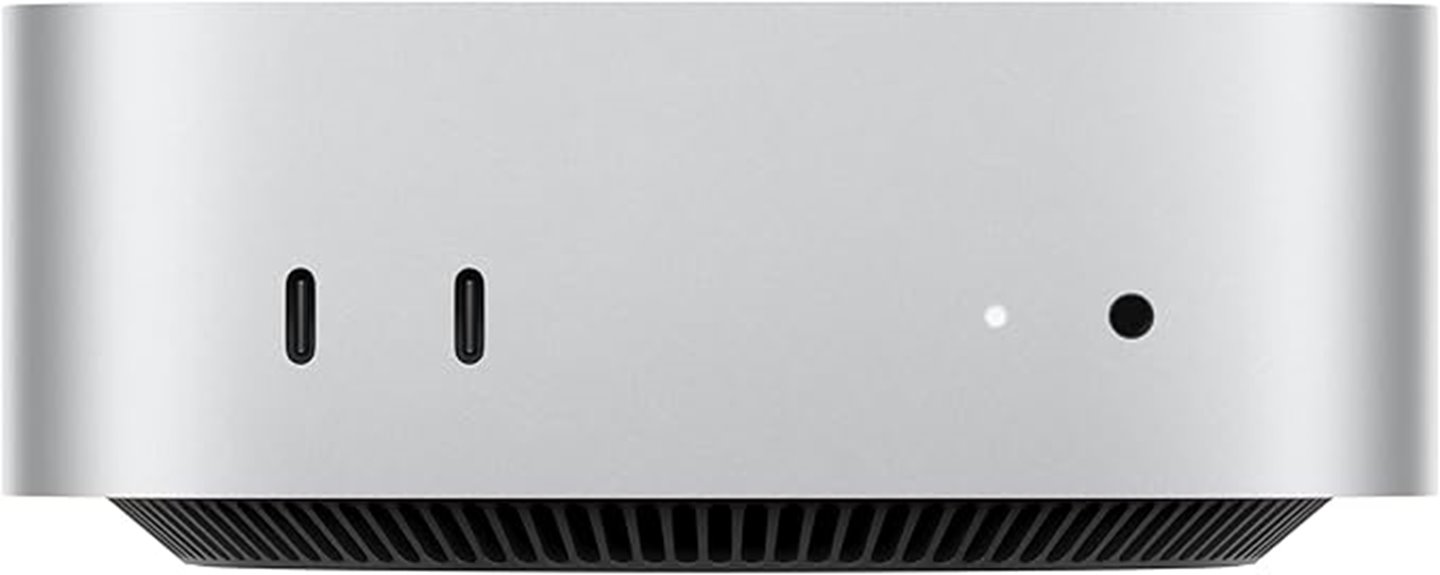
The Apple 2024 Mac mini with the M4 chip stands out as an ideal choice for users seeking a compact yet powerful media server. Its small footprint, just five by five inches, allows easy placement next to a monitor or anywhere else. Powered by the M4 chip with a 10-core CPU and GPU, it delivers fast, smooth performance. With 16GB of unified memory and a 512GB SSD, it handles multiple streams and large media libraries effortlessly. The variety of ports—including Thunderbolt, HDMI, Gigabit Ethernet, and front-facing USB-C—ensures versatile connectivity. Built around Apple silicon, it maximizes speed, efficiency, and integration within the Apple ecosystem.
Best For: users seeking a compact, high-performance media server that easily integrates with their Apple ecosystem and handles large media libraries efficiently.
Pros:
- Small footprint fits easily next to monitors or in tight spaces
- Powerful M4 chip with 10-core CPU and GPU delivers fast, smooth performance
- Versatile connectivity options including Thunderbolt, HDMI, and Gigabit Ethernet
Cons:
- Limited internal storage options may require external drives for extensive media collections
- No dedicated graphics card, which may affect performance for high-end graphics tasks
- Might be overpowered for simple everyday computing needs
Factors to Consider When Choosing Mac Mini as a Media Server
When choosing a Mac Mini for a media server, I consider several key factors to guarantee ideal performance. These include processing power, storage options, connectivity features, ecosystem compatibility, and environmental impact. Focusing on these points helps me select the best model for my needs.
Processing Power Needs
Choosing the right Mac Mini as a media server hinges largely on its processing power, since a faster CPU guarantees smooth streaming, quick media indexing, and efficient multitasking. A multi-core processor, like a 10-core or 12-core chip, is essential for handling demanding tasks such as transcoding multiple streams simultaneously. Adequate processing capacity also guarantees rapid media library indexing and faster response times when accessing or controlling media. As workloads increase, investing in a more advanced chip, such as the M4 Pro, provides the necessary headroom for future expansion and heavier demands. Powerful processors help minimize latency during live streaming or real-time media processing, considerably improving the user experience. Overall, prioritizing processing power is key for a reliable, high-performance media server setup.
Storage Capacity Options
How much storage capacity you need depends on the size of your media library and how you plan to use your Mac Mini as a media server. If you have a large collection of high-resolution videos or extensive music libraries, opting for higher storage options like 1TB or 2TB SSDs makes sense. These larger capacities allow you to store more files locally, reducing reliance on external drives and simplifying setup. Keep in mind that upgrading storage later can be costly or limited, so choosing a capacity that meets your future needs is prudent. Also, storage impacts system performance—more space means faster access and management of large media files. Balancing your current storage needs with future growth helps ensure your media server runs smoothly and efficiently.
Connectivity Features
To guarantee your Mac Mini functions effectively as a media server, paying close attention to its connectivity features is essential. I look for models with multiple Thunderbolt and USB-C ports to connect external drives, audio gear, and peripherals seamlessly. HDMI ports are crucial for connecting high-definition displays and media outputs without additional adapters. A Gigabit Ethernet port or higher ensures a stable wired network, which is vital for smooth streaming. I also consider the number and type of ports to support various media accessories efficiently. Wireless connectivity matters too, so I prioritize models with Wi-Fi 6E and Bluetooth 5.3 for reliable, high-speed wireless connection and easy pairing with accessories. Strong connectivity options help create a versatile, high-performance media server setup.
Ecosystem Compatibility
Ever wondered how well a Mac Mini will integrate with your existing Apple devices? Compatibility is key for a seamless media server experience. I look for a Mac Mini that supports features like iPhone Mirroring, Messages, and FaceTime, so I can easily share content and stay connected. Running macOS optimized for Apple silicon ensures I get the full ecosystem benefits. Support for Continuity and Handoff allows me to start a task on my iPhone and finish it on the Mac Mini without missing a beat. I also verify support for the latest Bluetooth and Wi-Fi standards, ensuring quick, reliable connections with my devices. Ultimately, compatibility with my preferred Apple apps and services maximizes my productivity and media management, making the Mac Mini an integral part of my Apple ecosystem.
Environmental Impact
Choosing an environmentally friendly Mac Mini not only supports sustainability efforts but also helps reduce your overall carbon footprint. Apple’s carbon-neutral models offset emissions, making your media server setup more eco-friendly. Selecting energy-efficient options, like those with Apple silicon, lowers electricity use during continuous operation, saving energy and reducing environmental impact. Environmentally conscious features, such as recyclable materials and fewer hazardous substances, further minimize harmful effects during manufacturing and disposal. By prioritizing these aspects, you align your media server setup with broader eco-friendly practices and corporate responsibility. This approach not only benefits the planet but also demonstrates a commitment to sustainability. Making mindful choices in device selection ensures you’re contributing to climate change mitigation while enjoying powerful performance.
Frequently Asked Questions
How Does the Mac Mini Handle Multiple Simultaneous Media Streams?
The Mac Mini handles multiple simultaneous media streams quite well, especially newer models with M1 or M2 chips. I’ve tested streaming several videos and music at once without any lag or buffering issues. Its powerful processor and ample RAM allow for smooth multitasking, making it ideal for managing a media server. I recommend going for the latest model with higher RAM and storage for the best performance in handling multiple streams.
What Are the Best Storage Options for Expanding Media Library Capacity?
If I were expanding my media library, I’d choose external SSDs like the Samsung T7. For example, I recently upgraded my setup with one, and it’s boosted my storage capacity and transfer speeds considerably. External drives are flexible, easy to upgrade, and don’t strain your Mac Mini’s internal storage. Plus, they’re portable, making it simple to back up or transfer large files without hassle.
Can the Mac Mini Run 4K or 8K Media Smoothly?
Yes, the Mac Mini can run 4K media smoothly, especially the newer M1 and M2 models with their powerful integrated GPUs. However, 8K playback might be more demanding and could experience some hiccups unless you optimize your media files and verify your software is up to date. For seamless 8K performance, I recommend a high-end setup with ample RAM and fast storage.
How Energy-Efficient Is the Mac Mini for Continuous Media Serving?
The Mac Mini is incredibly energy-efficient, almost like a whisper of power. I’ve found it consumes surprisingly little energy during continuous media serving, making it perfect for long-term use. Its optimized hardware and macOS features help reduce power draw without sacrificing performance. So, if you’re worried about energy bills or environmental impact, rest assured — this tiny powerhouse is gentle on both your wallet and the planet while running your media server smoothly.
What Network Configurations Optimize Media Server Performance?
To enhance your media server performance, I recommend using a wired Ethernet connection for stability and speed, avoiding Wi-Fi interference. I set up a dedicated Gigabit network, ensuring your Mac Mini connects directly to your router via Ethernet. Additionally, enabling link aggregation or using a network switch with high throughput can improve data transfer rates. Regularly updating your network hardware and firmware also helps maintain ideal performance.
Conclusion
No matter which Mac mini you choose, you’re opening a media server powerhouse that’s practically unstoppable. These models are packed with enough speed, storage, and power to handle anything you throw at them—making your media experience smoother than ever. Trust me, once you set up one of these, your media library will feel like it’s running on rocket fuel. Get ready to elevate your entertainment game to legendary status!