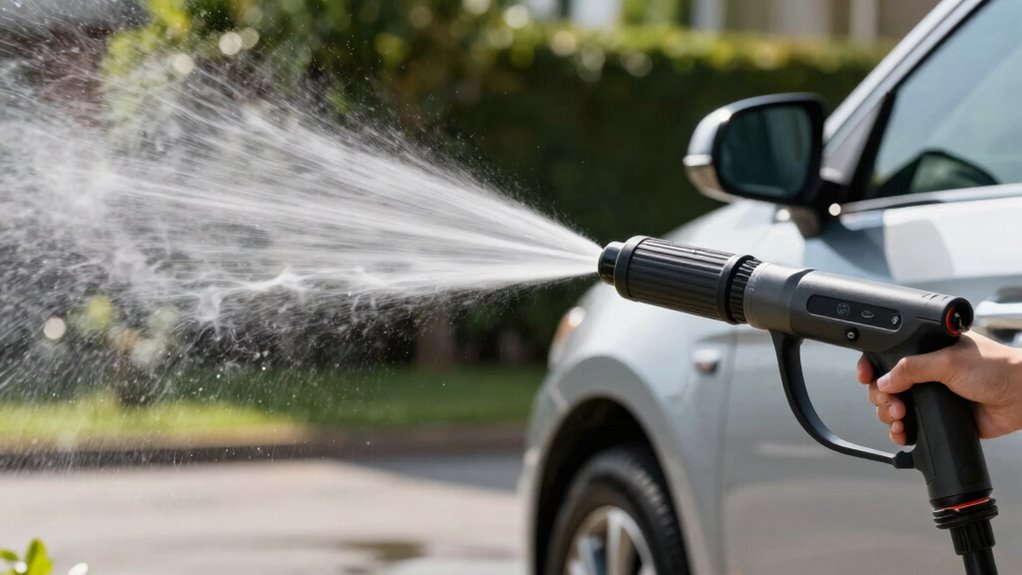
Choosing the right pressure washer for cars requires balancing cleaning power with paint safety, as too much pressure can strip wax or damage clear coats. The Westinghouse ePX3050 Electric Pressure Washer stands out as the best overall pick because it delivers 2100 PSI—enough to remove road grime without risking vehicle finishes—while remaining quiet enough for residential use. For those prioritizing portability, the Cordless Pressure Washer 1450 PSI Portable Handheld offers freedom from extension cords and outlets, making it ideal for apartment dwellers or remote detailing. Meanwhile, the Sun Joe SPX3000 appeals to enthusiasts who want higher pressure and included foam cannon accessories for a deeper clean. The main tradeoff in this category is between raw power and gentle handling; electric models generally offer better control for automotive work than gas units. Continue reading for a detailed breakdown of these fifteen options to find the model that fits your garage setup and washing frequency.

Get kitchen gear delivered free with Prime
- Fast, free delivery on millions of items
- Prime Video, Amazon Music and more included
- Member-only deals all year
Complete the kit


Key Takeaways
- Electric models dominate this category because they provide consistent pressure and lower noise levels, which is critical when washing vehicles in residential areas.
- The sweet spot for safe car washing is between 1600 and 2200 PSI; units exceeding 2500 PSI require careful nozzle selection to avoid paint damage.
- Cordless options have improved significantly but still lag behind corded electric models in continuous cleaning time and total water flow rate (GPM).
- Included foam cannons and soap tanks are major value drivers, as they allow for the two-bucket wash method that prevents swirl marks on car paint.
- Weight and storage footprint are often overlooked factors; vertical storage designs and integrated hose reels save significant space in smaller garages.
| Westinghouse ePX3050 Electric Pressure Washer, 2100 Max PSI |  | Best Overall Balance | Max Pressure: 2100 PSI | Max Flow Rate: 1.76 GPM | Power Source: AC Electric | VIEW ON AMAZON | See Our Full Breakdown |
| CRAFTSMAN 1700 PSI Electric Cold Water Pressure Washer (CMEPW1700) |  | Best Entry-Level Value | Max Pressure: 1700 PSI | Max Flow Rate: 1.2 GPM | Power Source: AC Electric | VIEW ON AMAZON | See Our Full Breakdown |
| Westinghouse ePX3500 Electric Pressure Washer, 2500 Max PSI |  | Best High-Performance Electric | Max Pressure: 2500 PSI | Max Flow Rate: 1.76 GPM | Power Source: AC Electric | VIEW ON AMAZON | See Our Full Breakdown |
| Greenworks 2100 PSI Electric Pressure Washer |  | Best for Portability | Max Pressure: 2100 PSI | Max Flow Rate: 1.2 GPM | Power Source: Corded Electric | VIEW ON AMAZON | See Our Full Breakdown |
| Kärcher K1700 Electric Pressure Washer |  | Best for Precision Cleaning | Max Pressure: 1700 PSI TruPressure | Max Flow Rate: 1.2 GPM | Power Source: Electric | VIEW ON AMAZON | See Our Full Breakdown |
| Westinghouse ePX3100s Electric Pressure Washer |  | Best for Storage-Constrained Owners | Brand: Westinghouse | Model: ePX3100s | Maximum Pressure: 2100 PSI | VIEW ON AMAZON | See Our Full Breakdown |
| Westinghouse ePX3100 Electric Pressure Washer |  | Best Mid-Range Versatility | Brand: Westinghouse | Model: ePX3100 | Maximum Pressure: 2300 PSI | VIEW ON AMAZON | See Our Full Breakdown |
| YKYI Cordless Pressure Washer, 1200 PSI |  | Best for Off-Grid & Detailing | Brand: YKYI | Maximum Pressure: 1200 PSI | Flow Rate: 3 GPM | VIEW ON AMAZON | See Our Full Breakdown |
| Greenworks 1700 PSI Electric Pressure Washer |  | Best for Light-Duty Maintenance | Brand: Greenworks | Model: GPW1705 | Maximum Pressure: 1700 PSI | VIEW ON AMAZON | See Our Full Breakdown |
| Westinghouse WPX3000e Electric Pressure Washer, 3000 PSI |  | Best Power for Electric Users | Model: WPX3000e | Maximum Pressure: 3000 PSI | Flow Rate: 1.76 GPM | VIEW ON AMAZON | See Our Full Breakdown |
| LWQ Portable Pressure Washer with 4 Quick-Connect Nozzles, Foam Cannon, and Wheels |  | Best for Storage-Conscious Owners | Maximum Pressure: 2030 PSI | Flow Rate: 2.5 GPM | Tank Volume: 2.5 gallons | VIEW ON AMAZON | See Our Full Breakdown |
| Sun Joe SPX100-GO Electric Pressure Washer with Foam Cannon |  | Best for Small Garages | Maximum Pressure: 1800 PSI | Motor Power: 13 amps | Hose Length: 20 feet | VIEW ON AMAZON | See Our Full Breakdown |
| Sun Joe SPX3000 Electric Pressure Washer, 2500 Max PSI |  | Best Overall Performance | Working Pressure: 2030 PSI | Flow Rate: 1.76 GPM | Detergent Tanks: Two 0.9 L tanks | VIEW ON AMAZON | See Our Full Breakdown |
| Westinghouse ePX3100v Electric Pressure Washer |  | Best Balanced Portable Option | Maximum Pressure: 2100 PSI | Flow Rate: 1.76 GPM | Weight: 17.6 lbs | VIEW ON AMAZON | See Our Full Breakdown |
| Cordless Pressure Washer 1450 PSI Portable Handheld Power Washer with 6-in-1 Nozzle and Dual 4.0 Ah Batteries |  | Best for Location Freedom | Maximum Pressure: 1450 PSI | Flow Rate: 3.0 GPM | Battery Capacity: 2 x 4.0 Ah | VIEW ON AMAZON | See Our Full Breakdown |
| pressure washer for car | Hose Length | Weight | Warranty | Maximum Pressure |
|---|---|---|---|---|
| Westinghouse ePX3050 Electric | 20 feet | 17 pounds | 3-Year Limited | — |
| CRAFTSMAN 1700 PSI Electric Co | 20 feet | 17.5 pounds | 3-Year Limited | — |
| Westinghouse ePX3500 Electric | 25 feet | 19 pounds | 3-Year Limited | — |
| Greenworks 2100 PSI Electric P | 20-25 feet (varies) | 1.5 pounds (unit only) | 3-Year Limited | — |
| Kärcher K1700 Electric Pressur | — | — | 2-Year Limited | — |
| Westinghouse ePX3100s Electric | 20 feet | 13.5 pounds | 2-year limited | 2100 PSI |
| Westinghouse ePX3100 Electric | 25 feet | 19 lbs | 3-year limited | 2300 PSI |
| YKYI Cordless Pressure Washer | 24 feet | — | — | 1200 PSI |
| Greenworks 1700 PSI Electric P | 25 feet | — | 3-year limited | 1700 PSI |
| Westinghouse WPX3000e Electric | 25 feet | — | 3-year limited | 3000 PSI |
| LWQ Portable Pressure Washer w | 6.3 meters | 16.6 pounds | — | 2030 PSI |
| Sun Joe SPX100-GO Electric Pre | 20 feet | 14.33 lbs | 2 years | 1800 PSI |
| Sun Joe SPX3000 Electric Press | 20 feet | 24.3 pounds | — | — |
| Westinghouse ePX3100v Electric | 20 ft | 17.6 lbs | 3-year limited | 2100 PSI |
| Cordless Pressure Washer 1450 | — | 2.18 lbs | — | 1450 PSI |
More Details on Our Top Picks
Westinghouse ePX3050 Electric Pressure Washer, 2100 Max PSI
This model stands out for its balanced power-to-portability ratio, making it my top pick for most car owners. With 2100 PSI and 1.76 GPM, it strips away road grime faster than the CRAFTSMAN 1700 PSI model, which lacks the flow rate to rinse soap efficiently. The inclusion of a foam cannon is a significant advantage over competitors like the Greenworks 2100 PSI, allowing for safer contactless washing that protects paintwork. However, it is not the most powerful option; the Westinghouse ePX3500 offers higher PSI for tougher jobs. This unit is ideal for those who want serious cleaning power without the bulk of gas-powered units, though the electric cord does restrict mobility compared to battery-operated alternatives.
Pros:- High flow rate (1.76 GPM) speeds up rinsing compared to lower-flow models.
- Includes a foam cannon for safe, paint-friendly washing.
- Compact footprint with wheels reduces storage hassle.
- 35-foot power cord offers decent reach from outlets.
Cons:- Lower maximum PSI than the Westinghouse ePX3500.
- Corded design limits range compared to battery models.
- Plastic components may feel less durable than steel alternatives.
Best for: Enthusiasts who prioritize safe, foam-based washing and need higher flow rates for efficient rinsing.
Not ideal for: Users with large properties who need gas-level pressure or cordless freedom.
- Max Pressure:2100 PSI
- Max Flow Rate:1.76 GPM
- Power Source:AC Electric
- Hose Length:20 feet
- Cord Length:35 feet
- Weight:17 pounds
- Warranty:3-Year Limited
Our verdict“Choose this if you want the best combination of flow rate and included accessories for safe car detailing.”
CRAFTSMAN 1700 PSI Electric Cold Water Pressure Washer (CMEPW1700)
The CRAFTSMAN CMEPW1700 serves as a solid entry point for beginners who want to wash cars without a steep learning curve. It delivers 1700 PSI, which is sufficient for light dust and mud but struggles with baked-on grime that the Westinghouse ePX3050 handles easily due to its higher flow rate. While it lacks the foam cannon included with the Westinghouse, its onboard storage keeps the wand and nozzles organized, a convenience the Greenworks model lacks. This is not a professional tool; the 1.2 GPM flow rate means rinsing takes longer. However, for occasional weekend cleaning, it offers reliable performance at a lower complexity level, making it a sensible choice for those new to pressure washing.
Pros:- Lightweight and easy to store in tight spaces.
- Onboard storage keeps accessories attached and organized.
- Simple assembly and operation for first-time users.
- CETA certified for reliable pressure output.
Cons:- Low flow rate (1.2 GPM) results in slow rinsing.
- Lacks a dedicated foam cannon for safe washing.
- Lower PSI limits effectiveness on tough stains.
Best for: Beginners or casual users who wash cars infrequently and want simple, compact equipment.
Not ideal for: Detailers who need high flow rates for quick rinsing or heavy-duty cleaning tasks.
- Max Pressure:1700 PSI
- Max Flow Rate:1.2 GPM
- Power Source:AC Electric
- Hose Length:20 feet
- Cord Length:35 feet
- Weight:17.5 pounds
- Warranty:3-Year Limited
Our verdict“A practical, no-fuss option for occasional car washers who prioritize storage over raw power.”
Westinghouse ePX3500 Electric Pressure Washer, 2500 Max PSI
This unit pushes the boundaries of what an electric washer can do, offering 2500 PSI to tackle stubborn dirt that the Westinghouse ePX3050 might leave behind. The 1.76 GPM matches the ePX3050’s flow rate, ensuring efficient rinsing despite the higher pressure. Unlike the Kärcher K1700, this model includes a steel wand and a 20 oz onboard soap tank, enhancing durability and convenience. The 360-degree steering wheels are a notable upgrade for maneuverability around tight garage spaces. However, the tradeoff is weight; at 19 pounds, it is slightly heavier than the entry-level options. It is the right choice for those who demand higher pressure for multiple surfaces but want to avoid gas maintenance.
Pros:- Highest PSI in this electric lineup for tougher cleaning jobs.
- Steel wand offers better durability than plastic alternatives.
- Onboard soap tank simplifies detergent application.
- Anti-tipping design with 360-degree wheels improves stability.
Cons:- Heavier than the Westinghouse ePX3050 and CRAFTSMAN models.
- Rated pressure may vary under load compared to max specs.
- Higher price point than entry-level electric washers.
Best for: Users who need higher pressure for versatile cleaning beyond just cars, such as driveways or fences.
Not ideal for: Those with limited storage space or who prefer the lightest possible equipment.
- Max Pressure:2500 PSI
- Max Flow Rate:1.76 GPM
- Power Source:AC Electric
- Hose Length:25 feet
- Weight:19 pounds
- Soap Tank:20 oz
- Warranty:3-Year Limited
Our verdict“The go-to electric choice for those who need extra power for multi-surface cleaning without gas complexity.”
Greenworks 2100 PSI Electric Pressure Washer
The Greenworks GPW2101A distinguishes itself with a telescoping handle and lightweight design, making it easier to store than the bulkier Westinghouse ePX3500. It matches the Westinghouse ePX3050 in pressure at 2100 PSI but falls short in flow rate at 1.2 GPM, which means it will take longer to rinse soap off a vehicle. While it includes a soap applicator, it lacks the dedicated foam cannon found on the Westinghouse, limiting its effectiveness for safe paint cleaning. The push-button start is a user-friendly feature, but the conflicting hose length specifications (20 vs 25 feet) create uncertainty. This is best for users who value compact storage and ease of handling over maximum cleaning speed.
Pros:- Telescoping handle simplifies storage and transport.
- Lightweight design reduces strain during use.
- Push-button start offers convenient operation.
- Includes multiple nozzles for varied cleaning tasks.
Cons:- Low flow rate (1.2 GPM) slows down the washing process.
- No foam cannon included for safe paint washing.
- Unclear hose length specifications cause confusion.
Best for: Apartment dwellers or those with limited storage who need a lightweight, easy-to-manage unit.
Not ideal for: Users who frequently wash large vehicles and need high flow rates for quick rinsing.
- Max Pressure:2100 PSI
- Max Flow Rate:1.2 GPM
- Power Source:Corded Electric
- Hose Length:20-25 feet (varies)
- Cord Length:35 feet
- Weight:1.5 pounds (unit only)
- Warranty:3-Year Limited
Our verdict“Pick this if storage space is your primary concern and you can tolerate slower rinse times.”
Kärcher K1700 Electric Pressure Washer
The Kärcher K1700 relies on CETA-certified TruPressure, offering consistent output that differs from the variable max ratings seen in the Westinghouse ePX3050. While it provides 1700 PSI and 1.2 GPM—similar to the CRAFTSMAN—its design focuses on reliability and ease of use. The removable detergent tank allows for precise chemical application, though it does not include a foam cannon for broad coverage. Never-flat wheels are a practical touch for garage use. However, the lower pressure means it struggles with heavy grime compared to the Westinghouse ePX3500. This unit is best suited for users who prioritize brand reputation and consistent, gentle cleaning over raw power or speed.
Pros:- CETA-certified pressure ensures consistent performance.
- Removable detergent tank allows for precise soap application.
- Never-flat wheels enhance reliability and maintenance.
- Compact design is easy to store and transport.
Cons:- Low flow rate limits rinsing efficiency.
- No foam cannon for safe, contactless washing.
- Lower PSI compared to high-performance electric options.
Best for: Brand-loyal users who want consistent, certified performance for light-to-medium cleaning.
Not ideal for: Those who need to remove heavy mud or oil stains quickly.
- Max Pressure:1700 PSI TruPressure
- Max Flow Rate:1.2 GPM
- Power Source:Electric
- Detergent Tank:0.5 gal removable
- Hose Type:M22 included
- Certification:CETA
- Warranty:2-Year Limited
Our verdict“A reliable, precision-focused option for users who value consistency and brand quality over maximum power.”
Westinghouse ePX3100s Electric Pressure Washer
This model stands out for its ultra-compact footprint, making it ideal for garage owners with limited floor space. Compared to the heavier Westinghouse WPX3000e, the ePX3100s is significantly lighter at 13.5 pounds, allowing for easy transport to the driveway without straining your back. The included foam cannon and turbo nozzle provide sufficient cleaning power for regular car maintenance, though the rated performance of 1800 PSI is lower than the marketing maximum, meaning it may struggle with deeply embedded grime on textured surfaces. It strikes a balance between portability and utility for those who prioritize convenience over raw power.
Pros:- Extremely lightweight and compact for easy storage
- Includes a foam cannon for effective soap application
- Long 35-foot power cord reduces the need for extension cords
- 20-foot high-pressure hose offers good reach around vehicles
Cons:- Rated performance is lower than the advertised maximum specs
- Small water tank or direct hose connection required (no onboard tank mentioned in specs)
- May lack the power for heavy-duty scrubbing tasks
Best for: Apartment dwellers or homeowners with small storage sheds who need a lightweight, portable unit for routine vehicle washing.
Not ideal for: Users with heavily soiled vehicles or large driveways who require higher sustained pressure and flow rates for deep cleaning.
- Brand:Westinghouse
- Model:ePX3100s
- Maximum Pressure:2100 PSI
- Flow Rate:1.76 GPM (Max) / 1.2 GPM (Rated)
- Weight:13.5 pounds
- Hose Length:20 feet
- Power Cord:35 feet
- Warranty:2-year limited
Our verdict“Choose this if you value easy storage and light weight over maximum cleaning power.”
Westinghouse ePX3100 Electric Pressure Washer
This unit offers a compelling middle ground with a 2300 PSI rating and an onboard 20 oz soap tank, distinguishing it from the tankless Westinghouse ePX3100s. The four-wheel steering and anti-tipping design provide better stability on uneven driveways compared to smaller, wheeled-less models. While the flow rate peaks at 1.76 GPM, this often occurs at lower pressure settings, so users should expect a trade-off between rinsing speed and scrubbing power. It is a solid choice for owners who want a balance of portability and features without stepping up to the bulkier Westinghouse WPX3000e.
Pros:- Onboard 20 oz soap tank simplifies the washing process
- Four-wheel steering enhances maneuverability on rough surfaces
- Five quick-connect nozzles allow for quick task switching
- Automatic pump shutoff extends motor life and saves energy
Cons:- Peak flow rate is achieved at lower pressure settings
- Slightly heavier than the compact ePX3100s model
- Soap tank capacity may require frequent refills for large vehicles
Best for: Homeowners who want a balance of portability and features like an onboard soap tank for mixed surface cleaning.
Not ideal for: Professionals or enthusiasts who need consistent high-pressure output for large, dirty areas like extensive concrete patios.
- Brand:Westinghouse
- Model:ePX3100
- Maximum Pressure:2300 PSI
- Flow Rate:1.76 GPM
- Soap Tank:20 oz
- Hose Length:25 feet
- Weight:19 lbs
- Nozzles:5 Quick-Connect
- Warranty:3-year limited
Our verdict“This is the sensible pick for those who want built-in soap delivery without the bulk of a large unit.”
YKYI Cordless Pressure Washer, 1200 PSI
The YKYI Cordless redefines convenience by eliminating the need for a power outlet, making it perfect for detailing cars in remote locations or where extension cords are impractical. Its 30 adjustable pressure levels offer granular control that fixed-nozzle electric models like the Greenworks 1700 PSI cannot match, allowing safe use on delicate paintwork. However, the 1200 PSI limit means it is strictly for light rinsing and foam application rather than deep cleaning. The 60-90 minute runtime is adequate for one vehicle but insufficient for multiple cars without charging breaks.
Pros:- Cordless design enables cleaning anywhere with water access
- 30 pressure levels provide precise control for various surfaces
- Can draw water from buckets, pools, or lakes
- Includes a foam cannon and 6-in-1 nozzle for versatility
Cons:- Lower maximum pressure limits deep cleaning capability
- Limited runtime of 60-90 minutes per charge
- Battery lifespan and replacement costs are long-term considerations
Best for: Detailers who wash vehicles away from home power sources or need precise pressure control for delicate surfaces.
Not ideal for: Users needing to clean large, heavily soiled vehicles or driveways where high volume and power are required.
- Brand:YKYI
- Maximum Pressure:1200 PSI
- Flow Rate:3 GPM
- Battery:21V, 4000mAh Lithium
- Runtime:60–90 minutes
- Pressure Levels:30 Adjustable
- Hose Length:24 feet
- Nozzle:6-in-1 Spray Patterns
- Motor:300W, 20000 RPM
Our verdict“Buy this for portability and precision detailing, not for heavy-duty cleaning tasks.”
Greenworks 1700 PSI Electric Pressure Washer
The Greenworks 1700 PSI is designed for users who prioritize simplicity and safety over power. It lacks the aggressive scrubbing capability of the Westinghouse WPX3000e, making it unsuitable for stubborn mud or old stains. However, its GFCI plug and push-button start make it exceptionally user-friendly for beginners or those uncomfortable with complex machinery. The two-nozzle system keeps things simple, though it limits versatility compared to models with five or more attachments. It is a low-maintenance option for keeping cars and patio furniture looking fresh without the risk of paint damage.
Pros:- GFCI plug provides essential electrical safety protection
- No gas, oil, or engine maintenance required
- Lightweight and compact for easy handling
- Simple two-nozzle system reduces complexity
Cons:- Low 1700 PSI rating limits cleaning effectiveness on tough grime
- Corded design restricts range compared to battery models
- Only two nozzles included, limiting application variety
Best for: First-time pressure washer owners or those with light cleaning needs who prioritize safety and ease of use.
Not ideal for: Owners of dirty vehicles or outdoor surfaces that require high pressure to remove grime and mildew.
- Brand:Greenworks
- Model:GPW1705
- Maximum Pressure:1700 PSI
- Flow Rate:1.2 GPM
- Power Cord:35 feet
- Hose Length:25 feet
- Safety Feature:GFCI Plug
- Nozzles:2 Included (25°, 40°)
- Warranty:3-year limited
Our verdict“Ideal for gentle, routine maintenance where high power is unnecessary and safety is paramount.”
Westinghouse WPX3000e Electric Pressure Washer, 3000 PSI
For those who need serious cleaning power without switching to gas, the Westinghouse WPX3000e delivers a substantial 3000 PSI, outclassing the lower-pressure Greenworks 1700 PSI and the mid-range Westinghouse ePX3100. The large 0.45-gallon soap tank and 10-inch never-flat wheels make it easier to handle for extended sessions on large driveways or multiple vehicles. The trade-off is its bulk and weight, which makes storage and transport more difficult than the compact ePX3100s. It is the right choice for users who demand high performance from an electric unit and have the space to store it.
Pros:- High 3000 PSI output for effective deep cleaning
- Large 0.45-gallon soap tank reduces refill frequency
- 10-inch never-flat wheels improve mobility on rough terrain
- Five quick-connect nozzles offer extensive versatility
Cons:- Bulky and heavy compared to compact models
- Requires compatible M22 fittings for certain accessories
- Higher power consumption and noise levels
Best for: Homeowners with large driveways, multiple vehicles, or heavy cleaning needs who want maximum electric power.
Not ideal for: Users with limited storage space or those who find heavy equipment difficult to maneuver and store.
- Model:WPX3000e
- Maximum Pressure:3000 PSI
- Flow Rate:1.76 GPM
- Soap Tank:0.45 gallon
- Hose Length:25 feet
- Power Cord:35 feet
- Wheels:10-inch Never-Flat
- Nozzles:5 Quick-Connect
- Warranty:3-year limited
Our verdict“Select this if you need professional-grade cleaning power from a plug-in electric source.”
LWQ Portable Pressure Washer with 4 Quick-Connect Nozzles, Foam Cannon, and Wheels
This unit distinguishes itself with an integrated 2.5-gallon water tank, a feature rarely seen in this price bracket. Unlike the Sun Joe SPX100-GO, which requires a continuous garden hose connection, the LWQ S5 can draw water from a bucket or tank, making it ideal for locations without outdoor spigots. The inclusion of wheels and nozzle holders simplifies storage, addressing a common pain point where accessories get lost or hoses tangle. However, the 6.3-meter hose is shorter than competitors, limiting reach around large SUVs. While the 2,030 PSI is adequate for routine car cleaning, it lacks the punch needed for stripping heavy mud from off-road tires. The air-exhausting requirement before startup is a minor annoyance that adds friction to the workflow compared to simpler plug-and-play models.
Pros:- Built-in 2.5-gallon tank allows water sourcing from buckets or tanks
- Wheels and dedicated holders streamline movement and storage
- Includes a foam cannon for effective soap application
Cons:- Short 6.3-meter hose restricts movement around large vehicles
- Requires air exhaustion from hoses before first use
- Lower flow rate compared to dedicated high-flow models
Best for: Owners who clean vehicles in locations without direct water access or who prioritize compact, self-contained storage.
Not ideal for: Users needing long-range reach or those who want to skip the pre-start air bleeding step.
- Maximum Pressure:2030 PSI
- Flow Rate:2.5 GPM
- Tank Volume:2.5 gallons
- Hose Length:6.3 meters
- Weight:16.6 pounds
- Nozzles:4 quick-connect metal tips
Our verdict“Choose this if you need portability and water independence over raw power and reach.”
Sun Joe SPX100-GO Electric Pressure Washer with Foam Cannon
The Sun Joe SPX100-GO is engineered for tight spaces, featuring a 35-foot power cord and 20-foot hose that offer superior reach compared to the LWQ S5. Its compact footprint fits easily on a shelf or under a bench, making it a strong contender for apartment dwellers or those with limited garage real estate. The automatic shutoff feature reduces pump wear and saves energy, a practical advantage over models without this safety mechanism. However, at 1,800 PSI, it trails behind the Sun Joe SPX3000 in cleaning force, meaning stubborn grime may require more passes. The foam bottle is smaller than the dedicated tanks found on larger units, necessitating more frequent refills during extensive detailing sessions.
Pros:- 35-foot power cord provides excellent reach from indoor outlets
- Automatic shutoff extends pump life and conserves energy
- Compact dimensions fit easily in cramped storage spaces
Cons:- Lower 1,800 PSI pressure requires more effort on tough stains
- Small 13.53 oz foam bottle requires frequent refilling
- Lightweight frame may vibrate more on hard surfaces
Best for: Apartment residents or owners with small storage areas who need long cord reach.
Not ideal for: Detailers tackling heavily soiled vehicles who need higher PSI for efficient cleaning.
- Maximum Pressure:1800 PSI
- Motor Power:13 amps
- Hose Length:20 feet
- Power Cord:35 feet
- Weight:14.33 lbs
- Warranty:2 years
Our verdict“This is the go-to choice for users prioritizing cord length and compact storage over maximum cleaning power.”
Sun Joe SPX3000 Electric Pressure Washer, 2500 Max PSI
Despite marketing the 2,500 PSI maximum, the 2,030 PSI working pressure is the realistic metric for car washing, placing it slightly above the LWQ S5 in sustained cleaning force. The standout feature here is the dual detergent tanks, allowing users to switch between soap and rinse solutions without stopping to refill or reconfigure the system. This efficiency beats single-tank competitors like the Westinghouse ePX3100v during multi-stage detailing. The stainless steel lance offers durability against corrosion, a significant upgrade over plastic alternatives. However, at 24.3 pounds, it is noticeably heavier than the Sun Joe SPX100-GO, making it less ideal for users with limited lifting capacity or storage space.
Pros:- Dual detergent tanks allow seamless switching between solutions
- Stainless steel lance resists corrosion and wear better than plastic
- Five spray tips cover a wide range of cleaning scenarios
Cons:- Heavier weight (24.3 lbs) makes transport more difficult
- Working pressure is lower than the advertised maximum
- Bulkier footprint requires more storage space
Best for: Enthusiasts who value workflow efficiency and durable build quality over portability.
Not ideal for: Users with back issues or small storage closets who need a lightweight, compact unit.
- Working Pressure:2030 PSI
- Flow Rate:1.76 GPM
- Detergent Tanks:Two 0.9 L tanks
- Lance Material:Stainless steel
- Weight:24.3 pounds
- Hose Length:20 feet
Our verdict“Pick this model for its superior detergent management and durable construction, provided you have the storage space.”
Westinghouse ePX3100v Electric Pressure Washer
The Westinghouse ePX3100v occupies a sweet spot between the lightweight Sun Joe SPX100-GO and the heavier Sun Joe SPX3000. At 17.6 pounds, it is easy to maneuver while still delivering 2,100 PSI, offering a slight pressure advantage over the LWQ S5. The Total Stop System is a practical feature that conserves energy and extends pump longevity, similar to the automatic shutoff on other units. However, the flow rate of 1.76 GPM is standard, not exceptional, meaning rinsing large areas may take longer than with higher-flow cordless options. The three-nozzle setup is sufficient for car washing but lacks the specialized tips found on the five-nozzle Sun Joe SPX3000.
Pros:- Lightweight 17.6 lb frame is easy to carry and store
- 2,100 PSI provides solid cleaning power for vehicle surfaces
- Total Stop System reduces wear and saves electricity
Cons:- Only three spray tips limits versatility compared to 4 or 5 tip models
- Flow rate is standard, not optimized for rapid rinsing
- Plastic components may feel less premium than metal alternatives
Best for: Owners who want a balance of portability and power without the bulk of larger units.
Not ideal for: Users who need extensive nozzle variety or the highest possible flow rate for speed.
- Maximum Pressure:2100 PSI
- Flow Rate:1.76 GPM
- Weight:17.6 lbs
- Hose Length:20 ft
- Nozzles:3 quick-connect tips
- Warranty:3-year limited
Our verdict“This is the logical choice for those who find the Sun Joe SPX3000 too heavy but want more power than the SPX100-GO.”
Cordless Pressure Washer 1450 PSI Portable Handheld Power Washer with 6-in-1 Nozzle and Dual 4.0 Ah Batteries
This handheld unit redefines convenience with its cordless design, allowing cleaning anywhere without being tethered to an outlet or garden hose. While its 1,450 PSI output is lower than the electric models like the Westinghouse ePX3100v, the 3.0 GPM flow rate compensates by rinsing soap quickly. The 6-in-1 nozzle simplifies operation, eliminating the need to swap tips, which contrasts with the multi-nozzle systems of the LWQ S5. However, the 30-minute runtime is a hard limit; large detailing jobs will require battery swaps, adding downtime. At just 2.18 lbs, it is exceptionally light, but this portability comes at the cost of the sustained pressure needed for stripping caked-on mud.
Pros:- Cordless freedom allows cleaning anywhere with a water source
- High 3.0 GPM flow rate speeds up the rinsing process
- Ultra-light 2.18 lb weight reduces user fatigue
Cons:- 30-minute runtime limits continuous use for large jobs
- 1,450 PSI is insufficient for heavy-duty stain removal
- Short 5-meter hose restricts movement around the vehicle
Best for: Users who clean cars in remote locations or want to avoid dragging cords and hoses.
Not ideal for: Detailers tackling heavily soiled vehicles who need uninterrupted, high-pressure cleaning.
- Maximum Pressure:1450 PSI
- Flow Rate:3.0 GPM
- Battery Capacity:2 x 4.0 Ah
- Run Time:Up to 30 minutes
- Weight:2.18 lbs
- Nozzle Type:6-in-1 adjustable
Our verdict“Select this cordless option for quick washes and location flexibility, accepting lower pressure for unmatched convenience.”

How We Picked
To select these fifteen pressure washers, I evaluated each model based on its specific suitability for automotive detailing rather than general heavy-duty cleaning. The primary criterion was pressure output measured in PSI (pounds per square inch). While higher numbers often look impressive on spec sheets, I prioritized units in the 1600–2500 PSI range, which provides sufficient force to lift dirt and bug guts without eroding clear coats or forcing water into seals. Units with adjustable pressure settings or multiple nozzle tips received higher rankings because they offer greater control over the spray pattern, a feature essential for sensitive vehicle surfaces.
I also assessed water flow rate (GPM), usability, and accessory compatibility. A higher GPM rinses soap and debris faster, reducing the time your car sits with detergent on it. I favored models that come with a dedicated foam cannon or a reliable detergent injection system, as applying soap via low-pressure spray is a standard best practice for car care. Durability of components like the pump (axial vs. triplex) and the ease of connecting hoses and power cords were also weighed, ensuring that the recommended products are not just powerful, but also practical for regular weekend use.
Factors to Consider When Choosing Pressure Washer For Cars
Selecting a pressure washer specifically for vehicles differs from choosing one for cleaning concrete or siding. The following factors address the unique needs of car owners, focusing on paint protection and convenience.PSI and GPM Balance for Paint Safety
Many buyers mistakenly believe that higher PSI equals a better car wash, but this is a dangerous assumption for vehicle maintenance. Too much pressure can strip protective waxes, chip paint edges, and force water into door seals or electrical components. For most passenger cars, a range of 1600 to 2200 PSI is effective for removing road grime while preserving the finish. Equally important is the gallons per minute (GPM) rating, which determines how quickly the machine can rinse away soap and dirt. A higher GPM at a moderate PSI is generally safer and more efficient for cars than a high PSI at a low GPM, as it relies on volume rather than brute force to clean the surface.
The Importance of Foam Cannons and Soap Systems
Proper car washing involves applying soap at low pressure to lift dirt before rinsing, a process that minimizes swirl marks. A dedicated foam cannon attachment is superior to built-in detergent tanks because it produces thick, clinging foam that lubricates the paint surface. If a model does not include a foam cannon, verify that it has a compatible inlet for third-party attachments. Some electric units rely on a ‘downstream’ injection system that can be finicky with certain soaps; models with a simple suction tube or direct foam cannon hookups tend to offer a smoother user experience. This feature is often the difference between a basic rinse and a professional-grade detail at home.
Power Source: Corded Electric vs. Cordless
Corded electric models remain the standard for home use due to their consistent power delivery and unlimited runtime, provided you have an outlet nearby. However, the lack of a nearby outlet is a common frustration for apartment dwellers or those washing in driveways far from the house. Cordless pressure washers have matured, offering decent portability and sufficient power for light-to-medium cleaning tasks. The tradeoff is battery life; most cordless units operate for 15–25 minutes on a single charge, which may require recharging between cars or sections. If you wash multiple vehicles or large SUVs, a corded model is typically less frustrating, whereas a cordless unit shines for quick touch-ups and users without easy access to power.
Nozzle Variety and Spray Patterns
Versatility in spray patterns is critical for different parts of the vehicle. A wide-angle nozzle (usually 25 or 40 degrees) is safe for the body panels, while a narrower jet should be avoided on painted surfaces. Look for models that include multiple quick-connect nozzles or a variable pressure wand. This allows you to switch from a gentle rinse for delicate areas like mirrors and trim to a slightly stronger spray for wheel wells and bumpers. Some advanced models offer a soap nozzle specifically designed to apply detergent evenly. Having these options built-in saves you from purchasing separate accessories and ensures you always have the right tool for the specific part of the car you are cleaning.
Storage and Maneuverability
Pressure washers are bulky, and improper storage can lead to kinked hoses or damaged pumps. Consider where the unit will live when not in use. Vertical storage designs are excellent for tight garages, while models with integrated hose reels keep the workspace tidy and prevent tripping hazards. Weight is another factor; while most electric units are manageable, adding a full tank of water or dragging the unit over gravel can be cumbersome. Look for models with large, rubberized wheels and sturdy handles. If you plan to store the unit in a trunk or tight closet, compact dimensions and the ability to detach the wand for shorter storage are practical advantages that enhance long-term usability.
Frequently Asked Questions
Can I use a pressure washer on a newly painted or ceramic-coated car?
Yes, but with significant caution and specific techniques. For newly painted cars (less than 30 days old), it is generally recommended to avoid pressure washing entirely and stick to hand washing to allow the clear coat to cure fully. For ceramic-coated vehicles, pressure washing is safe and actually recommended to remove dirt without touching the surface, but you must use a wide-angle nozzle (25 or 40 degrees) and keep the wand at least 12–18 inches away from the paint. Never use the zero-degree tip on any painted surface, as the concentrated stream can etch the coating or paint, regardless of how durable it is claimed to be.Do I need a foam cannon, or is the built-in soap tank enough?
While a built-in soap tank can apply detergent, it typically does so at high pressure, which can blast dirt across the paint rather than lubricating it. A foam cannon attaches to the wand and uses the pressure to create a thick, low-pressure blanket of soap that clings to the vehicle. This allows dirt to loosen and slide off without physical agitation, significantly reducing the risk of swirl marks. If your priority is protecting your paint finish, a model that supports a foam cannon is a much better choice than one relying solely on a downstream detergent injection system.Is 2000 PSI too much for car paint?
No, 2000 PSI is generally considered safe for car paint if used correctly. The key is not just the pressure rating, but how you use it. Using a 25-degree or 40-degree nozzle tip spreads the water over a wider area, reducing the impact force on any single point. Problems usually arise when users switch to a 0-degree or 15-degree tip, or get too close to the surface (under 6 inches). As long as you maintain a proper distance and use a wide fan spray, 2000 PSI is effective for removing mud and bugs without damaging the clear coat.Can I use a cordless pressure washer for a full car wash?
You can, but it requires planning. Most cordless pressure washers have a runtime of 15 to 30 minutes on a single battery charge, depending on the trigger usage and battery capacity. For a standard sedan, this is usually sufficient, but for large SUVs or trucks, you might run out of battery before finishing. Additionally, cordless units often have lower GPM (gallons per minute) than corded models, meaning rinsing takes longer. If you choose a cordless option, look for models with dual batteries or quick-charge capabilities to minimize downtime between cars.What is the difference between axial and triplex pumps in these washers?
Most residential electric pressure washers use axial pumps, which are lighter, cheaper, and adequate for occasional use like washing a car once a week. They typically last for 200–500 hours of use. Triplex pumps are found in more expensive, commercial-grade units; they are more durable, handle higher pressures, and last much longer (1000+ hours). For most home car owners, an axial pump is sufficient and offers better value. You only need a triplex pump if you are running the machine for multiple hours a day or washing a large fleet of vehicles regularly.Conclusion
Choosing the right pressure washer for cars comes down to matching the tool’s capabilities with your specific cleaning habits and storage constraints. If you want the best balance of power, safety, and reliability for a standard garage setup, the Westinghouse ePX3050 Electric Pressure Washer is the strongest all-around performer, offering 2100 PSI that is tough on dirt but gentle on paint. For those who lack outdoor outlets or prefer maximum portability, the Cordless Pressure Washer 1450 PSI Portable Handheld provides the freedom to wash anywhere, though it requires managing battery life carefully. Enthusiasts looking for a deeper clean with professional-grade accessories will find the Sun Joe SPX3000 to be the best premium option, thanks to its included foam cannon and higher flow rate. Beginners on a budget should consider the CRAFTSMAN 1700 PSI Electric Cold Water Pressure Washer, which offers reliable performance for light-duty tasks without the complexity of higher-end features. Ultimately, prioritize models with wide-angle nozzles and foam cannon compatibility to protect your vehicle’s finish while achieving a spotless shine.