To keep food warm before serving, preheat your oven to a low setting around 200°F (93°C) and cover dishes with aluminum foil. Alternatively, use insulated containers for soups and stews, ensuring they’re heated thoroughly before transfer. For plates, warm them in the microwave or oven, as this helps retain the meal’s heat. If you’re hosting a buffet, food warmers are great for self-service. These methods will keep your dishes at the perfect temperature—there’s more to discover about effective warming techniques!

Get kitchen gear delivered free with Prime
- Fast, free delivery on millions of items
- Prime Video, Amazon Music and more included
- Member-only deals all year
Key Takeaways
- Preheat the oven to a low setting (~200°F / 93°C) and cover dishes to keep food warm until serving.
- Use insulated containers for soups and stews, ensuring food is hot before transferring to maintain temperature.
- Warm plates in the microwave or oven before serving to help retain heat in hot food longer.
- Set up food warmers on buffet tables to keep dishes at safe temperatures during self-service.
- Utilize a slow cooker on the warm setting to maintain ideal serving temperatures without overcooking.
When you’re hosting a gathering or simply enjoying a family meal, keeping food warm can be a challenge. You want everything to remain at the perfect temperature until it’s time to serve. Fortunately, there are several effective strategies you can use to ensure your dishes stay warm and inviting.
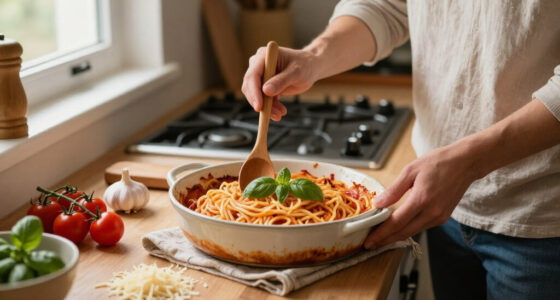
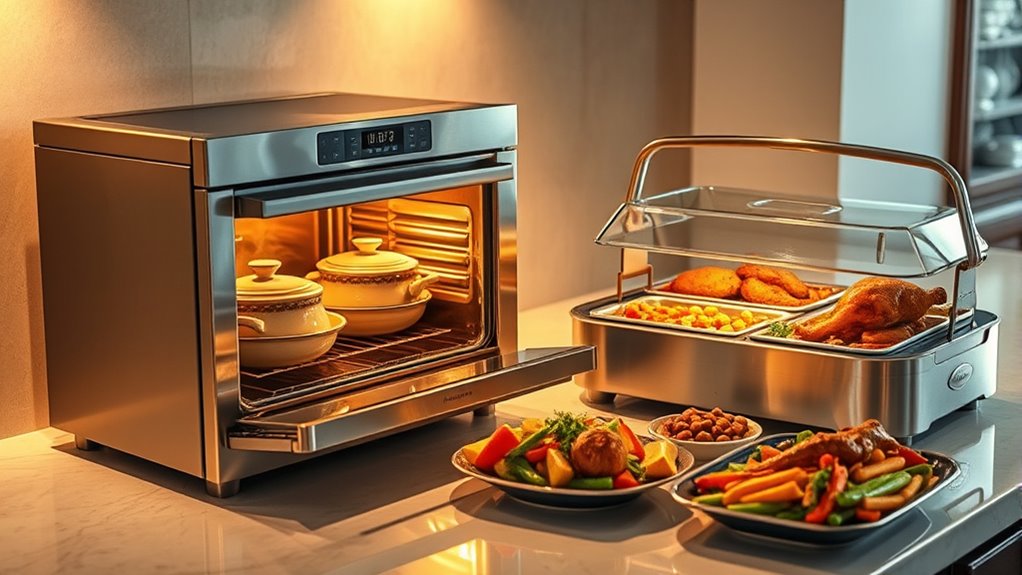
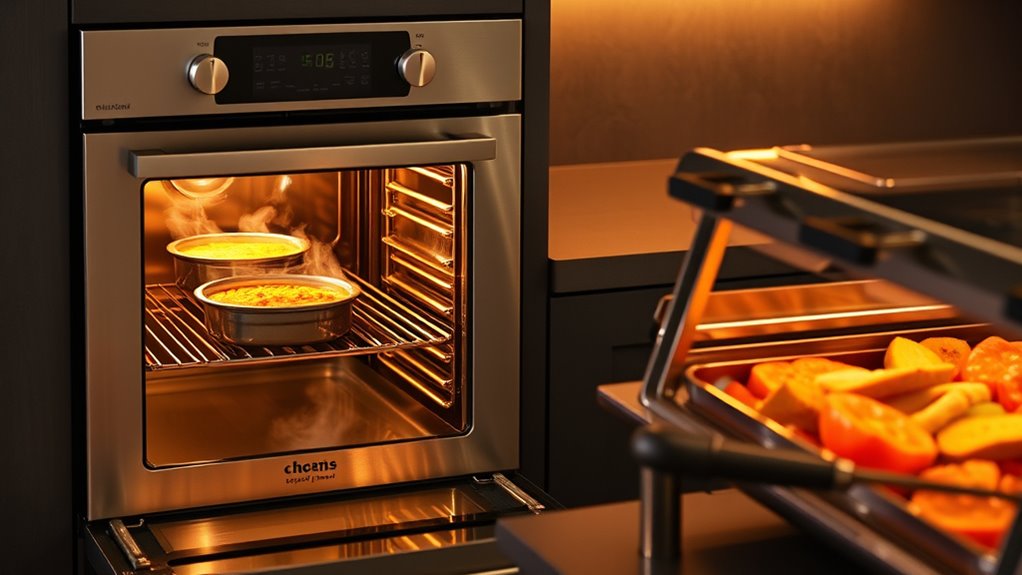
One of the simplest methods is to utilize your oven. Preheat it to a low setting, around 200°F (93°C), and keep your food inside until it’s time to eat. This method works well for casseroles, roasts, and baked dishes. Just be sure to cover them with aluminum foil or a lid to prevent them from drying out. It’s important to monitor the food, though, as leaving it too long might lead to overcooking.
Utilize your oven at a low setting to keep casseroles and roasts warm while preventing them from drying out.
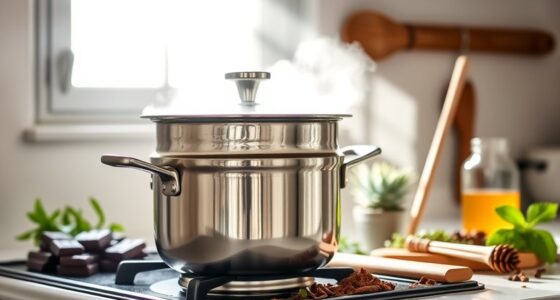
If you’re serving multiple dishes, consider investing in insulated containers. These are perfect for keeping soups, stews, and sauces warm for extended periods. Simply heat up the food, then transfer it to these containers. They’ll trap the heat and help maintain the temperature, so your guests can enjoy everything piping hot.
Another useful tip is plate warming. Before serving, warm your dinner plates in the microwave or oven. This way, when you serve hot food onto warm plates, it helps retain the heat longer. Nobody likes a lukewarm meal, and this small step can significantly enhance the dining experience.
For larger gatherings, food warmers can be a game-changer. These appliances are designed to keep food at a safe serving temperature for extended periods. You can set them up on a buffet table, allowing guests to help themselves while keeping everything warm. Just remember to check the temperatures occasionally to ensure everything’s safe to consume.
Lastly, if you’re short on time, using a slow cooker can also be effective. You can keep food warm without having to worry about it overcooking. Just set it to the warm setting once the food is fully cooked and it’ll stay at the perfect serving temperature until you’re ready. Utilizing temperature control methods can help ensure that your food remains safe and enjoyable for everyone at the table.
As an affiliate, we earn on qualifying purchases.
Frequently Asked Questions
Can I Use Aluminum Foil to Keep Food Warm?
Yes, you can use aluminum foil to keep food warm. Its aluminum foil insulation helps trap heat, enhancing heat retention properties. When you wrap your dishes tightly, it minimizes heat loss, keeping your meal at a warmer temperature for longer. Just remember, while it’s effective for short periods, it’s not a long-term solution. For best results, combine it with other methods if you need to maintain warmth for an extended time.
How Long Can I Keep Food Warm Without Compromising Quality?
You can keep food warm for about 1 to 2 hours without compromising quality. Isn’t it amazing how proper temperature control can make a difference? Just remember to maintain a safe temperature of 140°F (60°C) or higher to guarantee food safety. After that, flavors might start to fade, and textures can change. So, if you want to enjoy the best taste, try to serve it fresh within that timeframe!
What Types of Food Retain Heat Better?
Foods like soups, stews, and casseroles retain heat better due to their thermal insulation properties. The dense ingredients and liquid content help keep the temperature stable for longer. On the other hand, items like bread or rice can lose heat quickly. For ideal heat retention, use heavy cookware or insulated containers. When serving, consider covering dishes with lids or foil to minimize heat loss, ensuring your meal stays warm and enjoyable.
Is It Safe to Keep Food Warm for Several Hours?
Sure, keeping food warm for hours sounds like a culinary dream, but it’s not a safe bet! If you want a bacteria fiesta instead of a feast, go ahead. But seriously, food safety matters. You should maintain temperature control above 140°F to avoid foodborne illness. If it drops below, you might as well invite the germs to dinner. So, keep it warm, but keep it safe! Your guests will thank you.
Can I Use a Slow Cooker to Keep Food Warm?
Yes, you can use a slow cooker to keep food warm! It’s a great option for maintaining temperature without overcooking. Just make certain you use the low setting to avoid drying out your dish. For added slow cooker safety, consider covering the food with aluminum foil to retain moisture and heat effectively. This method keeps your meal delicious while you serve at your convenience, making it a smart choice for gatherings.
insulated food containers for soups
As an affiliate, we earn on qualifying purchases.
As an affiliate, we earn on qualifying purchases.
Conclusion
Keeping food warm before serving is essential for maintaining flavor and texture. Did you know that nearly 60% of people believe food tastes better when it’s served hot? By using your oven, warming trays, or slow cookers, you can guarantee your dishes remain at the perfect temperature. Remember to monitor the heat to avoid overcooking, but with these tips, you’ll impress your guests with delicious, warm meals every time! Enjoy the satisfaction of serving up delightful dishes!
As an affiliate, we earn on qualifying purchases.
As an affiliate, we earn on qualifying purchases.
Halloween Picks
halloween
As an affiliate, we earn on qualifying purchases.