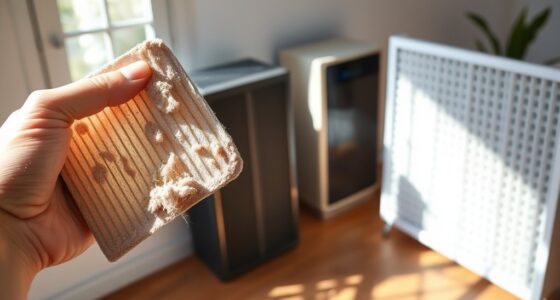
To allergy-proof your home this spring, start by using HEPA air purifiers to filter out allergens and improve air quality. Regularly clean your home by dusting surfaces and vacuuming with a HEPA-filtered vacuum to minimize dust, pollen, and pet dander. Wash your bedding in hot water and consider allergen-proof covers for mattresses and pillows. Keep humidity below 50% with dehumidifiers, making your home less inviting for dust mites. There’s more to learn about creating an allergen-free environment!
Key Takeaways
- Invest in air purifiers with HEPA filters to continuously filter allergens and improve indoor air quality.
- Regularly wash bedding and pillowcases in hot water to eliminate dust mites and reduce allergy triggers.
- Use allergen-proof covers on pillows and mattresses as effective barriers against dust mites.
- Maintain indoor humidity levels below 50% with dehumidifiers to hinder dust mite growth.
- Perform thorough spring cleaning by dusting surfaces and vacuuming to remove accumulated allergens effectively.
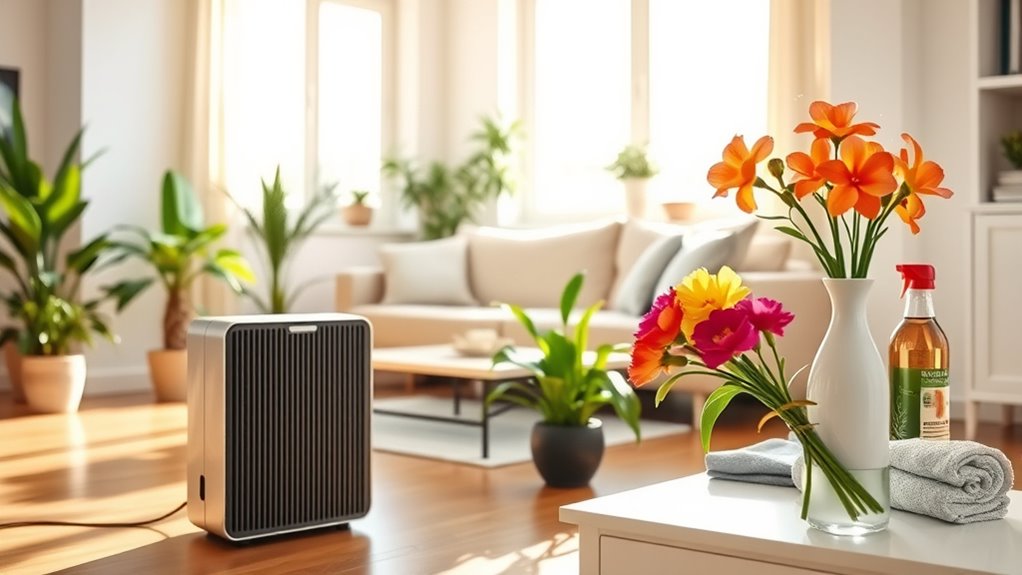
As spring blooms and allergies flare up, how can you guarantee your home remains a safe haven? One effective way is to invest in an air purifier. You might wonder how this small device can make such a difference. Well, air purifiers are designed to filter out allergens and pollutants from the air you breathe. By trapping dust, pollen, and pet dander, they help create a cleaner indoor environment. This is especially vital during spring when outdoor allergens can sneak into your home, exacerbating your allergies.
The benefits of an air purifier go beyond just improving air quality. They can also substantially reduce the presence of dust mites, which thrive in warm and humid conditions. Dust mites are microscopic creatures that feed on dead skin cells and are a common trigger for allergy sufferers. By using an air purifier equipped with a HEPA filter, you’re not only getting rid of airborne allergens but also minimizing dust mite populations in your home. This dual-action can lead to fewer allergy symptoms and a much more comfortable living space.
In addition to using an air purifier, you should also focus on dust mite prevention. Start by washing your bedding and pillowcases regularly in hot water, as this can kill any dust mites lurking in your sheets. Consider using allergen-proof covers on pillows and mattresses, which provide a physical barrier against these pesky critters. Vacuuming your floors and upholstery frequently with a vacuum equipped with a HEPA filter can also help reduce dust mites and other allergens, ensuring your home stays allergen-free.
Don’t forget about your home’s humidity levels, either. Dust mites thrive in humid environments, so using a dehumidifier can help keep moisture levels in check, making it less hospitable for these unwelcome guests. Aim for a humidity level below 50% to keep dust mites at bay. Additionally, maintaining optimal humidity levels can significantly enhance indoor air quality, complementing the effects of your air purifier.
Finally, while spring cleaning may feel intimidating, it’s an essential part of allergy-proofing your home. Regularly dusting surfaces and cleaning floors will help eliminate allergens before they have a chance to accumulate. With these strategies in place, you can transform your home into a true sanctuary, free from the triggers that make spring so challenging for allergy sufferers. Embrace the season with confidence, knowing you’ve taken the necessary steps to protect yourself and your loved ones.
Frequently Asked Questions
How Often Should I Replace My Air Filters?
You should replace your air filters every 1 to 3 months, depending on your filter type and home environment. Regular filter maintenance is vital for allergy prevention, as dirty filters can circulate dust, pollen, and other allergens. If you have pets or live in a high-pollen area, consider changing them more frequently. Keeping your air filters clean can greatly improve your indoor air quality and help reduce allergy symptoms.
Can I Use Essential Oils to Reduce Allergens?
Yes, you can use essential oils to reduce allergens. Essential oil diffusers can help disperse oils like eucalyptus or tea tree, which may alleviate allergy symptoms. These natural allergy remedies can create a more pleasant atmosphere while potentially minimizing irritants. Just remember to choose high-quality oils and consult with a healthcare professional if you have respiratory issues. Incorporating these oils into your routine can complement other allergy-proofing efforts at home.
What Types of Air Filters Are Most Effective?
The early bird catches the worm, so don’t wait to improve your air quality! HEPA filters are your best bet for capturing allergens like dust and pollen. They trap particles effectively, providing cleaner air. Consider adding activated charcoal filters too; they’re great for absorbing odors and chemicals. Together, they’ll help create a healthier environment, making it easier for you to breathe and enjoy your space without the sneezes.
Are There Specific Cleaning Products to Avoid for Allergies?
Yes, you should definitely avoid cleaning products that contain fragrance chemicals, as they can exacerbate allergies. Instead, opt for unscented or hypoallergenic options. Also, be cautious with products that can stir up pet dander, like certain dusting sprays or fabric fresheners. Always check labels and choose items specifically designed for allergy sufferers to keep your home more comfortable and reduce potential triggers. Your health deserves that extra attention!
How Can I Manage Outdoor Allergens While Indoors?
You can manage outdoor allergens by creating pollen barriers and controlling outdoor ventilation. Picture yourself sealing windows tightly during high pollen days, blocking those tiny intruders. Use air purifiers to filter out allergens and keep your indoor air fresh. When you do open windows, do it during low pollen times, like after a rain. Regularly clean surfaces to remove any settled pollen, ensuring your home feels like a safe haven from the outside world.
Conclusion
By taking these steps to allergy-proof your home this spring, you’re not just cleaning up; you’re creating a sanctuary where you can breathe easy. Remember, a little effort goes a long way in keeping those pesky allergens at bay. So roll up your sleeves, change those air filters, and make cleaning a habit. With these simple changes, you’ll be well on your way to enjoying a fresh and comfortable space—no more sneezing like it’s a springtime tradition!