Wall-mount range hoods are designed to effectively vent smoke, grease, and odors from heavy cooking. To work well, install the hood 24 to 30 inches above your cooktop and securely support it to wall studs or anchors. Use a straight, short duct route for ideal airflow, preferably venting outside. Proper electrical wiring and sealing all joints are also essential for safety and efficiency. Continue exploring to uncover more tips for making your ventilation system work best in heavy cooking homes.

Get kitchen gear delivered free with Prime
- Fast, free delivery on millions of items
- Prime Video, Amazon Music and more included
- Member-only deals all year
Key Takeaways
- Proper installation height (24-30 inches above the cooktop) ensures safety and effective ventilation during heavy cooking.
- Ducted systems exhausting outside provide optimal removal of smoke and odors, especially for high-heat cooking.
- Use straight, short, rigid metal ducts with sealed joints to maximize airflow and ventilation efficiency.
- Ensure electrical wiring and wall support meet safety standards to handle the hood’s weight and power requirements.
- Correct installation and ducting design improve overall performance, safety, and air quality in heavy cooking environments.

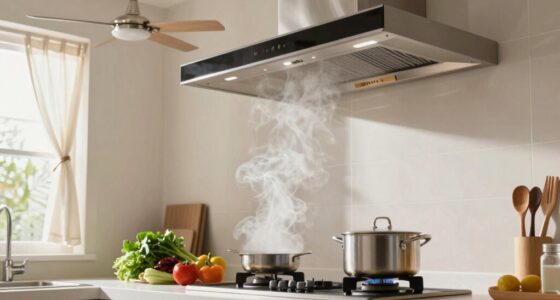
First, you need to take into account the height at which you install the hood. Generally, it should be mounted 24 to 30 inches above your cooktop surface. This height provides enough clearance for safety and ease of use, while also allowing the hood to effectively capture airborne particles. When installing, make sure your wall can support the weight of the range hood, especially if it’s a heavy, high-capacity model. Secure the hood to wall studs or use appropriate anchors to prevent any wobbling or risk of falling. Following the manufacturer’s installation guidelines carefully ensures your unit functions correctly and safely.
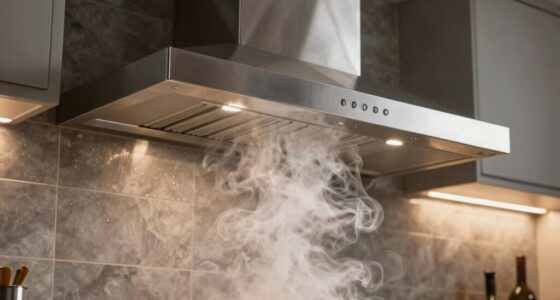
Ventilation efficiency depends heavily on proper ducting. For heavy cooking homes, a ducted system that exhausts air outside is usually best. When installing ductwork, keep the route as straight and short as possible — bends and long ducts can reduce airflow, diminishing the hood’s ability to clear smoke and odors effectively. Use smooth, rigid metal ducts rather than flexible ones to maximize airflow. If ducting outside isn’t feasible, consider a high-quality recirculating kit with a reliable carbon filter, though these tend to be less effective for heavy cooking. Proper ducting design is crucial to maintain optimal airflow and overall ventilation performance. Additionally, understanding airflow efficiency can help you optimize your setup for heavy cooking scenarios. Ensuring that your ventilation system is correctly configured can make a significant difference in maintaining air quality during intense cooking sessions.
Additionally, make sure the vent opening is appropriately sized. The duct diameter should match the hood’s exhaust outlet, usually 6 inches in diameter. Sealing all joints tightly prevents leaks that could compromise ventilation efficiency. Also, verify your home’s electrical wiring and power supply meet the hood’s requirements before installation. Proper grounding and circuit capacity prevent electrical issues. Ensuring proper installation techniques are followed can significantly improve the overall performance of your range hood in heavy cooking environments.
Products Worth Considering

Le Creuset Enameled Cast Iron Round Bread Oven, 9.5-Inch, Cerise

Ninja Kitchen System Pro, 1500W, 72oz Pitcher, 8-Cup, Black, BL770

Cuisinart 14-Cup Food Processor with 720-Watt Motor, Stainless Steel (DFP-14BCNY)
As an affiliate, we earn on qualifying purchases.
Frequently Asked Questions
How Loud Are Wall-Mount Range Hoods During Operation?
Wall-mount range hoods typically produce noise levels between 60 to 70 decibels during operation, which is comparable to a normal conversation or background noise. If you choose a high-performance model, it might reach up to 75 decibels. Most models have adjustable fan speeds, so you can balance noise levels with effective ventilation. Keep in mind, quieter units often come at a higher price but provide a more peaceful cooking environment.
Are Wall-Mount Range Hoods Suitable for Island Kitchens?
Think of an island kitchen as a stage needing a spotlight; wall-mount range hoods can work, but they’re not the best fit. You might struggle with installation challenges, as they’re designed for walls, not floating spaces. If you want decorative accents and a seamless look, consider a custom or ceiling-mounted hood instead. Wall-mounts can feel out of place, like a painting hung in the wrong spot.
What Maintenance Is Required for Heavy-Duty Range Hoods?
You should regularly maintain your heavy-duty range hood by replacing filters as needed—typically every few months or more often if you cook heavily. Additionally, schedule duct cleaning annually to prevent grease buildup and guarantee peak airflow. Keep the exterior surfaces clean with a damp cloth, and check for any loose parts. Proper maintenance extends your hood’s lifespan and keeps your kitchen air fresh and safe.
Can Wall-Mount Hoods Be Customized in Size or Finish?
Yes, wall-mount range hoods can be customized in size and finish options to match your kitchen’s design. You can choose a custom size to fit your space perfectly, ensuring ideal coverage and ventilation. Finish options vary from stainless steel to painted or textured surfaces, allowing you to select a style that complements your decor. Customization helps create a seamless look and enhances your kitchen’s overall aesthetic.
How Energy-Efficient Are These Range Hoods?
These range hoods are surprisingly energy-efficient, saving you from power-hungry appliances that could drain your wallet. Their energy consumption is optimized to keep power usage low without sacrificing performance. Modern models often feature energy-saving modes and efficient fans, making them a reliable choice for heavy cooking homes. You’ll enjoy clean air without skyrocketing your electricity bills, proving that good ventilation doesn’t have to be an energy guzzler.
Conclusion
With wall-mount range hoods, you’ll enjoy cleaner, clearer cooking corners. They seamlessly suppress smoke, steam, and strong scents, creating a fresh, fragrant kitchen. By balancing beauty and bulk, these hoods help home chefs handle heavy, hearty meals with hassle-free ease. So, select a sturdy, stylish wall-mount hood, and enjoy an inviting, odor-free oasis where cooking becomes a clean, comforting, and confident craft.