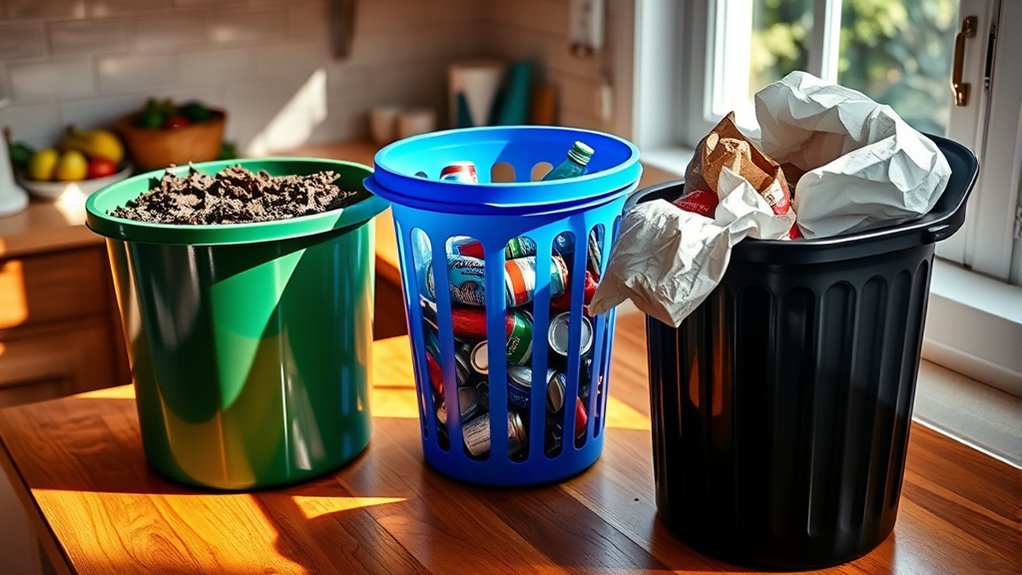

To manage kitchen waste, start by composting food scraps like vegetable peels and fruit cores; it reduces landfill waste and enriches your garden soil. Next, recycle plastic packaging by rinsing containers and following local guidelines. If you can’t compost or recycle, trash what remains responsibly. Small changes in how you handle waste can make a big difference. Stick around for more tips on enhancing your waste management practices and living sustainably.
Key Takeaways
- Compost food scraps like vegetable peels and fruit cores to enrich soil and reduce landfill waste.
- Recycle plastic packaging by rinsing containers and following local recycling guidelines to prevent environmental pollution.
- Avoid adding meat, dairy, or oily foods to compost to prevent pests and odors.
- Use reusable bags and containers to minimize reliance on plastic packaging in the kitchen.
- Educate yourself and others on proper waste disposal options to promote a sustainable kitchen environment.

When you take a moment to think about the amount of waste generated in your kitchen, it’s clear that managing it effectively is essential for both your household and the environment. One of the primary contributors to this waste is food scraps. Whether it’s vegetable peels, fruit cores, or leftover meals, these scraps can add up quickly, contributing to the waste problem. Instead of tossing them in the trash, think about composting. Composting not only reduces the amount of waste that ends up in landfills but also provides nutrient-rich soil for gardening. If you’re new to composting, start small. Set up a compost bin in your backyard or use a composting container in your kitchen. You can throw in your food scraps, coffee grounds, and even eggshells. However, avoid adding meat, dairy, or oily foods, as these can attract pests and create odors.
Managing kitchen waste effectively is essential; composting food scraps can reduce landfill waste and enrich your garden soil.
While food scraps are a significant part of kitchen waste, plastic packaging is another major culprit. You might not realize how much plastic you use until you start paying attention. From the packaging that holds your groceries to the containers that store leftovers, it adds up. To manage this effectively, start by reducing your reliance on plastic. Opt for reusable bags when shopping, and choose products with minimal packaging. When you do have plastic waste, make sure you recycle it properly. Check local guidelines to see what types of plastic your recycling facility accepts. Rinse out containers before recycling them to ensure they’re clean and free of food residues.
You can also contemplate alternatives to traditional plastic packaging. Many stores offer bulk items that allow you to bring your containers, minimizing plastic usage. Additionally, look for products packaged in glass or cardboard, which are often easier to recycle. By making these conscious choices, you’re not only reducing waste but also setting a positive example for your household.
Ultimately, managing kitchen waste effectively comes down to three options: composting, recycling, or trashing. It’s about being mindful of what you have and making educated decisions about waste disposal. By composting food scraps and recycling plastic packaging, you’re taking significant steps toward a more sustainable kitchen. Each small change you make can lead to a bigger impact on the environment, and it’s a rewarding journey worth setting out on. Additionally, implementing proper recycling techniques can further enhance your waste management efforts and contribute to a healthier planet.
Frequently Asked Questions
Can I Compost Meat and Dairy Products?
You can’t compost meat and dairy products in traditional composting systems. Meat composting can attract pests and create odors, while dairy disposal can lead to similar issues. If you’re keen on composting, consider using a specialized system designed for these materials or check if your local waste management offers organic waste collection. it is crucial to manage these items properly to maintain a healthy compost environment and keep your kitchen waste under control.
How Can I Reduce Kitchen Waste Effectively?
To reduce kitchen waste effectively, start by planning your meals to avoid overbuying. Use leftovers creatively in new dishes, and freeze extras to extend their life. Implement food waste reduction techniques, like proper storage to keep items fresh longer. Keep a list of what you have to minimize spoilage. Ultimately, practice kitchen cleanup tips, like cleaning as you cook, so you waste less time and materials. You’ll see a significant difference in no time!
What Are the Benefits of Composting?
Composting’s like turning kitchen scraps into gold for your garden! The benefits of composting are numerous; it enriches soil, boosts plant growth, and reduces the need for chemical fertilizers. By composting, you’re also cutting down on landfill waste, which notably lessens your environmental impact. You’re not just reducing waste; you’re nurturing the earth and creating a sustainable cycle. Plus, it’s a simple way to contribute positively to our planet’s health!
How Often Should I Empty My Compost Bin?
You should empty your compost bin every few weeks, depending on how quickly it fills up. Keeping a consistent composting schedule helps maintain good airflow and speeds up decomposition. If you notice a strong odor or a lot of moisture, it’s a sign to empty it sooner. Regular maintenance guarantees your compost stays healthy and effective, turning kitchen scraps into nutrient-rich soil for your garden. Don’t forget to mix it up occasionally!
Are There Specific Recycling Guidelines for Kitchen Items?
Think of recycling like a well-choreographed dance; you’ll need to know the steps to get it right. For kitchen items, you’ve gotta follow specific recycling regulations that vary by location. Check your local guidelines for what’s accepted—often, plastics, metals, and certain glass items are welcome, while others aren’t. Keep your kitchen waste guidelines in mind, ensuring everything’s clean and sorted for the best chance at being recycled successfully.
Conclusion
In the grand tapestry of life, every small action counts—just like those tiny seeds you plant in your compost. By choosing to compost, recycle, or properly trash your kitchen waste, you’re not just managing refuse; you’re nurturing a healthier planet. Remember, even the mightiest oak grows from a humble acorn. So, let your kitchen waste journey be a demonstration to your commitment to a sustainable future, where every choice you make helps cultivate a better world.