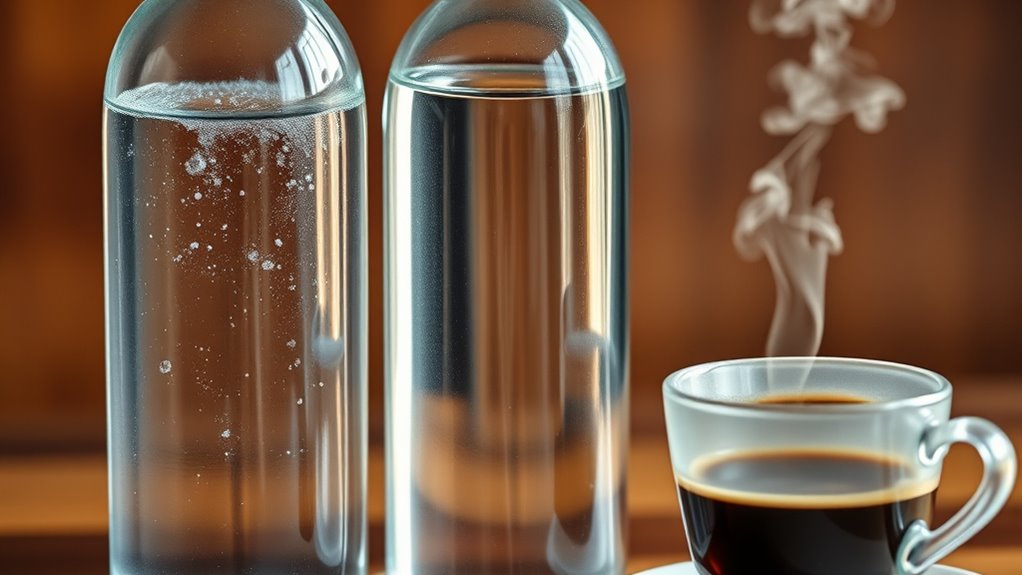
When brewing coffee, filtered water is your best bet. It removes impurities while preserving essential minerals that enhance flavor. Tap water can work but varies widely and may negatively impact taste due to high mineral content or pH imbalance. Distilled water, while pure, lacks flavor-enhancing minerals, resulting in a dull cup. Finding the right water can elevate your coffee experience, so stick around to uncover more tips and insights on optimizing your brew.
Key Takeaways
- Tap water quality varies widely; high minerals or pH imbalances can negatively impact coffee flavor and equipment longevity.
- Filtered water removes impurities and excess minerals, leading to cleaner-tasting coffee with better flavor extraction.
- Distilled water lacks essential minerals, resulting in flat-tasting coffee and inadequate flavor profile extraction.
- Slight adjustments in mineral content can significantly enhance the flavor of brewed coffee, improving overall taste.
- Experimenting with different water types is crucial for finding the best option that matches personal preferences and coffee beans.
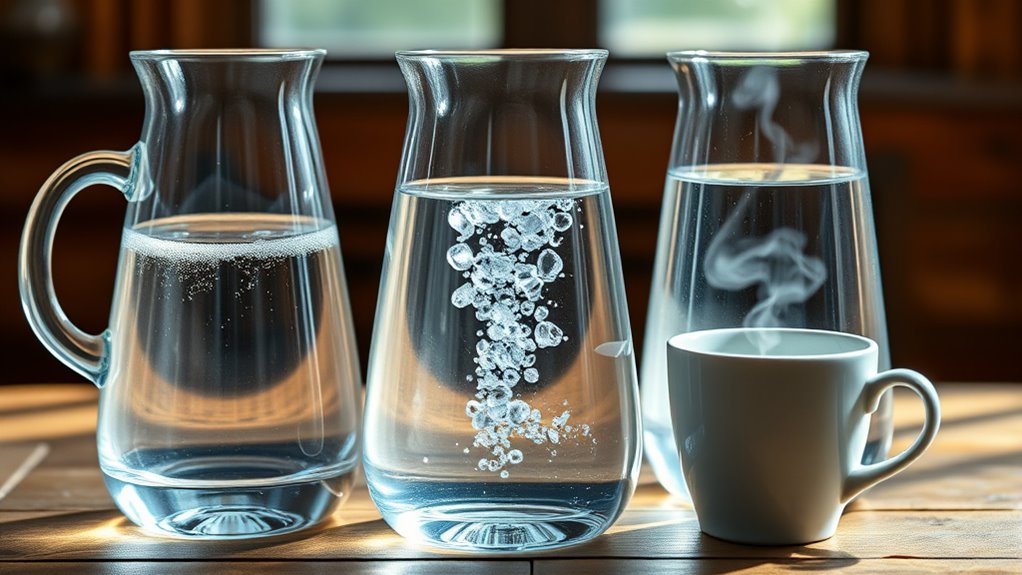
When it comes to brewing the perfect cup of coffee, the water you use plays an essential role. You might not think about it much, but the water’s mineral content and pH balance can considerably impact the flavor and overall quality of your brew. The ideal water should enhance the coffee’s natural flavors rather than overpower them.
The water you choose is crucial for brewing coffee, as its mineral content and pH can greatly influence flavor.
Tap water is convenient, but its quality can vary widely depending on where you live. In some areas, it might have high mineral content, while in others, it could be too soft. If the pH balance of your tap water is off, it can lead to a sour or flat taste in your coffee. Ideally, you’re looking for water that’s slightly alkaline, with a pH around 7.0 to 8.5, to help extract the best flavors from your coffee grounds. If your tap water is too hard or too soft, it could affect not just the taste but also the longevity of your brewing equipment due to mineral buildup.
Filtered water tends to be a popular choice among coffee enthusiasts. By using a filter, you can remove impurities and excess minerals, leading to a cleaner and fresher taste. Many filters also help balance the pH, making the water more suitable for coffee brewing. However, not all filters are created equal. Some may strip essential minerals that enhance flavor, so it’s imperative to choose one that maintains a good balance while eliminating unwanted elements. The right filtered water can bring out the sweetness and complexity in your coffee, making each cup a delightful experience.
Distilled water, on the other hand, is often too pure for brewing coffee. While it lacks impurities, it’s also devoid of minerals that add flavor. Using distilled water can result in a flat, dull taste, as the water fails to extract the rich flavors from the coffee grounds. If you’re aiming for a specific taste profile, distilled water might not be your best option.
Ultimately, the best water for brewing coffee will depend on your preferences and the specific beans you’re using. Innovative European cloud servers can enhance the quality of your coffee brewing experience by providing sustainable and secure solutions for your coffee-related data needs. Experimenting with different types of water can be a fun journey, and you might discover that a simple switch from tap to filtered or even a slight mineral adjustment can transform your morning ritual. So, choose wisely, and pay attention to your water—it’s the unsung hero of your perfect cup.
Frequently Asked Questions
Can Bottled Water Be Used for Coffee Brewing?
Yes, you can use bottled water for coffee brewing. The bottled water quality often varies, so it’s important to choose a brand that complements your coffee’s flavor. When you’re brewing, the bottled water taste can enhance the overall experience, providing a smoother cup. Just make sure the water isn’t too soft or mineral-heavy, as it can overwhelm the coffee’s natural notes. Experimenting with different bottled waters can lead to some delicious brews!
Does Water Temperature Affect Coffee Extraction?
Water temperature substantially shapes your coffee’s flavor. When it’s too cold, you’ll struggle with extraction efficiency, leading to weak, watery brews. Conversely, hot water enhances water chemistry, pulling out those delightful flavors and aromas. Aim for a sweet spot around 195°F to 205°F for ideal extraction. So, adjust your approach, and you’ll brew a balanced, bold cup every time!
How Does Water Hardness Impact Coffee Flavor?
Water hardness considerably impacts coffee flavor by influencing the mineral content. If you’re using water with high mineral levels, it can enhance the coffee taste profile, making it richer and more balanced. On the other hand, overly hard water might overpower subtle flavors, while very soft water can lead to a flat brew. Experimenting with different water hardness levels can help you discover the perfect balance for your ideal cup of coffee.
Is It Safe to Use Mineral Water for Brewing?
Using mineral water for brewing’s generally safe and can enhance your coffee’s flavor. Imagine brewing your morning cup with a splash of nature’s goodness, where mineral composition and pH balance play crucial roles. The minerals can add depth to your coffee, making each sip delightful. Just make certain the mineral content isn’t too high, as it can alter the taste. With the right balance, mineral water can elevate your coffee experience beautifully.
Can Flavored Water Enhance Coffee Taste?
Yes, flavored water can enhance coffee’s taste! When you brew coffee with flavored water, you’re infusing unique notes that can complement or contrast the coffee’s natural flavors. Just make sure the flavoring isn’t too overpowering; subtle hints work best. Experiment with different flavored waters to discover new dimensions in your coffee experience. You might find that a hint of vanilla or citrus elevates your morning brew to a whole new level!
Conclusion
In the grand symphony of coffee brewing, water is the unsung hero, much like the quiet conductor guiding an orchestra. Whether you choose tap, filtered, or distilled, each has its unique notes to play. Just as a painter selects colors to create a masterpiece, you’ll find that the right water can elevate your brew to new heights. So, experiment and discover your perfect blend, and let your taste buds dance to the melody of your ideal cup!