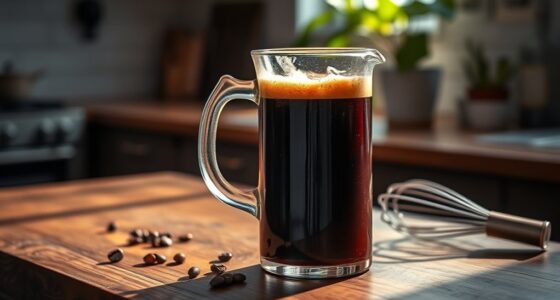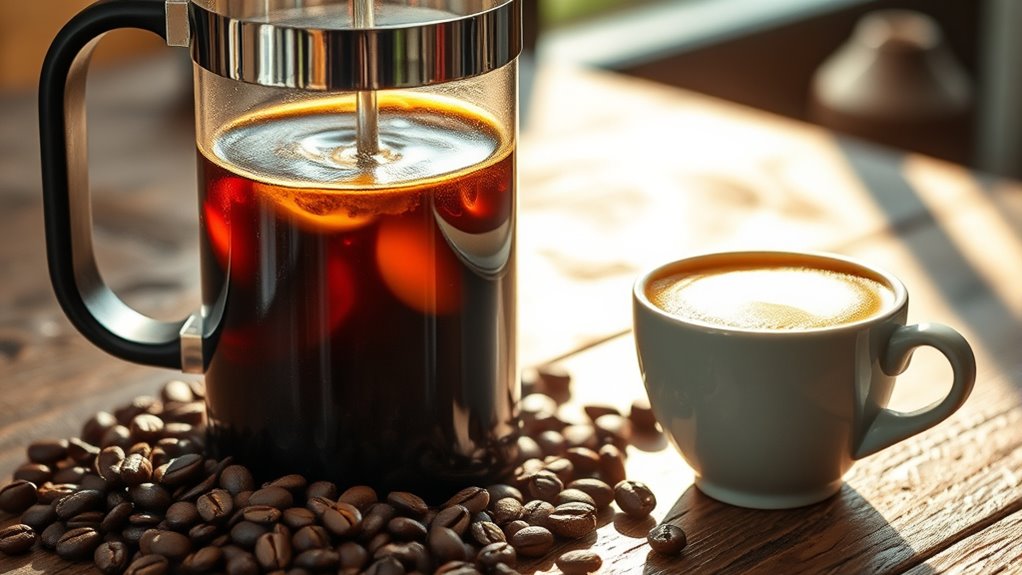

To brew strong coffee without bitterness, start by choosing high-quality beans from reliable origins. Use a medium to fine grind, as coarse grinds can weaken flavor while fine grinds might lead to over-extraction. Maintain a brewing temperature of 195°F to 205°F to ensure ideal extraction. Stick to a coffee-to-water ratio of 1:15, and monitor your brewing time, aiming for about four minutes. With these tips, you can enjoy a robust cup without harshness. There’s more to discover!

Get kitchen gear delivered free — and shop member deals
- Fast, free delivery on millions of items
- Access to Prime Big Deal Days deals on October 6–7
- Prime Video, Amazon Music and more included
Key Takeaways
- Choose high-quality coffee beans from regions like South America for a full-bodied flavor without bitterness.
- Use a medium to fine grind size to balance strength and prevent over-extraction.
- Brew at the ideal temperature range of 195°F to 205°F to avoid undesirable flavors.
- Maintain a coffee-to-water ratio of 1:15, adjusting for strength without compromising taste.
- Steep for about 4 minutes to optimize flavor extraction without risking bitterness.
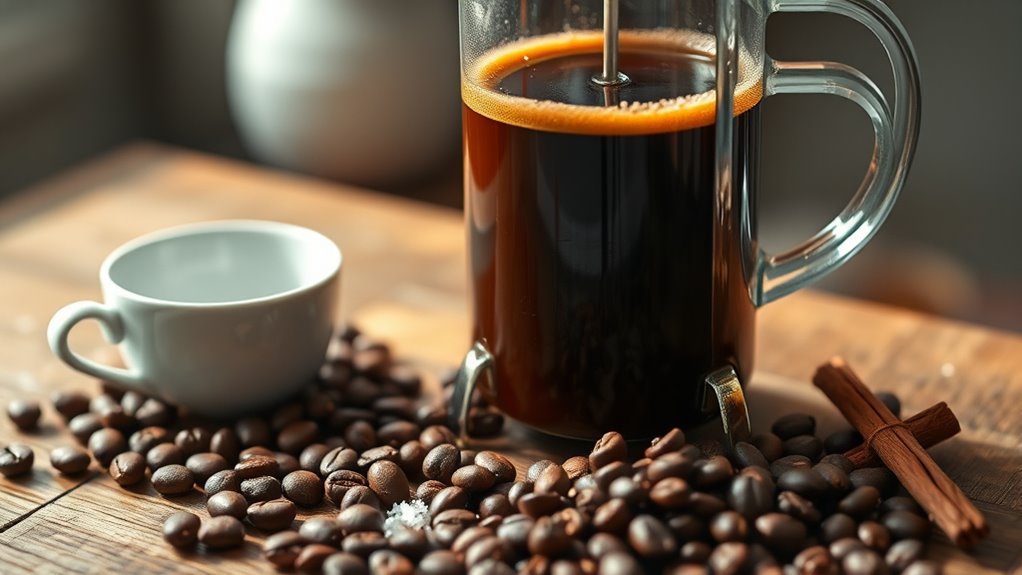
Have you ever wondered how to brew a cup of coffee that truly packs a punch? If you’re searching for that perfect balance between strength and flavor without the bitterness, you’ve come to the right place. The secret lies in understanding the coffee bean origin and mastering the brewing temperature. Let’s plunge into the essentials of brewing strong coffee that doesn’t taste harsh.
First, consider the coffee bean origin. Different regions produce beans with distinct flavor profiles, and choosing the right beans can make a world of difference. For a bold and robust cup, look for beans from South America or Africa. Colombian beans, for example, often deliver a full-bodied flavor with a hint of sweetness, while Ethiopian beans provide a fruity and floral note. When you pick high-quality beans with a strong origin, you set the stage for a remarkable cup of coffee.
Next, pay attention to the grind size. A coarser grind may result in a weaker brew, while a fine grind can lead to over-extraction and bitterness. Aim for a medium to fine grind to strike the balance between strength and smoothness. Experiment with different grind sizes to find the perfect fit for your taste buds.
Now, let’s talk about brewing temperature. The ideal temperature for coffee brewing is between 195°F and 205°F. If your water’s too hot, it can extract undesirable flavors, making your coffee taste bitter. Conversely, if it’s too cool, you won’t get the full flavor potential. Use a thermometer, or if you don’t have one, let the water sit for about 30 seconds after boiling before pouring it over your grounds.
When measuring your coffee, aim for a coffee-to-water ratio of 1:15. This means for every gram of coffee, use about 15 grams of water. Adjust this ratio based on your taste preferences. If you want a stronger cup, try increasing the amount of coffee slightly.
Finally, don’t forget about the brewing time. For methods like pour-over or French press, steeping for about four minutes usually yields the best results. If you brew for too long, you risk bitterness; too short, and your coffee may taste weak.
best coffee beans for strong flavor
As an affiliate, we earn on qualifying purchases.
As an affiliate, we earn on qualifying purchases.
Frequently Asked Questions
What Type of Coffee Beans Is Best for Strong Brews?
For strong brews, you should focus on coffee bean selection and roast level selection. Opt for robusta beans, as they’re higher in caffeine and often yield a bolder flavor. Dark roasts, like French or Italian, enhance the richness while minimizing acidity. If you prefer a lighter roast, try a medium blend with a strong flavor profile. Experimenting with different beans and roast levels will help you find the perfect balance for your taste.
How Does Water Temperature Affect Coffee Strength?
Like a chef controlling the heat, you need to master water temperature for brewing coffee. If it’s too hot, you risk extracting bitter compounds; if it’s too cool, you’ll miss out on rich flavors. Ideally, brew between 195°F and 205°F. Water chemistry also plays a role; minerals can enhance extraction. By balancing these elements, you can craft a strong cup without the bitterness that often ruins the experience.
Can I Use a Cold Brew Method for Strong Coffee?
Yes, you can use a cold brew method for strong coffee. Cold brew typically involves steeping coarsely ground coffee in cold water for an extended brewing duration, usually 12 to 24 hours. This process extracts flavors without the bitterness often associated with hot brewing. If you want a stronger taste, just increase the coffee-to-water ratio. Experiment with different brewing durations to find the strength that suits your palate best!
What Equipment Is Ideal for Brewing Strong Coffee?
For brewing strong coffee, you’ll want a good quality coffee grinder and a reliable brewing method like a French press or AeroPress. A consistent and coarse coffee grind is vital, as it allows for better extraction without bitterness. Adjust your brew time; around four minutes for a French press or about 30 seconds with an AeroPress works well. Using fresh beans and the right equipment guarantees you get that bold flavor you’re after!
How Can I Reduce Acidity in Strong Coffee?
Ever wondered how to enjoy a strong cup without that sharp bite? To reduce acidity in your coffee, focus on flavor balancing. Try using low-acid beans, like a dark roast, or brewing methods like cold brew. Adding a pinch of salt can also help with acidity control, softening those bitter notes. Experimenting with your water temperature and grind size can further enhance your coffee’s smoothness. Enjoy that robust flavor without the unwanted acidity!
coffee grinder medium to fine grind
As an affiliate, we earn on qualifying purchases.
As an affiliate, we earn on qualifying purchases.
Conclusion
In the dance of flavors, brewing strong coffee doesn’t have to mean embracing bitterness. By choosing the right beans, adjusting your grind, and mastering the water temperature, you can craft a bold cup that sings instead of screams. Embrace the artistry of balance; let rich notes of chocolate and caramel entwine without the harshness. With these tips in hand, you’ll brew a potion that awakens the senses, inviting each sip to be a warm embrace rather than a bitter farewell.
As an affiliate, we earn on qualifying purchases.
pour-over coffee maker with temperature control
As an affiliate, we earn on qualifying purchases.
As an affiliate, we earn on qualifying purchases.
Fall Picks
fall essentials
As an affiliate, we earn on qualifying purchases.