
To descale your Keurig coffee maker, mix the descaling solution with water as per the instructions. Fill the reservoir with this mixture and place a large container under the brew head. Run multiple brew cycles without a pod until the reservoir is empty. Then, refill with fresh water and run several rinse cycles to remove any remaining solution. Regular descaling keeps your machine running smoothly and ensures delicious coffee. There’s more to learn about maintaining your coffee maker!
Key Takeaways
- Descale your Keurig every 3 to 6 months with hard water, or annually if using filtered water, to prevent mineral buildup.
- Use a descaling solution designed for Keurig machines and follow the mixing instructions carefully.
- Empty the water reservoir before filling it with the descaling solution mixture and place a large container under the brew head.
- Run multiple brew cycles without a pod until the reservoir is empty, then refill with clean water and run several rinse cycles.
- Regular descaling combined with water filtration enhances machine performance and extends its lifespan.

If you want to keep your Keurig coffee maker brewing delicious cups of coffee, regular descaling is vital. Over time, mineral buildup can affect the performance of your machine, leading to slower brewing times and potentially impacting the flavor of your coffee. To maintain your coffee maker’s efficiency, you should establish a descaling frequency that suits your water quality and usage. If you have hard water, consider descaling every three to six months. If you use filtered water, you might only need to descale once a year.
Regular descaling is essential for your Keurig to ensure great-tasting coffee and optimal performance.
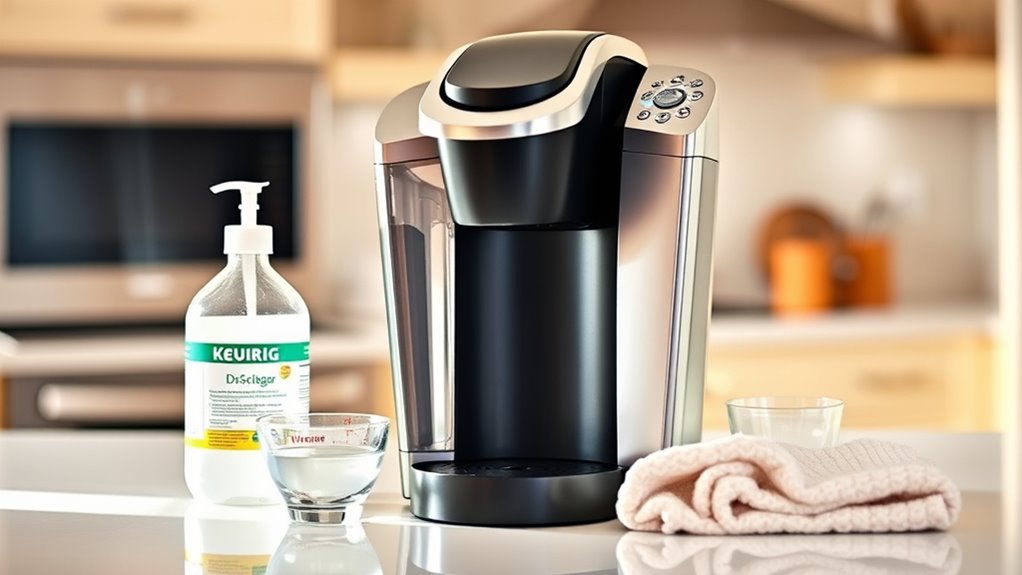
To start the descaling process, gather your materials: you’ll need a descaling solution, preferably one specifically designed for Keurig machines, and a large container to catch the water. First, empty the water reservoir and remove any pods from the machine. Next, mix the descaling solution with water according to the instructions on the product. Pour the mixture into the reservoir and place your container under the brew head. It’s important to follow the instructions carefully to guarantee effective descaling.
Now, run the machine without a pod, selecting the largest cup size. You’ll want to repeat this process until the reservoir is empty. This helps the descaling solution circulate through the internal components, breaking down any mineral buildup. Once the solution has run through, it’s time to rinse the machine. Fill the reservoir with fresh water and run multiple brew cycles, again without a pod, to flush out any remaining solution. This step is vital, as it guarantees you won’t taste any lingering descaling solution in your next cup of coffee.
Incorporating water filtration can further extend the intervals between descaling. Using a water filter compatible with your Keurig can greatly reduce the mineral content in your water, preventing buildup and improving your coffee’s taste. Make sure to replace the filter according to the manufacturer’s recommendations to keep perfect filtration levels. By paying attention to both descaling frequency and water quality, you can keep your Keurig operating smoothly. Additionally, maintaining kidney health through proper hydration is important, as it can also influence your overall well-being while enjoying coffee.
Regular maintenance might seem like a chore, but it pays off with every satisfying sip of coffee. By committing to a consistent descaling routine and ensuring proper water filtration, you’ll not only prolong your machine’s life but also enhance your overall coffee experience. So go ahead and brew that perfect cup, knowing you’ve taken the right steps to keep your Keurig in top shape!
Frequently Asked Questions
How Often Should I Descale My Keurig Coffee Maker?
You should descale your Keurig coffee maker every three to six months, depending on your water quality and usage. Stick to a maintenance schedule that fits your needs—if you notice slower brewing or off-tasting coffee, it might be time to descale sooner. Keeping an eye on your machine’s performance can help determine the best descaling frequency for you, ensuring your coffee remains delicious and your machine runs smoothly.
Can I Use Vinegar Instead of Descaling Solution?
Using vinegar instead of descaling solution is like using a butter knife to cut through steak; it might work, but it’s not the most suitable choice. While vinegar can help, it’s not as effective as commercial descalers and may leave a lingering taste. For descaling safety, stick to products designed for your machine. If you’re looking for vinegar alternatives, consider citric acid or a specific descaling solution for ideal results.
What Happens if I Don’T Descale My Keurig?
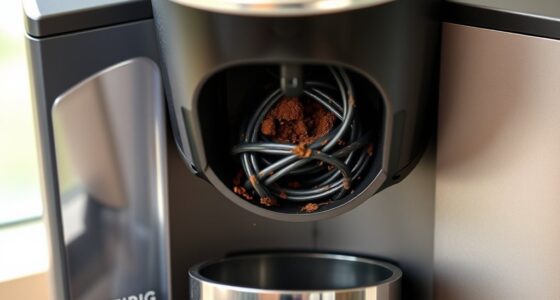
If you don’t descale your Keurig, you’ll likely face calcium buildup that can lead to machine malfunction. This buildup clogs the internal components, affecting water flow and brewing efficiency. Your coffee won’t taste as good, and the machine may even stop working altogether. Regular descaling keeps your brewer running smoothly, ensuring you enjoy perfect coffee every time. Don’t let neglect ruin your mornings; make descaling a routine!
Is Descaling Safe for All Keurig Models?
Yes, descaling is safe for all Keurig models, but you should verify your specific model’s guidelines for any particular recommendations. Regular descaling helps maintain performance and extends the lifespan of your machine. It’s best to descale every three to six months, depending on your water quality and usage frequency. Keeping up with this maintenance ensures your coffee stays fresh and your brewer runs smoothly, regardless of the model you own.
How Can I Tell if My Keurig Needs Descaling?
You’ll know your Keurig needs descaling when you spot those telltale signs. Imagine your once-vibrant coffee now tasting dull, or the machine gurgling like an old engine. Keep an eye out for descaling indicators, such as a flashing light or slower brewing times. If your coffee takes longer to brew or the water flow seems sluggish, it’s time for some Keurig maintenance. Don’t wait too long; give it the care it deserves!
Conclusion
In conclusion, descaling your Keurig is as easy as pie and keeps your coffee flowing smoothly. By following these simple steps, you’re not just maintaining your machine; you’re ensuring every cup is a burst of flavor. Remember, a little upkeep goes a long way in brewing happiness. So, grab that descaling solution and give your coffee maker the love it deserves—because a clean machine means a happy morning, one sip at a time!