
Home air quality monitors are a smart investment for your health. They help you identify indoor pollutants like VOCs and particulate matter that can cause allergies and respiratory issues. With real-time feedback, these devices enable you to take immediate action to improve your air quality. Using them alongside air purifiers boosts their effectiveness, creating a cleaner home environment. Discover how you can enhance your well-being and protect your loved ones with the right air quality solutions.
Key Takeaways
- Home air quality monitors help identify harmful pollutants and allergens, ensuring a healthier living environment.
- They provide real-time feedback on air quality, prompting immediate action when levels drop.
- Using monitors alongside air purifiers enhances air quality by targeting specific pollutants effectively.
- Monitoring indoor air quality can significantly reduce health issues related to allergies and respiratory problems.
- Investing in a monitor contributes to a safer, more comfortable home by proactively managing air quality concerns.
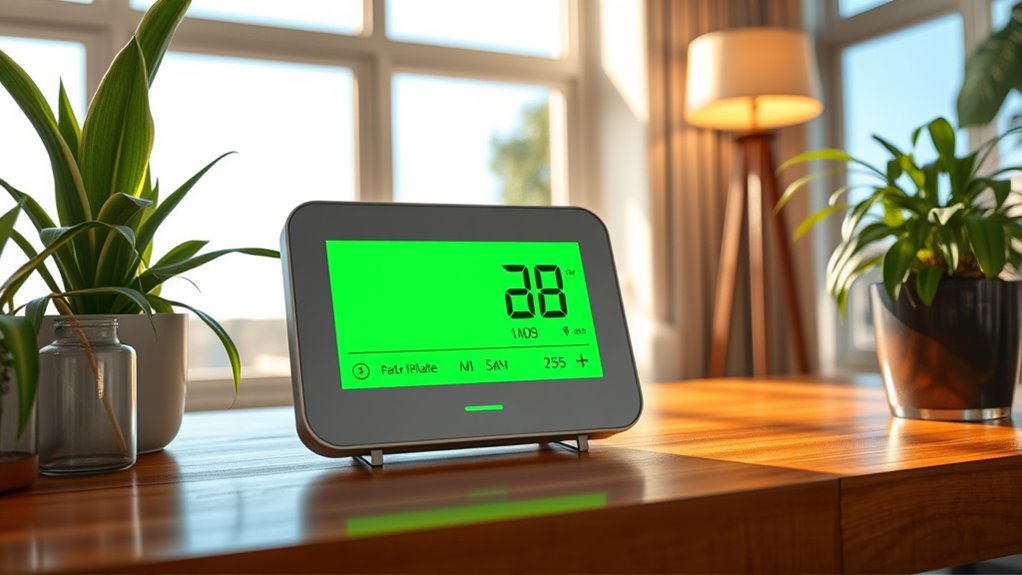
Home Air Quality Monitors
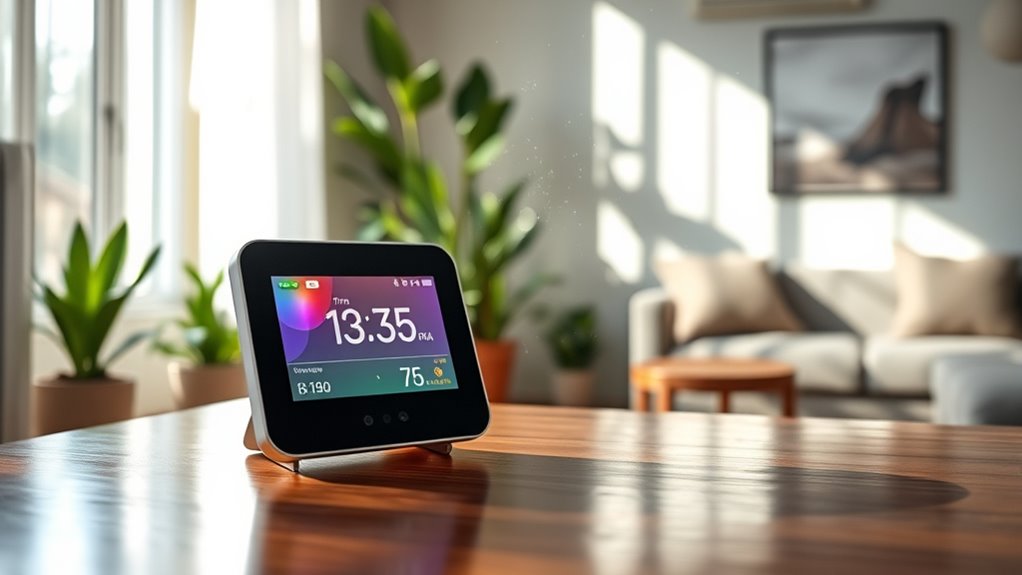
In recent years, home air quality monitors have become essential for maintaining a healthy living environment. You might not realize how much your indoor air quality affects your overall health, but poor air can contribute to allergies, asthma, and other respiratory issues. By investing in a home air quality monitor, you can stay informed about the pollutants and allergens that may be lurking in your space. With this knowledge, you can take appropriate action, such as using an air purifier or improving ventilation.
Home air quality monitors are vital for a healthy living space, helping you manage pollutants that can impact your well-being.
You may wonder about the specific benefits of using an air purifier alongside your monitor. Air purifiers can markedly enhance your indoor air quality by filtering out harmful particles, allergens, and even odors. When combined with smart sensor technology, an air purifier can adjust its settings based on real-time air quality data from your monitor. This means your air purifier works more efficiently, targeting problem areas as they arise, which saves energy and prolongs the lifespan of the device.
Smart sensor technology is a game changer for home air quality monitoring. These advanced sensors provide real-time feedback about indoor air conditions, allowing you to understand when your air quality dips below healthy levels. You’ll receive alerts on your smartphone or monitor, so you can take immediate action. This proactive approach helps you maintain a cleaner, healthier atmosphere, reducing the risk of health issues related to poor air quality.
You might find it interesting that many modern air quality monitors also track various pollutants, including volatile organic compounds (VOCs), carbon dioxide, and particulate matter. By keeping an eye on these levels, you can make informed decisions about when to ventilate your space or run your air purifier. For instance, if your monitor detects high levels of VOCs after painting or using certain cleaning products, you can air out the room to minimize exposure. Additionally, understanding your indoor air quality is crucial for creating a sanctuary of pure air in your home, as the air you breathe significantly impacts your well-being.
Frequently Asked Questions
How Much Do Home Air Quality Monitors Typically Cost?
Home air quality monitors typically cost between $50 and $300, depending on feature variety and brand. If you’re looking for a basic model, expect to pay on the lower end, while advanced options with multiple sensors can hit the higher range. Doing a cost comparison among different models helps you find the best fit for your needs. Don’t forget to contemplate the features that matter most for your home’s air quality.
Can Air Quality Monitors Detect Allergens Like Dust Mites or Pollen?
Yes, air quality monitors can detect allergens like dust mites and pollen through allergen detection and air sampling. These devices analyze the air for particulate matter and can identify specific allergens present in your environment. However, the effectiveness varies depending on the monitor’s quality and specifications. If you’re concerned about allergens in your home, investing in a reliable air quality monitor can help you understand and improve your indoor air quality.
How Often Should I Calibrate My Air Quality Monitor?
To guarantee your air quality monitor’s accuracy isn’t just a wishful thought, you should calibrate it at least once a year. Regular sensor calibration helps maintain accuracy, keeping you informed about your environment. If you notice any discrepancies in readings, don’t hesitate to recalibrate sooner. Remember, your health depends on the quality of the air you breathe. Staying proactive about maintenance can make all the difference in your indoor air quality.
Are There Specific Brands That Are More Reliable Than Others?
Yes, some brands are more reliable than others. When choosing a monitor, consider the brand reputation and look for customer reviews. Trusted brands like IQAir and Airthings often receive high praise for accuracy and durability. Check online platforms for user feedback to see how well the monitors perform in real-life situations. This way, you’ll make an informed decision and invest in a product that meets your air quality needs.
Do Air Quality Monitors Require Regular Maintenance or Battery Changes?
Yes, air quality monitors do require regular maintenance. You’ll need to check the battery lifespan, as some models may need battery changes every few months. Additionally, sensor calibration is essential for accurate readings; manufacturers usually recommend recalibrating the sensors periodically, often annually. Keeping an eye on these aspects guarantees your monitor works effectively, helping you maintain the best air quality in your home. Regular maintenance keeps your device reliable and accurate.
Conclusion
So, should you get a home air quality monitor? Well, if you’re keen on transforming your living room into a high-tech science lab, go for it! Just imagine the thrill of obsessively checking your indoor air quality instead of, you know, enjoying life. And who wouldn’t want to pay for a gadget that tells you your air is just as bad as the outside? In the end, your lungs might thank you, but your sanity might not!