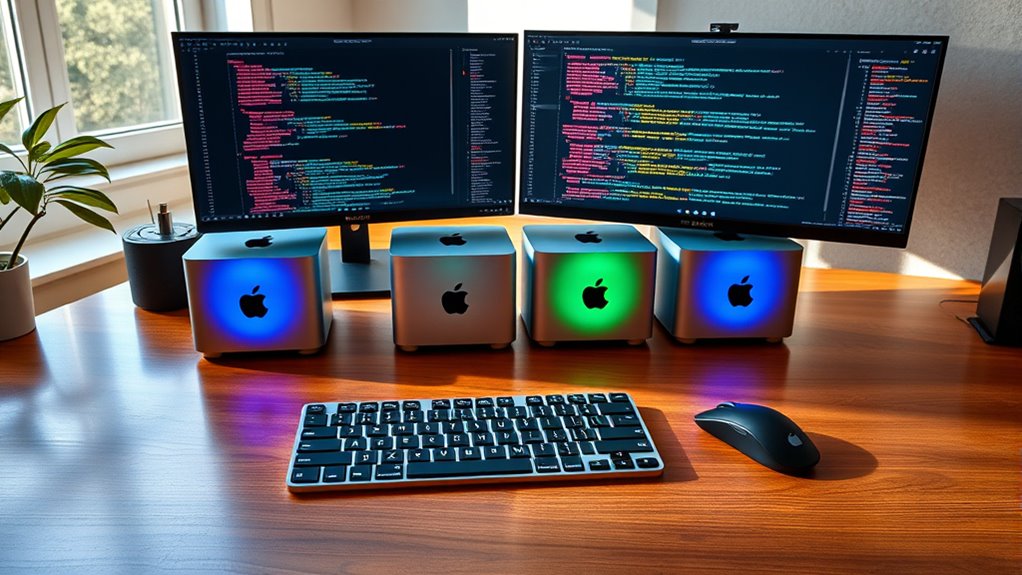

If you’re upgrading your setup in 2025, I recommend considering Mac minis with the M4 Pro chip for top performance, especially for demanding coding tasks. The compact design saves space, while the powerful CPU and GPU handle multitasking, rendering, and large projects with ease. With options for ample RAM and storage, these models are future-proof, too. If you keep exploring, you’ll find even more details to help pick the perfect Mac mini for you.
Key Takeaways
- Look for Mac Minis with the latest M4 Pro chip for optimal performance in demanding development tasks.
- Prioritize models with at least 24GB of unified memory and scalable storage options like 1TB or 2TB SSDs.
- Ensure the Mac Mini offers multiple Thunderbolt and USB-C ports for versatile peripheral and display connectivity.
- Choose configurations with higher GPU core counts (e.g., 16-core GPU) for graphics-intensive development work.
- Consider models with future-proof features like Wi-Fi 6E and expandable RAM to support evolving software environments.
Apple Mac mini Desktop Computer with M4 Pro chip
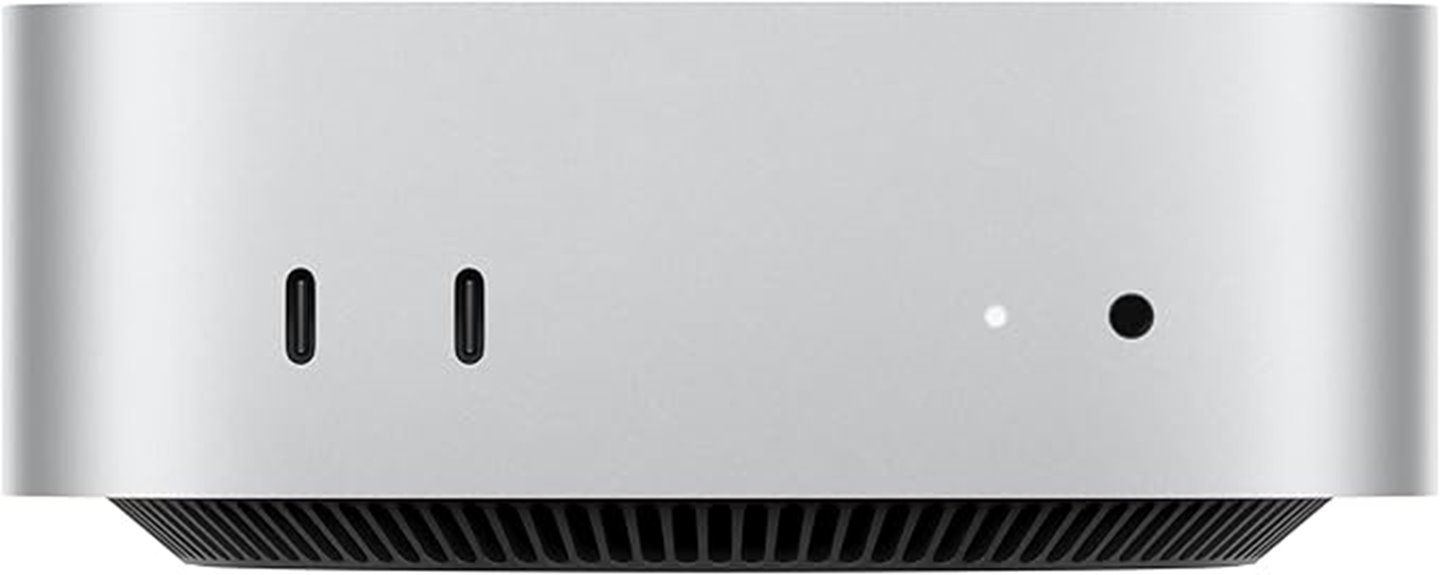
If you’re looking for a compact yet powerful desktop for software development, the Apple Mac mini with the M4 Pro chip is an excellent choice. Its small five-by-five-inch design fits easily next to your monitor or in tight spaces, yet it packs serious performance. The M4 Pro’s 12-core CPU and 16-core GPU handle demanding tasks like code compilation and complex scenes with ease. With 24GB of unified memory and a 512GB SSD, it’s fast and responsive. Connectivity is versatile, featuring Thunderbolt, HDMI, Gigabit Ethernet, and front USB-C ports. Running macOS optimized for Apple silicon, it supports essential apps and integrates seamlessly into the Apple ecosystem.
Best For: professionals and developers seeking a compact, high-performance desktop that seamlessly integrates with the Apple ecosystem.
Pros:
- Compact size fits easily in tight spaces or next to monitors
- Powerful M4 Pro chip with 12-core CPU and 16-core GPU handles demanding tasks efficiently
- Seamless integration with macOS and Apple devices enhances productivity and user experience
Cons:
- Limited upgrade options due to compact design and integrated components
- May have higher initial cost compared to other small-form-factor desktops
- No dedicated graphics card options, which could impact certain graphics-intensive workloads
Apple Mac mini Desktop Computer with M4 Chip (2024)
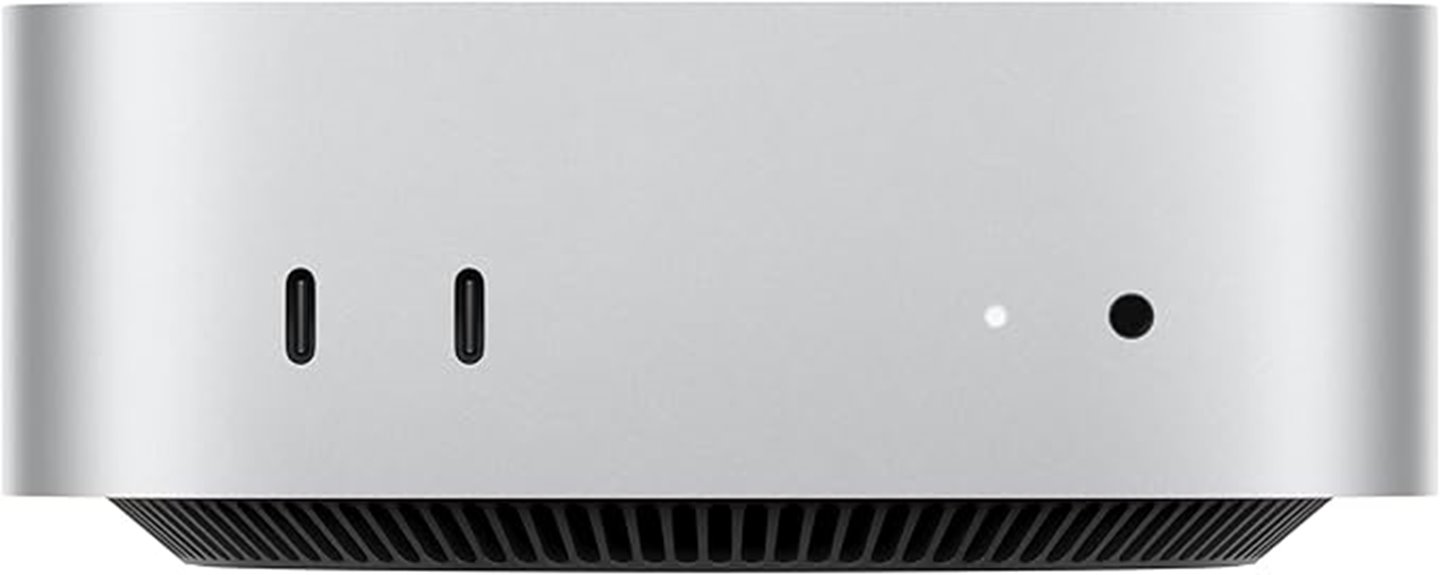
The Apple Mac mini Desktop Computer with M4 Chip (2024) stands out as an excellent choice for software developers who need powerful performance in a compact form factor. Its M4 chip packs a 10-core CPU, 10-core GPU, and 16-core Neural Engine, delivering fast, efficient processing. With 24GB of unified memory (upgradable to 32GB) and a 512GB SSD (configurable up to 2TB), it handles multitasking and large projects with ease. Its small size and extensive connectivity options—including Thunderbolt 4, HDMI, and multiple USB-C ports—support multiple high-resolution displays. Designed with environmental responsibility in mind, it’s perfect for a versatile, space-saving development setup.
Best For: software developers and creative professionals seeking a high-performance, compact desktop with extensive connectivity and environmental sustainability.
Pros:
- Powerful M4 chip with 10-core CPU, GPU, and Neural Engine for fast multitasking and processing
- Compact size with versatile port options supporting multiple high-resolution displays
- Environmentally friendly design that is carbon neutral and energy-efficient
Cons:
- Limited upgradeability beyond initial configuration options
- Higher price point compared to traditional mini desktops with similar specs
- May require additional peripherals for complete setup due to compact form factor
Apple 2024 Mac mini Desktop Computer with M4 Chip
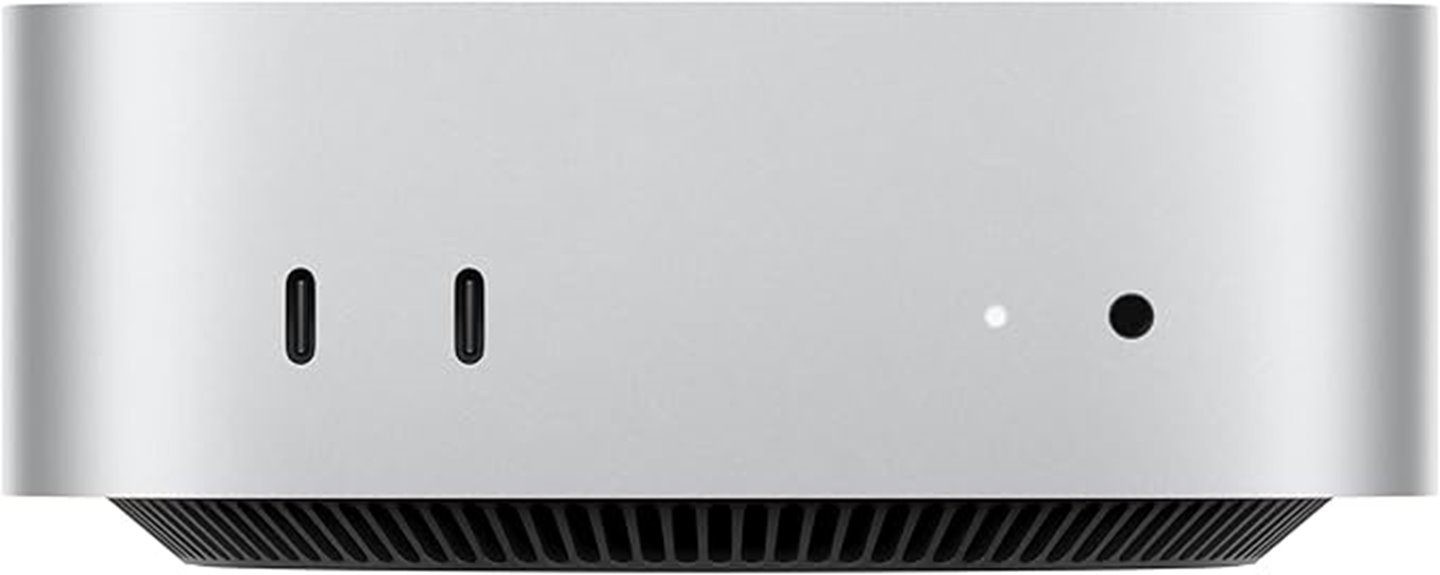
Looking for a compact yet powerful desktop that can handle demanding development tasks? The Apple 2024 Mac mini with M4 chip is exactly that. Its small footprint—just five by five inches—fits easily next to your monitor and saves space. Powered by the M4 chip with a 10-core CPU and GPU, it delivers fast, smooth performance. With 16GB of unified memory and 512GB SSD, it handles multitasking and large projects effortlessly. Multiple ports, including Thunderbolt, HDMI, and Gigabit Ethernet, ensure robust connectivity. Plus, seamless integration with Apple’s ecosystem and advanced privacy protections make it ideal for serious developers who value power and compact design.
Best For: developers and creative professionals seeking a compact, powerful desktop with seamless ecosystem integration and robust performance for demanding tasks.
Pros:
- Compact size fits easily into any workspace while delivering high performance
- Powerful M4 chip with 10-core CPU and GPU for smooth multitasking and demanding applications
- Multiple connectivity options including Thunderbolt, HDMI, and Gigabit Ethernet for versatile setup
Cons:
- Limited upgrade options due to integrated Apple silicon design
- No dedicated graphics card, which may impact performance in certain high-end graphics tasks
- Relatively high price point for a compact desktop, especially compared to some PC alternatives
Apple 2024 Mac mini Desktop Computer with M4 Chip
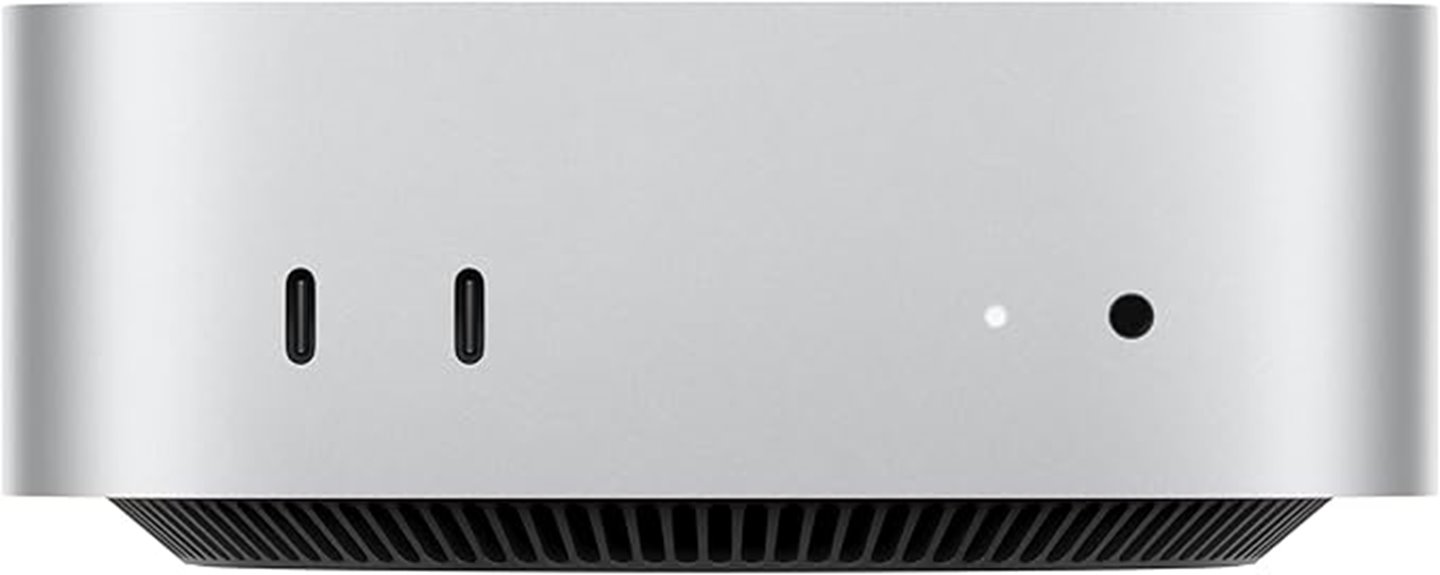
For developers seeking a compact yet powerful machine, the Apple 2024 Mac mini with the M4 chip stands out as an excellent choice. Its 10-core CPU and GPU deliver snappy, fluid performance, perfect for running demanding development tools like Microsoft 365 and Adobe Creative Cloud. The 16GB of unified memory and 256GB SSD ensure fast multitasking and quick data access. With versatile ports—including Thunderbolt, HDMI, Gigabit Ethernet, and front USB-C—it’s easy to connect peripherals. Designed around Apple silicon, it seamlessly integrates with the Apple ecosystem, supporting features like device mirroring and easy file sharing. Plus, it’s a carbon-neutral product, emphasizing sustainability.
Best For: developers and power users seeking a compact, high-performance desktop that seamlessly integrates with the Apple ecosystem.
Pros:
- Compact size fits easily into any workspace without sacrificing performance.
- Powerful M4 chip with 10-core CPU and GPU ensures fluid multitasking and demanding application support.
- Versatile connectivity options (Thunderbolt, HDMI, Ethernet, USB-C) for easy peripheral setup.
Cons:
- Limited storage capacity with 256GB SSD may require external drives for large files.
- The compact design might restrict internal expansion or upgrades.
- Higher price point compared to similarly specced non-Apple mini desktops.
Factors to Consider When Choosing a Mac Mini for Software Development
When selecting a Mac Mini for software development, I focus on key factors like processing power, memory, and storage to guarantee smooth performance. Connectivity options and graphics performance also matter, especially for complex projects or multitasking. Understanding these points helps me choose a model that best fits my specific development needs.
Processing Power Needs
Choosing the right processing power for your Mac Mini is essential because it directly impacts how efficiently you can compile code, run tests, and multitask during development. Software development often demands a processor with multiple cores to handle complex tasks smoothly. A high-performance CPU, like a 10-core or 12-core chip, can drastically cut down build times and boost your productivity. Multi-core processors also support better multitasking, enabling you to run IDEs, virtual machines, and testing tools simultaneously without slowdown. Additionally, the clock speed and architecture influence how well your Mac handles intensive computations. If your projects involve graphics or media processing, a GPU with more cores can further accelerate rendering, debugging, and testing workflows, ensuring a smoother development experience.
Memory Capacity Options
Selecting the right memory capacity is essential for maximizing your Mac Mini’s performance during software development. More RAM enables smoother multitasking and allows you to run multiple tools, like IDEs, virtual machines, and emulators, without slowdown. Upgrading to 24GB or 32GB of unified memory can greatly improve handling large codebases and resource-heavy tasks such as compiling complex projects. Increasing RAM also helps prevent lag during intensive operations, ensuring a more efficient workflow. When choosing, consider the complexity of your projects and dataset sizes; more demanding environments benefit from higher memory. Additionally, opting for greater RAM future-proofs your Mac Mini, so it can handle evolving software requirements and larger applications for years to come.
Storage Requirements
Adequate storage capacity is vital for keeping your development environment efficient and organized. Large project files, virtual machines, and software libraries require ample space to run smoothly. SSD storage provides faster read/write speeds, which can substantially cut down build times and enhance workflow. If you’re working with multimedia or data-heavy applications, opting for higher storage options like 1TB or 2TB SSDs makes sense to prevent running out of space. Additionally, cloud storage can complement local capacity, offering flexibility and scalability as your projects grow. Balancing storage needs with your budget and future expansion plans is critical to ensure your Mac Mini remains capable and responsive over time. Proper storage choices keep your development process seamless and productive.
Connectivity Options
When evaluating a Mac Mini for software development, paying close attention to its connectivity options is essential because they directly impact your workflow and productivity. Make sure it has multiple ports like Thunderbolt 4, HDMI, and USB-C to connect various peripherals and external displays seamlessly. Check for Gigabit Ethernet or higher speeds, up to 10Gb, if you handle large data transfers over wired networks. Front-facing USB-C ports are convenient for quick access to external drives, docking stations, or peripherals. Ensure compatibility with Wi-Fi 6E and Bluetooth 5.3 for reliable wireless connectivity, especially when working remotely or using wireless accessories. Don’t forget audio ports, such as headphone jacks, which are useful for audio monitoring or communication during development sessions. These connectivity features keep your setup flexible and efficient.
Graphics Performance
Graphics performance in a Mac mini is largely determined by its GPU, which plays a vital role in handling demanding visual tasks. Newer models equipped with Apple Silicon chips feature integrated GPU cores that deliver impressive power for rendering, video editing, and 3D modeling—essential tools for software development involving graphics. A higher GPU core count, such as 16 cores, greatly boosts performance in these areas. The unified memory architecture allows the GPU to access data efficiently, reducing bottlenecks during intensive tasks. Additionally, support for multiple high-resolution displays, up to 8K, enables seamless work with complex visual interfaces and large datasets. Hardware-accelerated media engines further optimize video encoding and decoding, making these Mac minis excellent choices for multimedia-heavy projects.
Compatibility With Tools
Choosing a Mac mini for software development means guaranteeing it can run your essential tools smoothly. First, confirm the Mac mini supports the operating system you need, like the latest macOS or specific versions required by your software. Check that it has enough ports, such as Thunderbolt or USB-C, to connect external devices and peripherals. Make sure the hardware specs, like CPU and RAM, meet the minimum requirements of your IDEs and development tools. If you work with virtualization or containers, verify compatibility with those platforms. Finally, confirm the Mac mini can support the latest programming languages, SDKs, and APIs relevant to your projects. This extensive compatibility check helps prevent roadblocks and ensures a seamless development experience.
Expandability Potential
Because of its compact design, the Mac mini offers limited options for hardware upgrades, making initial choices vital for long-term development needs. Most models come with fixed RAM configurations, often maxing out at 32GB, and upgrading RAM later is usually not possible. Storage upgrades are also limited internally, so relying on external drives or Thunderbolt-connected SSDs is common if more capacity is needed. The number and type of ports you choose at purchase influence future expandability for peripherals and external devices, so selecting a model with sufficient connectivity is essential. To future-proof your setup, opting for higher initial specifications, especially in RAM and storage, can reduce the need for upgrades later. Since internal upgrades are minimal, careful initial planning ensures your Mac mini remains effective for your evolving development workload.
Environmental Commitments
Considering the growing importance of sustainability, selecting a Mac mini with strong environmental commitments is a smart choice for software developers who want to align their work with eco-friendly values. Many Mac mini models are now carbon neutral, supporting efforts to fight climate change. Choosing an environmentally responsible device helps reduce your carbon footprint thanks to energy-efficient design and manufacturing practices. These models often incorporate recycled materials and utilize renewable energy sources during production, further minimizing environmental impact. Opting for an eco-friendly Mac mini not only benefits the planet but also boosts your company’s or personal sustainability profile. Making environmentally conscious choices demonstrates a commitment to corporate social responsibility and aligns your tech setup with broader ecological goals.
Frequently Asked Questions
How Do Mac Mini Models Compare for Cross-Platform Development?
I find that Mac Mini models vary in performance for cross-platform development. The newer M2 and M3 chips boost speed and efficiency, making it easier to run multiple environments smoothly. I prefer the latest models because they handle virtualization and emulators better, helping me switch between Windows, Linux, and macOS effortlessly. Overall, investing in a recent Mac Mini guarantees I can develop across platforms without hiccups.
What’s the Upgrade Potential for Storage and RAM in Upcoming Mac Minis?
Imagine your Mac Mini as a sturdy ship ready to sail into new territories. The upcoming models promise significant upgrade potential for storage and RAM, with some configurations allowing for future enhancements. I’m excited because this means I can start with a solid foundation and expand as my projects grow. It’s like having a vessel that evolves alongside my ambitions, ensuring I stay afloat and ahead in my coding journey.
Are Mac Minis Suitable for Running Virtual Machines for Testing?
Yes, Mac Minis are suitable for running virtual machines for testing, especially the latest models with powerful M1 or M2 chips. They handle virtualization software like Parallels or VMware well, allowing me to run multiple OS environments smoothly. However, I keep in mind that their performance depends on the amount of RAM and storage, so selecting a configuration with ample resources guarantees a seamless testing experience.
How Does Battery Life Impact Portable Coding Setups With Mac Minis?
Battery life isn’t a concern with Mac Minissbecause they’re designed to stay plugged in, not run on batteries. When I set up portable coding stations, I rely on laptops for mobility. But if you’re thinking about using a Mac Mini away from power, it’s not practical. Instead, I’d recommend a MacBook, which offers portability with decent battery life, making remote coding sessions more feasible.
What Are the Best Accessories to Enhance Development on a Mac Mini?
Imagine you’re coding late into the night, and a high-quality external monitor instantly boosts your productivity. I recommend a good mechanical keyboard and an ergonomic mouse; they make long coding sessions comfortable. Additionally, a USB-C hub expands your connectivity options, and a reliable external SSD speeds up your workflow. These accessories transform your Mac Mini into a powerful, efficient development station, making every project smoother and more enjoyable.
Conclusion
Choosing the right Mac mini for software development is like selecting the perfect tool for a craftsman—each option offers unique strengths. Whether you opt for the latest M4 Pro or the reliable M4 chip, you’ll be powering your coding game with impressive speed and efficiency. Remember, the best choice aligns with your needs and ambitions. Investing wisely now will make your development journey smoother, like a finely tuned engine propelling you forward effortlessly.